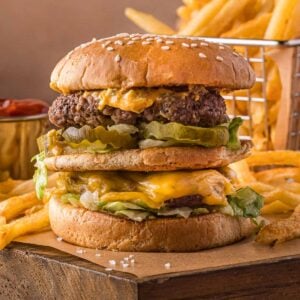
There is a very specific kind of satisfaction that only a Big Mac delivers, and it has nothing to do with fine dining or farmers’ markets or knowing where your beef came from. It’s greasy and saucy and a little embarrassing, and you want two of them. This is that burger. Made at home, made right, and significantly harder to stop eating than anything this straightforward has any business being.
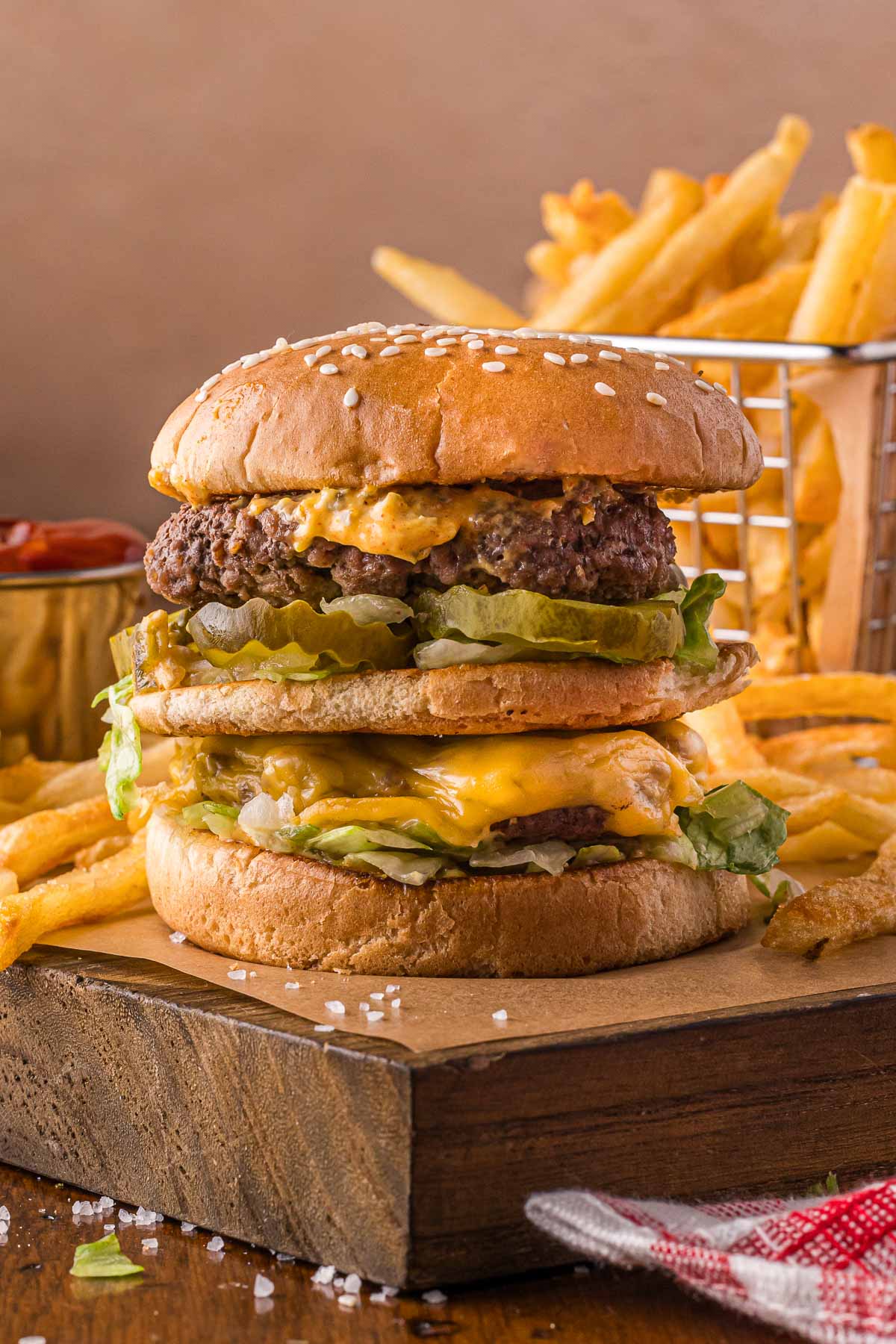
So, what makes this iconic? That extra bun jammed in the middle, and the iconic sauce. The bun is what makes it a Big Mac instead of just a double cheeseburger. But the trick is all in how that rogue middle bun is handled, that makes this perfect or too big to truthfully handle. And then there’s the sauce; it’s what makes you keep eating it. We cracked that code and make ours from scratch. It’s so good you’ll be putting it on everything else in your fridge by Tuesday.
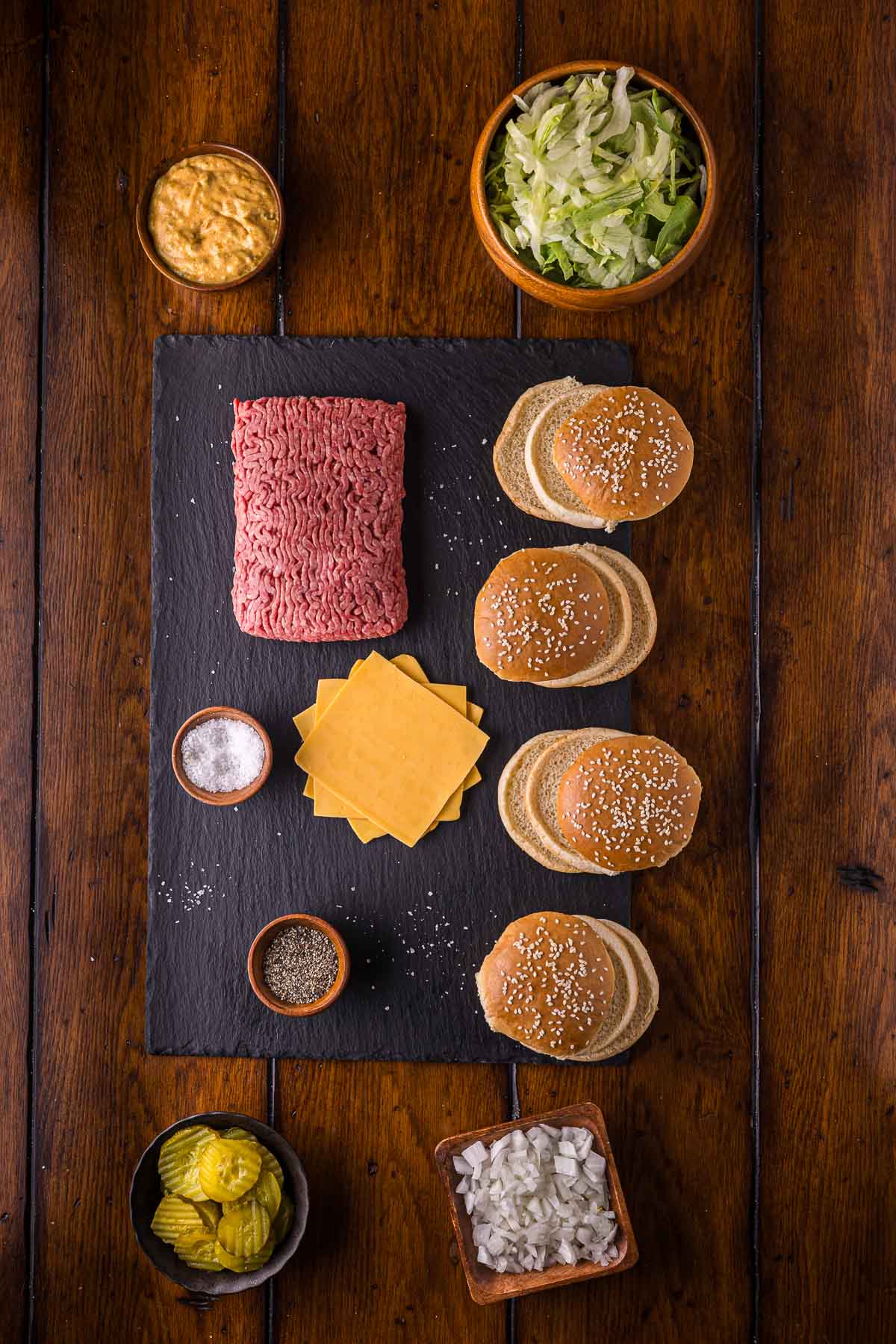
🔪 Ingredients for Homemade Big Mac
For the Patties
- Ground beef (80/20): The fat ratio matters here. 80/20 gives you the crust development and the juice that makes a smash patty worth eating.
- Kosher salt: Season right as the patties hit the pan – not before, not after.
- Black pepper
For the Buns
- Sesame seed burger buns: Buy regular-sized buns, not oversized brioche. Brioche is too soft and too sweet – the stack won’t hold, and the flavor profile shifts. You need 4 buns for the full build, plus 4 extra bottom halves for the middle layer. Buy two packages.
- Unsalted butter: For toasting. Don’t skip the toast on the middle buns – it’s what gives them structure.
For Assembly
- Big Mac sauce: Use our homemade Big Mac sauce recipe. Make it ahead, it’s better after it’s had 30 minutes in the fridge to come together. You’ll use about 2 tablespoons per burger, plus extra for dipping.
- Shredded iceberg lettuce: Not romaine, not mixed greens. Iceberg shreds fine and doesn’t wilt immediately when it hits the warm bun.
- White onion, finely diced
- Dill pickle slices: Five per burger on the top layer. The pickles cut through the richness of the sauce and the beef.
- American cheese
Equipment
- Cast iron skillet or flat-top griddle: You need a surface that holds high, even heat. Cast iron is the move for home cooks. A heavy stainless skillet works too. Non-stick won’t give you the crust.
- Sturdy metal spatula: For smashing. A thin, flexible spatula won’t work — you need something with enough surface area to press the patty flat in one shot.
📝 How to Make Homemade Big Macs
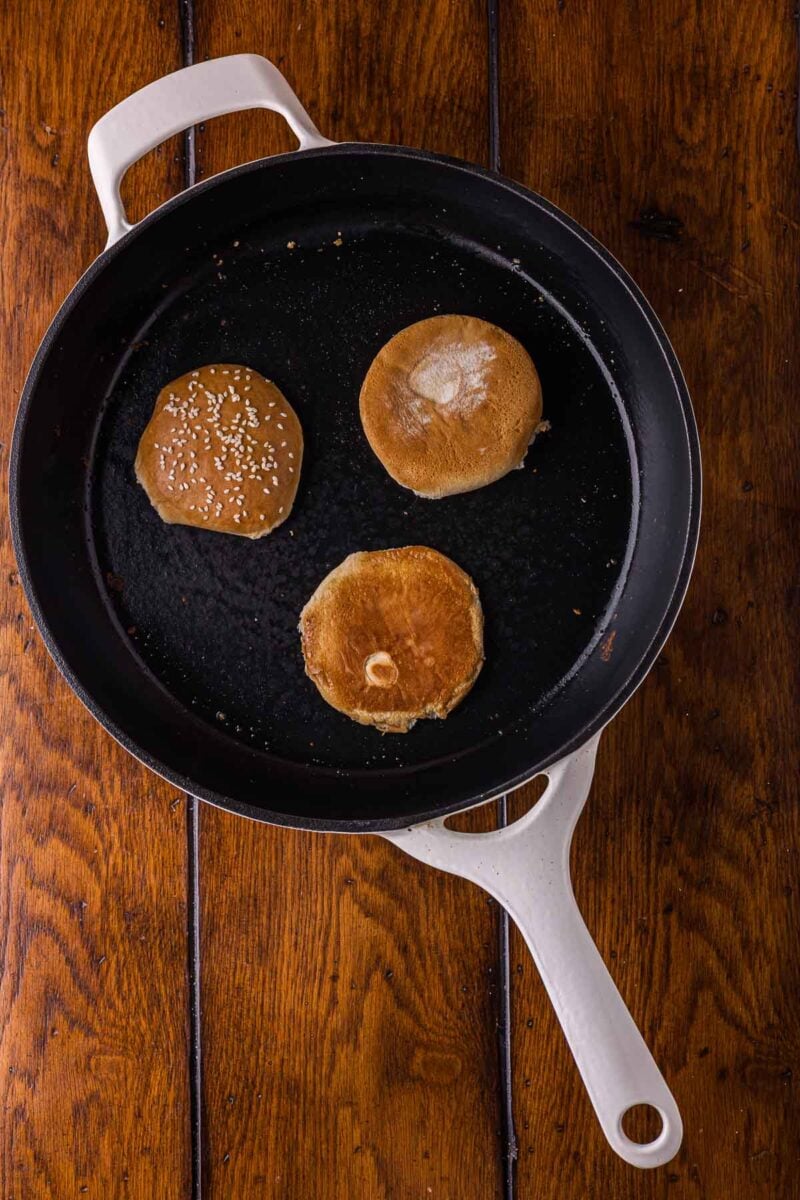
- Press and prep the middle buns. Take your 4 extra bottom bun halves and press each one firmly with your palm until it’s roughly half its original thickness. You’re not trying to flatten it paper-thin — just compress it enough that it’ll hold up as a structural layer in the stack. Set aside.
- Toast all the buns. Melt a thin layer of butter in your skillet over medium heat. Toast the cut sides of all 4 top buns and 4 bottom buns until golden, about 1 to 2 minutes. Then toast the flattened middle buns on both sides until firm and lightly golden, about 1 to 2 minutes per side. The double toast is what keeps the middle layer from going soggy the moment the sauce hits it. Set everything aside.
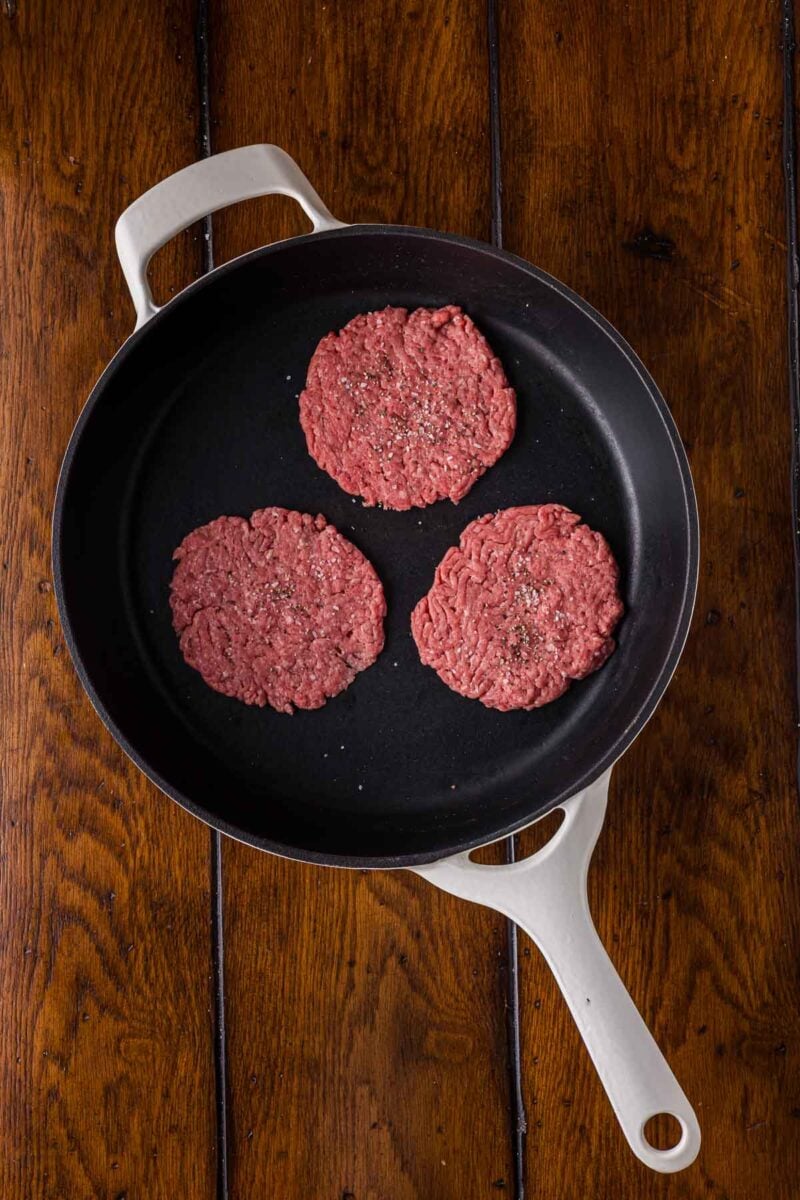
- Divide and loosely form the patties. Divide 1 lb of ground beef into 8 equal portions, roughly 2 oz each. Roll them gently into loose balls – don’t pack them tight. Overworked beef means dense patties with no crispy bits.
- Get the pan ripping hot. Heat your cast iron over medium-high heat until a drop of water evaporates immediately on contact. A properly hot pan is the difference between a good crust and a patty that just steams.
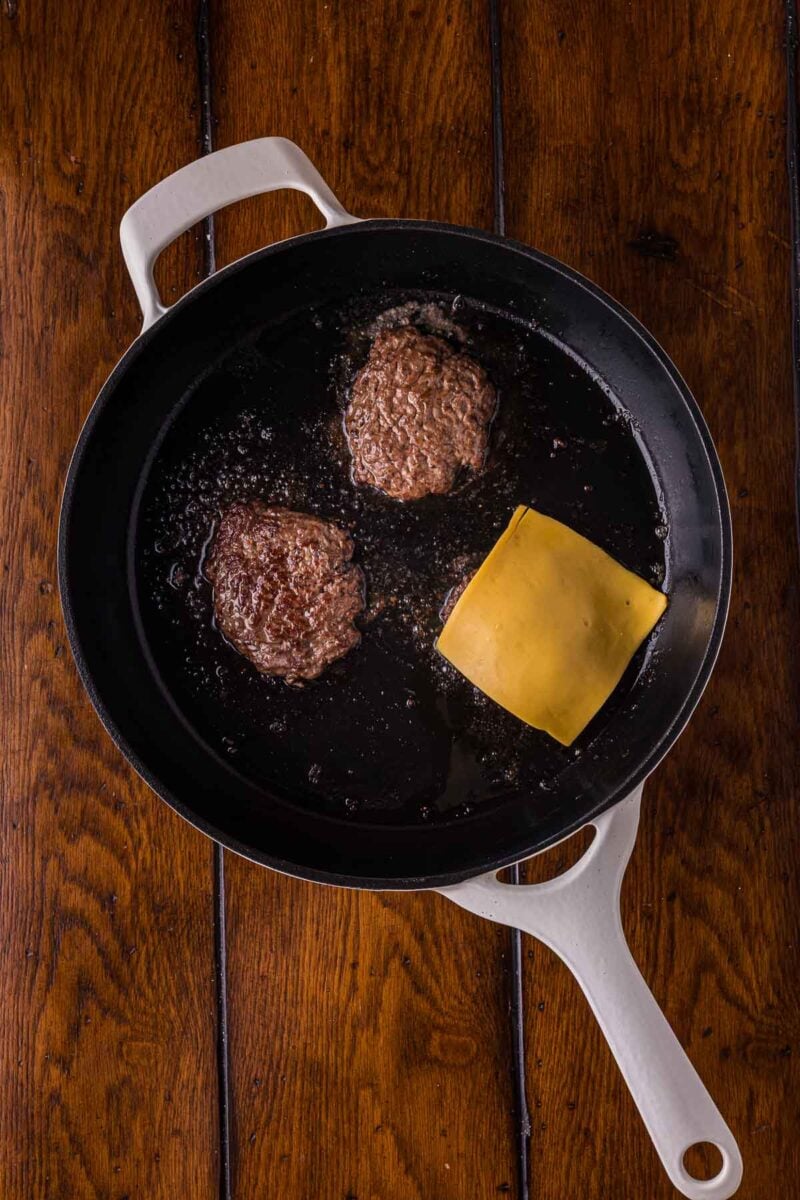
- Smash and season. Place 4 patty balls in the pan (or work in batches) and immediately smash flat with your spatula, pressing hard and holding for 3 to 4 seconds until you have a patty about ¼ inch thick. Season the top with kosher salt and black pepper right after smashing.
- Cook until the crust develops. Don’t touch them. Cook for 2 to 3 minutes, until a deep mahogany-brown crust forms on the underside and the edges of the patty are no longer pink.
- Flip and add cheese. Flip each patty and cook 1 more minute. Place one slice of American cheese on 4 of the 8 patties (these are your bottom patties) during the last 30 seconds and let it melt fully before you move them. Cook the remaining 4 patties through without cheese.
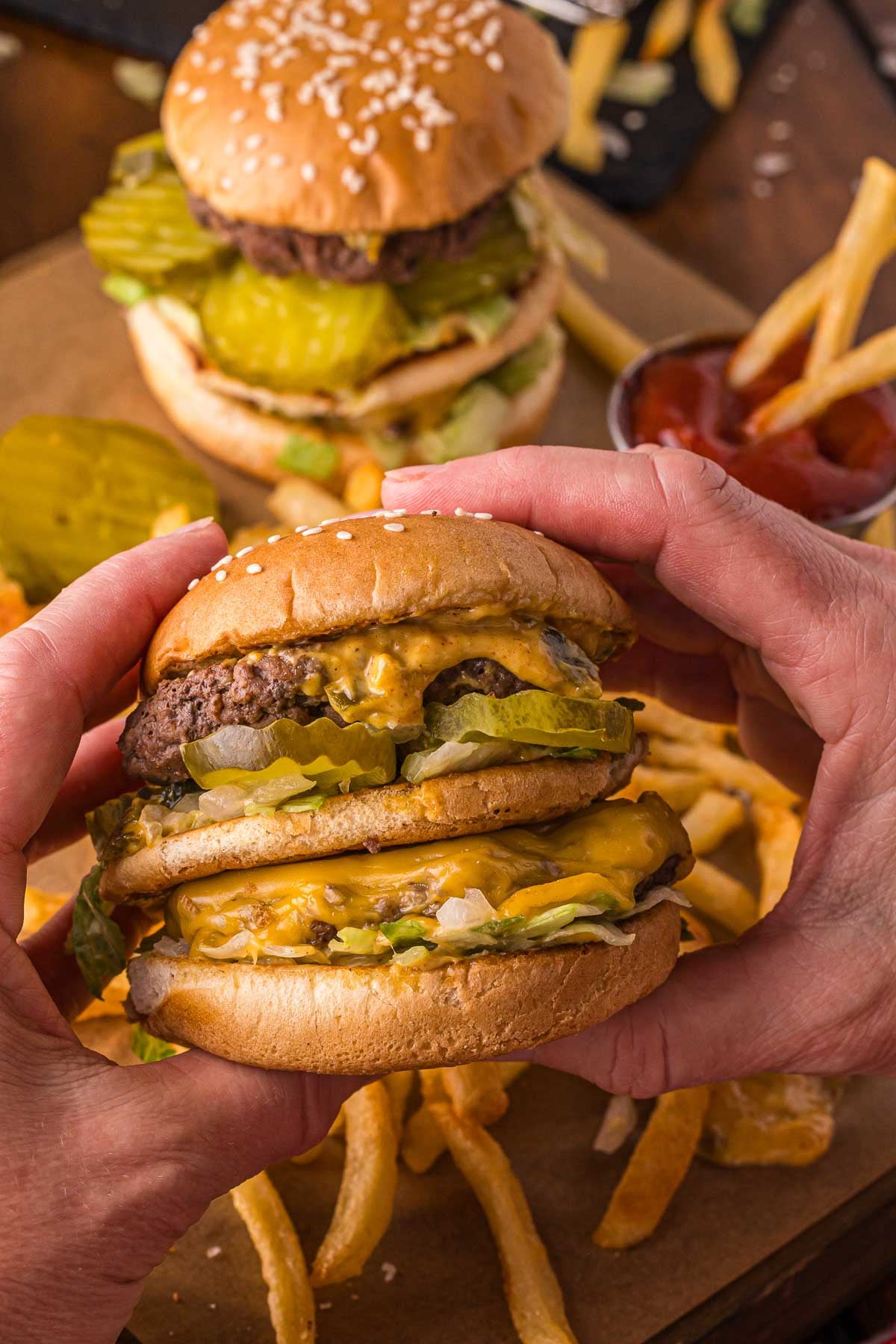
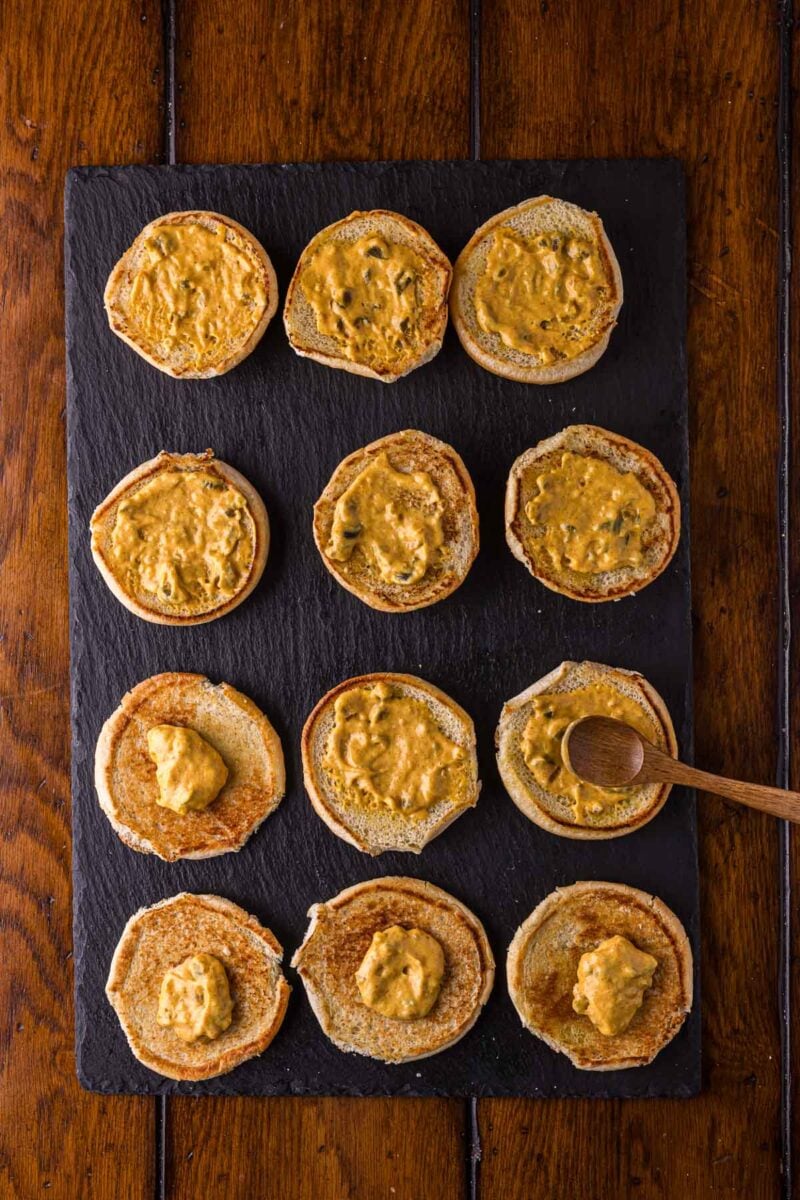
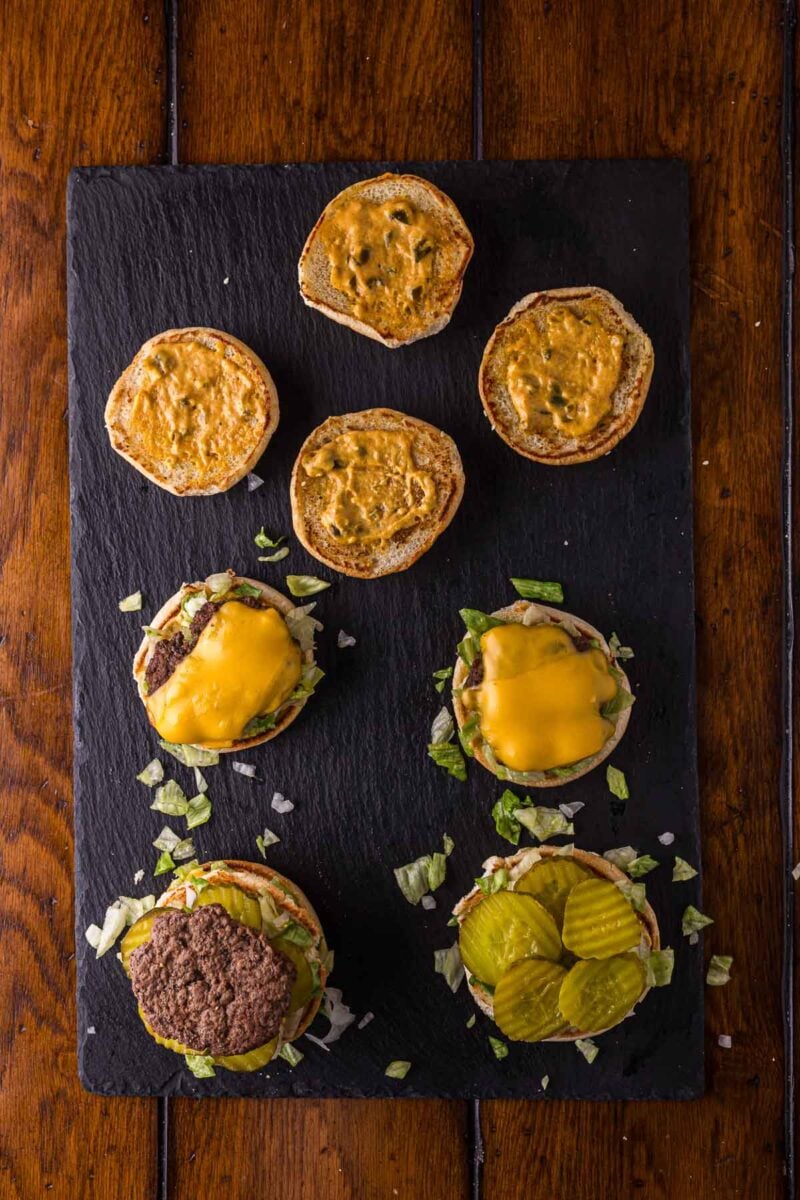
- Build the stack. Work quickly – these burgers got soggy quick. On the toasted bottom bun: spread Big Mac sauce, add a pinch of shredded lettuce, and a small amount of diced onion. Place the cheese-topped patty. Top with the flattened, toasted middle bun. Add another spread of Big Mac sauce, more lettuce, more onion, then 5 pickle slices. Place the second patty (the one without cheese). Crown with the top bun.
- Serve immediately. The lettuce and pickles start releasing liquid after a few minutes. These are serve-right-now burgers.
🔄 Substitutions
- 85/15 or 90/10 ground beef instead of 80/20: Leaner beef will still work, but crust development isn’t as good. The patties won’t have the same crispy-edged bite, and the finished burger tastes slightly drier, and no one’s making a Big Mac because they’re cutting carbs.
- Thousand Island dressing instead of homemade Big Mac sauce: It hits similar flavor notes but leans sweeter and misses the mustard-forward tang that makes Big Mac sauce distinctive. The burger tastes close but not quite right.
- Sweet pickle relish instead of dill pickle slices: The sweetness competes with the sauce rather than cutting through it. The savory-tangy contrast that makes each bite interesting goes away. Use dill.
💡 Meat Nerd Tips
- Don’t overwork the beef before smashing. Loose, cold balls of meat smash better and produce more of those craggly, crispy edges that make smash burgers worth making. If you’ve been rolling the beef between your palms until it’s packed tight, that’s why your patties cook up smooth and dense instead of craggy and crackly.
- The middle bun needs to be toasted on both sides, and it needs to be firm. If you pull it before it’s genuinely crisp, it soaks up the sauce the moment it hits and collapses around 90 seconds into eating. Press it flat, let it toast until it’s firm rather than soft, and test it by pressing lightly with your finger — it should push back.
- Season the patties only after they hit the pan. If you salt raw ground beef and let it sit, even for a few minutes, the salt draws out moisture and changes the texture. Season right after smashing, before the crust develops, so the salt integrates into the sear rather than competing with it.
- Make the Big Mac sauce ahead. Freshly mixed, it tastes sharp and a little flat. After 20 to 30 minutes in the fridge, the flavors meld, and the whole sauce softens into something that tastes like what you remember. If you can make it the day before, do it.
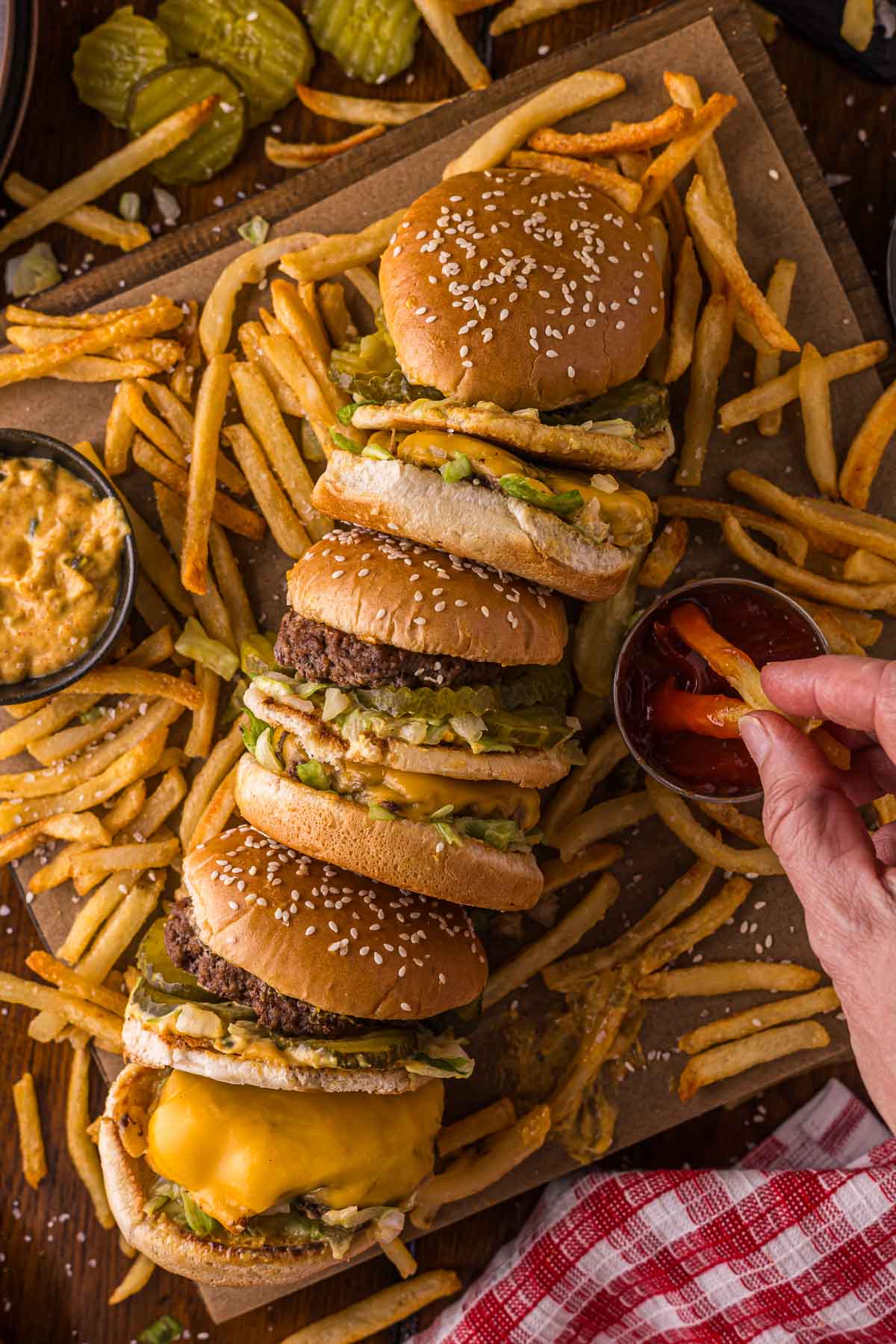
🍽️ What to Serve with Homemade Big Mac
- Classic French fries or waffle fries: This is the obvious call, and it’s obvious for a reason. Extra Big Mac sauce in a ramekin on the side for dipping is the right move (the combo hits the same nostalgia note the whole meal is chasing).
- Onion rings: The crunch and slight sweetness of onion rings play well against the salty, saucy burger. Also who doesn’t love onion rings?
- A simple coleslaw: If you want to cut the richness of two patties and a double hit of sauce, a sharp, vinegar-based coleslaw does the job without competing with the flavors on the burger.
🧊 Leftovers and Storage
- Store components separately. Assembled Big Macs do not keep – the lettuce wilts, the buns go soggy, and the whole thing loses its texture. Store cooked patties separately from everything else.
- Cooked patties: Airtight container in the fridge for up to 3 days.
- Reheat patties: A dry cast-iron skillet over medium heat, 1 to 2 minutes per side, is better than the microwave. The microwave steams them and kills any remaining crust.
- Big Mac sauce: Covered in the fridge for up to 1 week. It gets better over the first couple of days as the flavors continue to develop.
- Uncooked patty balls: Freeze on a parchment-lined sheet, then transfer to a zip bag. Lasts up to 3 months. Smash and cook straight from frozen, adding about 1 extra minute per side.
Have you tried this recipe? Do us a favor and rate the recipe card with the ⭐ ⭐ ⭐ ⭐ ⭐ and drop a comment to help out the next reader.
Homemade Big Macs
Recommended Equipment
- Cast iron skillet or flat-top griddle
- Sturdy metal spatula
Ingredients
For the Patties
- 1 lb ground beef 80/20
- 1 tsp kosher salt
- ½ tsp black pepper
For the Buns
- 4 regular-sized sesame seed burger buns
- 4 additional sesame seed bottom bun halves for the middle layer
- 1 tbsp unsalted butter
For Assembly
- ½ cup Big Mac sauce
- 1 cup shredded iceberg lettuce
- ¼ cup white onion finely diced
- 20 dill pickle slices (5 per burger)
- 4 slices American cheese
Instructions
Press the Middle Buns
- Press each extra bottom bun half firmly with your palm to roughly half its original thickness. Set aside.
Toast All the Buns
- Melt butter in skillet over medium heat. Toast the cut sides of all top and bottom buns until golden, 1 to 2 minutes. Toast the flattened middle buns on both sides until firm and golden, 1 to 2 minutes per side. Set aside.

Divide the Beef
- Divide ground beef into 8 loose balls, about 2 oz each. Do not pack tightly.
Heat the Pan
- Heat cast iron skillet over medium-high heat until a drop of water evaporates immediately on contact.
Smash and Season
- Place 4 beef balls in the pan and immediately smash flat with a metal spatula, pressing firmly and holding 3 to 4 seconds until about ¼ inch thick. Season tops with kosher salt and black pepper.
Build the Crust
- Cook without touching 2 to 3 minutes until a deep brown crust forms on the underside and edges are no longer pink.
Flip and Cheese
- Flip each patty and cook 1 more minute. Place one slice of American cheese on 4 of the patties. Let melt fully, about 30 seconds. Cook remaining 4 patties through without cheese.
Build the Stack
- On the toasted bottom bun: spread Big Mac sauce, add lettuce and onion. Place the cheese-topped patty.
- Top with the pressed middle bun. Add more sauce, lettuce, onion, and 5 pickle slices. Place the uncheesed patty. Crown with the top bun.
Serve
- Serve immediately.
Notes
- Make Big Mac sauce at least 30 minutes ahead; overnight is better
- Season patties only after they hit the pan
- Middle buns must be double-toasted or they collapse when the sauce hits them
- Store cooked patties separately — do not store assembled burgers
- Freeze uncooked patty balls up to 3 months; cook from frozen, adding 1 minute per side
Save this Recipe
Nutrition
Bookmark this recipe now!
Quick Summary
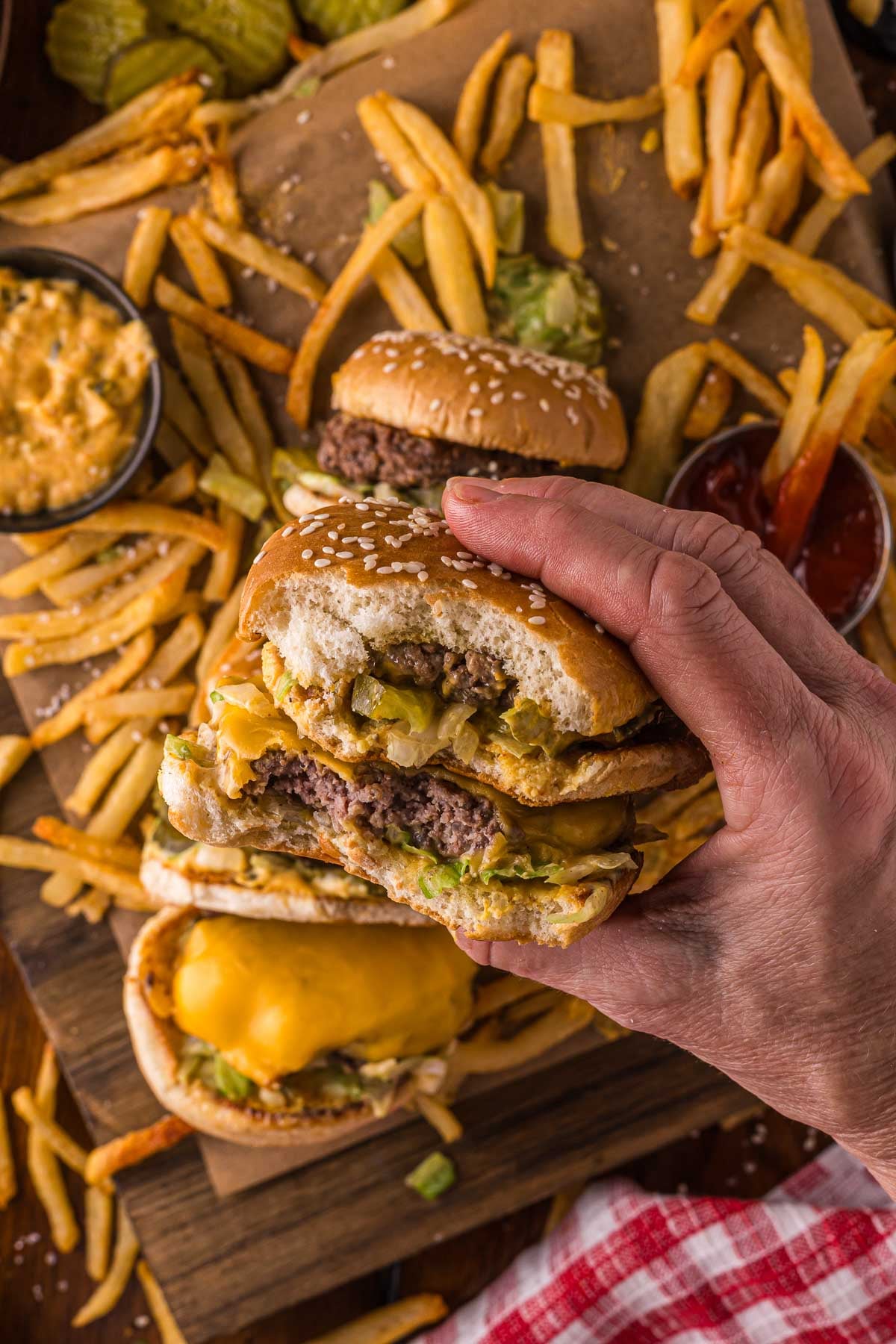
A homemade Big Mac lives and dies by three things: the patty weight (2 oz, smashed flat), the middle bun (a pressed and double-toasted bottom half, not a top bun), and the sauce (made ahead and chilled). Get those right and you’ve got a burger that tastes like the one you’ve been remembering, not the approximation you’ve been making. The whole thing comes together in about 30 minutes.
❓ FAQs
“Two all-beef patties, special sauce, lettuce, cheese, pickles, onions, on a sesame-seed bun.” The triple-bun architecture is the main structural difference — bottom bun, middle bun (a second bottom half), and top bun, with two thin patties stacked across two layers. The Big Mac also uses thinner, lighter patties than a typical double cheeseburger, and the sauce is sweeter and tangier than standard burger condiments.
Three likely culprits: patties that are too thick, a middle bun that’s either wrong or not properly toasted, and sauce that wasn’t made ahead. McDonald’s uses very thin patties — about 1.6 oz — that cook fast and develop a thin crust rather than a thick sear. If your patties are noticeably thicker than a quarter-inch, they’re not smashing down the same way.
The sauce, yes — and it should be made at least 30 minutes ahead. The patties can be cooked in advance and reheated in a hot skillet. But assembled Big Macs don’t hold. The lettuce wilts and the bun softens within minutes, so build and serve immediately every time.
The base is mayonnaise with sweet pickle relish, yellow mustard, white wine vinegar, garlic powder, onion powder, and a pinch of paprika. It’s similar to Thousand Island but tangier and with a stronger mustard note. Check our full Big Mac sauce recipe for exact ratios and a make-ahead guide.
A sturdy metal spatula is all you need. Place the loose ball of beef in a screaming hot pan and press down hard with the flat of the spatula, holding for 3 to 4 seconds. The key is pressing firmly and immediately — waiting even 15 seconds after the beef hits the pan lets the proteins start to set, making it harder to get the patty flat without tearing it.