Stop serving dry, bland meat – our tested technique delivers melt-in-your-mouth results…
St. Patrick’s Day is around the corner, and that can drudge up memories of soggy, boring corned beef. We’re here to flip the script on that because when done right, corned beef is delicious!
If you’re looking for a step-by-step classic recipe, start with our Corned Beef and Cabbage. This guide breaks down the cut, curing process, and every cooking method so you can choose the right one.
But here’s the thing… most home cooks are missing key steps that separate good corned beef from the melt-in-your-mouth masterpiece you deserve. We’re about to change that.
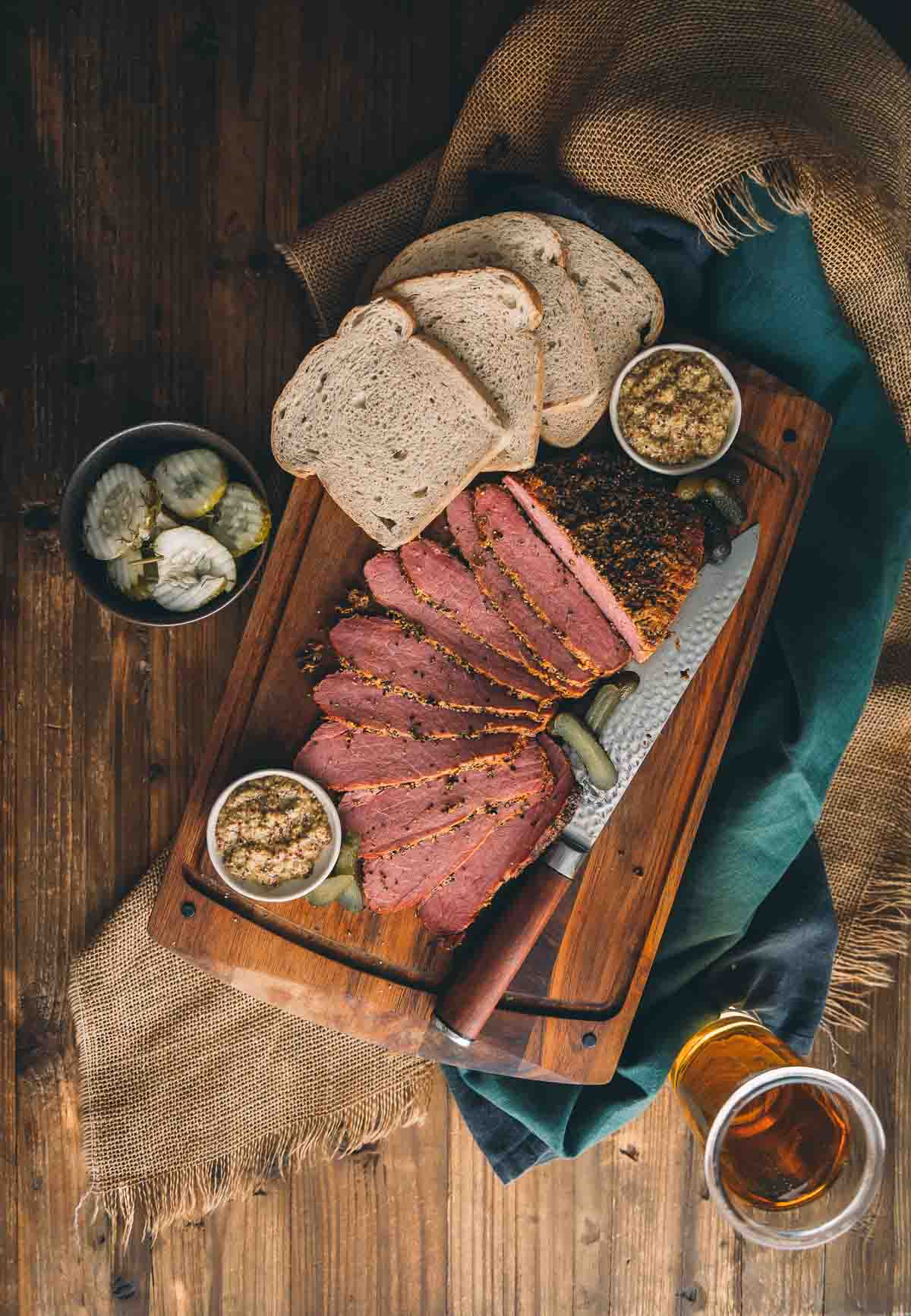
Table of Contents
- What is Corned Beef?
- Choosing Your Beef
- Pre-Cooking Prep That Makes All the Difference
- Cooking Methods: Beyond Boiling
- Slow Cooker Method (the Weekday Favorite)
- Pressure Cooker Method (Time-Saver)
- Smoked Corned Beef Method
- The Slicing Secret
- Beyond the Traditional Dinner
- Common Mistakes to Avoid
- More Irish-American-Inspired Recipe Ideas
- FAQs
- Corned Beef Recipes & Guides
What is Corned Beef?
Despite its name, corned beef has nothing to do with corn. The term “corned” comes from the large “corns” or grains of salt historically used to cure the meat. Here’s what you need to know:
The Cut: Corned beef is typically made from brisket, a flavorful but naturally tough cut from the breast section of the cow. The long, slow cooking process transforms this tough cut into tender perfection. Confused about how corned beef compares to pastrami? Here’s the full breakdown.
The Process: Corned beef is beef that’s been cured in a salt brine with spices. Traditional spices include peppercorns, bay leaves, mustard seeds, and coriander. The curing process takes several days and gives the meat its characteristic pink color and distinctive flavor. If you want to build flavor from scratch, our Homemade Pickling Spice shows you exactly how to control the spice blend.
The History: While many associate corned beef with Irish cuisine, particularly in America, it became popular among Irish immigrants as an affordable alternative to bacon when they arrived in the United States. The connection to St. Patrick’s Day was solidified as Irish Americans embraced it for their cultural celebrations.
The Color: That pink hue isn’t natural—it comes from sodium nitrite, which is added during the curing process. This preserves the meat and prevents bacterial growth while giving corned beef its distinctive color and flavor.
Choosing Your Beef
The foundation of great corned beef starts before you ever turn on the stove:
Best Cut: Look for flat-cut brisket, not point cut. The flat cut offers more even thickness, better presentation, and more consistent results. The telltale sign? It should be relatively uniform in thickness with a fat cap on one side.
Look for flat-cut brisket for even slicing and consistent texture. The flat is leaner and more uniform than the point, which has more internal fat and irregular thickness.
Quality Matters: This is a slow-cooked dish where with a little quality, a cheap shines through.
Choose:
- Bright pink color (from the curing process)
- 3-5 pounds for most families (accounting for shrinkage)
- If making from scratch, USDA Choice grade or better brisket flat (or beef navel)
- And, Meat with good marbling (those thin white streaks of fat)
Store-Bought vs. DIY Cure: While making your own corned beef from scratch is a rewarding project (we’ll cover that in a separate guide), there’s no shame in using pre-corned beef (we take this shortcut for our smoked corned beef and our smoked pastrami that everyone loves). Most come with a spice packet—You’ll want to toss that out and use your own aromatics.
Pre-Cooking Prep That Makes All the Difference
Don’t just unwrap and cook! These steps make a world of difference:
Rinse Thoroughly: This seemingly simple step is critical. Rinse your corned beef under cold water for 1-2 minutes to remove excess salt and surface brine. This prevents your final dish from becoming overly salty.
Soak for Balanced Flavor: For the most balanced flavor, soak your corned beef in cold water for 2 hours, changing the water halfway through. This draws out excess cure without removing all the flavor. We’ve been known to go as far as a 24 hour soak to really draw out the cure.
Pat Dry: Before cooking, always pat the meat thoroughly dry with paper towels. This helps with browning if you’re using a method that includes a searing step.
Join thousands of readers who trust us for expert tips, mouthwatering recipes, and step-by-step guides that help you to cook like a pro. Subscribe to Girl Carnivore here.
Cooking Methods: Beyond Boiling
While traditional boiled corned beef has its place, let’s explore methods that build more flavor:
Slow Cooker Method (the Weekday Favorite)
- Place the rinsed corned beef fat side up in the slow cooker
- Add 2 cups beef broth, 1 cup water, and 2 tablespoons brown sugar
- Surround with quartered onion, crushed garlic cloves, and bay leaves
- Cook on low for 8-10 hours until fork-tender
- Add cabbage and potatoes for the final 1-2 hours if desired
Want the full traditional plate? Here’s our complete Corned Beef and Cabbage recipe with vegetable timing dialed in.
Pressure Cooker Method (Time-Saver)
- Add 1 cup beef broth and 1 cup water to the Instant Pot
- Place the trivet and corned beef on top (you will most likely have to cut the corned beef in half to make it fit)
- Add traditional spices (bay, peppercorns, cloves, mustard seeds)
- Cook on high pressure for 90 minutes with natural release
- For veggies: remove beef, add veggies, cook 3-4 minutes on high pressure
Smoked Corned Beef Method
- Rinse and soak corned beef as described above. Dry and cover in a binder.
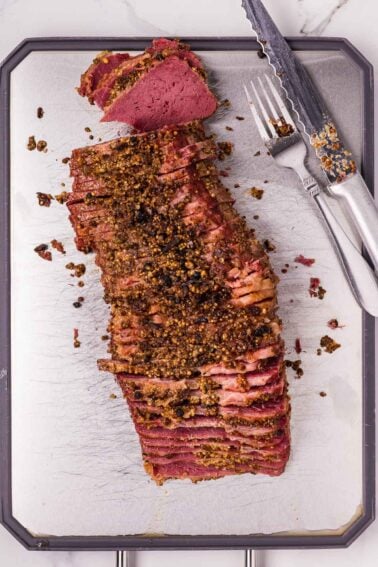
- Season with a simple rub of black pepper and spices.
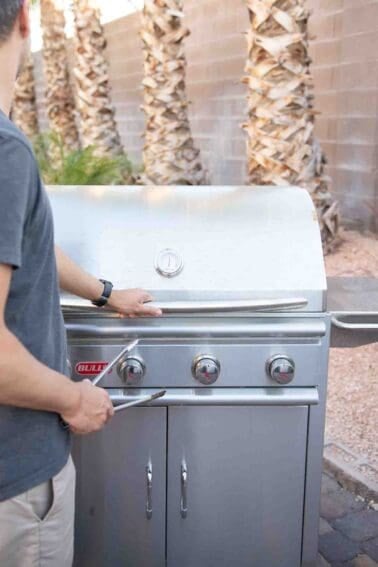
- Smoke at 250°F using hickory or oak wood chips or chunks
- Cook until internal temperature reaches 165°F (about 2 hours)
- Wrap tightly in foil after spritzing and continue cooking
- Remove when internal temperature reaches around 203°F (about 1-2 more hours)
- Rest wrapped for at least 30 minutes before slicing
- Pro tip: For the best of both worlds, smoke for 2-3 hours, then finish in the oven, wrapped in foil with liquid until fork tender
For the full step-by-step breakdown with photos, see our complete Smoked Corned Beef recipe.
The Slicing Secret
No matter how perfectly you cook your corned beef, improper slicing can ruin it. Always:
- Rest the meat for at least 15-20 minutes before slicing
- Identify the grain direction (the lines running through the meat)
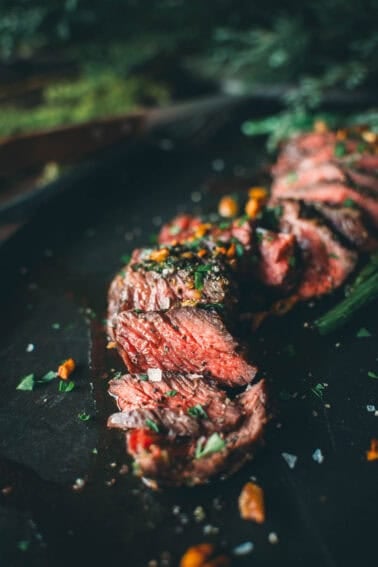
- Slice AGAINST the grain, cutting perpendicular to those lines
- Use a sharp knife and aim for thin, 1/8 to 1/4 inch slices
Not sure how to identify the grain on brisket? Our full slicing guide walks you through it.
Beyond the Traditional Dinner
Sure, corned beef and cabbage is classic, but don’t limit yourself:
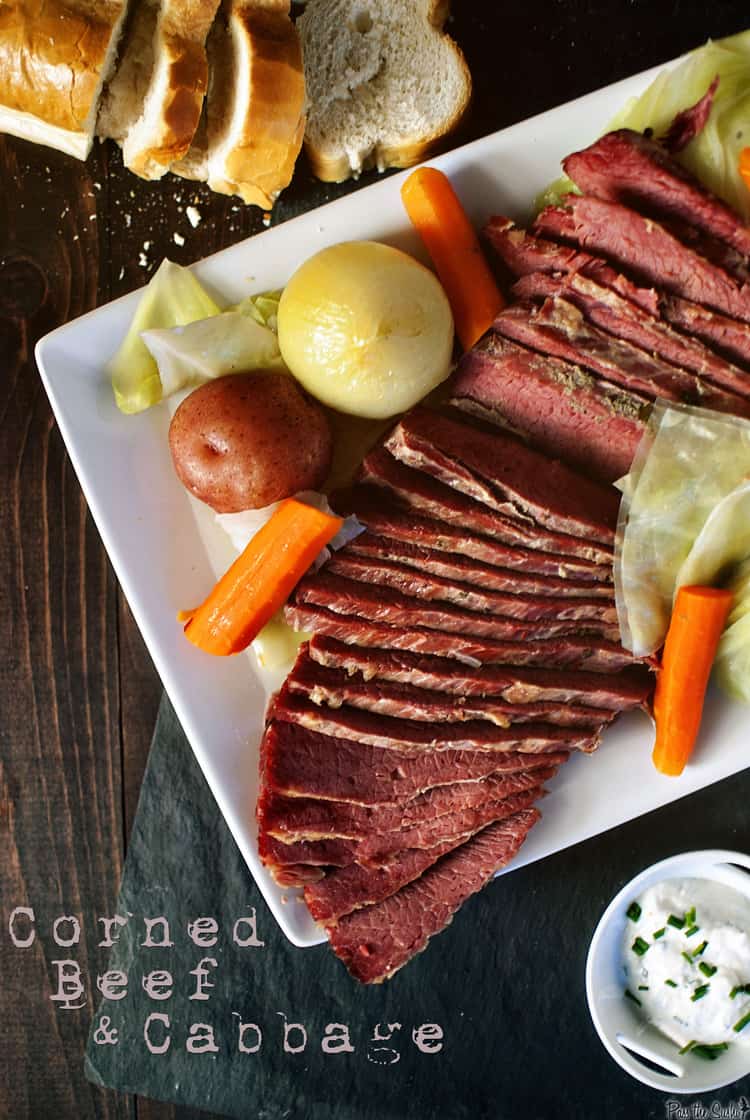
- Reuben Sandwiches: Layer thinly sliced corned beef with Swiss cheese, sauerkraut, and Russian dressing on rye bread, then grill until golden.
- Corned Beef Hash: Crisp up diced corned beef with potatoes, onions, and bell peppers, then top with a fried egg for the ultimate breakfast.
- Corned Beef Nachos: Turn your favorite pub food into an Irish-themed snack with waffle fries, leftover corned beef, and a whiskey cheese sauce.
Common Mistakes to Avoid
- Skipping the rinse: Results in over-salted meat
- Cooking too hot (or too fast): Causes tough, stringy texture
- Slicing with the grain: Creates chewy, rather than tender bites
- Not allowing enough time: Rushing this dish never works—plan ahead
More Irish-American-Inspired Recipe Ideas
Dinner Recipes
Bangers and Mash Recipe
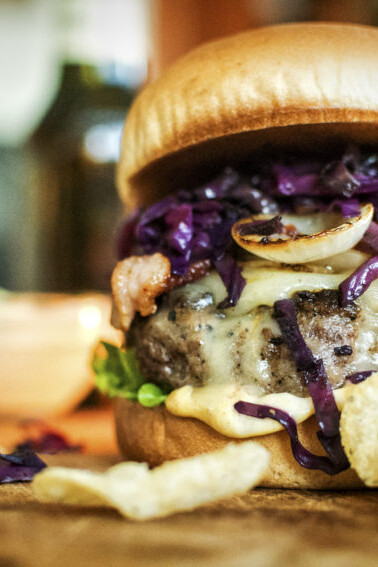
Epic Burger Recipes
Irish Brat Burger
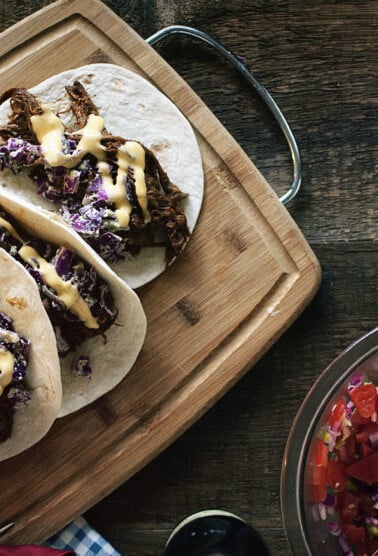
GC Original
BBQ Brisket Tacos with Dubliner Cheese Sauce
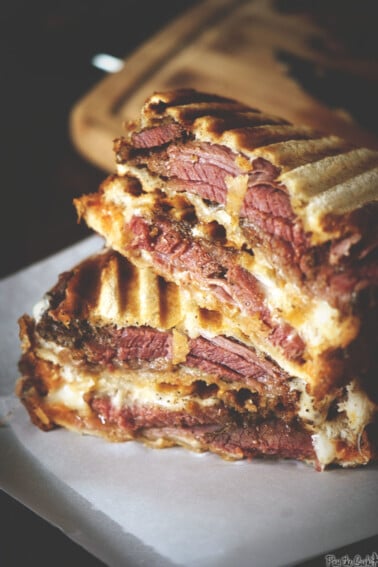
Beef Recipes
Easy Smoked Pastrami
Looking for more St. Patrick’s Day inspiration? Save this guide for your upcoming feast and share it with friends who appreciate a perfectly prepared corned beef. We’d love to see your results—share your pic in our Weekly Roll Call on Facebook, or drop a comment below.
FAQs
Brisket, usually flat cut for even cooking and slicing.
Sodium nitrite used during curing preserves color and prevents bacterial growth.
Yes. Rinse under cold water to remove excess surface salt and brine.
195–205°F for sliceable tenderness. Corned beef is technically safe at 145°F, but it won’t be tender. For classic sliceable results, cook until the internal temperature reaches 195–205°F and a knife slides in with little resistance.
It hasn’t cooked long enough. Corned beef becomes tender at higher finishing temperatures, not lower.
Corned beef is cured brisket. Pastrami is cured, seasoned heavily, then smoked.
Corned Beef Recipes & Guides
- Ultimate Corned Beef Guide – Everything you need to know about cuts, curing, and cooking methods.
- Classic Corned Beef and Cabbage – Traditional stovetop method with tender brisket and braised vegetables.
- Smoked Corned Beef – Bark, smoke, and deep flavor from the grill or smoker.
- Smoked and Braised Corned Beef – Smoke for flavor, braise for fork-tender texture.
- Homemade Pickling Spice – Control the flavor from the start.
- Corned Beef Stuffed Baked Potato – The best way to use leftovers.
- Fried Cabbage with Bacon – A richer, year-round cabbage side.
- Smoked Cabbage – Our favorite way to cook cabbage.
- Corned Beef Sandwich – Thin-sliced and piled high for deli-style results.