Most corned beef recipes peak at “boil it in a pot and hope for the best.” And look, that version has its place, but it’s also how you end up with gray, salty meat that everyone eats out of obligation on St. Patrick’s Day.
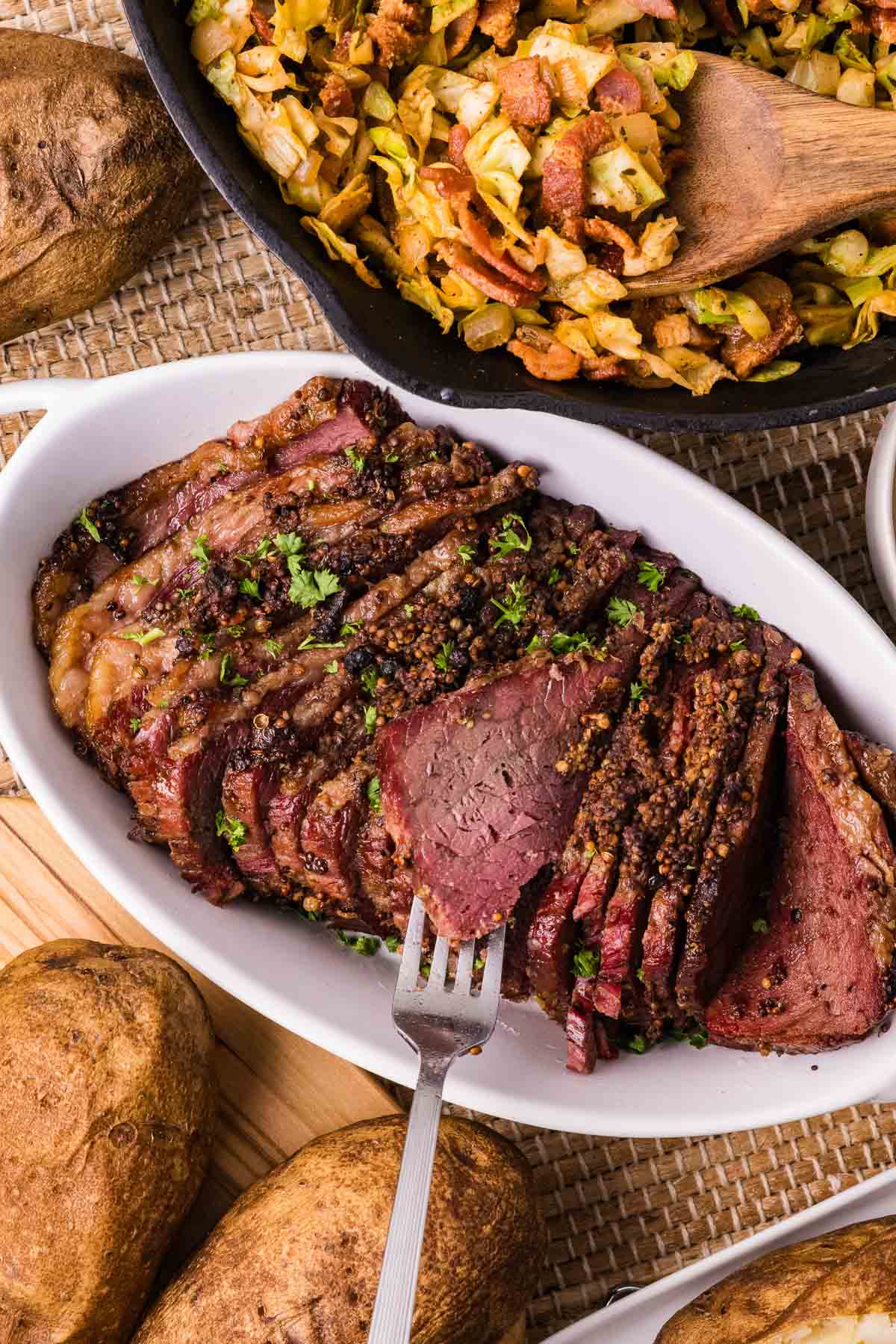
This is the version people actually get excited about. This recipe smokes for bark and braises for tenderness.
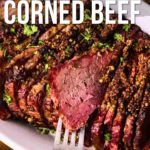
A stone-ground mustard and cracked pickling-spice crust goes on the brisket before it hits the smoker at 275°F, where it picks up real smoke flavor for 2 solid hours. Then it moves into a braise with beef broth, apple cider, garlic, bay leaves, and cooks low and slow until it’s fork-tender and slices with zero effort. The braise is the insurance policy: it keeps the meat impossibly juicy while the smoke does the flavor work.
Fun fact: smoke corned beef, and you’re basically in pastrami territory (same family, same idea, insanely good). You’re making pastrami at home, and it costs a fraction of what the deli charges per pound. Slice it thick for sandwiches, shred it into hash, or go all-in and pile it onto our smoked stuffed baked potatoes with bacon-fried cabbage, Swiss cheese, and Reuben dressing. That last one is the move.
If you want a fully smoked pellet-only version, see our Traeger smoked corned beef. This one is built for guaranteed tenderness.
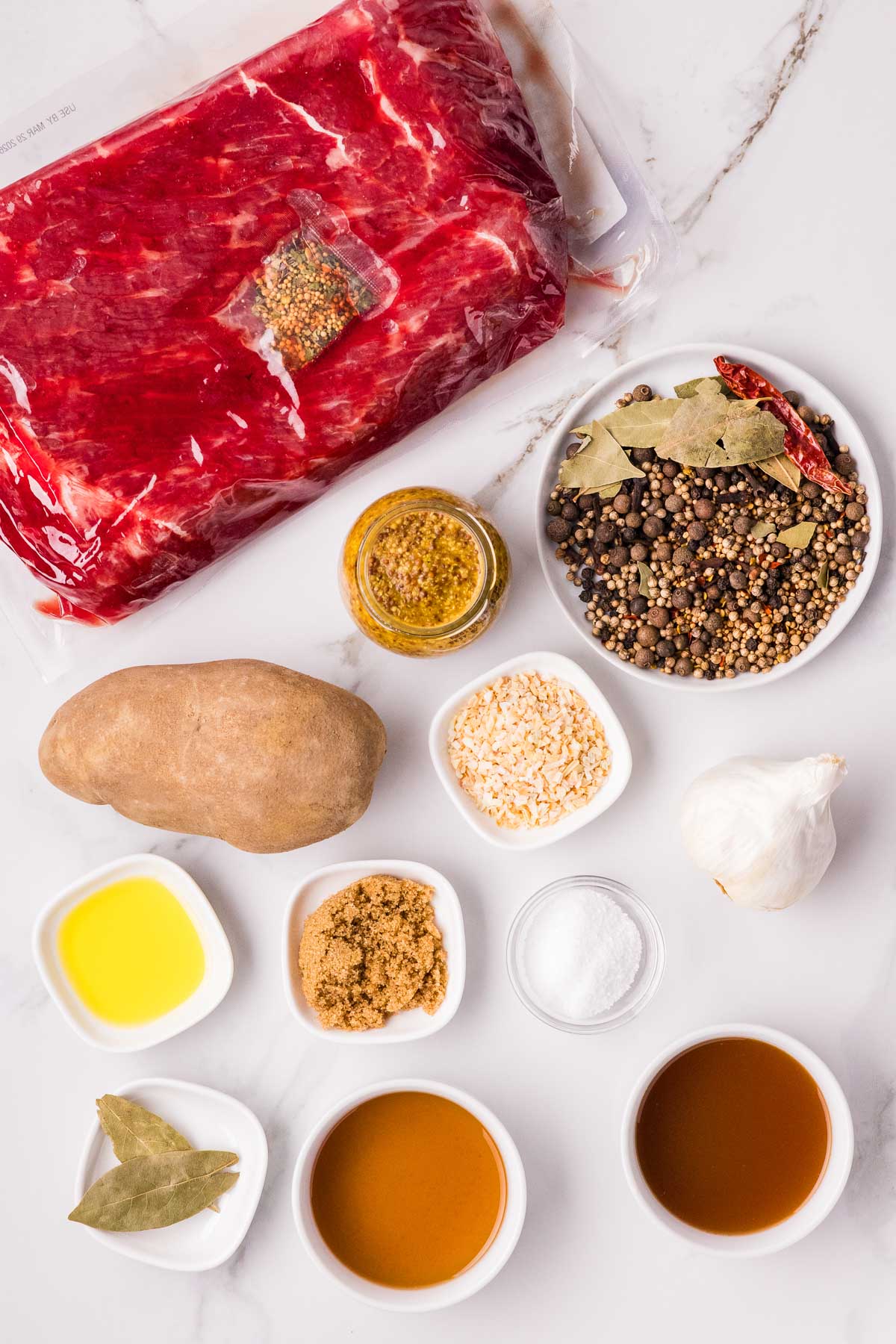
🔪 Ingredients for Smoked and Braised Corned Beef
- Corned beef brisket (flat or point): Look for one with even thickness and moderate fat. You don’t need a thick fat cap; braising provides moisture.
- Stone-ground mustard: Works as a binder and flavor layer. Texture helps the spice adhere.
- Pickling spice (lightly cracked): Crack it, don’t grind it. You want a toasted, spiced texture in the bark.
- Beef broth (low sodium): Corned beef is cured. Too much salt in the braise throws the balance.
- Garlic + dried onion: These deepen the braising liquid so it doesn’t taste one-dimensional.
- Brown sugar (small amount): Balances salt. This should not taste sweet.
- Bay leaves: Reinforces traditional corned beef flavor.
- Apple cider or apple juice: Adds subtle acidity and rounds the cure. Skip it, and the flavor can feel sharp.
Equipment
- Smoker set up for indirect heat
- Aluminum pan (half-size works well)
- Heavy-duty foil
- Instant-read thermometer
📝 Step-by-Step Instructions for Smoked and Braised Corned Beef
1. Soak to Balance the Cure
- Remove the corned beef from the packaging and discard the seasoning packet.
- Place it in cold water in the refrigerator for a few hours, changing the water at least two to three times.
- This step moderates the surface salt from the curing brine. It won’t strip flavor — it prevents the finished meat from tasting aggressively salty.
- After soaking, pat the brisket completely dry.
Moisture on the surface prevents the bark from forming properly.
2. Build the Bark First
- Preheat your smoker to 275°F for steady, even heat.
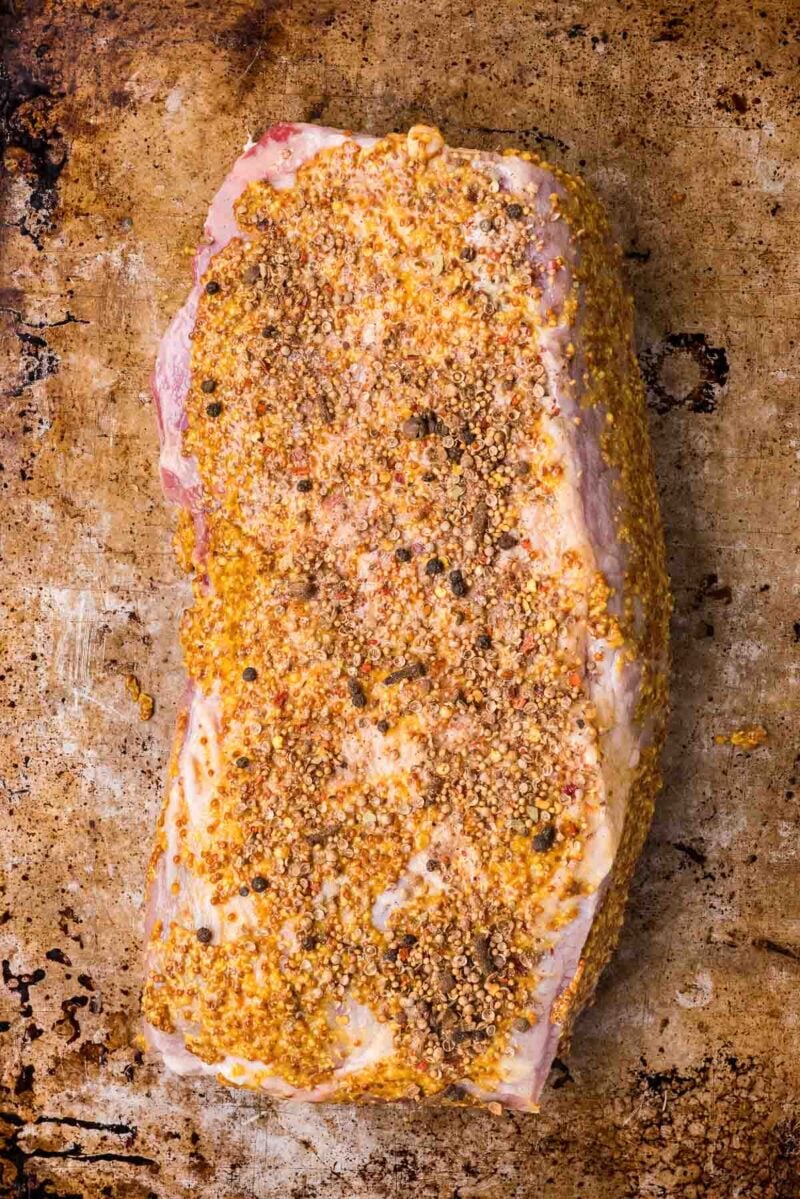
- Coat the brisket lightly but evenly with mustard. Press cracked pickling spice over all sides so it adheres firmly.
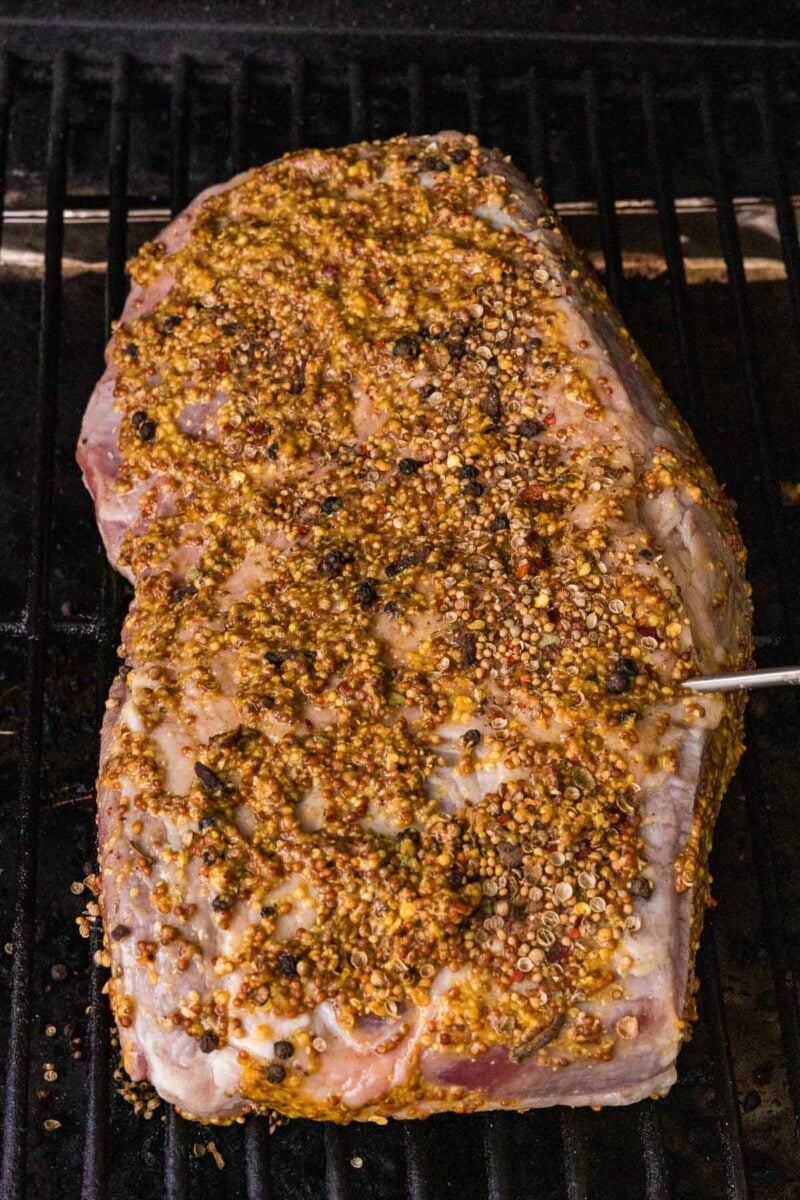
- Place the brisket fat side up on the grate.
- Smoke until the internal temperature reaches 150–160°F.
- You’re looking for:
- A deep red-brown exterior
- Spices that look toasted and set
- A surface that feels dry and firm, not tacky
- A probe that still meets resistance in the center
3. Braise to Tender; Built for Clean Slices
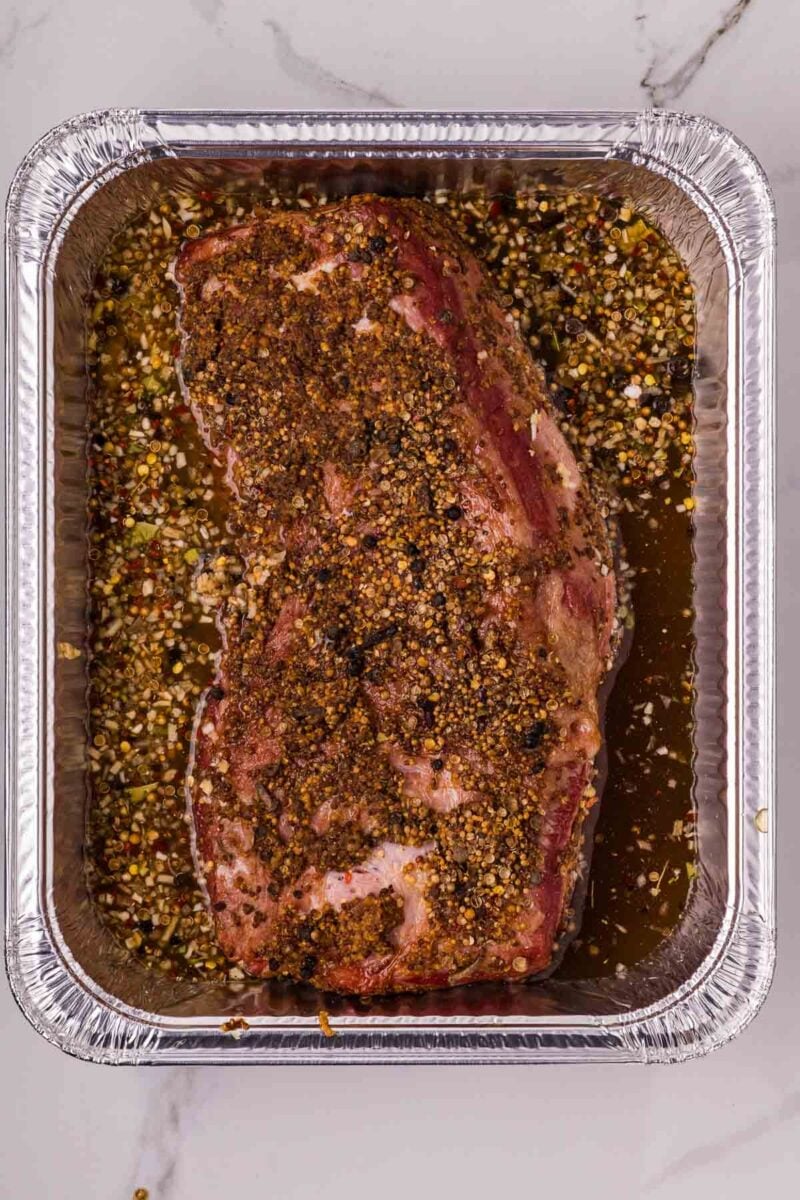
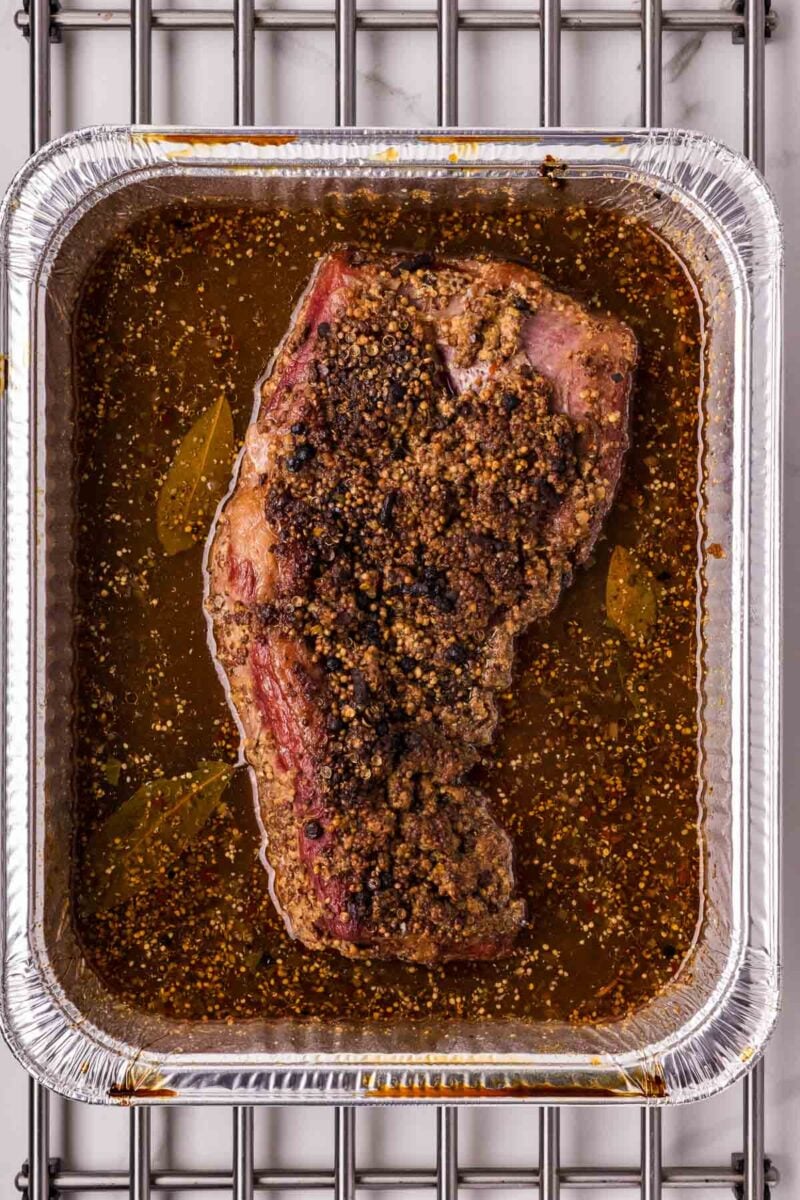
- Transfer the brisket to an aluminum pan.
- Pour the broth mixture around the meat, not over the crust. Add apple cider until the liquid rises roughly three-quarters up the side.
- Cover tightly with foil to trap steam.
- Return to the smoker at 275°F.
- Begin checking for doneness at around 195°F internal.
- For clean, structured slices, pull the brisket when:
- Internal temperature reaches about 198–205°F
- A probe slides in with gentle resistance — like warm butter, not air
- The flat bends slightly when lifted, but does not collapse
- A fork twists easily without tearing the meat apart
- If it still feels tight at 200°F, keep cooking.
- If the probe drops in with no resistance and the meat wants to split on its own, you’ve moved into shred territory.
- Cooking time will vary depending on the size; cook by feel and internal temp, not the clock.
4. Rest Before Slicing
- Rest the brisket, still covered, for at least 30 minutes.
- This allows juices to redistribute and the muscle fibers to relax, so slices stay clean.
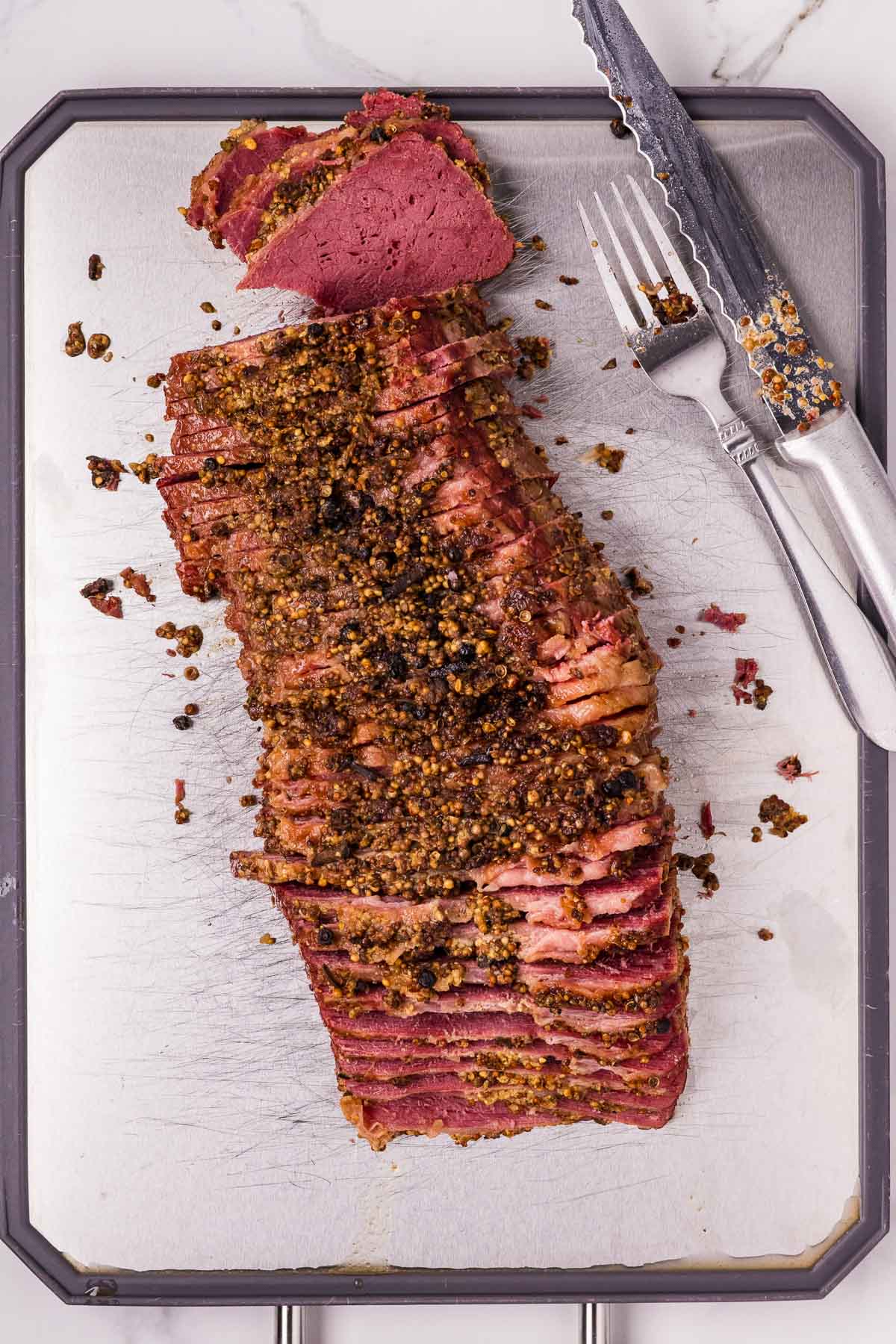
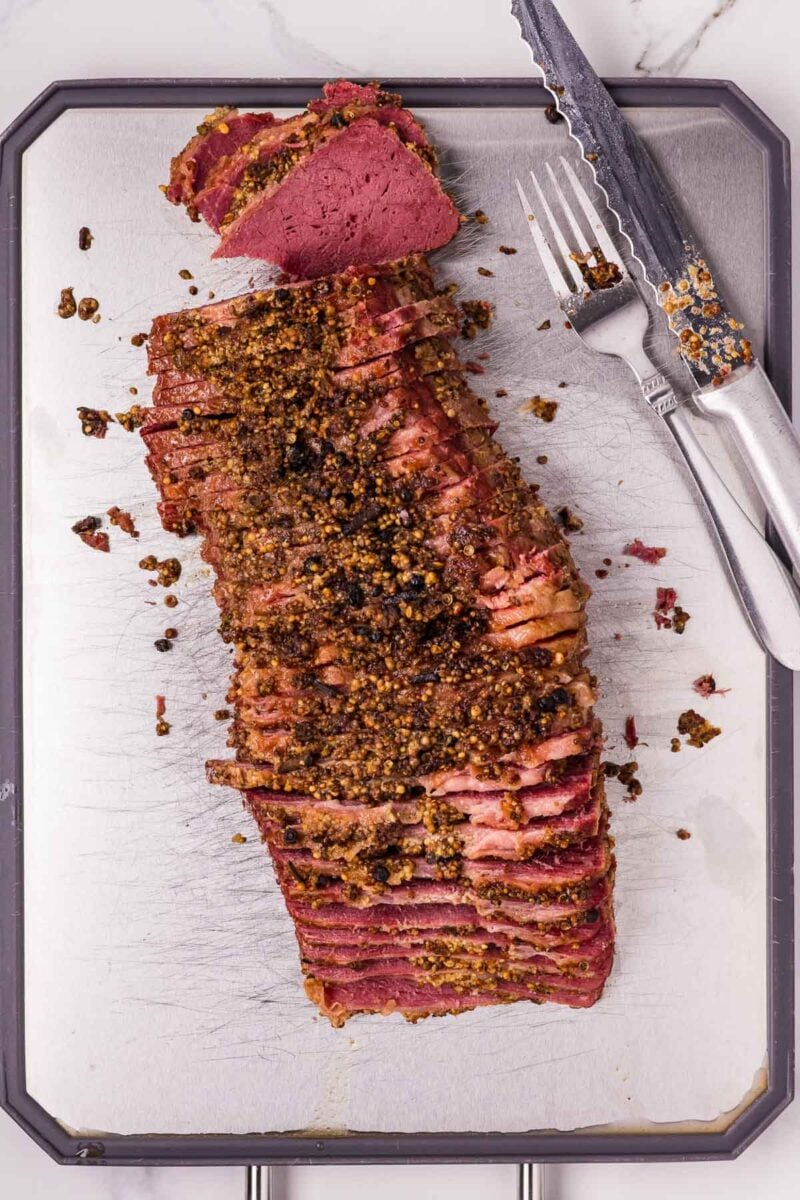
- Slice against the grain into quarter-inch slices.
- If the slices crumble, it is likely cooked a bit past the sweet spot for slicing. Or, if they feel tight or resistant, it needed more time in the braise.
Why This Method Works
Corned beef is brisket that’s been salt-cured. Curing tightens the muscle structure, so tenderness depends entirely on proper collagen breakdown during cooking.
Smoking alone can bring it to temperature, but tenderness depends on collagen conversion. The covered braise pushes it through that final stage without sacrificing the flavor.
🔄 Substitutions & Variations
- Mustard: Dijon or yellow both work fine. Stone-ground adds texture but won’t change the cook.
- Pickling spice: Store-bought is reliable. Once live, link to your homemade pickling spice for fresher flavor. Crack the spices; never powder them.
- Braising liquid: Dark beer can replace some broth for a deeper flavor. Keep liquids low-sodium.
- Flat vs point: Flat slices cleaner. Point runs fattier and can lean softer.
- Skip the sugar? You can… but taste the braising liquid first. It should feel balanced, not sharp.
- Prefer the classic simmered method? Here’s how to make traditional Corned Beef and Cabbage.
💡 Meat Nerd Tips
- Don’t grind pickling spice to powder. It can burn and turn bitter.
- Use low-sodium broth. Taste your braising liquid before sealing.
- Keep the foil tight. Steam inside the pan is part of the tenderness.
- If slicing feels resistant, you likely cut with the grain.
🍽️ How to Serve Smoked and Braised Corned Beef
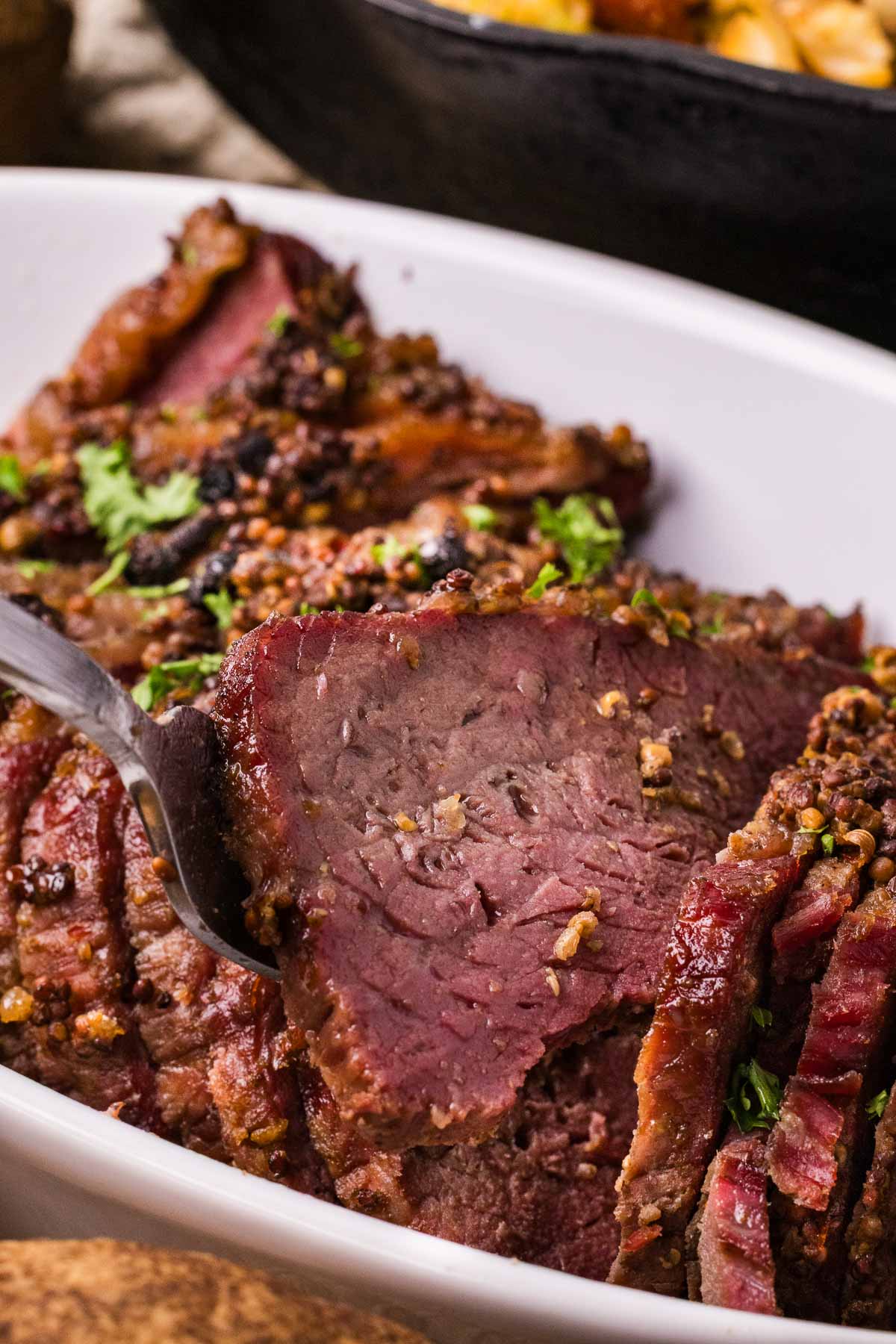
- Classic plate: Sliced with fried cabbage and potatoes for a traditional dinner with real smoke depth.
- Reuben sandwiches: This sliceable texture holds up better than fall-apart versions.
- Stuffed baked potatoes: Layer with Swiss, cabbage, and dressing.
- Corned beef hash: Dice chilled slices for crispy edges.
- Board-style: Serve warm or room temp with mustard and pickles.
🧊 Leftovers & Reheating
- Store in the refrigerator up to 3 days.
- Always reheat in some reserved braising liquid at 325–350°F until warmed through. Dry reheating ruins texture and results in shoe leather.
- Freeze sliced meat with a splash of the braising liquid for up to 3 months.
Have you tried this recipe? Do us a favor and rate the recipe card with the ⭐ ⭐ ⭐ ⭐ ⭐ and drop a comment to help out the next reader.
Smoked and Braised Corned Beef Recipe
Recommended Equipment
- Smoker set up for indirect heat
- Aluminum pan half-size works well
- Heavy-duty foil
Ingredients
For the Corned Beef
- 3-6 lb corned beef brisket flat or point
- 6-8 tbsp stone-ground mustard
- 4 tbsp pickling spice cracked (for bark)
For the Braise
- 2 cups low-sodium beef broth
- 4 tsp minced garlic
- 4 tbsp dried onion flakes
- 2 tbsp pickling spice
- 1 tbsp brown sugar
- 3 bay leaves
- 1-2 cups apple cider or apple juice enough to reach ¾ up the brisket
Instructions
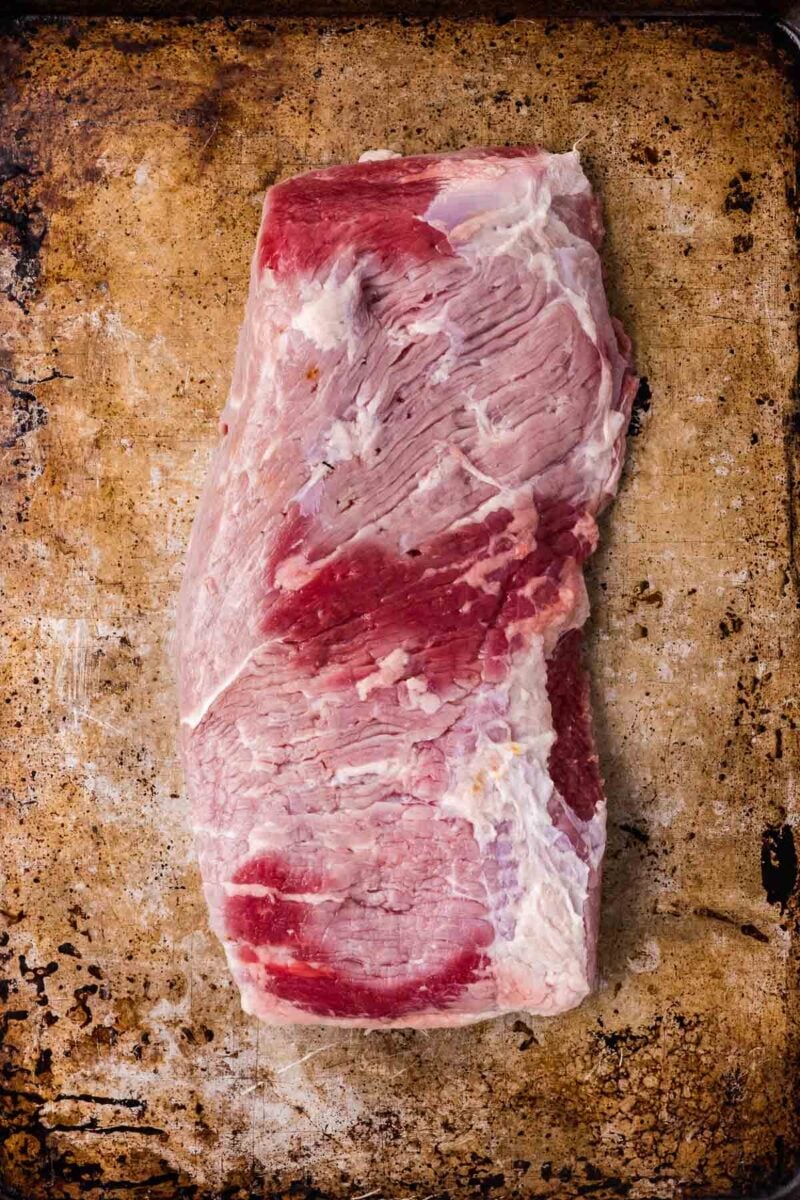
Soak the Brisket
- Remove from packaging and discard seasoning packet.
- Soak in cold water in the refrigerator 2–3 hours, changing the water at least three times.
- Pat completely dry.

Preheat the Smoker
- Preheat to 275°F for indirect cooking.
Season
- Coat the brisket evenly with mustard.
- Press cracked pickling spice over all sides.

Smoke for Bark
- Place fat side up on the grate.
- Smoke at 275°F until internal temperature reaches 150–160°F (about 2 hours).
Prepare Braising Liquid & Braise
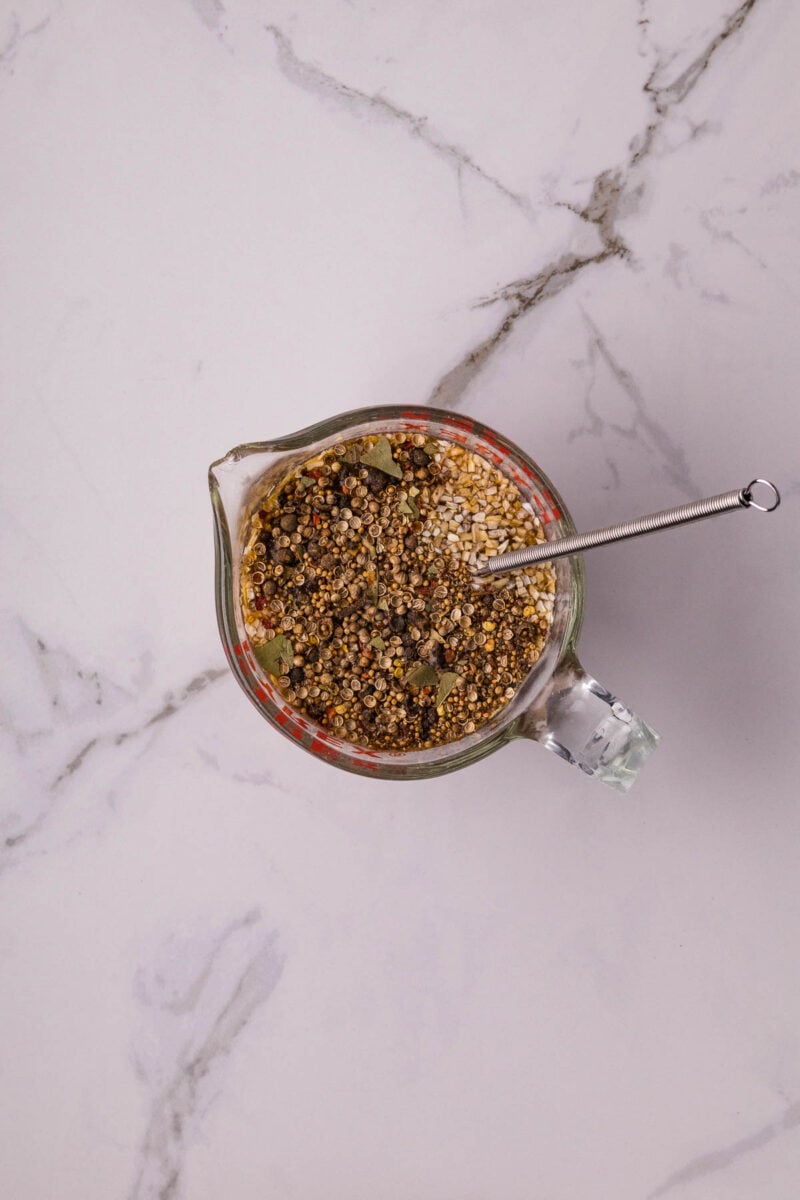
- Combine broth, garlic, dried onion, pickling spice, brown sugar, and bay leaves.
- Transfer brisket to a half-size aluminum pan.
- Pour braising liquid around the meat (not over the crust).
- Add apple cider until liquid reaches about ¾ up the sides.
- Cover tightly with foil.
- Return to smoker at 275°F.
Cook to Tender
- Begin checking at 195°F internal.
- For clean slices, remove at 198–205°F when:
- A probe slides in with gentle resistance
- The flat bends slightly but doesn’t collapse
- A fork twists easily without shredding
Rest & Slice
- Rest covered for at least 30 minutes.
- Slice against the grain into ¼-inch slices and serve.
Notes
- If the meat feels tight at 200°F, continue cooking.
- If it begins falling apart on its own, it has moved into shred territory.
- Use low-sodium broth to prevent oversalting.
- Do not grind pickling spice to powder.
Nutrition
Bookmark this recipe now!
❓ FAQs
For clean slices, pull around 198–205°F internal and confirm with probe tenderness.
It likely hasn’t cooked long enough for collagen to fully break down. Keep cooking until probe-tender.
Yes. Soaking reduces excess salt from the curing brine.
Yes — and it’s one of the most reliable ways to guarantee tenderness.
They start similarly. Pastrami is smoked corned beef that’s heavily seasoned and typically steamed before serving.
Corned Beef Recipes & Guides
- Ultimate Corned Beef Guide – Everything you need to know about cuts, curing, and cooking methods.
- Classic Corned Beef and Cabbage – Traditional stovetop method with tender brisket and braised vegetables.
- Smoked Corned Beef – Bark, smoke, and deep flavor from the grill or smoker.
- Smoked and Braised Corned Beef – Smoke for flavor, braise for fork-tender texture.
- Homemade Pickling Spice – Control the flavor from the start.
- Corned Beef Stuffed Baked Potato – The best way to use leftovers.
- Fried Cabbage with Bacon – A richer, year-round cabbage side.
- Smoked Cabbage – Our favorite way to cook cabbage.
- Corned Beef Sandwich – Thin-sliced and piled high for deli-style results.