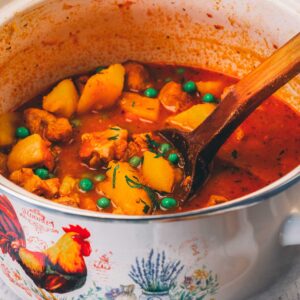
Nobody makes stew out of pork, which is a mistake, because it’s just as deep and savory as beef. And this year, it’s a lot cheaper too. This is the sort of old-world comfort stew Grandma made in a dented enamel pot. And we’re not changing a thing about it.
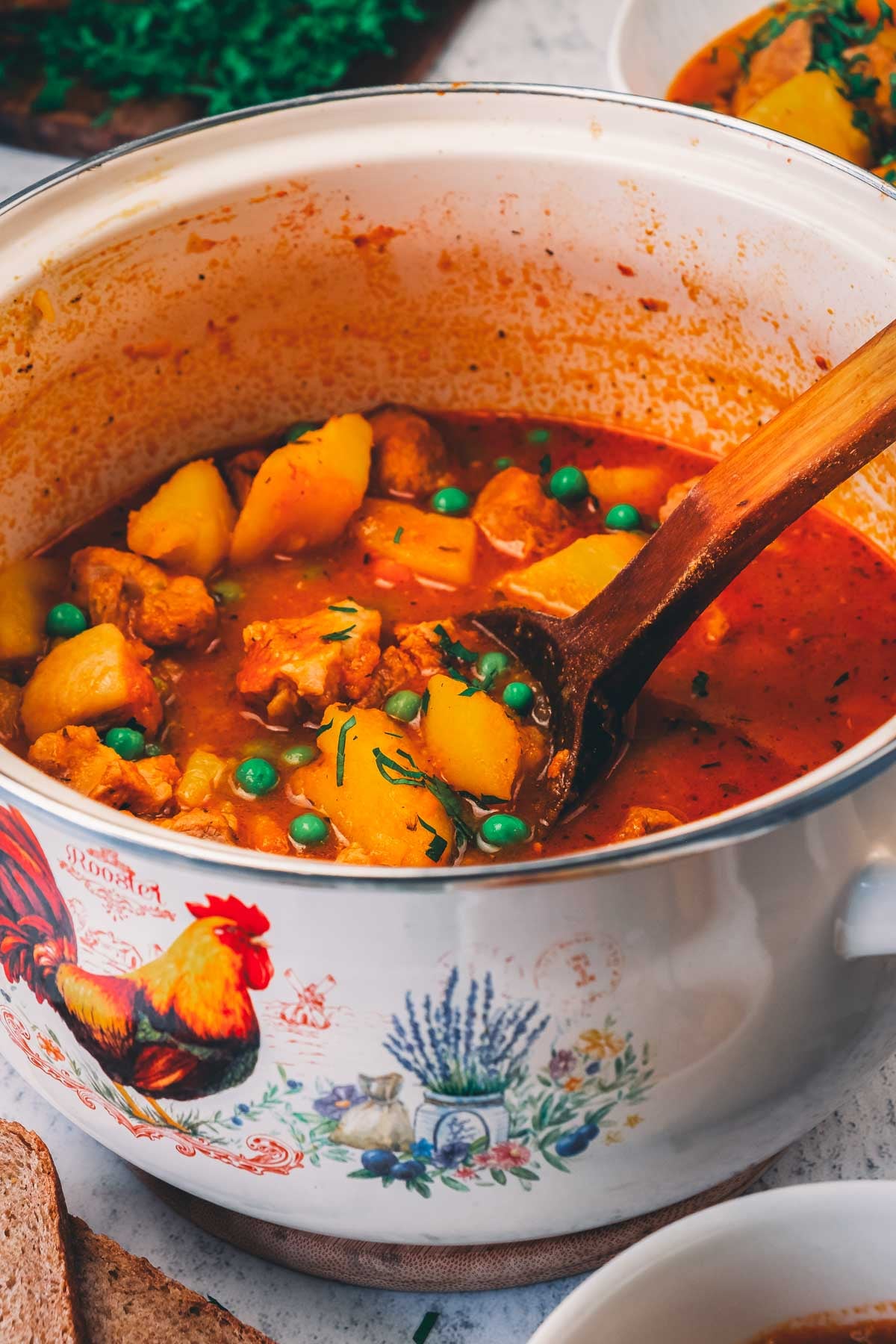
This one proves you don’t need to overthink it or spend all day or a bottle of good wine to make a stew that is absolutely loaded with flavor. It’s pure simplicity, executed perfectly. Bread is not optional for this one. You’ll need a good crusty loaf to sop up that soup at the bottom of the bowl.
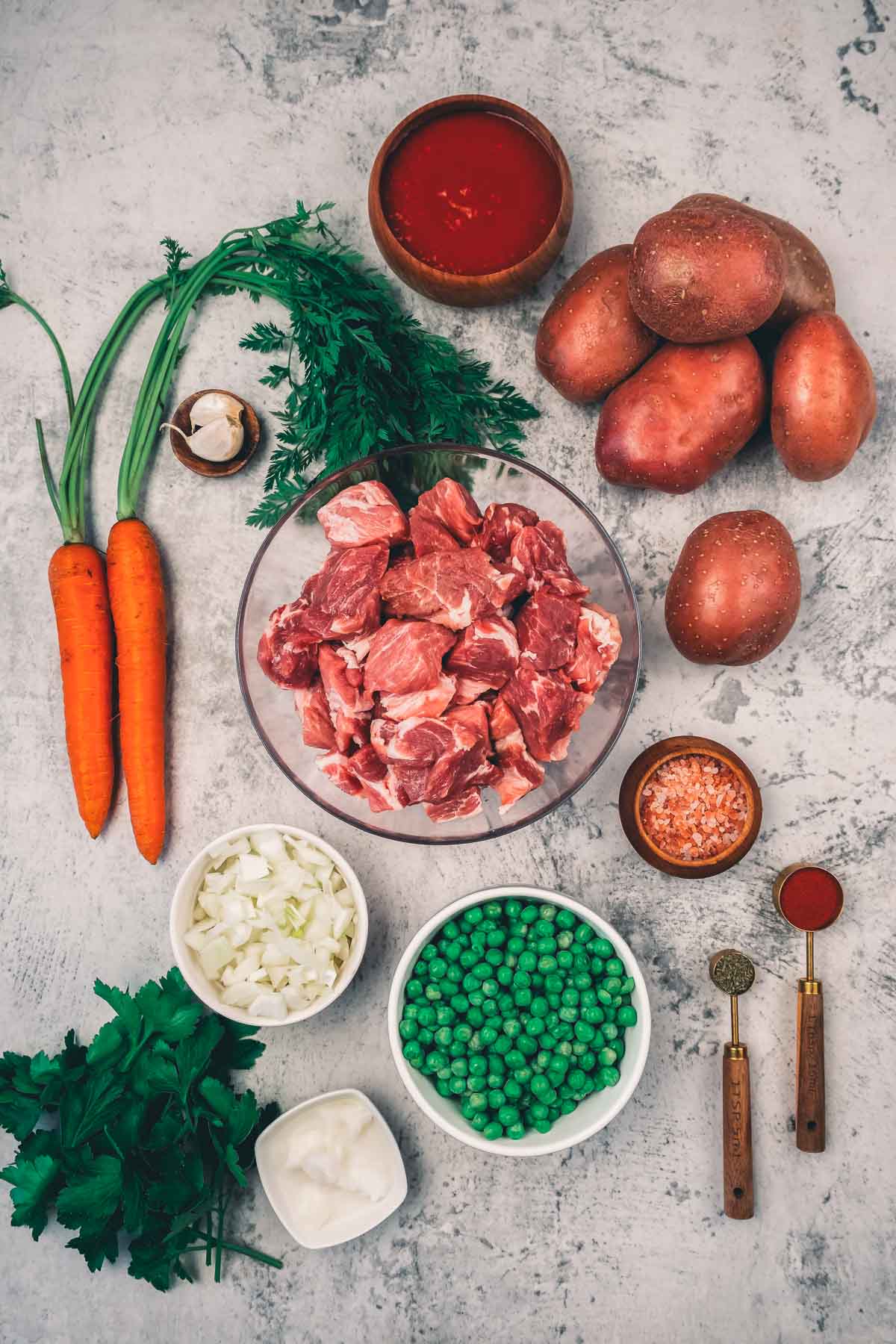
🔪 Ingredients for Pork Stew
Quantities live in the recipe card below 👇 . This is what to look for at the grocery store.
- Pork shoulder: sold as Boston butt or picnic shoulder. Cut it into 1 inch cubes yourself so they are even. The fat and collagen are what turn silky over a long simmer, which is why this is the cut for every stew in the pork shoulder recipes file.
- Lard: holds high heat without smoking and browns pork better than butter.
- Sweet paprika: Hungarian sweet, not smoked and not hot. Paprika older than a year tastes like red dust. Buy a fresh tin for this one.
- Red potatoes: waxy, so they hold their shape through a long simmer while still leaking enough starch to thicken the broth. Cut into 2 inch chunks.
- Tomato sauce: plain canned tomato sauce, not marinara. You want the acid and body, not garlic and basil.
- Beef broth
- Carrots, onion, garlic
- Frozen peas: no need to thaw.
- Dried thyme and flat leaf parsley
Equipment
A 6 quart Dutch oven or any heavy lidded pot. Thin stockpots scorch the fat and the paprika at the bottom before the pork is anywhere near tender. A Thermapen is the fastest way to confirm you are holding a bare simmer and not a boil.
📝 How to Make Pork Stew
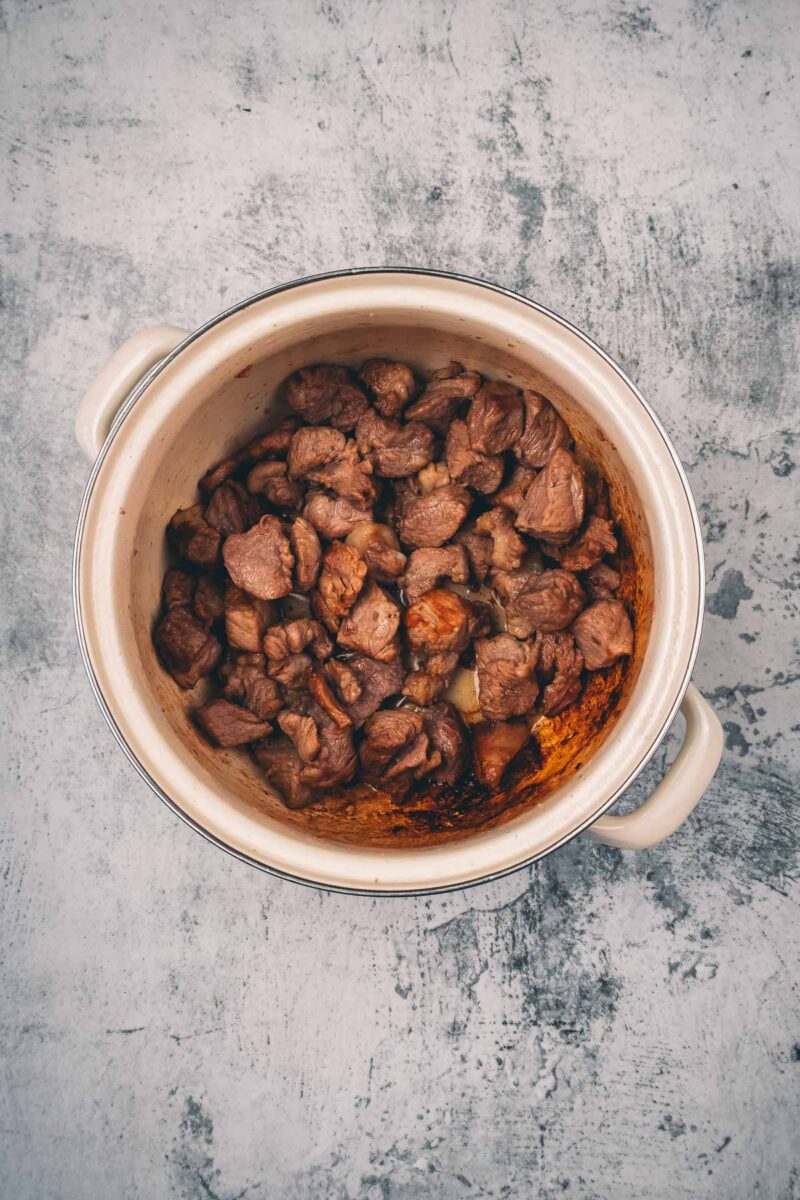
- Brown the pork. Pat the pork cubes dry and salt them right before they go in the pot. Melt the lard over medium-high heat in your favorite stew pot, add the pork in a single layer, and cook 7 to 8 minutes, stirring occasionally, until at least two sides of each cube are deep brown and release from the pot without sticking. Move the pork to a plate.
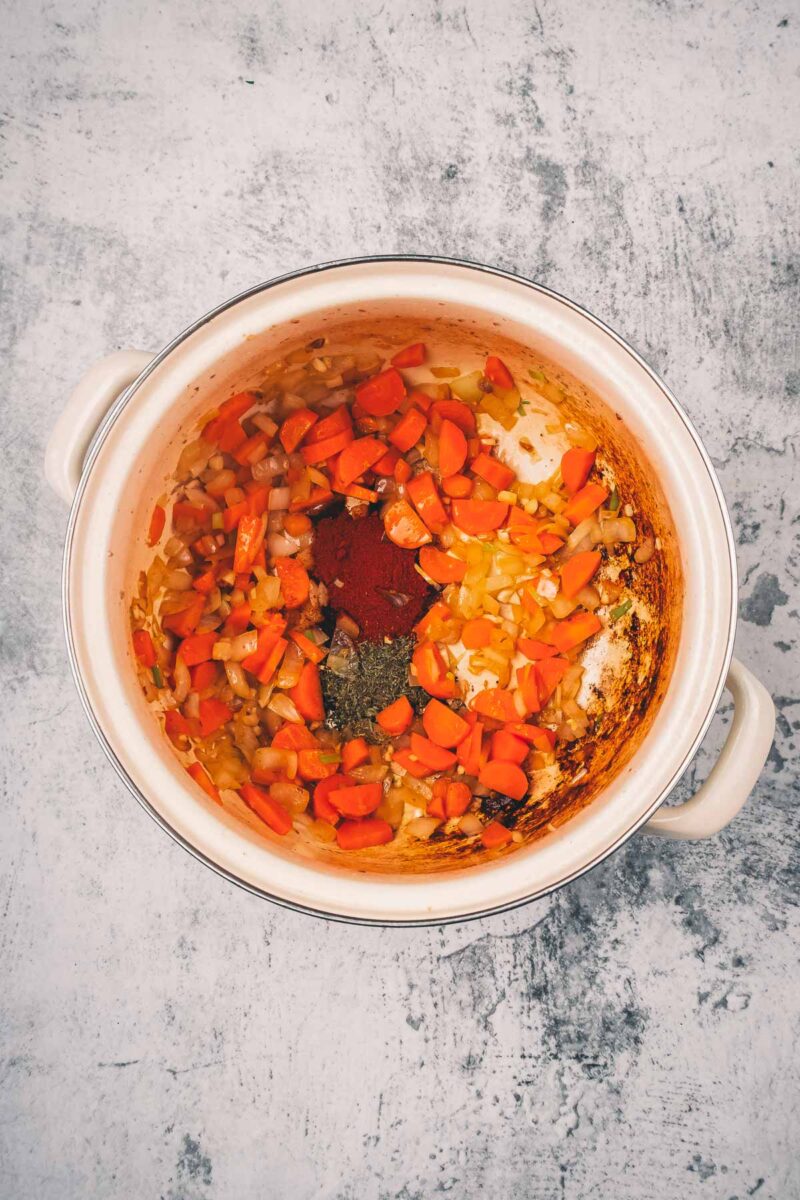
- Cook the onion and carrots. Drop the heat to medium. Add the chopped onion and carrots to the fat and cook about 3 minutes, until the onion turns translucent and the browned bits on the bottom start to loosen. Add the garlic and cook 30 seconds more, until it smells sharp.
- Bloom the paprika off the heat. Pull the pot off the burner. Stir in the paprika and thyme and keep stirring 20 to 30 seconds, until the fat turns brick red and smells sweet. This is the step that decides the batch. Paprika scorches over direct heat and turns bitter, and you can’t fix that without starting over.
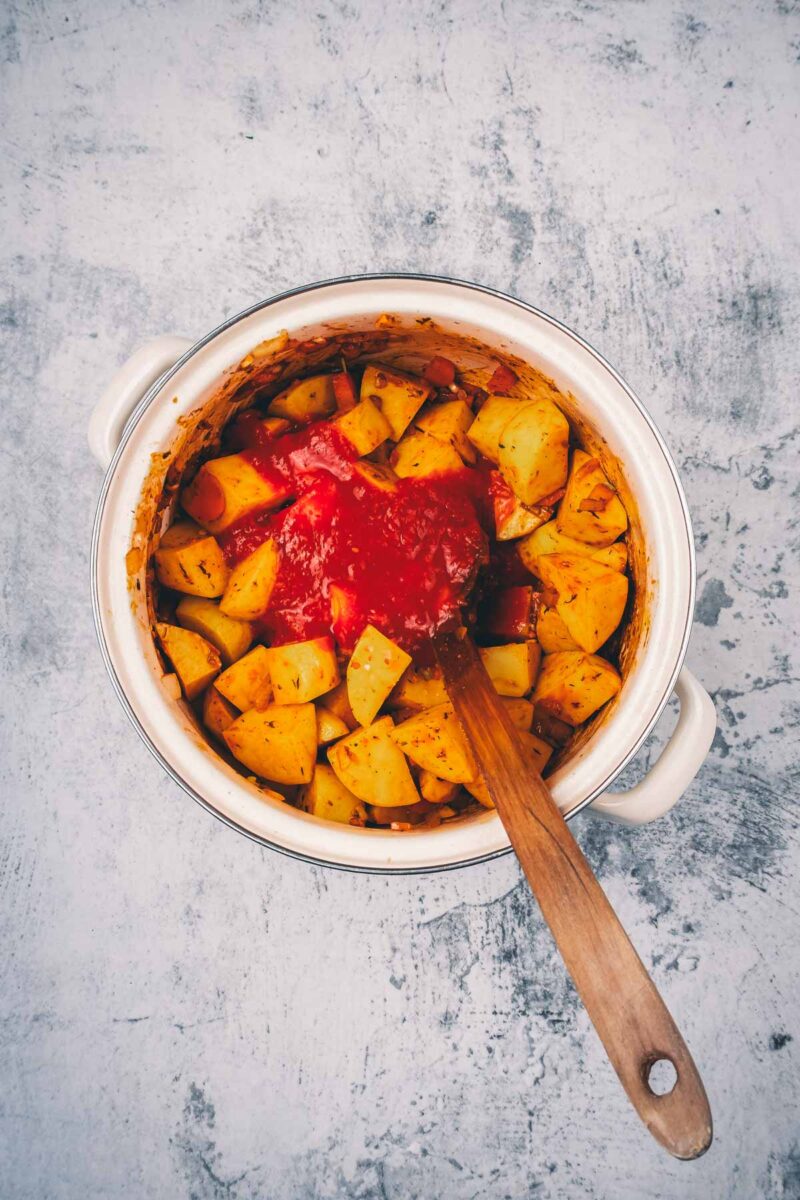
- Add the liquid. Return the pot to medium heat. Pour in the tomato sauce and broth and scrape the bottom of the pot until nothing is stuck. Return the pork and any juices on the plate, then season with salt and black pepper.
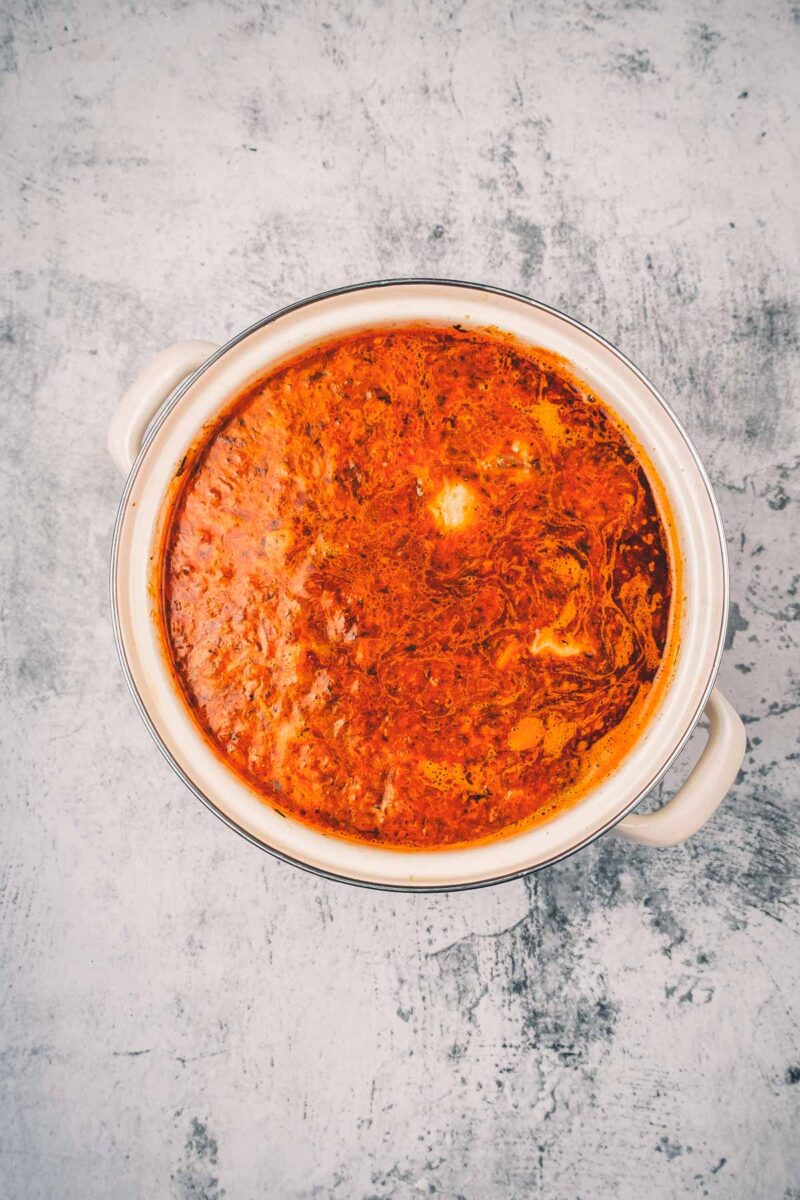
- Simmer the pork. Bring it up until small bubbles break one at a time, about 185°F, then cover and cook 30 minutes. Never let it roll. A boil tightens the collagen instead of melting it.
- Add the potatoes. Stir in the potato chunks, cover, and simmer 25 to 30 minutes more, until a knife slides into a potato with no resistance and a cube of pork gives when you press it against the side of the pot.
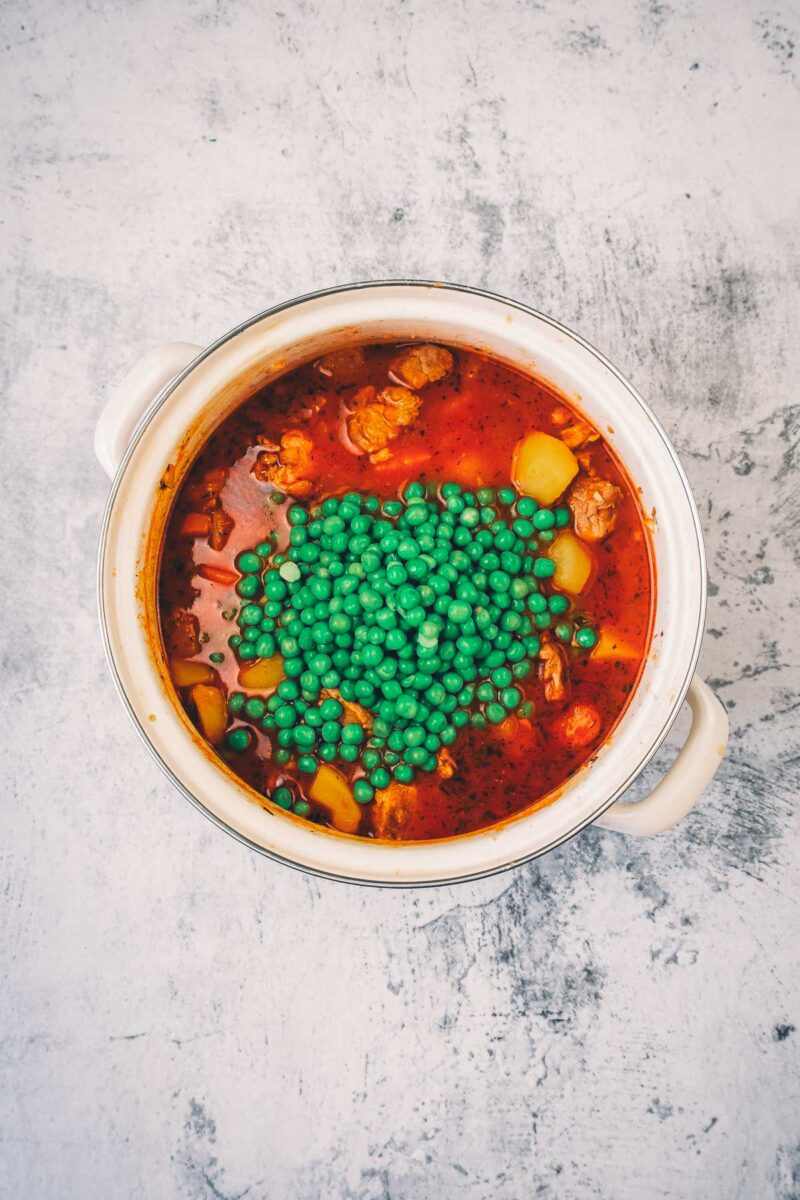
- Finish with the peas. Stir in the frozen peas and simmer uncovered 8 to 10 minutes, until they are bright green and hot through and the broth has tightened slightly.
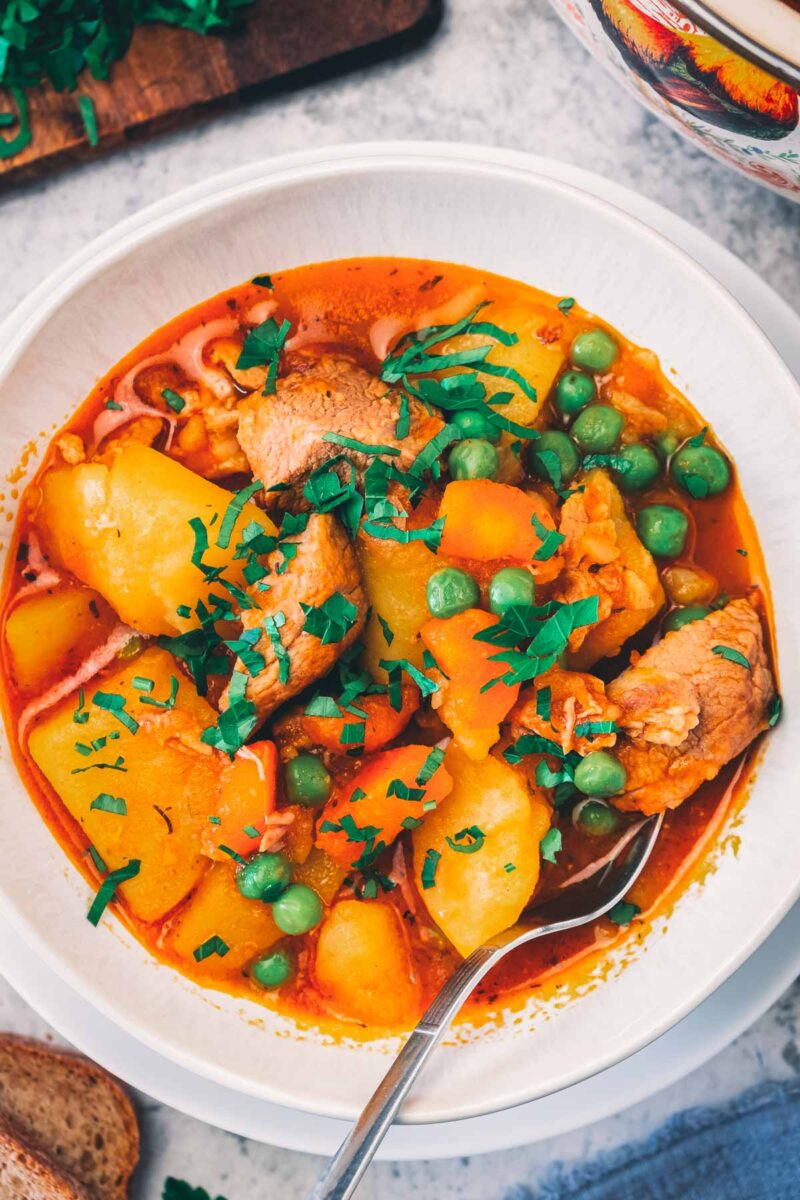
- Serve. Taste and correct the salt, which will need more than you think after the potatoes. Shower with chopped parsley and serve hot.
If your broth comes out thinner than you want, that is a fixable problem and not a failed stew. We broke down what separates a good stew from a watery one in its own post.
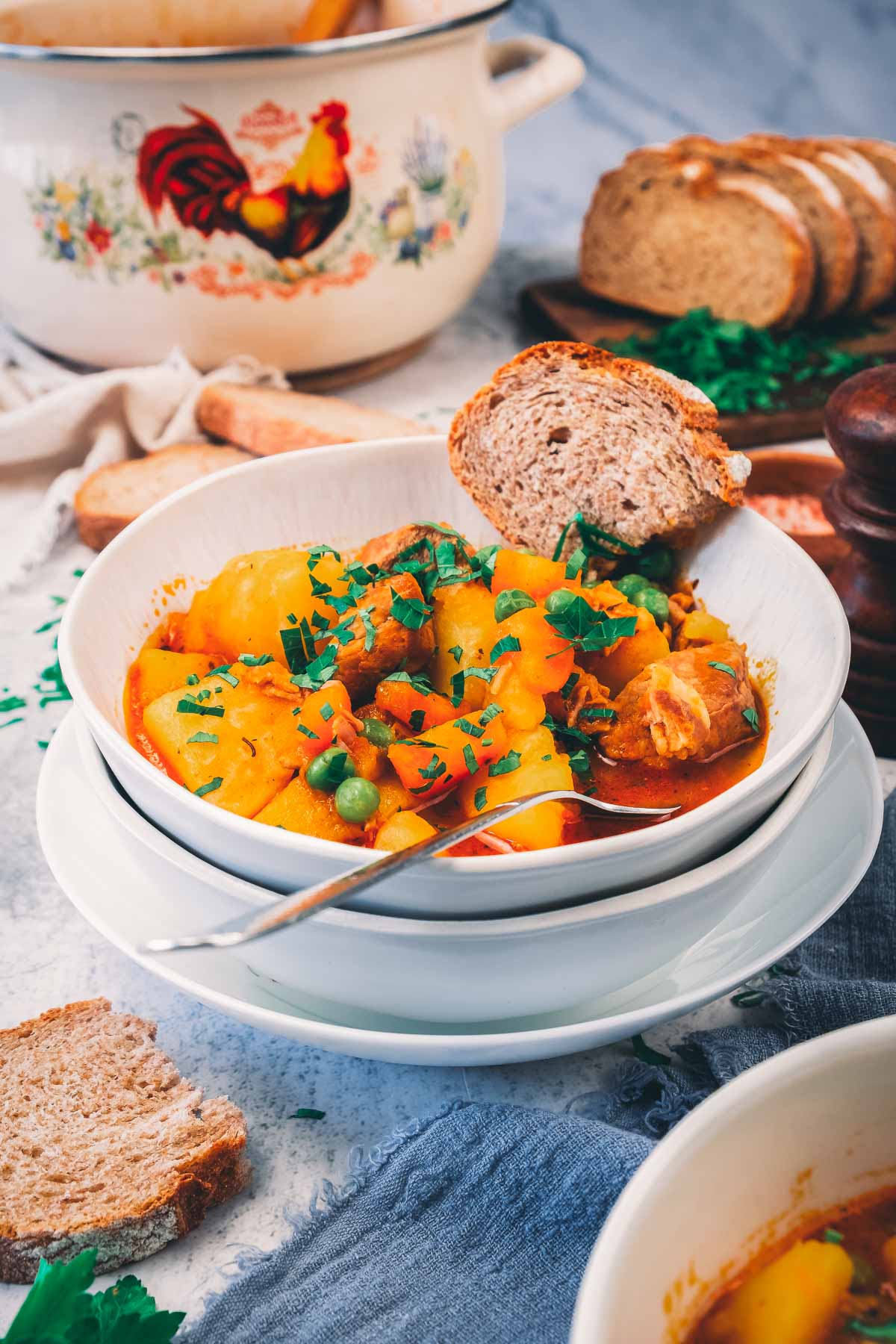
🔄 Substitutions
- Boneless country style ribs for the shoulder: same muscle, already cut into strips, so you save knife work. Timing holds.
- Smoked paprika for sweet: swap half, never all of it. A full tablespoon of smoked reads like barbecue sauce and buries the tomato.
- Bacon fat or a neutral oil for lard: browns the same. You lose a little of the round pork flavor in the base.
- Yukon Golds for red potatoes: hold nearly as well and break down slightly more, which thickens the broth faster.
- Water for beef broth: works, and it is how this stew has been made in home kitchens forever. Salt harder at the end.
- Frozen green beans or corn for peas: same late addition, same 8 to 10 minutes.
💡 Meat Nerd Tips
- Dry pork browns, wet pork steams. Pat the cubes with paper towels and salt them right before they hit the fat. Salting 20 minutes ahead pulls moisture to the surface and hands you a gray, wet cube that will not crust.
- Bare simmer, never a boil. Hold it around 185°F with small bubbles breaking one at a time. A rolling boil squeezes the collagen tight and leaves you with tough pork floating in thin broth.
- The potatoes are the thickener. Red potatoes leak enough starch in the last half hour to give the broth real body. If it still looks loose, mash three or four potato chunks against the side of the pot and stir them back in.
- Make it a day early. Paprika and pork both taste better on day two. Cool it fast, refrigerate overnight, and reheat gently. Hold the peas until the reheat if you want them bright green on the table.
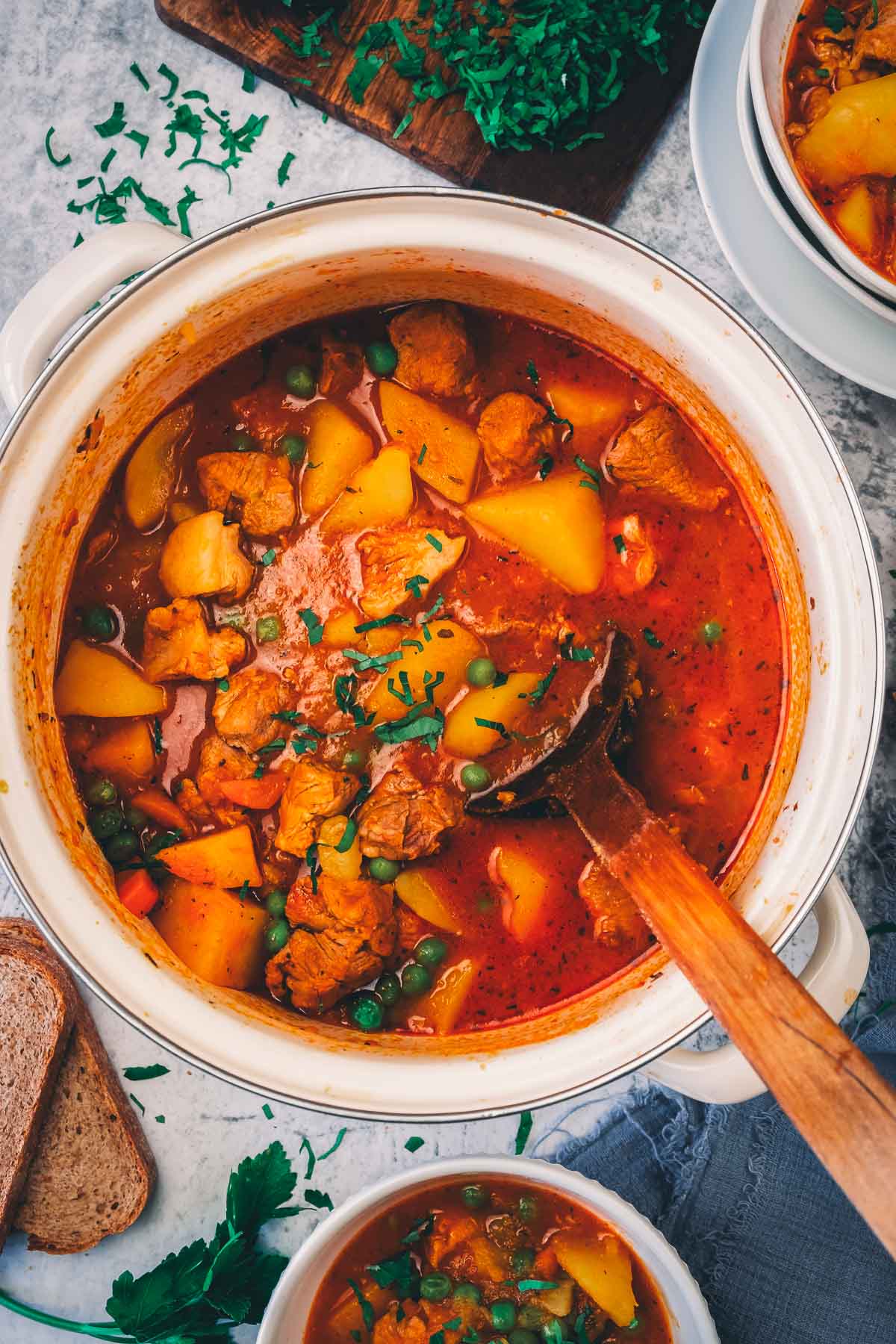
🍽️ What to Serve with Pork Stew
- Crusty bread or a split dinner roll. There is a lot of paprika broth in the bottom of that bowl and a spoon is not going to get all of it.
- A sharp vinegary cabbage slaw. Cuts straight through the lard and the tomato.
- A spoonful of sour cream stirred in at the table. Turns the broth rosy and rounds off the acid.
- Quick pickled red onion. Two minutes of work, and the bite lands exactly where the stew is richest.
- More one pot dinners: Guinness beef stew when you want beer in the pot, Dutch oven lamb stew for something a little more elegant, or steak and potato soup on a night you have steak to use up.
🧊 Leftovers and Storage
- Fridge: airtight container, up to 4 days. It genuinely peaks on day two.
- Freezer: up to 3 months. Potatoes go slightly grainy after thawing, so if you are cooking for the freezer on purpose, stop before the potatoes go in and add them fresh on reheat.
- Reheat: covered, low burner, with a splash of broth to loosen it. The microwave works if you stir every 90 seconds so the pork edges do not seize up.
- Stretch it: a cup of leftover stew over rice or under a fried egg is a better lunch than most lunches. More of that thinking in our budget pork recipes.
Pork Stew with Potatoes and Peas
Recommended Equipment
- 6-Quart Dutch Oven
- Wooden spoon
- Ladle
Ingredients
- 2 tablespoons lard or bacon fat
- 1.5 lbs pork shoulder cut into 1 inch cubes
- 1 large yellow onion chopped
- 2 medium carrots sliced into 1/2 inch coins
- 2 cloves garlic minced
- 1 tablespoon sweet Hungarian paprika
- 1 teaspoon dried thyme
- 1 cup canned tomato sauce
- 3 cups beef broth or water
- 1.5 lbs red potatoes cut into 2 inch chunks (about 4 to 5 potatoes)
- 1 cup frozen peas
- Kosher salt and black pepper to taste
- 2 tablespoons chopped flat leaf parsley for serving
Instructions
Brown the Pork
- Pat the pork cubes dry and salt them. Melt the lard in a 6 quart Dutch oven over medium high heat. Add the pork in a single layer and cook 7 to 8 minutes, stirring occasionally, until at least two sides are deep brown and release cleanly. Move to a plate.

Cook the Aromatics
- Lower the heat to medium. Add the onion and carrots and cook about 3 minutes until the onion is translucent and the browned bits start to loosen. Add the garlic and cook 30 seconds more.
Bloom the Paprika Off the Heat
- Pull the pot off the burner. Stir in the paprika and thyme for 20 to 30 seconds, until the fat turns brick red and smells sweet. Do not do this over a live flame. Scorched paprika turns the batch bitter.
Step 4: Add the Liquid
- Return to medium heat. Pour in the tomato sauce and broth, scraping the bottom until nothing is stuck. Return the pork and its juices. Season with salt and black pepper.
Step 5: Simmer the Pork
- Bring to a bare simmer, about 185F, with small bubbles breaking one at a time. Cover and cook 30 minutes. Do not let it boil.
Step 6: Add the Potatoes
- Stir in the potatoes, cover, and simmer 25 to 30 minutes, until a knife slides into a potato with no resistance and a cube of pork gives when pressed against the side of the pot.
Step 7: Finish with Peas
- Stir in the frozen peas and simmer uncovered 8 to 10 minutes, until bright green and hot through and the broth has tightened.
Serve
- Taste and correct the salt. Shower with parsley and serve hot.
Notes
Save this Recipe
Nutrition
Bookmark this recipe now!
Quick Summary
Pork stew built on browned pork shoulder, sweet paprika bloomed off the heat, and red potatoes that thicken the broth as they cook. One pot, about ninety minutes, no wine and no roux. The only move that can wreck it is stirring paprika into a pot sitting over a live flame, so pull it off the burner first. Find the rest of our soup and stew recipes here.
❓ Pork Stew FAQs
Pork shoulder, sold as Boston butt or picnic shoulder. It carries the fat and collagen that go silky over a long simmer. Boneless country style ribs come off the same muscle and behave identically. Lean cuts like loin or tenderloin dry out and go stringy long before the potatoes are tender.
Let the potatoes do it. Red potatoes release starch through the last half hour of simmering, which is enough for most batches. If the broth still looks thin, mash three or four potato chunks against the side of the pot, stir them back in, and simmer uncovered for five more minutes.
Yes, and it is better for it. Cook it through, cool it quickly, and refrigerate up to four days. Reheat covered over low heat with a splash of broth. Hold the peas back and stir them in during the reheat if you want them bright green.
Brown the pork and bloom the paprika on the stove first, since a slow cooker cannot do either, then transfer everything except the peas and cook on low for 5 to 6 hours. Add the peas in the last 15 minutes.
Still fighting a stew that will not come together? Our stew troubleshooting post walks through the usual culprits, and the rest of our slow cooker recipes are worth a look if you want this one running while you are out of the house.