Every carton in the broth aisle promises homemade flavor, and one night in the fridge settles whether it’s telling the truth.
The answer is not the same for every dish, which is why the usual advice falls apart the second you try to follow it. Stock behaves differently depending on how much of the finished dish it makes up. Get that one distinction right and you stop wasting weekends on stock for recipes that never needed it.

🔪 The short answer
Make your own when stock is the main liquid in the dish. Pan sauces, bisques, risotto, and anything you reduce will taste thin with commercial broth, because reducing concentrates whatever you started with. In a braise or a heavily seasoned soup, where stock is one of eight things in the pot, a carton holds up fine.
🍲 Where the carton is fine
A braise builds its own body. You put seared meat, connective tissue, wine, aromatics and a few hours of low heat into a covered pot, and the collagen in the meat itself dissolves into the liquid while it cooks. The stock you started with is a delivery system for heat and salt more than a flavor source. Chili, chicken and rice, bean soup, pot roast, anything with a long ingredient list and a long cook time all land in the same category.
Our Slow Cooker Beef and Barley Soup with Short Ribs is the honest example. Short ribs give up enough gelatin over eight hours that the starting liquid stops mattering much. Buy the low sodium carton, salt at the end, spend the saved afternoon on something else.
🥄 Where it shows up immediately
A pan sauce takes a cup of liquid down to a few spoonfuls, which means everything in that cup gets three or four times stronger, including the parts you did not want. Commercial broth reduces into salt and a faintly savory flatness. Real stock reduces into something that coats the back of a spoon, because dissolved gelatin thickens as water leaves.
Same story with risotto, bisque, and any au jus worth dipping into. The French Dip Sandwiches with au jus live or die on this. The jus is the whole dish, and a weak stock has nowhere to hide in it.
Gelatin is what you are paying for. It comes out of collagen in bones and connective tissue during a long, slow simmer, and it is the reason good stock sets up like jelly in the fridge and commercial broth stays liquid. That jiggle is the single fastest quality check there is.

🏷️ Stock and broth are the same word on a label
Every cooking site repeats some version of the rule that stock is made from bones and broth is made from meat. Federal labeling does not back that up. The USDA Food Standards and Labeling Policy Book, which governs what a meat or poultry product can be called, says plainly that no distinction has been made between broth and stock and that they may be used interchangeably.
Both carry the same standard, a moisture to protein ratio of 135.1 to 1. That is a low floor, and it explains why two cartons sitting next to each other on the same shelf, both legally labeled beef broth, can behave nothing alike in a pan. The word on the front tells you almost nothing about how much was simmered out of a bone.
Which is a long way of saying: judge the carton by whether it gels in the fridge and how much sodium is on the panel, not by the noun on the label.
🔥 The method, when you do make it
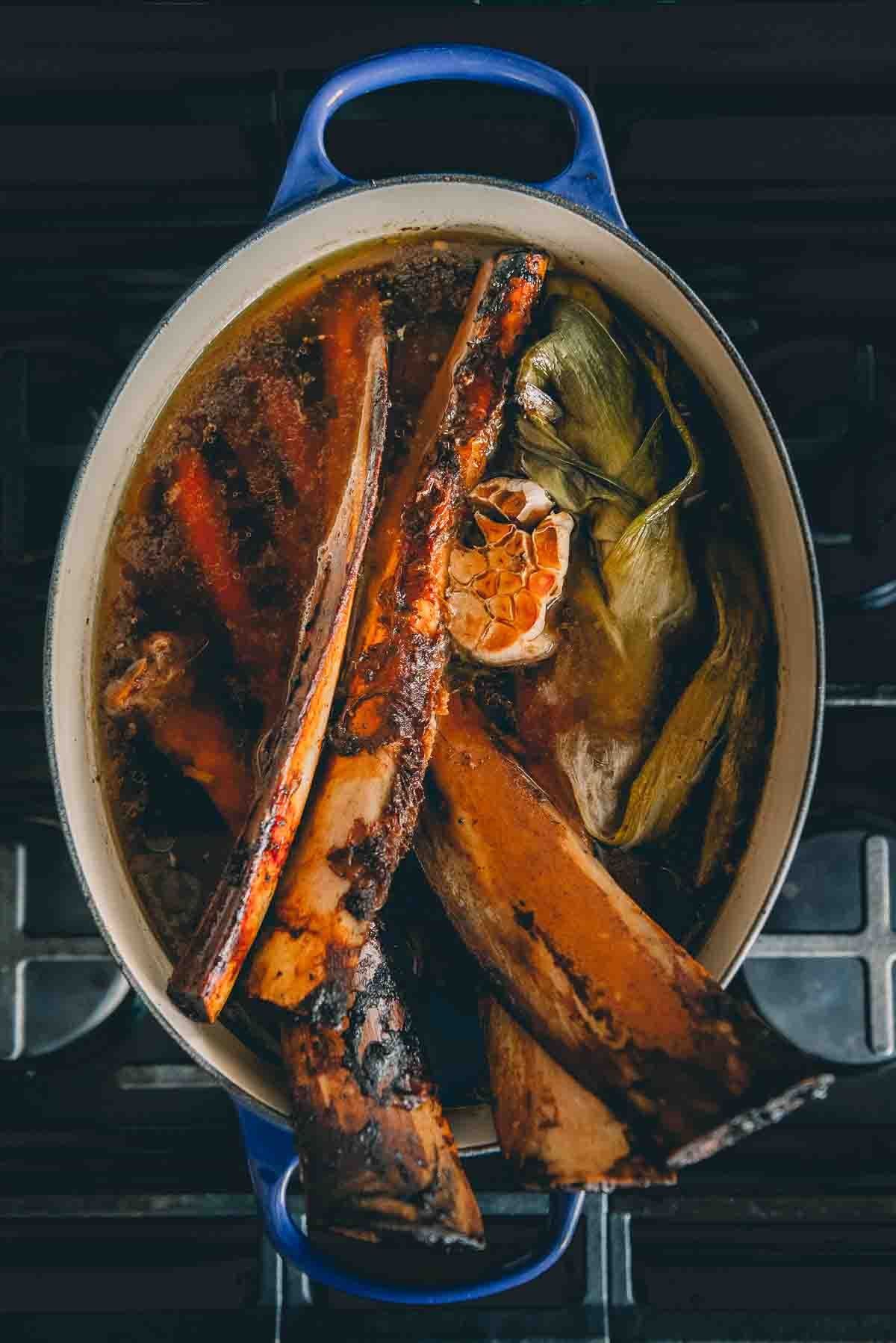
Bones, aromatics, cold water, low heat. Three variables change the result: how hard you roast the bones, how hot you hold the pot, and how far you reduce at the end. Roasting is what separates brown stock from white. Bones that go into a hot oven until they are deeply colored bring caramelized sugars and browned proteins with them, and that is the flavor people mean when they say a sauce tastes like a restaurant kitchen.
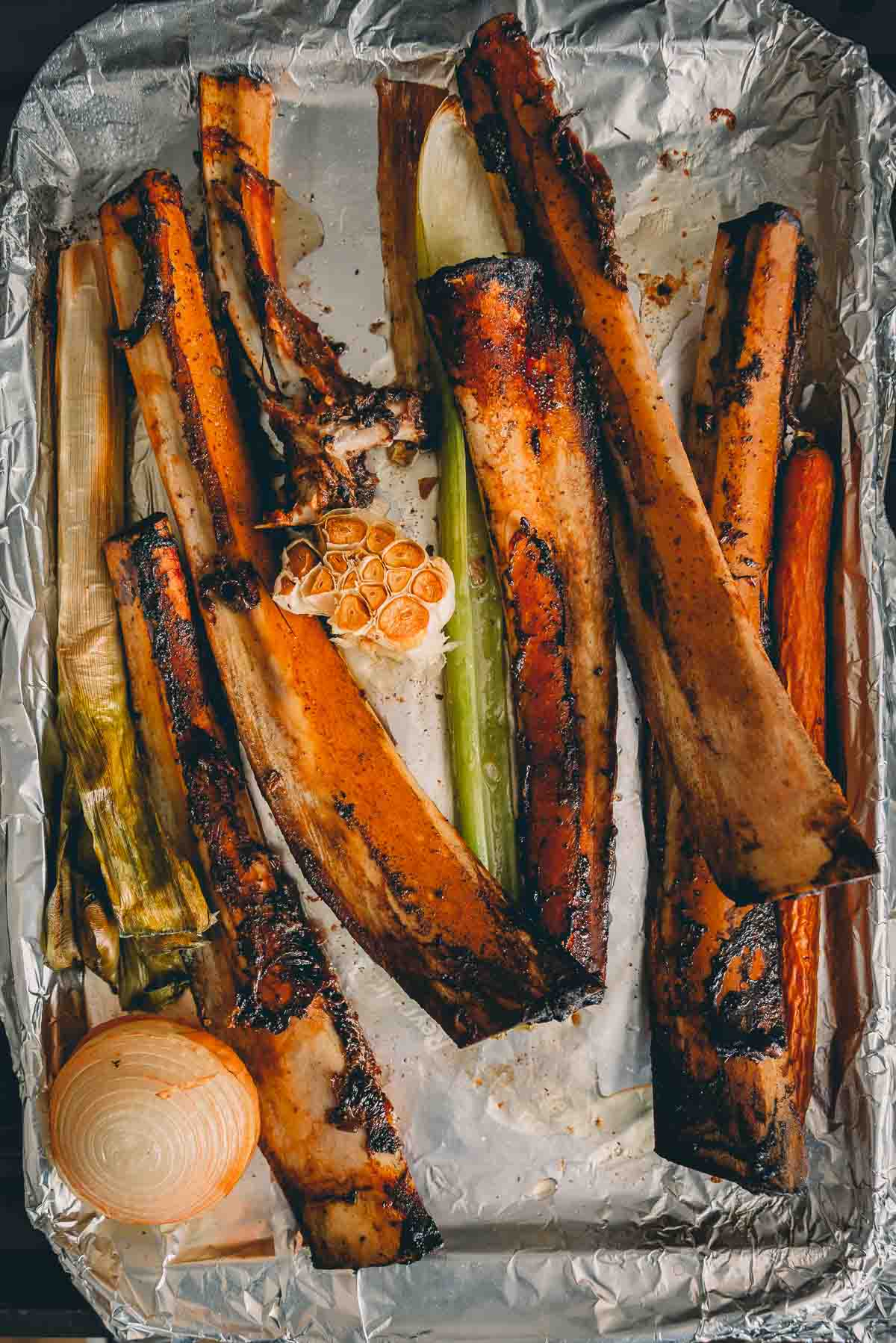
Hold it at a bare simmer. America’s Test Kitchen puts the reason cleanly: boiling causes soluble proteins and rendered fat to emulsify into the cooking liquid, which is exactly how you get a cloudy, greasy pot instead of a clean one. Skim, strain, cool fast, then freeze in the portions you cook with. Our roasted beef bone broth walks the whole thing start to finish.
🥩 Meat nerd tips
- Start in cold water. Dropping bones into hot water seizes the surface proteins and locks in some of what you are trying to pull out. Cold water heating slowly extracts more.
- Skim in the first thirty minutes. The grey foam that rises early is coagulated protein. Take it off then and the rest of the cook stays clear.
- Chill before you defat. Refrigerate overnight and the fat sets into a solid cap you lift off in one piece. Skimming hot fat off the surface is a losing game.
- Freeze it in two sizes. Quart containers for soups and braises, an ice cube tray for the nights you need a quarter cup to finish a pan sauce.
⚡ Lightning round
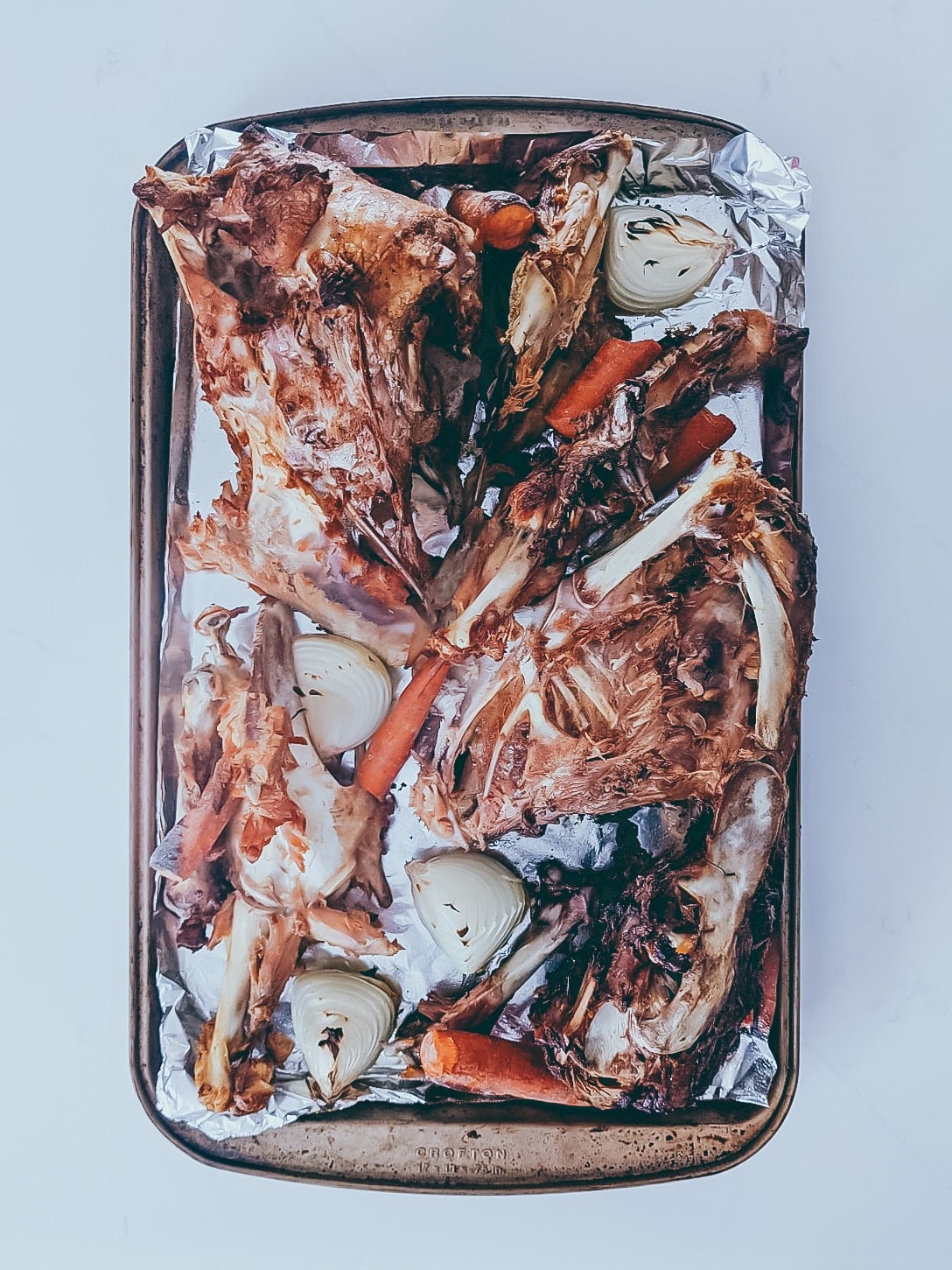
Yes, and roasted carcass bones from a chicken or a rib roast are already browned, which saves you the roasting step. Keep a bag in the freezer and start a pot once it fills. Leftover bones give up less gelatin than fresh joints and knuckles, so expect a lighter body.
Not in any way the label enforces. Bone broth is generally simmered longer for more gelatin, but there is no federal standard separating it from stock or broth. Treat it as a marketing term and judge the product by whether it gels.
You let it boil. According to America’s Test Kitchen, boiling emulsifies soluble proteins and rendered fat into the liquid instead of letting them settle or rise. Drop the heat until you see one lazy bubble every few seconds, and skim the foam early.
FoodSafety.gov gives soups and stews 3 to 4 days in the refrigerator and 2 to 3 months in the freezer. Cool it down fast in a shallow pan or an ice bath rather than leaving a hot stockpot on the counter. Label the containers with the date, because frozen stock all looks the same in January.
No. You do not know yet whether that stock is going into a sauce you will reduce by three quarters, and salt concentrates right along with everything else. Season the finished dish, not the stockpot.
Quick summary
Homemade stock earns its afternoon in dishes where stock is the primary liquid and gets reduced: pan sauces, au jus, risotto, bisque. In braises and long-simmered soups with a dozen other ingredients, a low sodium carton performs well enough that nobody at the table will call it. The one test worth running is the fridge test. If it sets up like jelly overnight, it has the gelatin that makes a sauce feel like a sauce.
📚 Keep reading
- Making beef bone broth, the roast, simmer, skim and freeze method step by step
- What cuts should you be asking your butcher for?, including the joints and shanks that give up the most gelatin
- Ask the Butcher, every question we have answered at the counter so far
Save this guide before your next pan sauce, and get the Butcher’s Block email for the next question we answer at the counter.