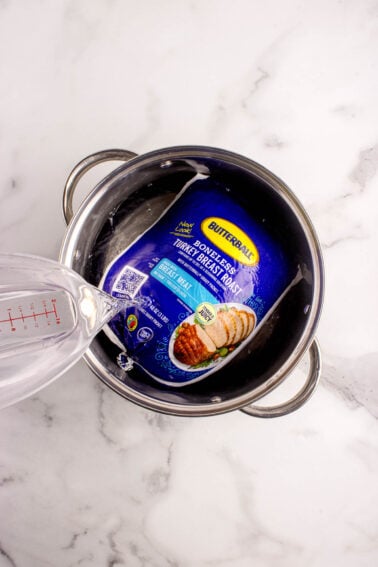
Once a year, I’m a sucker for a perfectly cooked prime rib. A holiday roast seasoned only on the outside eats bland in the middle, and the four steps below fix that from the center slice to the jus, with nothing but salt, time, and the pan already in your cabinet.
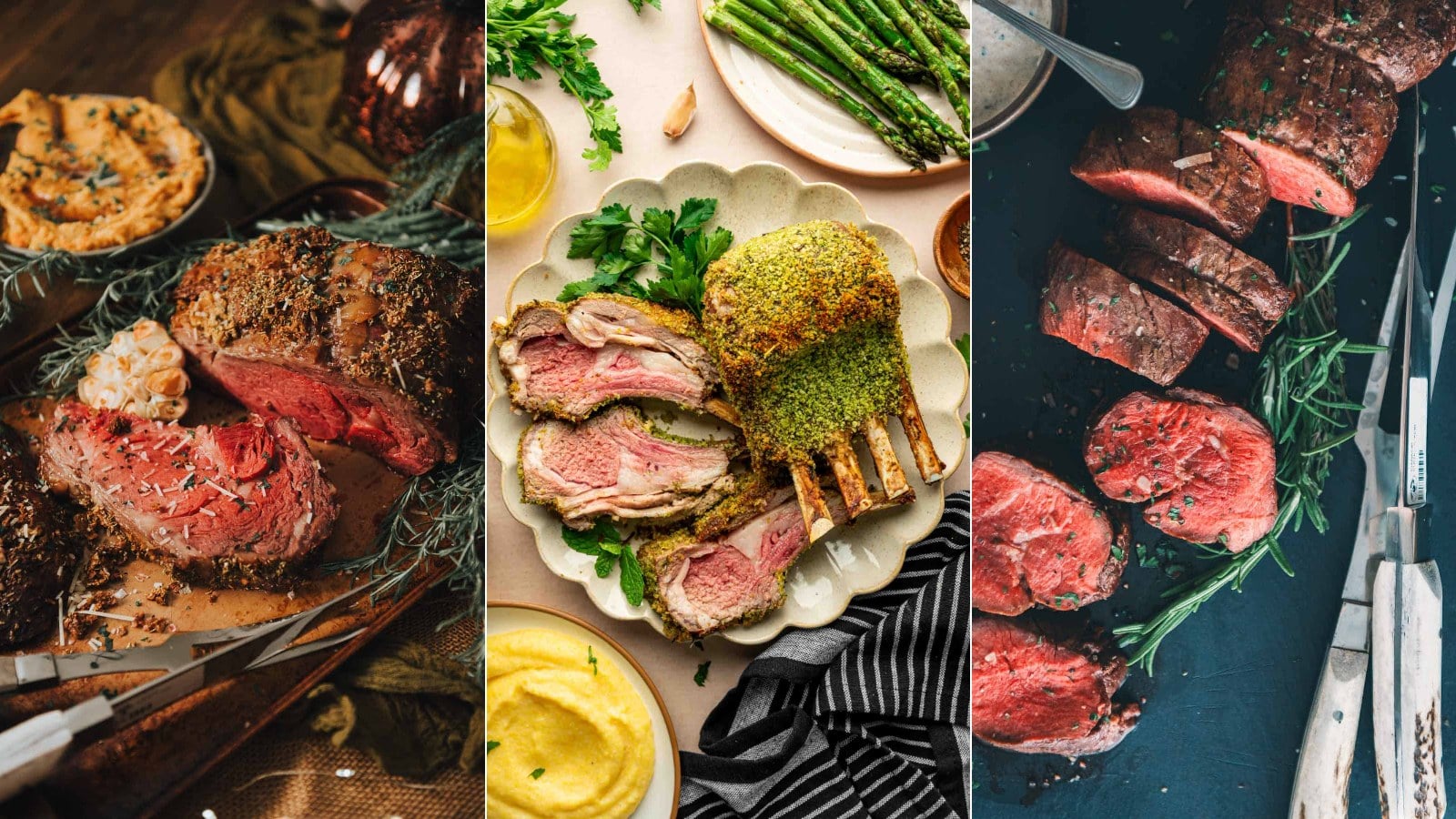
This is also the easiest way into this year’s biggest food trend. The Specialty Food Association named SenseMaxxing its 2026 trend of the year, food where every bite turns the volume all the way up. Call this flavor maxxing for the biggest piece of meat you will cook all year.
🔪 How to flavor maxx any holiday roast
Salt the roast a day ahead and leave it uncovered on a rack in the fridge so the surface dries out. Season the inside, not only the outside. Build the crust in a hot skillet with butter, or with mustard holding herbs in place, and glaze only at the end. Then roast on aromatics and turn the drippings into sauce.
🧂 Step 1: Dry brine it a day early and leave it uncovered
There’s one step we never skip when prepping a roast we’re serving to company: the 24-hour dry brine is peak flavormaxxing. Salt your holiday roast a day before it goes in the oven, and it comes out seasoned well past the surface, with a dry outside that browns into a real crust.
The day of lead time matters because of what salt does inside the meat. As America’s Test Kitchen explains, salt draws juice to the surface, dissolves into it, and that brine gets pulled back into the meat, where the salt changes the proteins so the roast holds on to more of its own juice.
Then leave it uncovered. For a whole bird or a roast that starts in a hot oven, ATK says the fridge air dries the surface, so browning happens faster, and you avoid a gray band under the crust.
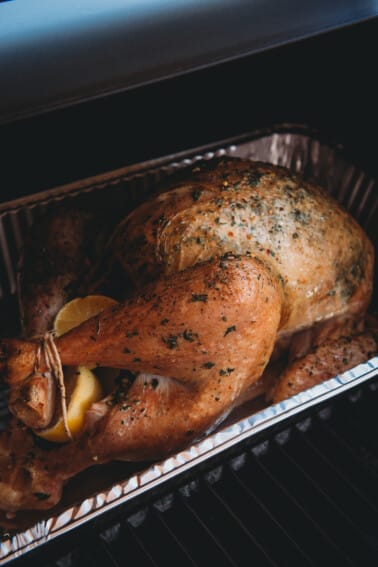
Cut the bones off before you salt, so the salt reaches the side they were covering. Our Garlic Herb Prime Rib Roast gets salted everywhere, bones included, then the bones get tied back on and the roast spends the night uncovered on a rack, so it goes into the oven seasoned and dry enough to brown. A turkey runs on the same idea with a longer clock: our dry-brine turkey method gives the bird 24 to 48 hours in the fridge.

🧄 Step 2: Season the roast from the inside out
Salt works its way in overnight, but a rub of garlic and herbs only reaches a few millimeters deep, so on a thick roast it ends up as a thin ring around the edge of every slice. That’s why we butterfly big boneless roasts, to open up more surface for seasoning.
Spread a garlic paste across the opened meat before you roll and tie it, and every slice comes out with garlic running through the middle. Our Garlic Stuffed Boneless Leg of Lamb is built that way, with a mustard and herb rub on the outside. On a turkey, the inside gets its seasoning a different way: the salt and herb mix goes under the skin and straight onto the meat, and we always season the cavity.

🔥 Step 3: Build a crust you can taste in the first bite
The crust is the first bite anyone gets. Salt and at least a 24 hour dry brine are what make it, which is why Step 1 comes first. Everything below builds flavor on top of that.
Save the sear for the end. Roast the tenderloin in a 325°F oven, then move it to a hot cast iron skillet and spoon butter, rosemary, thyme, and smashed garlic over the top while it browns. Before any of that, our Oven Roasted Beef Tenderloin gets its skinny tail end tucked under and twine every 2 inches, so you cook one even log instead of a roast with a thin end that overcooks first.
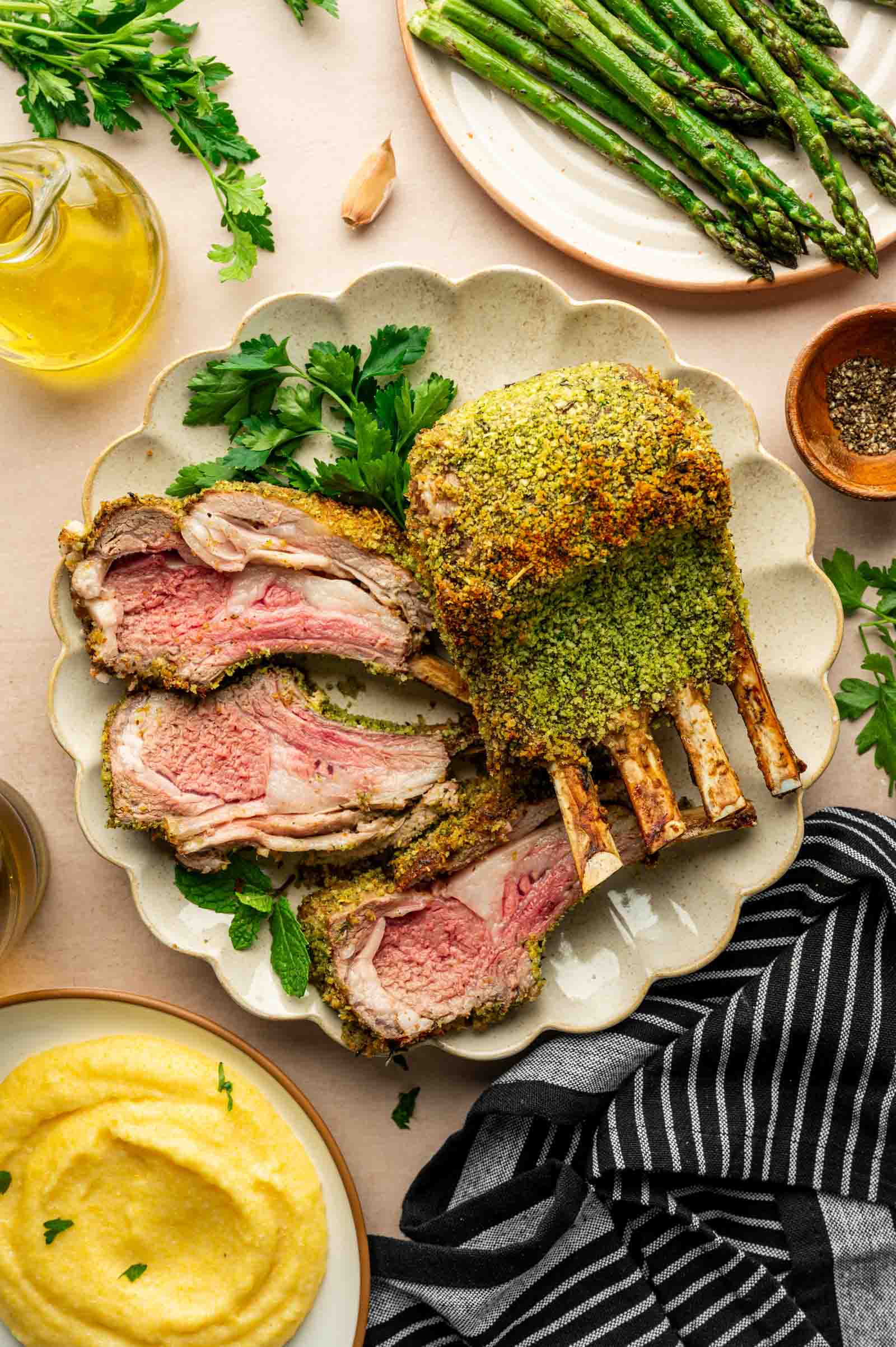
Brush on Dijon after the sear, and a crumb crust has something to grab. Press a mix of panko, Parmesan, and fresh herbs into the mustard. That’s how our Herb Crusted Rack of Lamb gets its crust.
Sugar comes last, because it can burn if things get too hot. Our Brown Sugar Glazed Spiral Ham warms through wrapped in foil, and the maple bourbon glaze only goes on at the end, under the broiler, until it turns tacky and browned.
🍷 Step 4: Roast on vegetables and turn the drippings into jus
Once the roast goes in the oven, skip the roasting rack and let the vegetables do the job. Our Boneless Pork Loin Roast gets its fat cap seared, then sits back in the skillet over onion, carrots, lemon, and a whole head of garlic. The vegetables lift the roast off the bottom of the pan like a roasting rack and cook in the drippings, so they come to the table as a finished side. A spoonful of compound butter melts over the top while it rests.

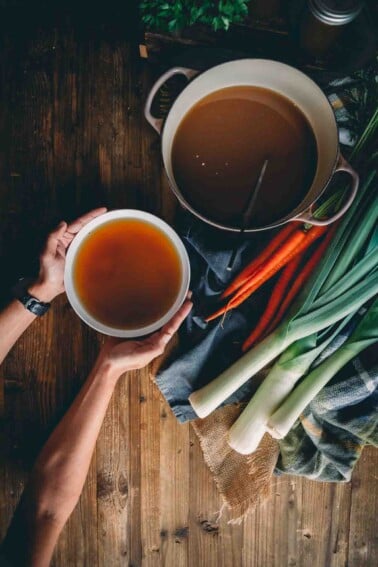
Then there’s the fond, the browned bits stuck to the bottom of the pan, and that’s the richest flavor you can get. While our prime rib rests under foil, its roasting pan goes over two burners. Red wine loosens the fond along with the shallot, garlic, and thyme that roasted under the meat, and broth and Worcestershire turn it all into jus. The resting time doubles as sauce time, so the jus adds nothing to your schedule. Cooking a steak or a chop instead? Our 5-minute pan sauce fix does the same thing in a skillet.
Jus or gravy? I serve both, just never at the same time. Some roasts are great with au jus and horseradish, and some are begging for a thicker gravy to pour over everything.
🥩 Meat nerd tips
- Pat it dry before the salt goes on. Every roast in this guide starts with paper towels, for the same reason it sits uncovered in the fridge: a dry surface browns faster.
- Use a wire rack in the fridge. A rack over a sheet pan lets cold air reach the bottom of the roast as well as the top.
- Read the turkey label before you salt. The USDA says a raw bird labeled self-basting, marinated or for flavoring had a solution added during processing, up to 3 percent of its weight for bone-in poultry. Skip the extra salt on those birds.
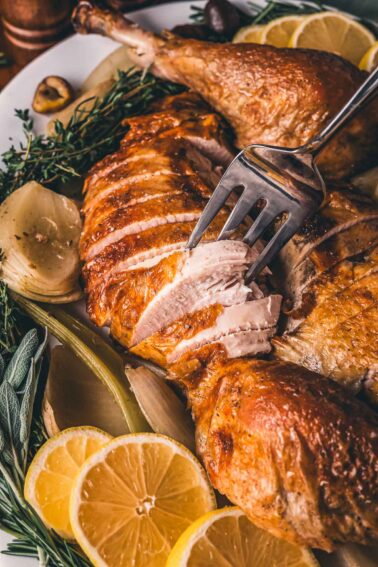
- Carve with a plan. Our guide to carving a bone-in prime rib walks you through taking the bones off cleanly and slicing the roast.
⚡ Holiday roast questions, answered fast
At least 6 hours ahead, and we go the full 24. America’s Test Kitchen recommends 6 to 24 hours for beef, lamb and pork roasts and 24 to 48 hours for a whole turkey, refrigerated the whole time.
The breast and white meat are done at 165°F and the thighs and dark meat at 175°F, read when the bird comes out of the oven. Check the thickest part of the breast and the thigh without touching bone.
130°F on a Thermapen, then let it rest. That number is on our Garlic Herb Prime Rib Roast card, and the roast climbs another 5 to 10 degrees as it sits. The same card says we like prime rib best at medium once it rests, because a medium rare center can run a little blue.
Pull it from the oven at 120 to 125°F, sear it in a hot skillet, and aim for 135°F at the center for medium rare. Those numbers come from our Oven Roasted Beef Tenderloin card, which gives the roast 10 to 15 minutes under foil before slicing.
About 15 to 20 minutes under foil for a big beef roast like our prime rib. Its internal temperature keeps climbing 5 to 10 degrees as it sits, so pull it from the oven a little before the doneness you want.
No. Spiral ham is cured, so the seasoning is already in it. Your job is to warm it through without drying it out and glaze it at the end.
Quick summary
Flavor maxxing a holiday roast takes salt, time and the pan you already own. Salt it 6 to 24 hours ahead (24 to 48 for a turkey) and leave it uncovered on a rack. Season the inside wherever the roast opens up, build the crust in a hot skillet or with mustard and herbs, glaze a ham last, and make the jus while the roast rests.
📚 Keep reading
- How to Cook a Turkey in the Oven, for the bird that anchors the table
- Why Doesn’t Your Steak Brown?, our column on the crust problem
- More Ask the Butcher columns
Hungry for more? Subscribe to our newsletter and become part of the world’s best meat community! From grilling tips to smoky secrets, we send you the best recipes, guides, and expert advice to master every cut.