
Most curries are served over plain white rice, and that’s leaving half the flavor on the table. Biryani rice takes the same 30 minutes, uses whole spices already in your pantry, and brings the whole meal together just like your favorite takeaway place. Fragrant aged basmati cooked with bloomed spices and ghee, finished with a drizzle of saffron milk (now, doesn’t that sound better than white rice?). This is the side dish that makes your butter chicken and rogan josh hit differently.

We made this biryani rice recipe alongside our Indian recipe collection at the GC Meat Labs, and the lesson every time was the same: the spice bloom is the step that can make it break it. A few seconds of whole spices in hot ghee does more for flavor than any spice blend you’d stir in at the end. Just pay attention to that step because they go from bloomed to burnt in the blink of an eye.
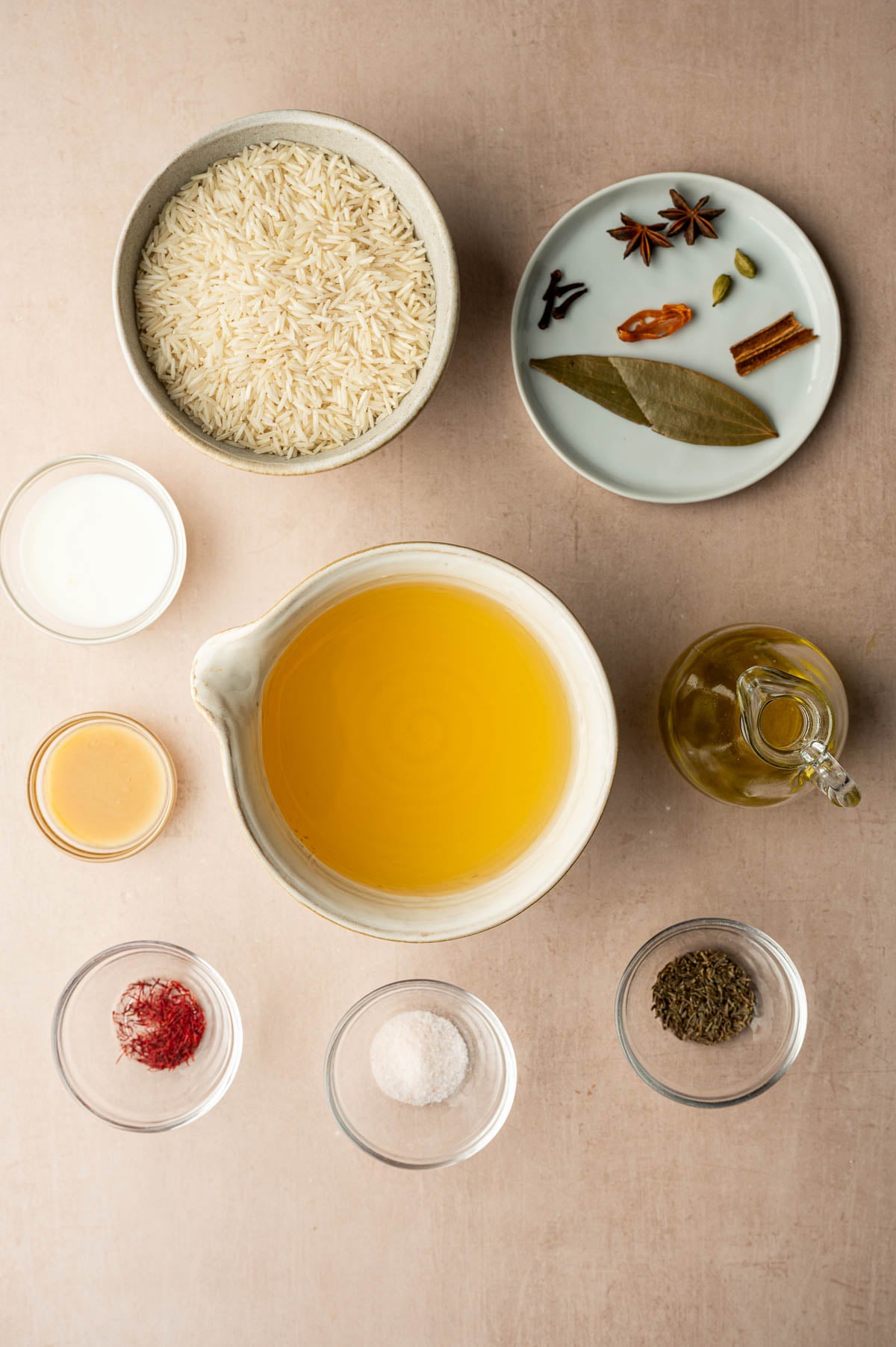
🔪 Ingredients for Biryani Rice
- Aged basmati rice: Look for bags labeled “aged” or “extra-long grain.” Aged basmati has lower moisture content, which is why the grains stay long and separate instead of clumping. If yours isn’t labeled aged, dial back the broth by about ¼ cup.
- Chicken Broth
- Ghee and neutral oil: Ghee provides the buttery, nutty base for the spice bloom; the neutral oil – like avocado oil – raises the smoke point so the ghee doesn’t burn. Use both.
- Whole spices: Cumin seeds (shahi jeera if you have it; it’s earthier and more complex than standard cumin), bay leaf, mace, green cardamom pods, cloves, cinnamon stick, and star anise. These go in whole and come out whole. Don’t sub ground spices; the bloom works because whole spice oils release gradually into the fat and then the liquid.
- Saffron strands: A small pinch steeped in warm milk gives biryani rice its signature golden color and floral finish.
- Kosher salt
- Fresh mint
Equipment
A medium saucepan with a tight-fitting lid. The goal is to trap in the steam.
📝 How to Make Biryani Rice
- Rinse and soak the rice. Rinse under cold water until it runs nearly clear — this strips the surface starch that causes clumping. Soak in fresh cold water for 20–30 minutes, then drain completely. The soak lets the grains hydrate and elongate; complete draining prevents a mushy finish.
- Bloom the spices. Heat the ghee and oil together in your pan over medium until the ghee shimmers. Add the cumin seeds, bay leaf, mace, cardamom pods, cloves, cinnamon, and star anise all at once. Cook for 30–45 seconds, stirring, until the cumin is sputtering and the kitchen smells like a spice market. Don’t rush this step, and don’t walk away.
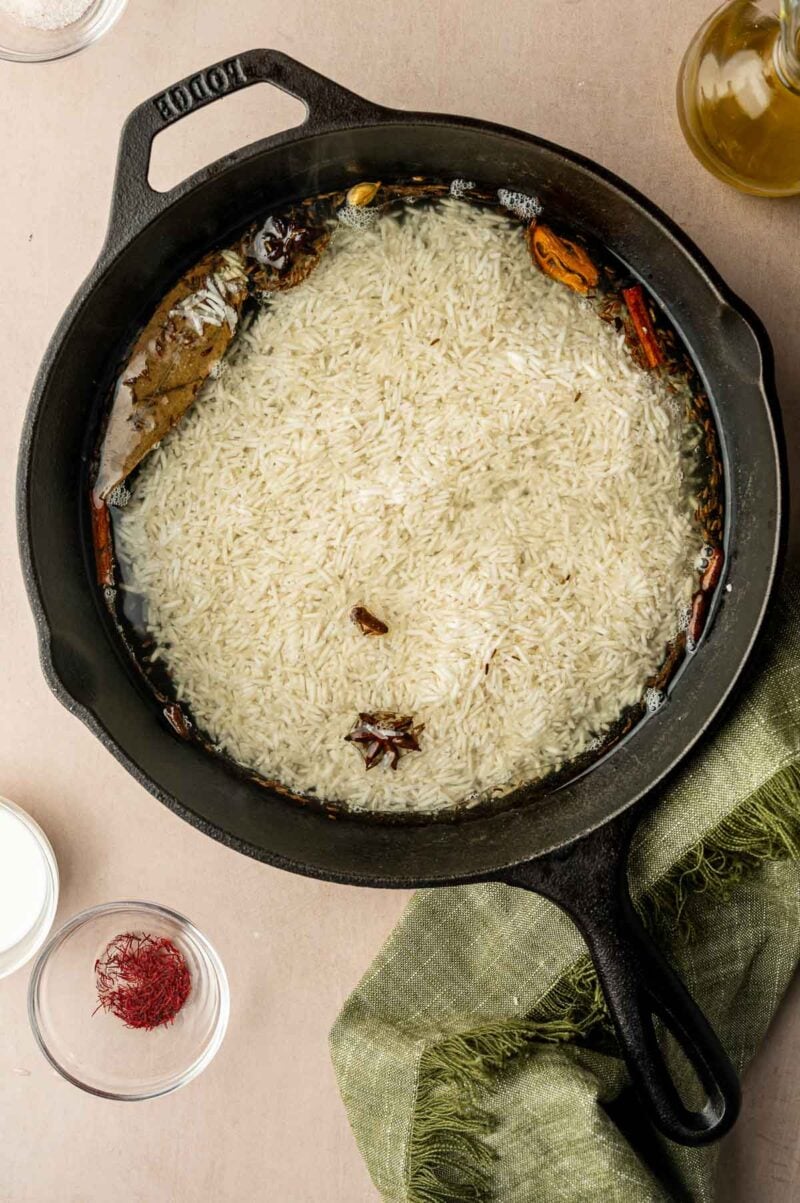
- Add broth and bring to a full boil. Pour in the broth and salt and bring it to a rolling boil — not a simmer, a proper boil before the rice goes in.
- Add rice and reduce to low. Stir in the drained rice, drop the heat to low, cover tightly, and cook for 12–14 minutes. Check the edges at 12 minutes — you’re looking for all the liquid to be absorbed. Do not stir, do not lift the lid.
- Bloom the saffron. While the rice cooks, steep the saffron strands in a tablespoon of warm milk (around 100–110°F, not boiling) for 5–10 minutes until the milk turns deep golden.
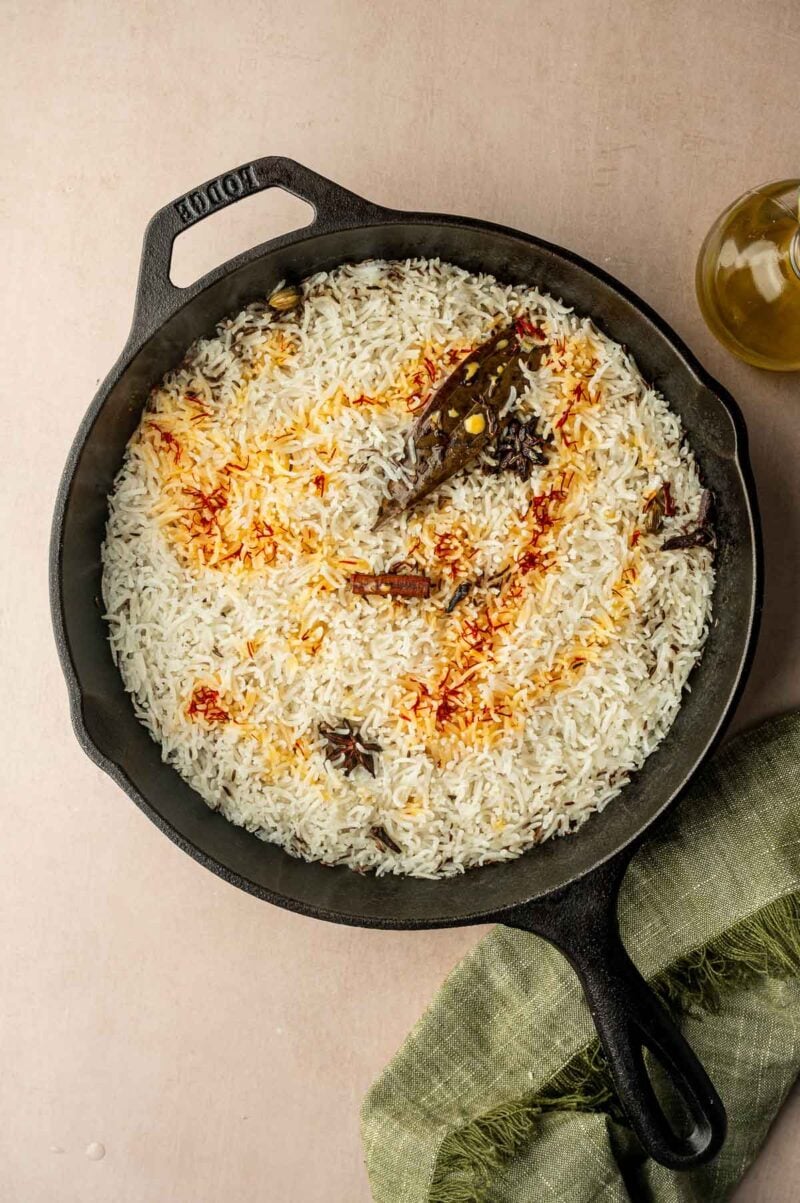
- Drizzle and rest. Once the liquid is absorbed, drizzle the saffron milk over the top. Turn off the heat, replace the lid, and rest for 10 full minutes. This steam finish is what separates fluffy from gummy. Don’t open the lid.
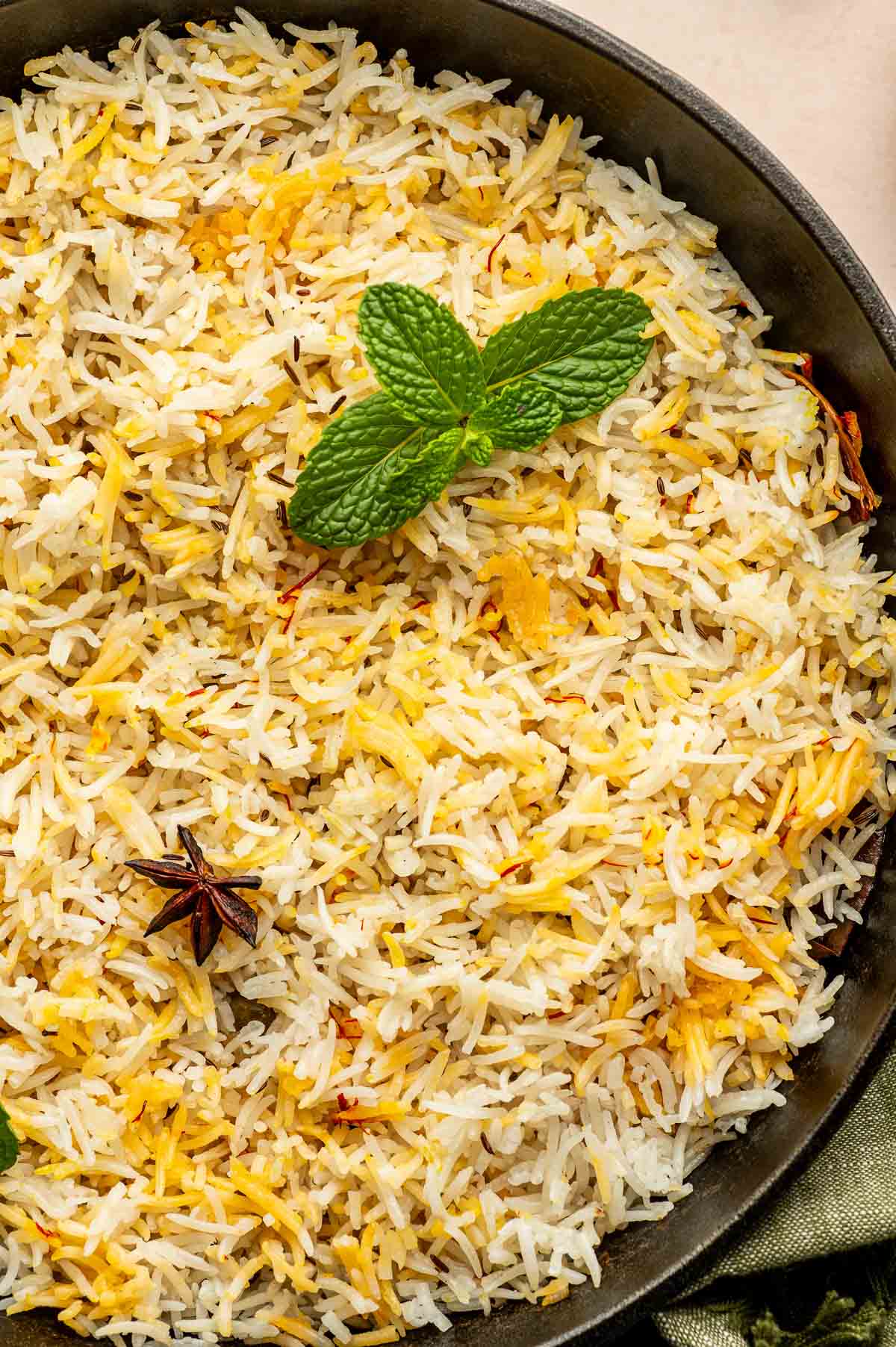
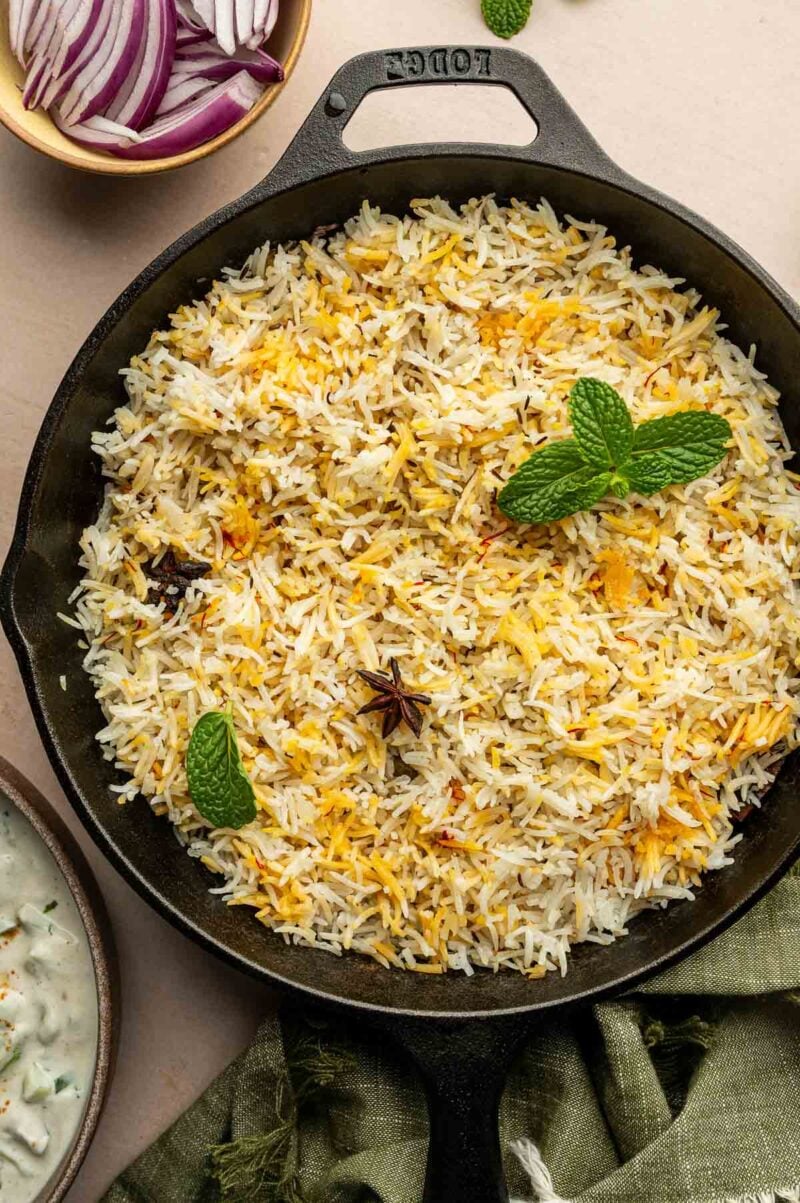
- Fluff and serve. Fork the rice gently from the outside edges inward, top with fresh mint, and serve while hot.
🔄 Substitutions
- Shahi jeera → regular cumin seeds: Works fine. You lose a little earthy complexity but the rice is still excellent.
- Saffron → skip it: The rice is still great without it.
- Basmati → jasmine or long-grain white rice: Workable, but adjust liquid and timing. Jasmine is stickier and needs less broth. The long, distinct grain character of biryani rice won’t be there.
💡 Meat Nerd Tips
- The 10-minute rest is not optional. Pulling the lid the moment the liquid is absorbed gives you dry, stiff grains with overdone bottoms. The covered rest off heat steams the rice through, redistributes moisture, and lets the saffron color spread across the grains. Set a timer and walk away.
- Bloom saffron in warm milk, not hot. Boiling milk kills the compounds that give saffron its flavor. Keep it around 100–110°F and steep for the full 5–10 minutes before you drizzle.
- Don’t double the assertive spices. If you scale this recipe up, don’t double the bay leaf, star anise, or mace — they’ll overpower the rice. Double everything else but cap those three at 1.5x.
- Make it ahead. Biryani rice actually improves overnight — the spice flavor deepens. Cook, cool uncovered for 10 minutes, then cover and refrigerate. Reheat with a splash of water in a covered pot over low, or microwave covered.
🍽️ What to Serve with Biryani Rice
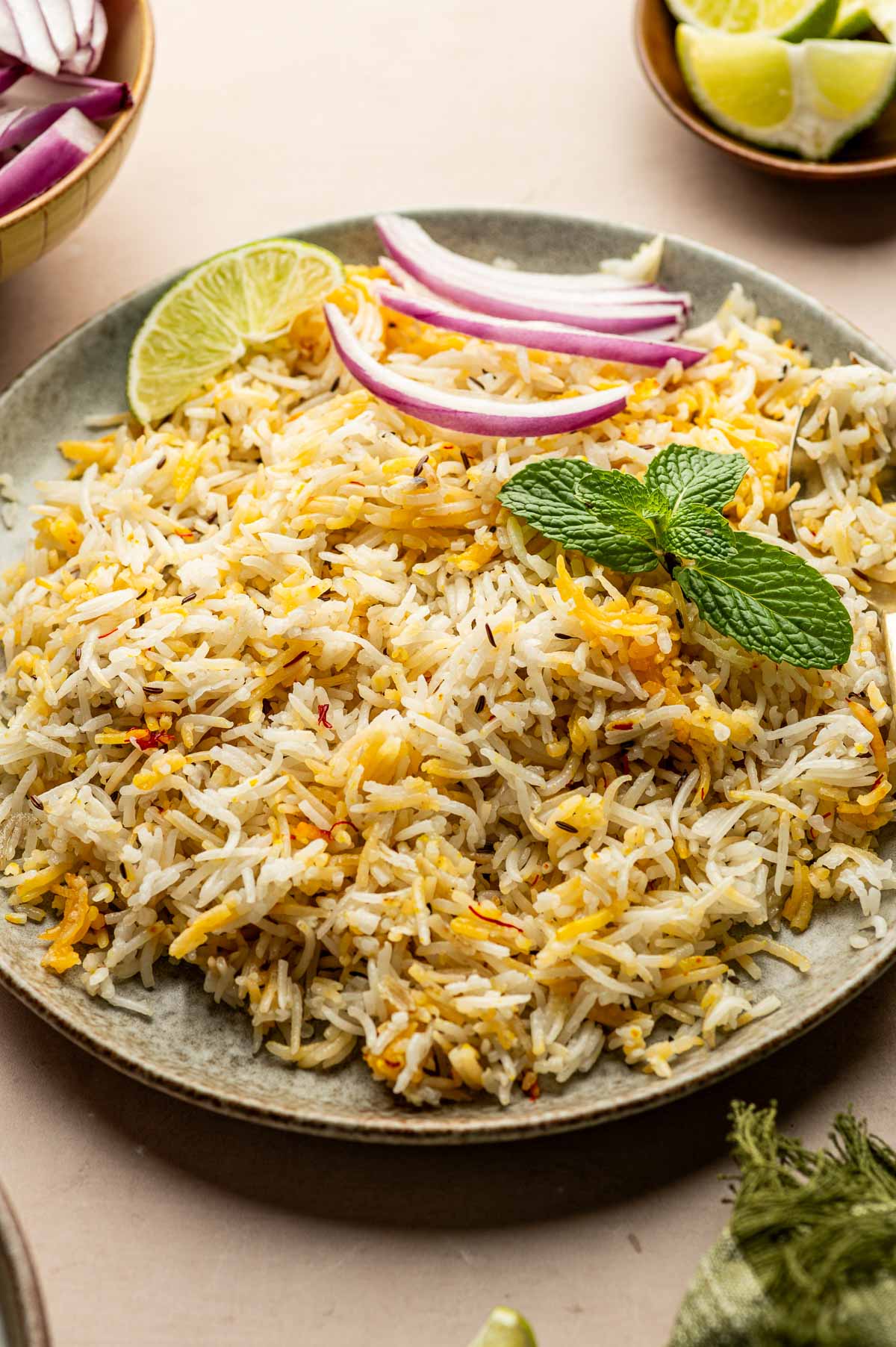
- This is the base layer for any Indian night. Spoon it under Butter Chicken, Rogan Josh, Chicken Tikka Masala, or Lamb Vindaloo.
- Add a simple cucumber raita alongside anything with heat.
🧊 Leftovers and Storage
- Refrigerator: Airtight container, up to 4 days. Cool completely uncovered before lidding — trapped condensation makes it soggy.
- Freezer: Sealed bag or container, up to 2 months. Flatten the bag for even freezing and faster thawing.
- Reheating from fridge: Add a tablespoon of water per cup of rice, cover, and heat on the stovetop over low for 5–6 minutes. Or microwave covered for 90 seconds to 2 minutes.
- Reheating from frozen: Thaw overnight in the fridge first, then reheat as above. Don’t microwave from frozen (you’ll get hot spots and dried-out pockets).
Have you tried this recipe? Do us a favor and rate the recipe card with the ⭐ ⭐ ⭐ ⭐ ⭐ and drop a comment to help out the next reader.
Biryani Rice

Ingredients
milk
- 2 cups aged basmati rice
- 3 cups chicken broth or veggie broth
- 1 tablespoon ghee
- 1 tablespoon neutral oil
- 1 teaspoon cumin seeds (shahi jeera preferred)
- 1 bay leaf
- 1 piece mace
- 2 green cardamom pods
- 4 cloves
- 1 small cinnamon stick
- 2 small star anise
- 1 teaspoon kosher salt
- ¼ teaspoon saffron strands
- 1 tablespoon milk, warm
- Fresh mint to garnish
Instructions
Rinse and Soak
- Rinse the basmati rice under cold water until the water runs nearly clear. Soak in fresh cold water for 20–30 minutes, then drain completely.
Bloom the Spices
- Heat ghee and neutral oil in a medium saucepan over medium. Add the cumin seeds, bay leaf, mace, cardamom pods, cloves, cinnamon stick, and star anise. Cook for 30–45 seconds, stirring, until fragrant and the cumin is sputtering.

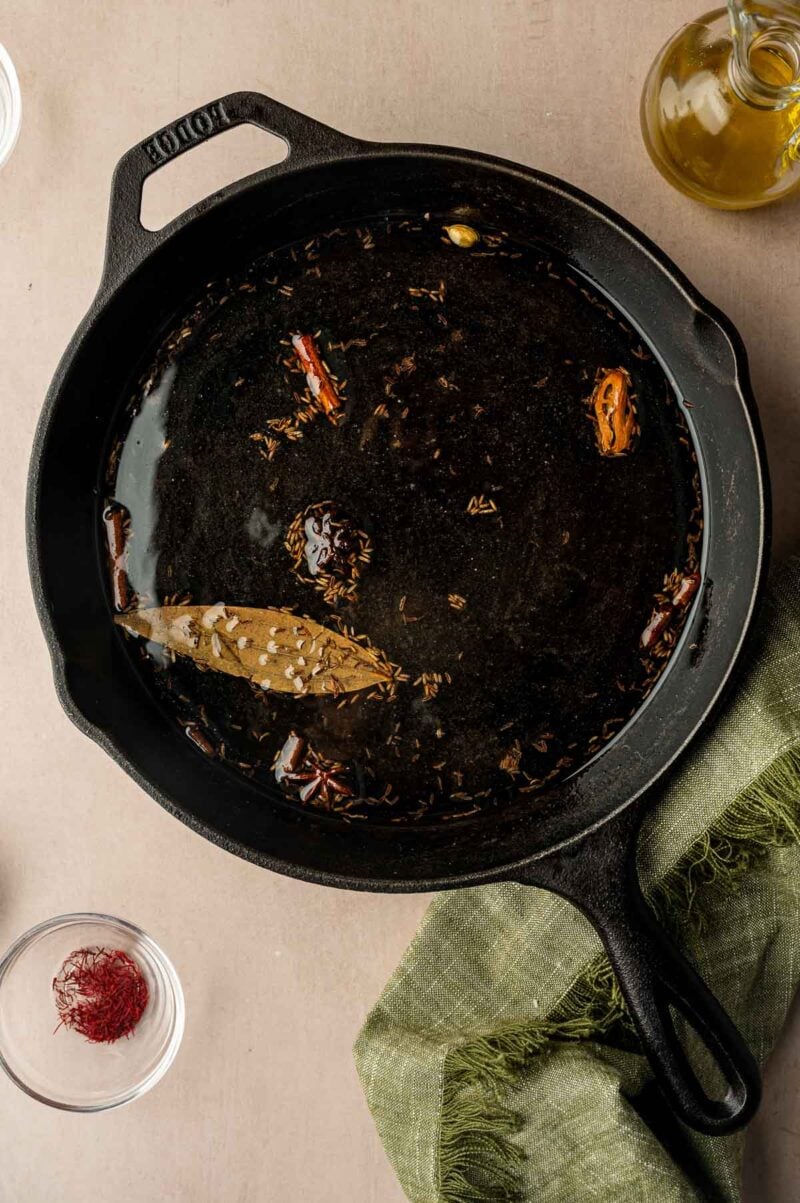
Add Broth
- Pour in the broth and salt. Bring to a rolling boil.
Cook the Rice
- Add the drained rice, stir once, reduce heat to low, cover tightly, and cook for 12–14 minutes until all liquid is absorbed. Do not stir or lift the lid.
Bloom the Saffron
- While the rice cooks, steep saffron strands in 1 tablespoon of warm milk for 5–10 minutes.
Drizzle and Rest
- Drizzle the saffron milk over the cooked rice. Turn off heat, replace the lid, and rest for 10 minutes. Do not open the lid.
Fluff and Serve
- Fluff gently with a fork from the edges inward. Top with fresh mint and serve immediately.
Notes
- Use aged basmati for the best grain length and aroma. If unlabeled, reduce broth by ¼ cup.
- Don’t double the bay leaf, star anise, or mace when scaling up — cap those at 1.5x.
- Reheat with a splash of water in a covered pot over low heat, or microwave covered.
Save this Recipe
Nutrition
Bookmark this recipe now!
Quick Summary
Biryani rice is aged basmati cooked in broth with whole spices bloomed in ghee, finished with saffron milk and a 10-minute covered rest. The spice bloom is the move — 30 seconds of whole spices in hot fat does more for flavor than any shortcut. Get the tight lid and the rest right and you’ll have fluffy, separate, deeply aromatic rice every single time.
❓ FAQs
Aged basmati. It has lower moisture content than regular basmati, which is what keeps the grains long, separate, and fluffy instead of clumping. Look for bags labeled “aged” or “extra-long grain” at Indian grocery stores or online. If yours isn’t labeled, reduce the broth slightly to compensate.
Highly recommended. A 20–30 minute soak hydrates the grains evenly so they elongate and cook through without breaking. You can skip it in a pinch, and the rice will still work; just don’t soak longer than 30 minutes, or the grains will be waterlogged before they even hit the pot.
Yes. The spiced rice is excellent without it — you just won’t get the golden color or floral finish. Don’t substitute turmeric; it adds bitterness and an entirely wrong flavor profile. Skip the saffron step or swap in a few drops of rose water for a more traditional aromatic substitute.
Three most common culprits: rice wasn’t rinsed thoroughly enough (surface starch causes clumping), the soak ran past 30 minutes, or the lid came off during cooking or the rest. Keep the lid on, don’t stir during cooking, and let it rest for the full 10 minutes before you fluff.










I love you dearly. You’re the little sister I always wanted so I could date her friends.
That being said, I must deduct 10 points for not blooming the saffron in the broth with no minced fresh herbs at the end.
I executed this with your ingredients and M.O.P. with my deviations (Italian parsley, chives, fresh oregano, and cilantro).
I deemed this perfection!!!
Hahaha, totally fair! 😀