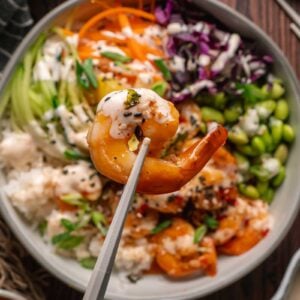
There’s a white sauce at hibachi restaurants that nobody can ever quite explain. The server says “it’s like a yum yum sauce” and you nod like that helps. This is the recipe where you stop nodding. Kewpie mayo, rice vinegar, a pop of sugar, paprika, and water… all thinned until it runs slow off a spoon and drizzled cold over sweet chili glazed shrimp, sushi rice, pineapple, red cabbage, cucumber. Once you crack the sauce, the bowl is the excuse. You will be making this every week…
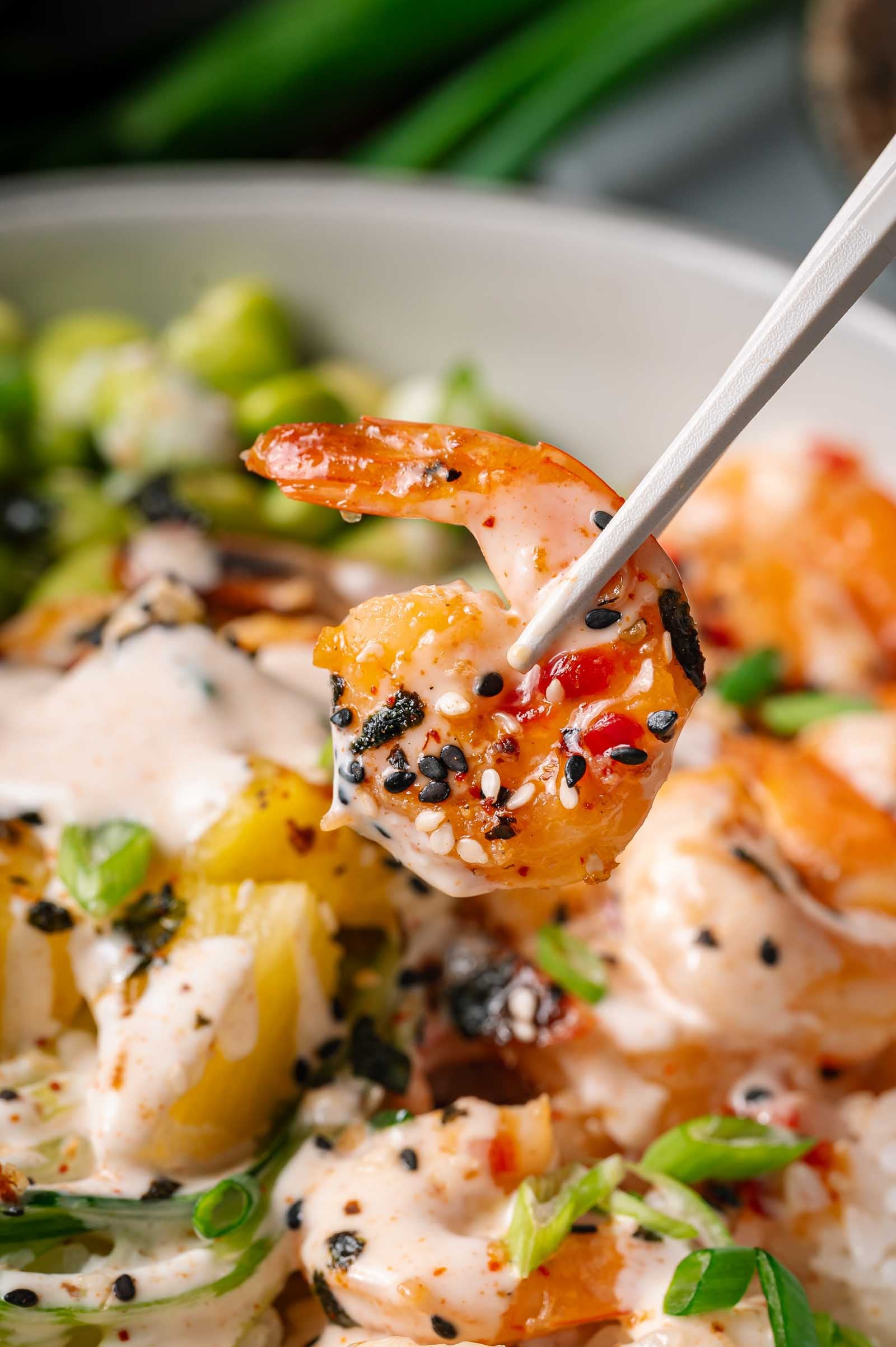
The sauce needs to sit – that’s the thing nobody tells you. If you whisk it and use it immediately, it tastes close but not quite. Fifteen minutes – or overnight – in the fridge and it’s a different sauce. The shrimp are the other piece: they have to come out of the pan before they look done. Pink at the edges, still a little soft in the middle, and the sweet chili sauce finishes the job. Every time we tried to cook them all the way through in the sear, they went rubbery before the glaze had a chance to do anything.
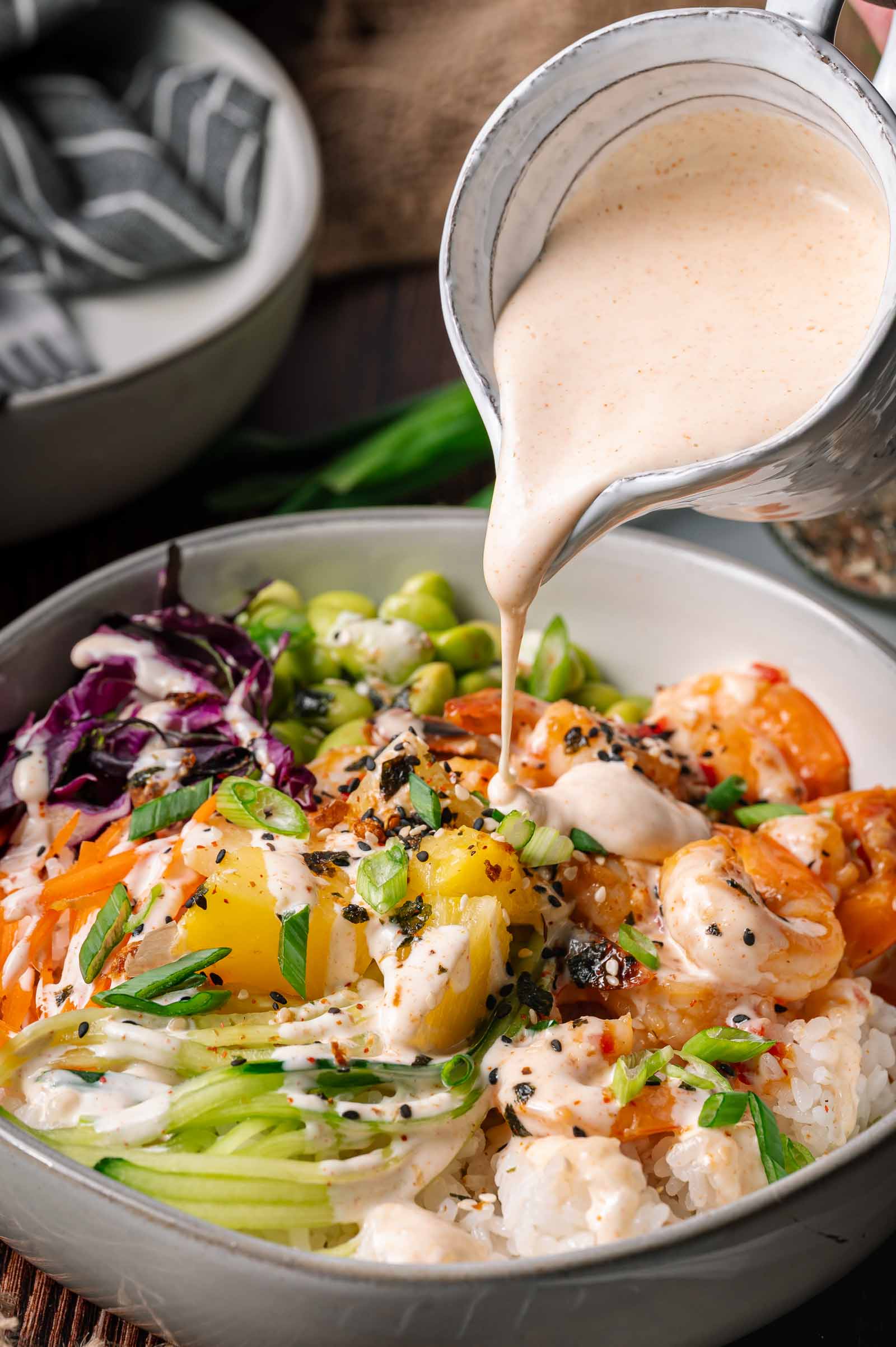
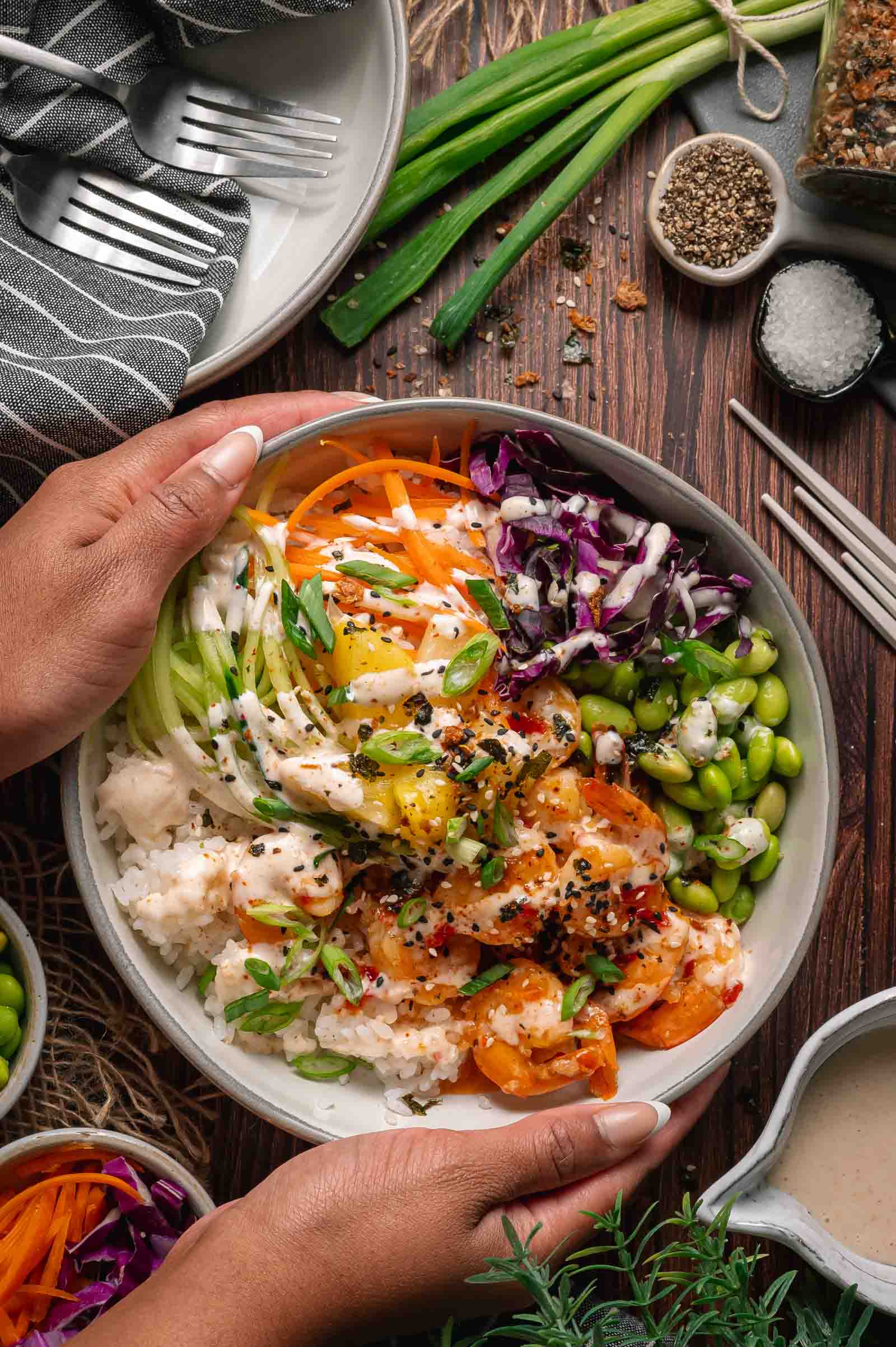
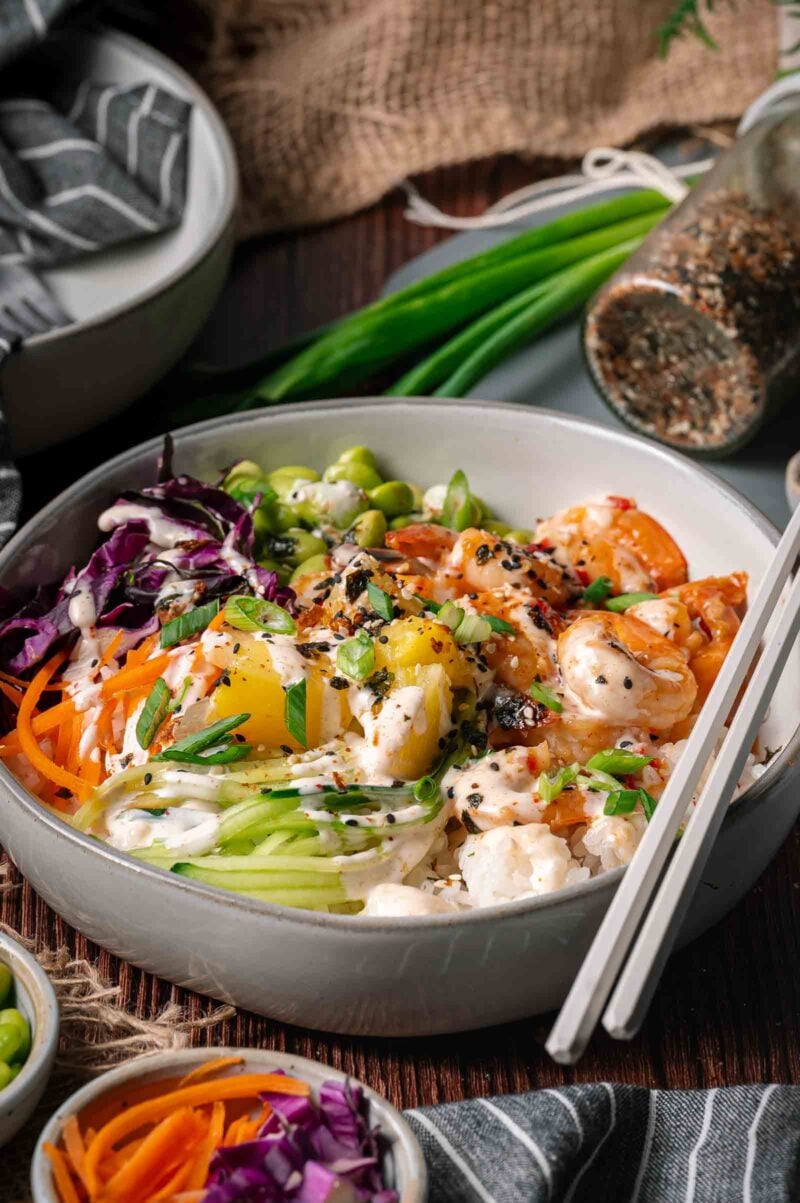
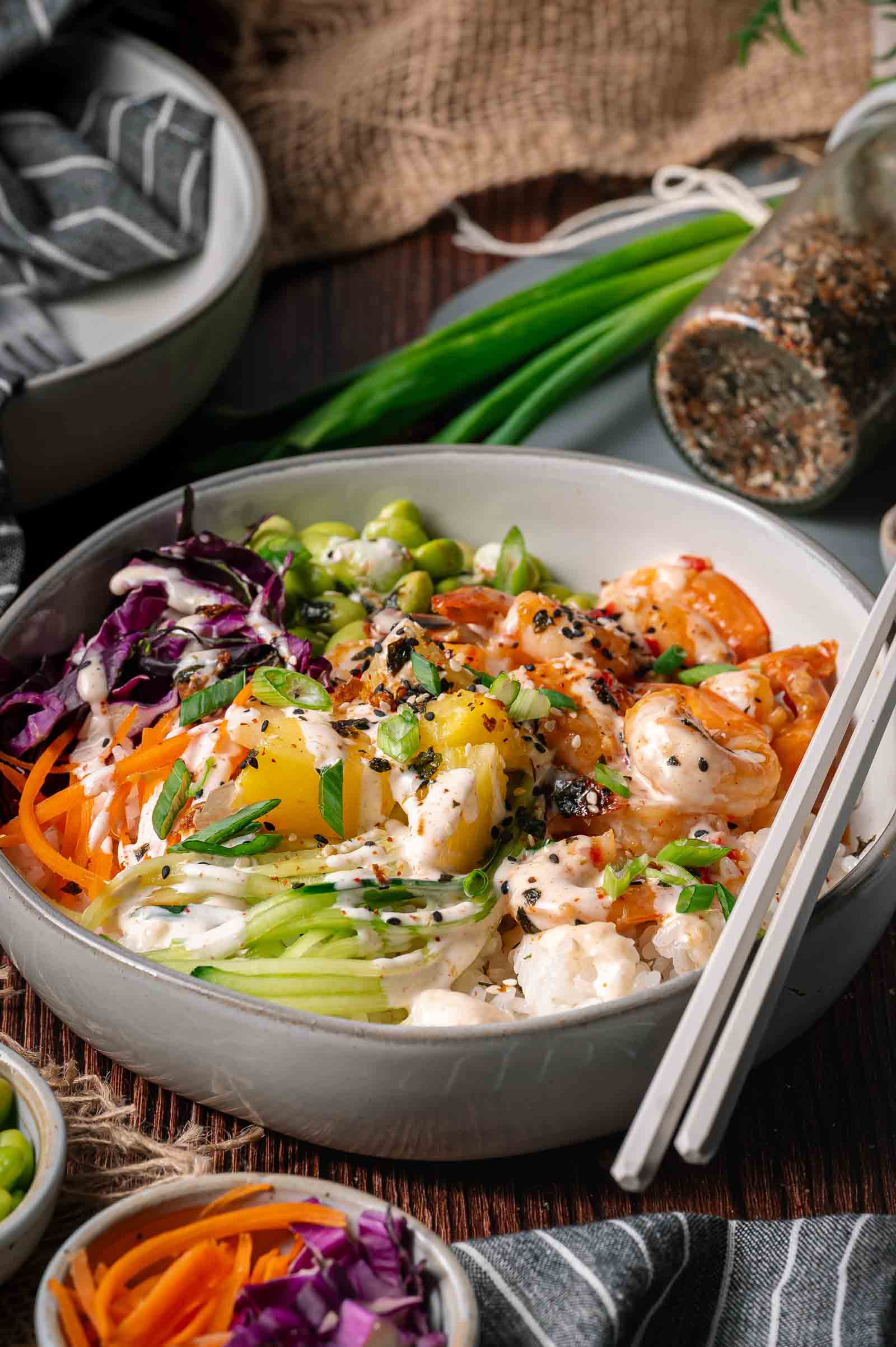
The whole poke bowl comes together fast once both sauces are made. Sushi rice as the base, glazed shrimp, then your favorite cold toppings arranged on top – pineapple, red cabbage, cucumber – and the infamous white sauce drizzled over everything. Furikake last if you really want flavor…
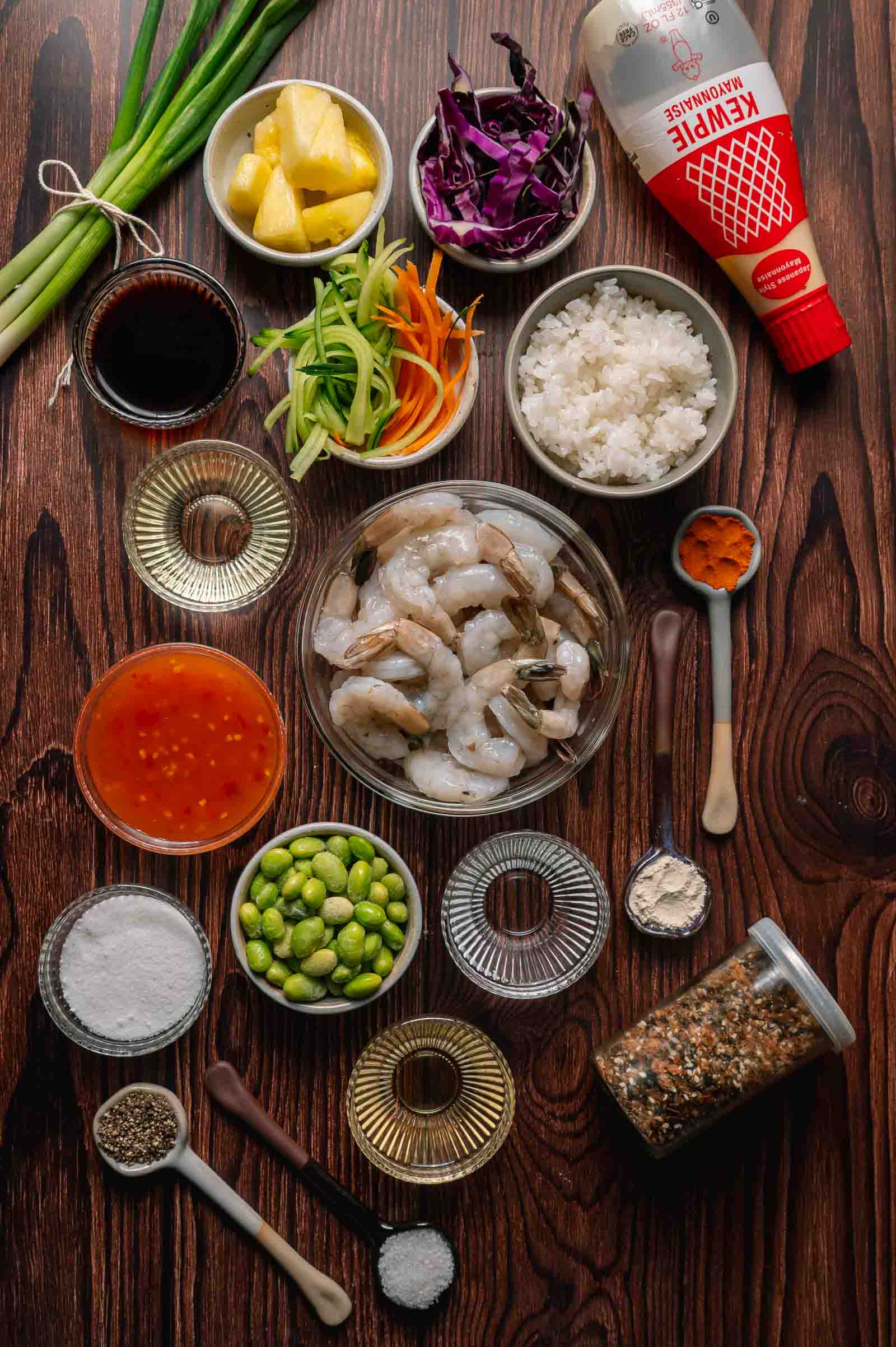
🔪 Ingredients for Sweet Chili Shrimp Poke Bowl
For the Shrimp:
- Large shrimp, peeled and deveined: 16/20 or 21/25 count is the right size here. Smaller shrimp overcook too fast. Frozen works well as long as you thaw completely and pat them dry before seasoning.
- Avocado oil: high smoke point, stays clean in a hot pan
- Kosher salt & Black pepper
- Garlic powder
For the Sweet Chili Sauce:
- Sweet chili sauce: Mae Ploy or the Trader Joe’s version both work without adjusting anything else
- Soy sauce
- Rice vinegar
For the Japanese White Sauce:
- Kewpie mayonnaise: the Japanese-style mayo made with egg yolks only. Richer and less tangy than standard American mayo. Find it in the Asian foods aisle or order online if your store doesn’t carry it. Worth tracking down.
- Rice vinegar
- Granulated sugar
- Garlic powder
- Paprika
- Water: added slowly until the sauce reaches a thin, drizzleable consistency
For the Bowls:
- Sushi rice: short-grain, slightly sticky. Holds its shape under the toppings in a way jasmine rice doesn’t quite pull off.
- Mukimame (shelled edamame): in the frozen vegetable aisle, usually next to the regular edamame pods
- Cucumber: thinly sliced
- Diced pineapple
- Shredded red cabbage
- Julienned carrots
- Sliced green onions
- Furikake or sesame seeds: furikake adds more complexity than plain sesame seeds and is worth the upgrade if you can find it
Equipment
- Large skillet
- Two mixing bowls
- Whisk
📝 How to Make Sweet Chili Shrimp Poke Bowl
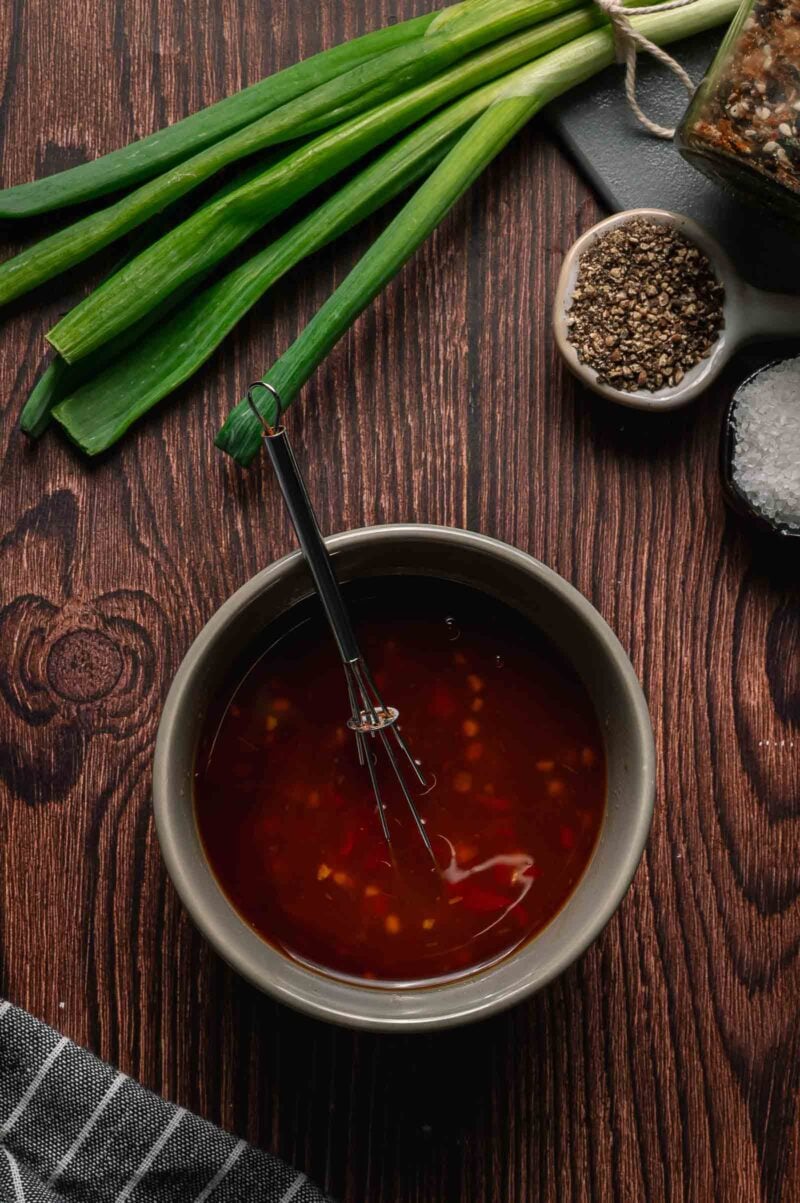
- Make the sweet chili sauce. Whisk together the sweet chili sauce, soy sauce, and rice vinegar in a medium bowl until combined. Set aside.
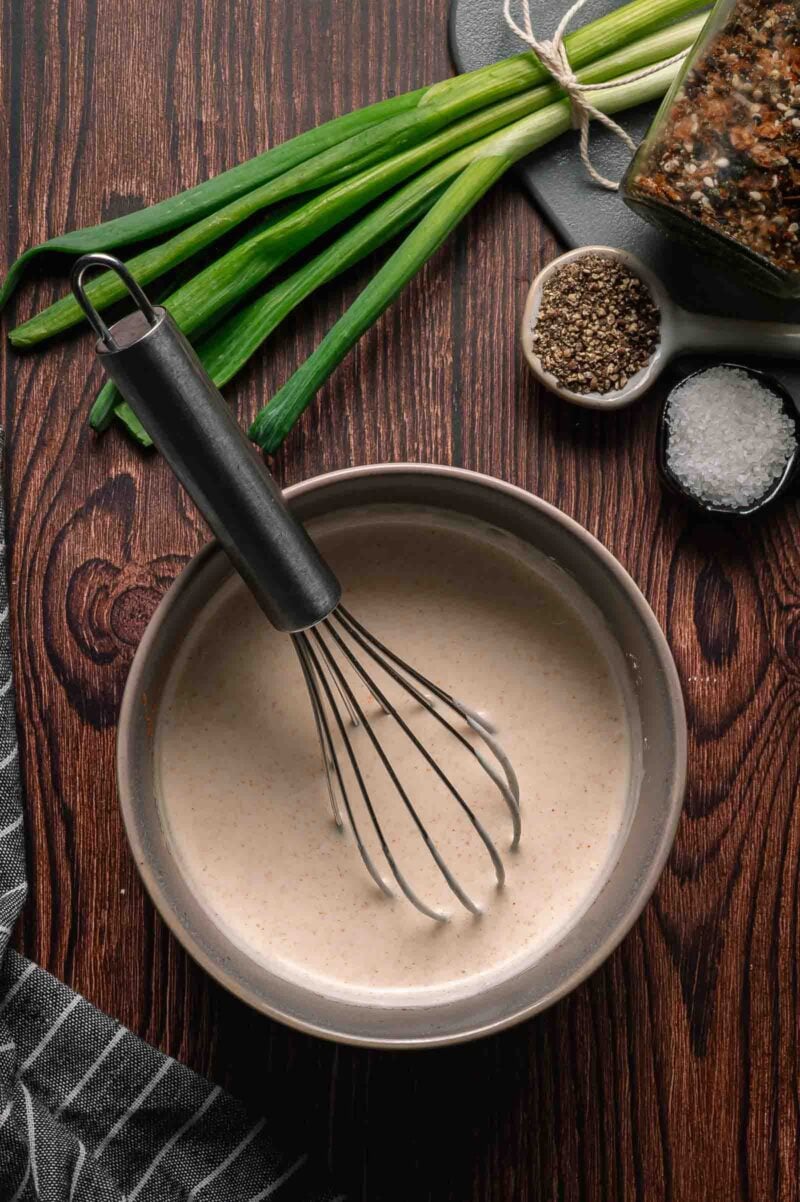
- Make the Japanese white sauce. Whisk together the Kewpie mayo, rice vinegar, sugar, garlic powder, paprika, and 2 tablespoons of water until smooth. Add more water a teaspoon at a time until the sauce is thin enough to drizzle. Cover and refrigerate while you prep everything else.
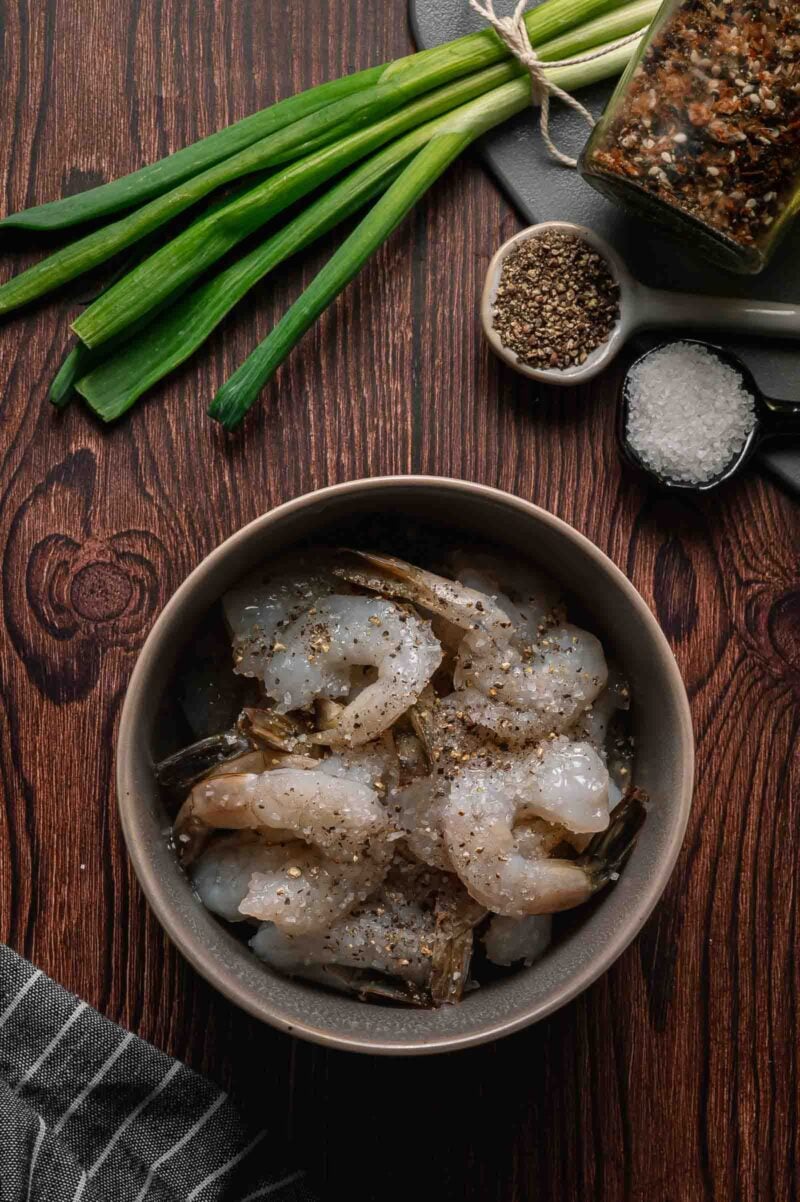
- Season the shrimp. Pat the shrimp completely dry with paper towels. Any surface moisture will steam instead of sear. Drizzle with avocado oil, then season with kosher salt, black pepper, and garlic powder. Toss until evenly coated.
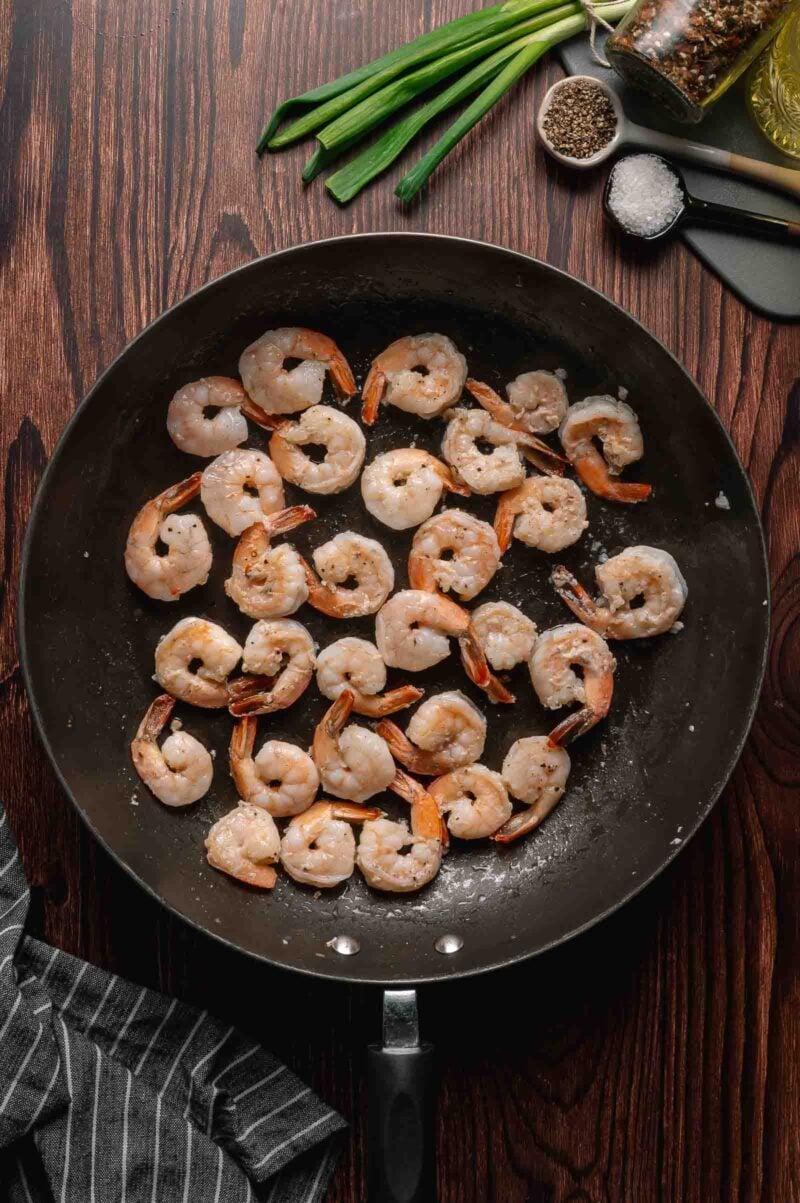
- Sear the shrimp. Heat a large skillet over medium-high heat until hot. Add the shrimp in a single layer without overlapping. Cook for 1 to 2 minutes per side, until the edges turn pink and the shrimp just start to firm up. Pull them at this point even if the centers look slightly underdone. Transfer to a plate.
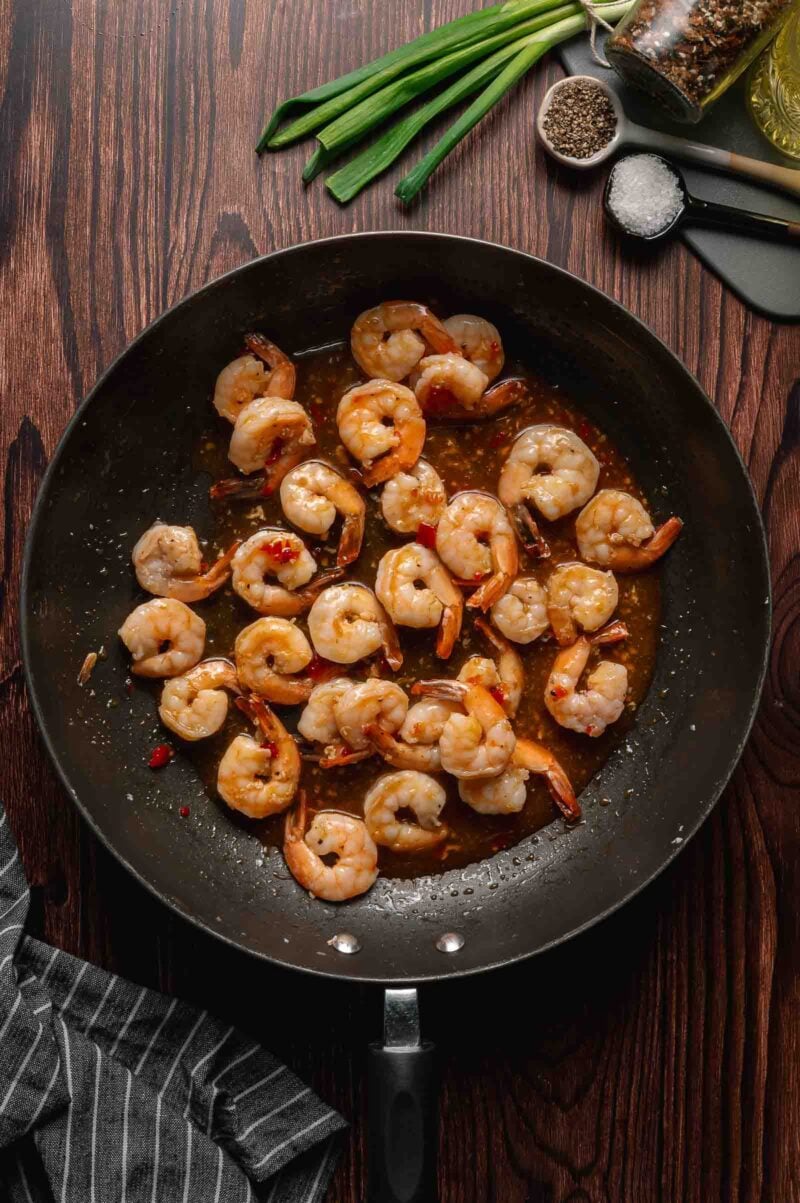
- Finish in the sauce. Pour the sweet chili sauce mixture into the same skillet. Cook for 1 to 2 minutes, stirring, until warmed and slightly thickened. Return the shrimp to the skillet and toss for 1 to 2 minutes, until fully cooked through and glazed.
- Assemble the bowls. Divide the sushi rice between bowls. Arrange the glazed shrimp, mukimame, cucumber, pineapple, red cabbage, and carrots over the rice. Drizzle with the Japanese white sauce, then finish with green onions and furikake.
🔄 Substitutions
- Kewpie mayo for regular mayo: the white sauce loses the signature richness that makes it taste like a hibachi drizzle. The finish turns slightly thinner and tangier. It works, but the depth drops noticeably. Add an extra splash of rice vinegar to compensate.
- Pineapple for mango: mango is less acidic and softer than pineapple, which plays better against the sweet chili glaze. The sharpness pineapple brings disappears, but nothing is lost in terms of flavor balance.
- Red cabbage and carrots for bagged slaw mix: saves prep time and adds some texture variety. Pre-shredded cabbage wilts faster once it meets the sauce, so eat the bowl same-day.
- Large shrimp for jumbo (U15): add about 30 seconds per side to the initial sear and watch the center more closely. The sweet chili finishing step is the same.
- Sushi rice for jasmine rice: the bowl is slightly looser and the rice doesn’t hold its shape as well under the toppings, but the flavor is fine.
💡 Meat Nerd Tips
- Pat the shrimp dry before oil, not after. Surface moisture is the enemy of a sear. Any water left on the shrimp turns to steam the second it hits the pan, and you get a gray boil instead of golden edges. Thirty extra seconds with paper towels makes a real difference.
- Work in a single layer, always. Crowded shrimp steam each other. If your skillet is under 12 inches, cook in two batches. The extra couple of minutes is worth not losing the sear on the first batch.
- Make the white sauce first and let it sit. Even 10 to 15 minutes in the fridge helps the flavors meld and the sauce tighten slightly. Making it right before serving means it tastes thin and a little raw.
- Prep every topping before the shrimp hits the pan. Shrimp cook in under 5 minutes total. Once they’re in, there’s no time to slice cucumbers or shred cabbage. Everything needs to be staged and ready to go.
🍽️ What to Serve with Sweet Chili Shrimp Poke Bowl
- This bowl is a full meal on its own, but a light miso soup alongside it is the move when you’re feeding a crowd. It stretches the spread without competing with the sweet chili glaze.
- If the poke bowl format is your thing, the salmon poke bowl is the natural next recipe. Different protein, sesame-sriracha marinade, completely different flavor profile. Easy to rotate through the same week without getting bored.
- Want to keep shrimp on the menu without repeating the bowl? Garlic butter shrimp over rice is about as fast as weeknight dinner gets, and the grilled shrimp tacos are a strong option when you want the same protein in a tortilla instead.
🧊 Leftovers and Storage
- Store the shrimp, rice, toppings, and white sauce in separate airtight containers in the fridge. Do not store assembled or everything turns soggy.
- Shrimp and rice keep for up to 2 days. Toppings like cucumber and red cabbage are best within 1 day before wilting sets in and the bowl loses its crunch.
- Reheat the shrimp in a skillet over medium heat for 1 to 2 minutes rather than the microwave. Microwaved shrimp go rubbery fast.
- Leftover shrimp and rice work well as lettuce wrap filling or stuffed into rice paper rolls the next day.
Have you tried this recipe? Do us a favor and rate the recipe card with the ⭐ ⭐ ⭐ ⭐ ⭐ and drop a comment to help out the next reader.
Sweet Chili Shrimp Poke Bowl
Recommended Equipment
- Two mixing bowls
- Whisk
Ingredients
furikake or sesame seeds, for serving
- 1 lb large shrimp, peeled and deveined
- 1 tablespoon avocado oil
- 1/2 teaspoon kosher salt
- 1/4 teaspoon black pepper
- 1/2 teaspoon garlic powder
For the Sweet Chili Sauce
- 1/2 cup sweet chili sauce
- 1 tablespoon soy sauce
- 1 tablespoon rice vinegar
For the Japanese White Sauce
- 3/4 cup Kewpie mayonnaise
- 1 tablespoon rice vinegar
- 2 teaspoons granulated sugar
- 1 teaspoon garlic powder
- 1/2 teaspoon paprika
- 2-3 tablespoons water
For the Bowls
- cooked sushi rice
- 1 cup mukimame (shelled edamame), thawed
- 1 cucumber, thinly sliced
- 1 cup diced pineapple
- 1 cup shredded red cabbage
- 1 cup julienned carrots
- sliced green onions, for serving
- furikake or sesame seeds, for serving
Instructions
Make the Sauces
- Whisk together the sweet chili sauce, soy sauce, and rice vinegar in a medium bowl. Set aside.

- In a separate small bowl, whisk together the Kewpie mayo, rice vinegar, sugar, garlic powder, paprika, and 2 tablespoons of water until smooth. Add more water a teaspoon at a time until drizzleable. Cover and refrigerate.

Season the Shrimp
- Pat the shrimp completely dry with paper towels. Drizzle with avocado oil, then season with kosher salt, black pepper, and garlic powder. Toss until evenly coated.
Sear the Shrimp
- Heat a large skillet over medium-high heat. Add the shrimp in a single layer. Cook 1 to 2 minutes per side until the edges turn pink and shrimp just starts to firm up. Pull them now – centers should still look slightly underdone. Transfer to a plate.
Finish in Sauce
- Pour the sweet chili sauce mixture into the same skillet. Cook 1 to 2 minutes, stirring, until warmed and slightly thickened. Return the shrimp and toss for 1 to 2 minutes until fully cooked and glazed.
Build the Bowls
- Divide rice between bowls. Arrange shrimp, mukimame, cucumber, pineapple, red cabbage, and carrots over the rice. Drizzle with Japanese white sauce. Finish with green onions and furikake.
Notes
- Store components separately in the fridge for up to 2 days. Do not store assembled. – Reheat shrimp in a skillet over medium heat, not the microwave.
- Kewpie mayo is the move for the white sauce – regular mayo works but the richness and depth drop significantly.
- If the shrimp turn rubbery, they stayed in the pan too long. Pull them early and let the sauce finish the job.
Save this Recipe
Nutrition
Bookmark this recipe now!
Quick Summary
Sweet chili shrimp poke bowls come together in 40 minutes with one skillet and no oven. The two-step method, searing the shrimp first then finishing in the sauce, is what keeps them from going rubbery. The Japanese white sauce is made ahead and drizzled cold over the assembled bowl. Get those two things right, and the rest takes care of itself.
❓ FAQs
Japanese white sauce (also called yum yum sauce or hibachi white sauce) is a mayo-based sauce made with Kewpie mayo, rice vinegar, sugar, garlic powder, paprika, and a little water to thin it out. Kewpie gives it a richer, more eggy flavor than regular mayo because it’s made with egg yolks only and includes a small amount of MSG, which rounds out the flavor.
Yes. Fully thaw the shrimp first and pat them completely dry before seasoning. Frozen shrimp tends to hold more moisture than fresh, so the dry-off step matters more. Don’t skip it or you’ll steam instead of sear.
Sushi rice. The short-grain, slightly sticky texture holds up under toppings and absorbs sauces without falling apart or turning to mush. Jasmine rice is a workable backup but the bowl doesn’t hold together as cleanly.
No. Sweet chili sauce has garlic, chili flakes, and a savory depth that sweet and sour sauce doesn’t have. They’re both sweet, but sweet chili sauce has heat and a more complex flavor profile. Swapping sweet and sour into this recipe would make the bowl taste flat.