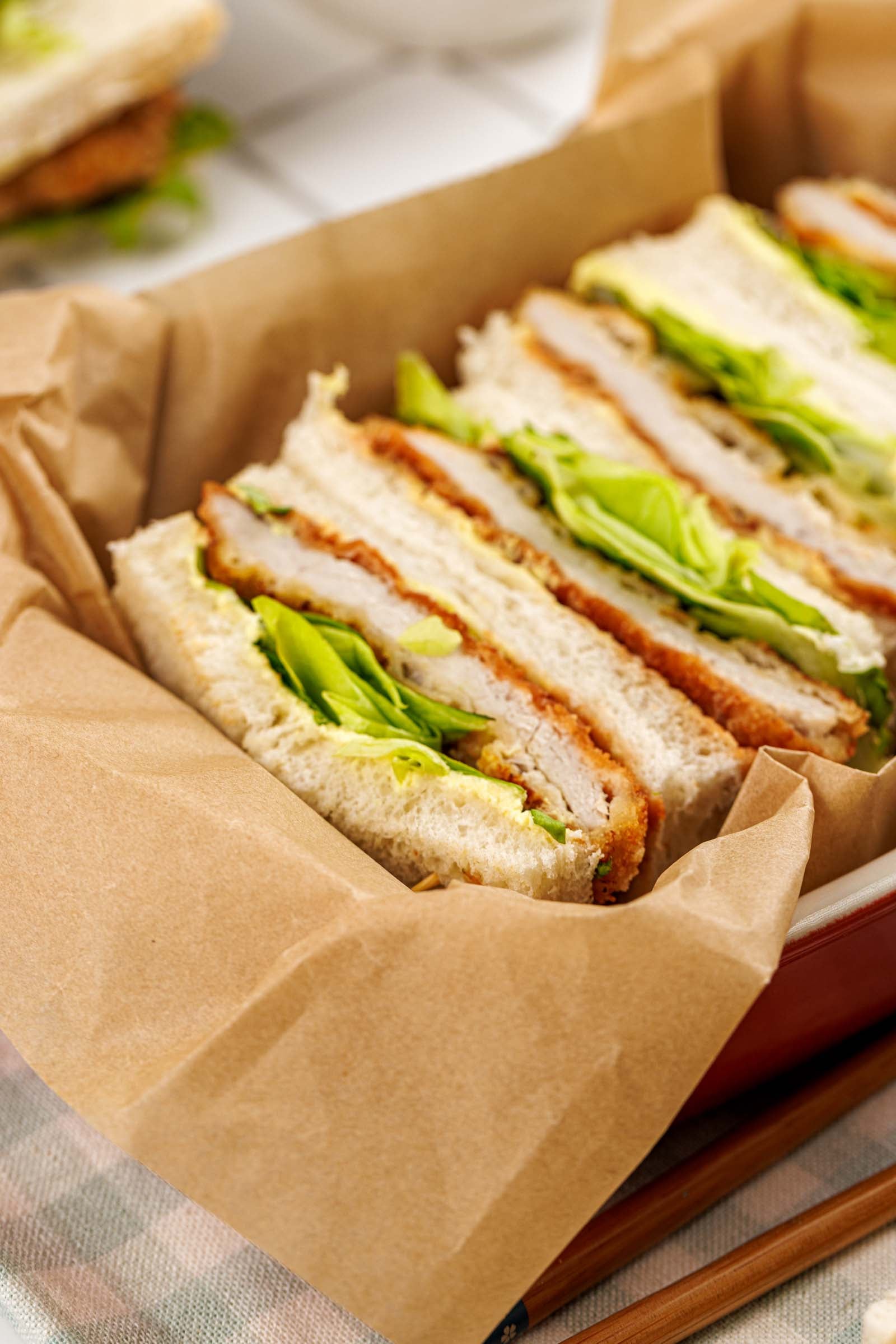
You already love a fried pork cutlet on soft white bread. A katsu sando is that sandwich the way Japan makes it: crusts cut off, sweet and sharp tonkatsu sauce, a handful of cabbage shaved as fine as slaw, and bread soft enough to press around the crunch. You get to make it at home in half an hour.
You are working with four things any grocery store carries. You pound the pork thin so it fries in about five minutes, you pull it at 145°F, and you wrap the whole sandwich for five minutes so it cuts clean. You will eat the first half standing at the counter.
🔪 Ingredients for Katsu Sando
For the pork katsu
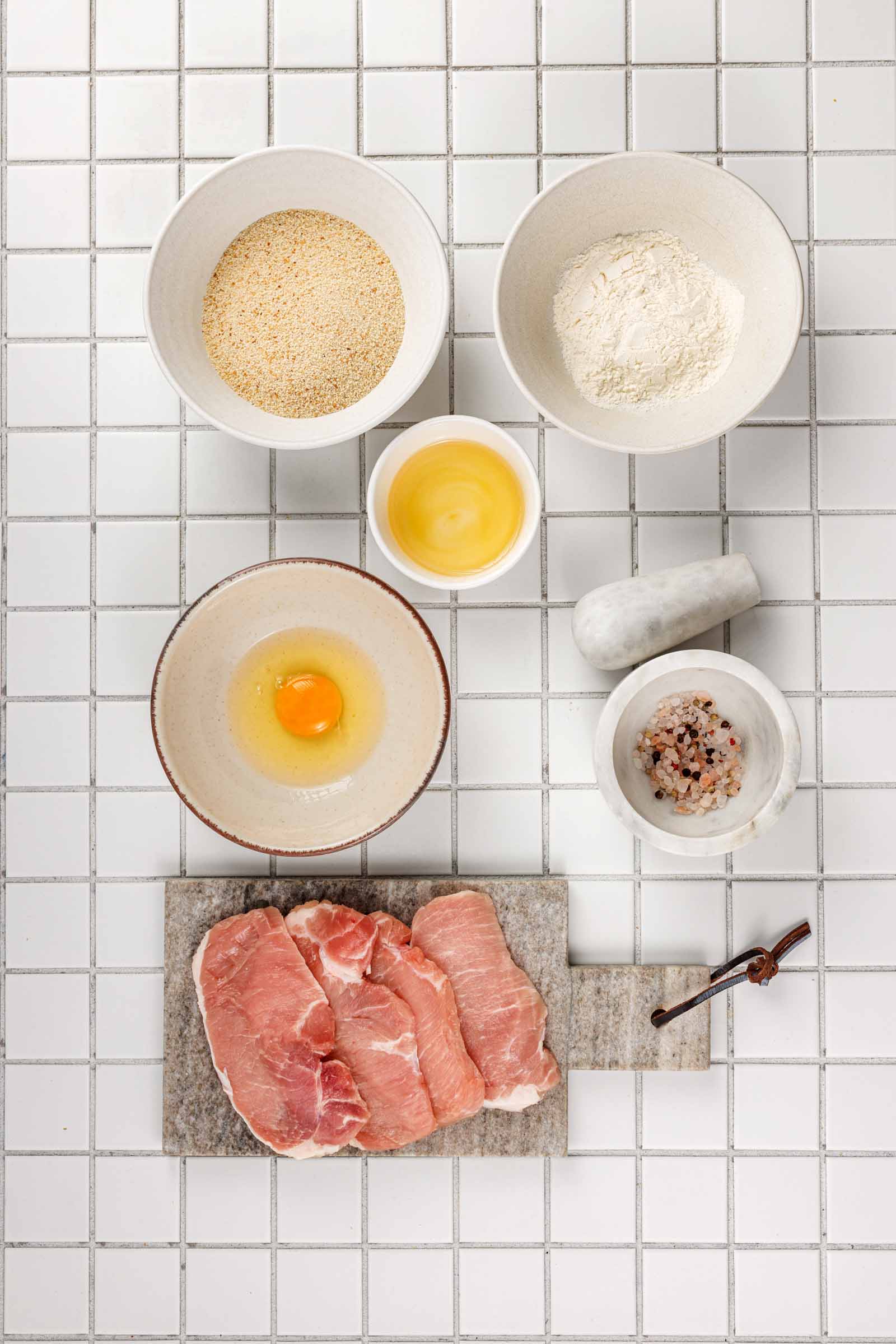
- Boneless pork loin chops: Center cut, about 3/4 inch thick before pounding. Skip the pre-sliced thin cutlets already under 1/4 inch. You cannot pound those to an even thickness and they overcook in the oil.
- Panko: The big shaggy Japanese-style flakes, not fine dry breadcrumbs. Panko is cut from crustless bread and dried without toasting, which is why it stays jagged and open instead of packing down into a sandy shell – this is what makes the crunch.
- All-purpose flour and one egg: The standard three-stage breading. Our full breading method applies here exactly.
- Neutral frying oil: Canola, vegetable, or peanut. You need enough for about 1/2 inch in the pan, not a full deep fry.
- Kosher salt and black pepper
For the tonkatsu sauce
- Ketchup: The base of the whole thing.
- Worcestershire sauce: Not optional. This is the ingredient that makes a bowl of ketchup taste like the bottled Bulldog sauce.
- Soy sauce: Regular or low sodium, your call. It carries the salt and the depth.
- Honey or sugar: Rounds the vinegar edge off the Worcestershire.
For building the sando
- Shokupan or soft white sandwich bread: Japanese milk bread if your store carries it. Plain soft white, you know the cheap kind, is the everyday stand-in.
- Kewpie mayo: Japanese mayo built on egg yolks and rice vinegar. Richer and tangier than American mayo, and worth the trip to the Asian market.
- Green cabbage: Shaved as thin as slaw, not chopped. This is the one ingredient people get wrong. Thick shreds eat like a salad wedged in a sandwich and shove the cutlet sideways on the first bite. You want strands fine enough to go translucent at the edges and settle flat under the pork.
Equipment
- Heavy skillet or cast iron: It holds its temperature when cold breaded pork hits the oil. A thin pan drops 40 degrees on contact and you get a greasy coating instead of a crisp one.
- Thermapen
- Mandoline: The fastest honest route to slaw-thin cabbage, but only if you use it safely with a guard. A sharp knife gets there too if you quarter the wedge, cut out the core, and slice across the leaf rather than through it.
- A wire rack: Where the cutlets drain. This is not a suggestion; it can make or break the crispiness.
📝 How to Make Katsu Sando
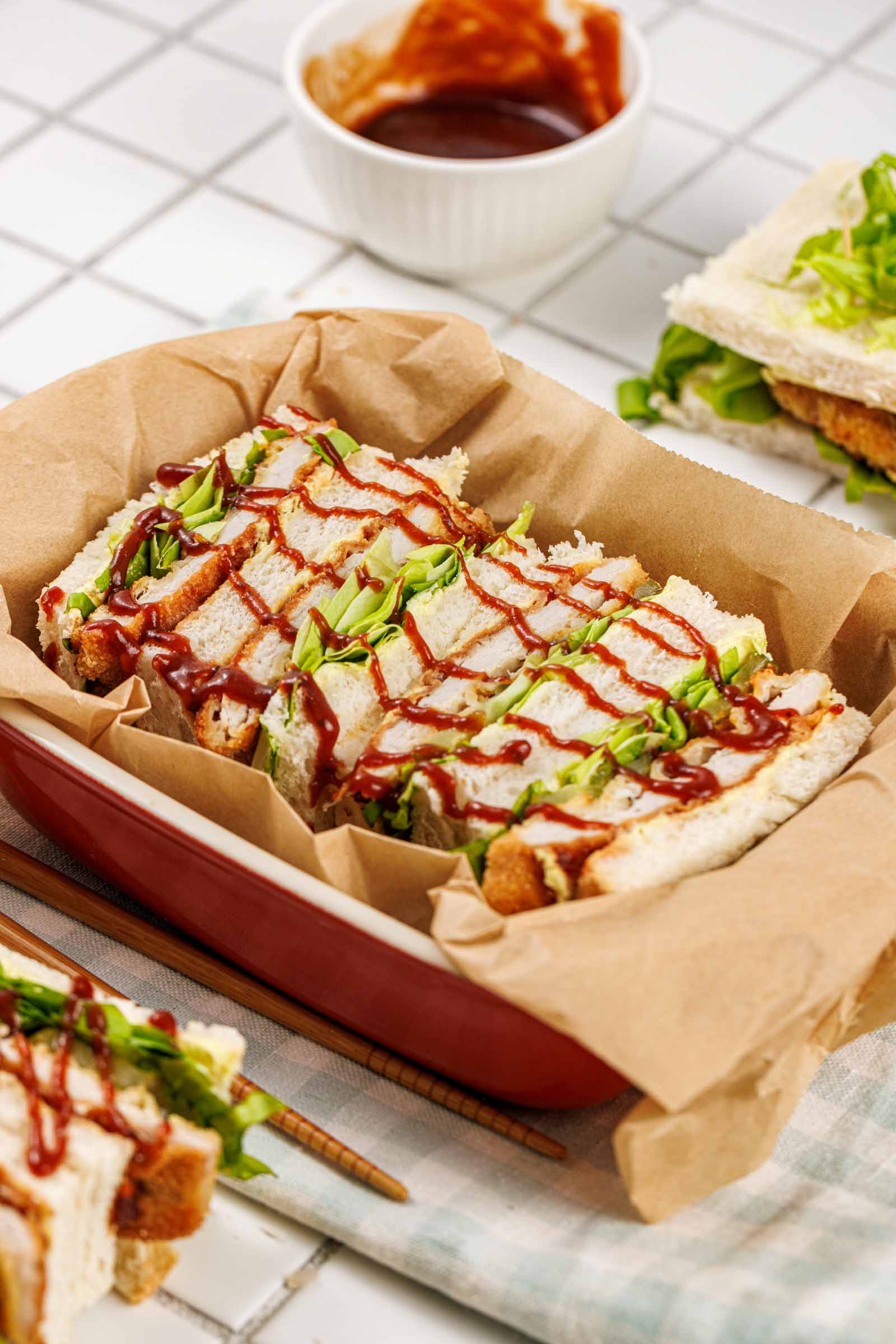
- Make the tonkatsu sauce. Whisk the ketchup, Worcestershire, soy sauce, and honey in a small bowl for about 30 seconds, until it is glossy and one color with no streaks of ketchup left. It should pour slowly and coat the back of a spoon.
- Shave the cabbage. Cut the wedge into quarters, take out the core, and shave it slaw-thin on a mandoline or with a sharp knife. Drop the strands into ice water for 5 minutes, then spin or towel them bone dry. The cold water snaps them stiff and pulls out the sulfur bite, and dry cabbage is the only kind that will not water down the bread.
- Pound the pork. Lay each chop between two sheets of plastic wrap and pound it to an even 1/2 inch. Even matters more than thin. Any spot left thicker than the rest is still raw when the edges are already done.
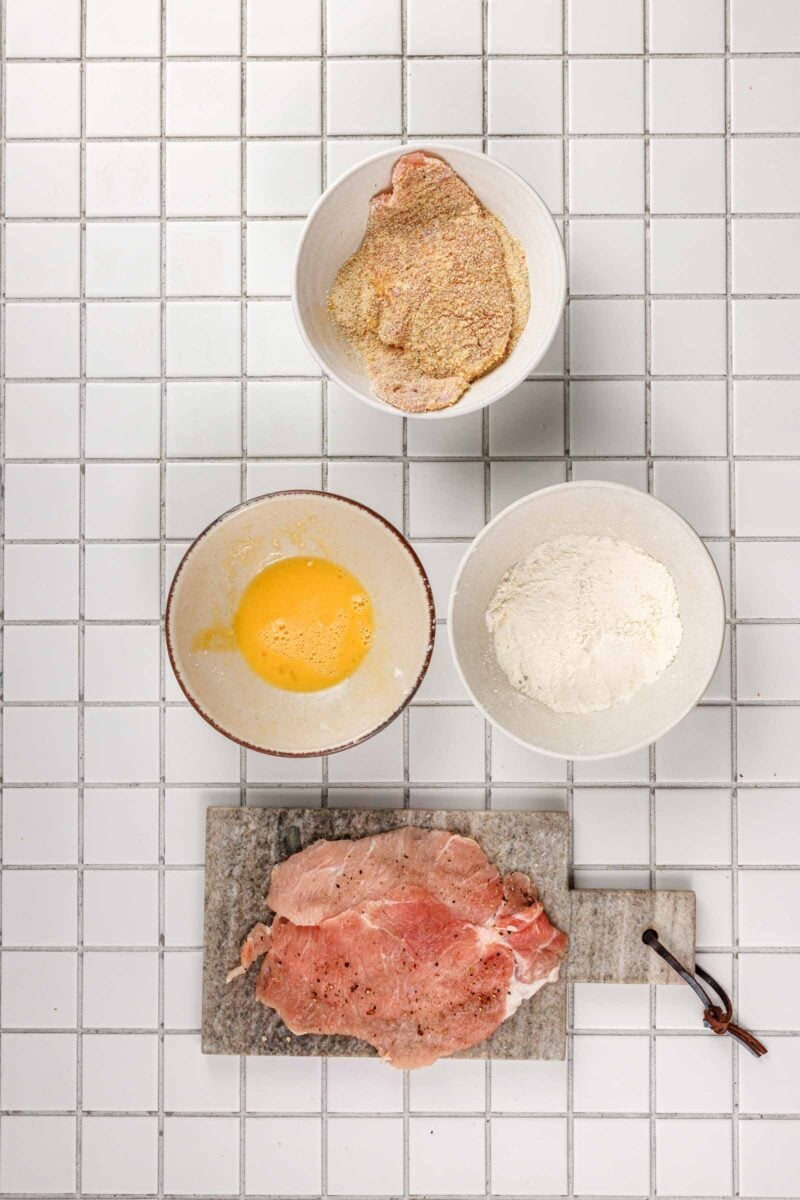
- Season and set up. Salt and pepper both sides of the cutlets. Line up three shallow dishes: flour, beaten egg, panko.
- Bread the cutlets. Flour first and shake off everything loose, then egg and let the excess run off, then press the cutlet down into the panko hard on both sides so the crumbs stand up instead of lying flat. Let the breaded cutlets sit 5 minutes before they go in the oil. The flour hydrates and glues the coating in place.
- Heat the oil. Pour 1/2 inch of neutral oil into the skillet and bring it to 340 to 350°F over medium heat. Drop in one panko crumb to check. It should sizzle steadily and float in about two seconds, not sit still and not brown instantly.
- Fry. Lay the cutlets away from you and fry 2 to 3 minutes per side, until the crust is deep golden brown and a Thermapen reads 140°F in the center, if it’s thick enough to get an accurate reading. Pull them immediately as they will continue to cook from the residual heat of the oil.
- Drain on a rack. Move the cutlets to a wire rack and let them sit 3 minutes. They stay loud on both sides and the residual heat finishes carrying through the center.
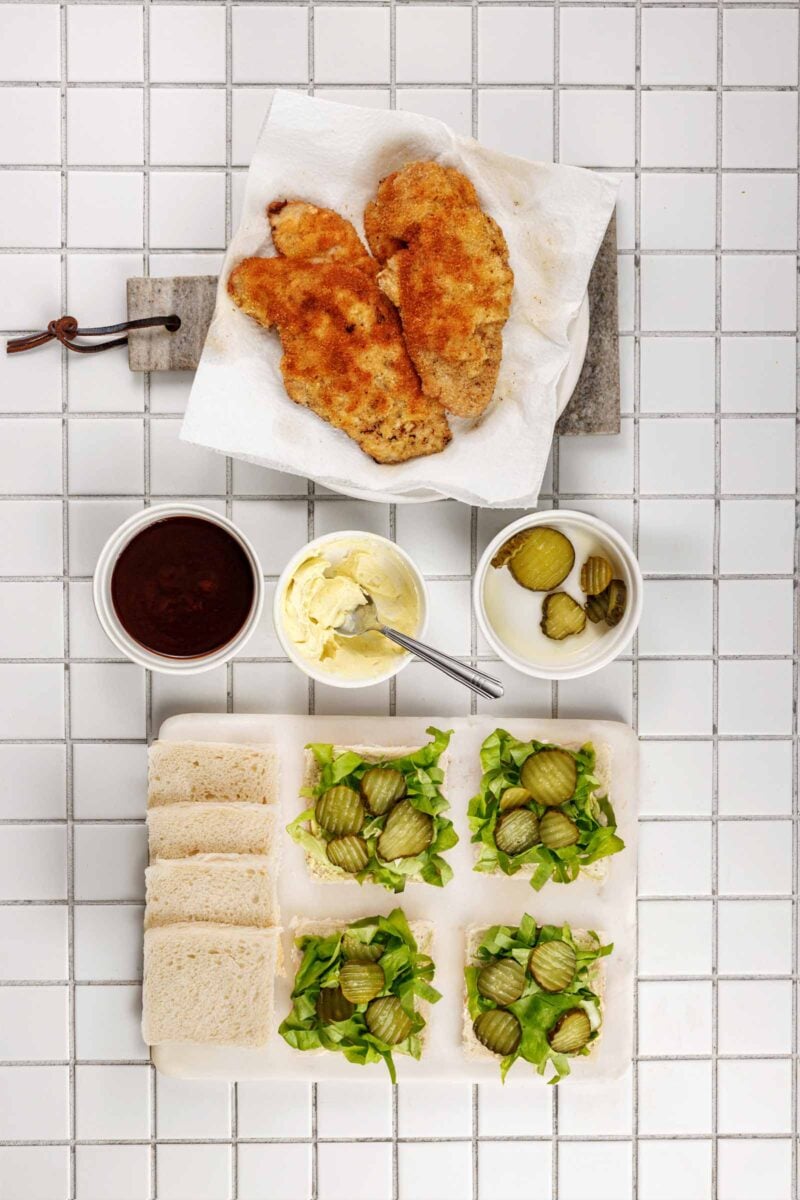
- Build the sando. Spread Kewpie mayo edge to edge on one side of all four slices of bread. Pile the dry cabbage on two of them and set a hot cutlet on top. Spoon the sauce over the cutlet, never onto bare bread. Sauce on bread soaks through in about a minute; panko holds it on the surface, which is the whole reason the coating is there. Close with the remaining slices, mayo side down.
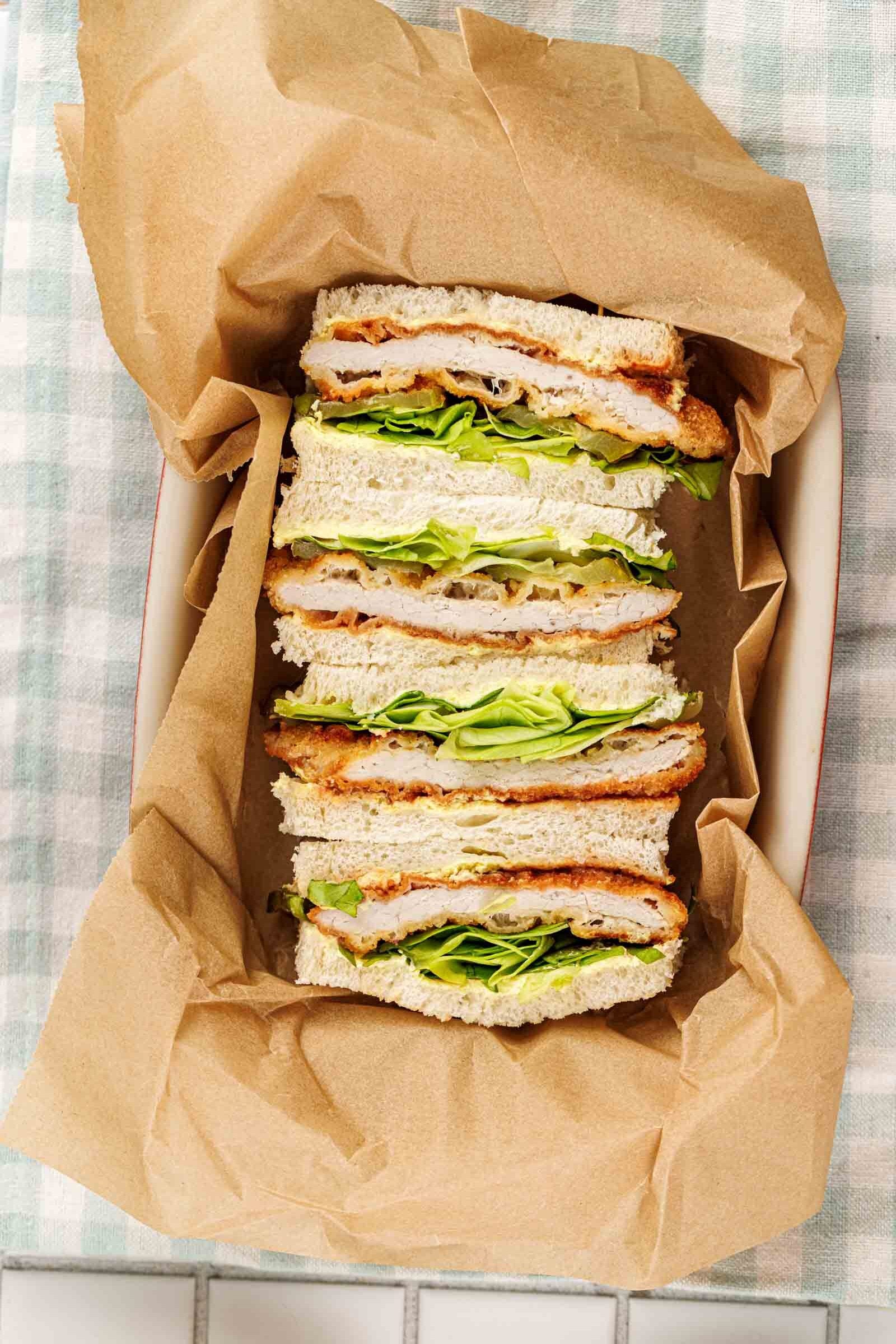
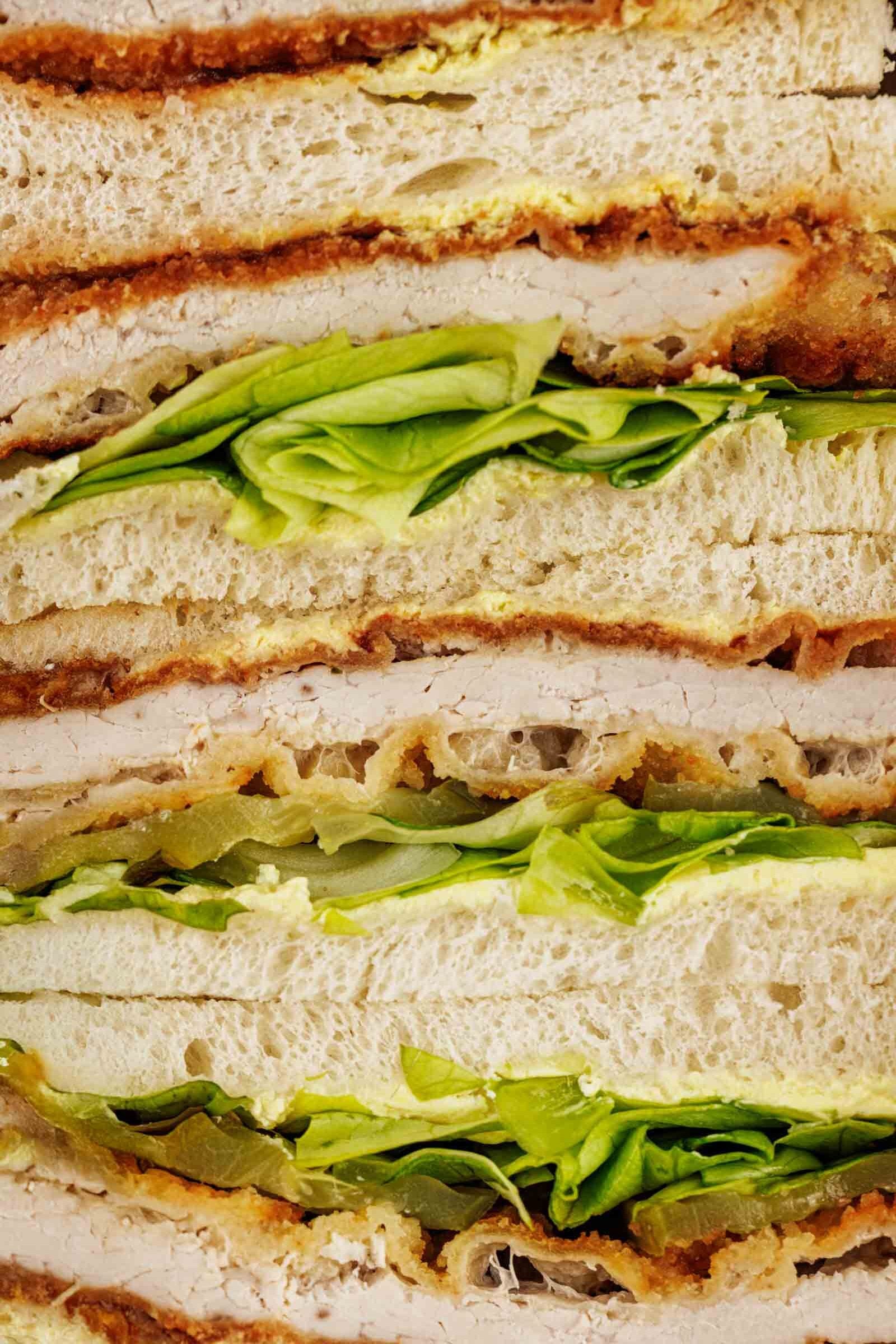
- Wrap, rest, then cut. Wrap each sandwich tight in parchment or plastic and leave it 5 minutes. The bread settles around the cutlet and everything stops sliding, which is the difference between a clean cross section and a sandwich that falls apart on the board. Unwrap, cut the crusts off all four edges with a serrated knife, then cut in half or into thirds, wiping the blade between cuts.
🔄 Substitutions
- Chicken breast for pork: Pound to the same 1/2 inch and fry on the same timing, but pull it at 165°F. That version is chicken katsu, and it is just as good in the bread.
- Karashi under the mayo: Japanese hot mustard, a thin smear on the bread before the Kewpie. It is sharper than Dijon and the heat clears fast, which is exactly what you want against fried pork. This is a standard move in Japan and the fastest way to make the sandwich taste less flat.
- Regular mayo for Kewpie: Whisk 1/4 teaspoon of rice vinegar and a pinch of sugar into 2 tablespoons of American mayo. It gets you most of the way there.
- Bottled tonkatsu sauce for homemade: Bulldog brand, straight from the bottle, no adjustments. Keep a bottle around and the sandwich drops to a 20 minute build.
- Brioche or potato bread for shokupan: Both are soft enough to press. They run sweeter, so go a little heavier on the sauce to balance it.
- Air fryer for the skillet: Spray the breaded cutlets heavily with oil, 400°F for 10 to 12 minutes, flipping once, same 145°F pull. The crust comes out drier and less craggy, which is a fair trade on a weeknight.
💡 Meat Nerd Tips
- Shave the cabbage thinner than you think you need to. This is the difference between a katsu sando and a pork sandwich with slaw on it. Aim for strands you can almost see through. Anything chunky enough to hold its own shape will roll under the cutlet and push the whole stack apart when you bite it.
- Pound for even, not for thin. A cutlet that runs 1/4 inch at the edge and 3/4 inch in the middle burns on the outside before the center reaches 145°F. Work from the center out and check it by laying your palm flat across the whole thing.
- Wire rack, never paper towels. Paper traps steam under the cutlet and the bottom crust goes soft in about 90 seconds. A rack keeps air moving on all sides and the crunch holds until it is between the bread.
- The five minute wrap is not optional if you want the photo. Every clean, flat cross section you have seen of this sandwich came from wrapping it and letting it sit before the knife went in. Cut it the second it is built and the cabbage slides, the cutlet shifts, and you get a mess that still tastes right.
🍽️ What to Serve with Katsu Sando
A katsu sando is a full sandwich, so everything around it should stay cold, sharp, or slurpable:
- Quick cucumber sunomono, thin slices tossed in rice vinegar, sugar, and salt for 10 minutes.
- Japanese potato salad, mashed rough with cucumber and carrot folded through it.
- Pan-Fried Pork Dumplings if you are turning this into a full spread for people.
- Miso soup, which cuts the fry better than anything else on this list.
- A cold Japanese lager or a whisky highball with a lot of ice.
More sandwiches worth frying for: Fried Pork Chop Sandwich and Crispy Fried Fish Sandwich. Chasing more Japanese flavors at home? Start with our Sweet Chili Shrimp Poke Bowl with Japanese White Sauce.
🧊 Leftovers and Storage
- The built sandwich: Eat it. Cabbage and sauce turn soft bread to paste within the hour, and there is no saving it after that.
- Fried cutlets: Airtight container in the fridge up to 3 days, stored on their own with nothing stacked on the crust.
- Reheating: 400°F oven or air fryer, on a rack, 5 to 6 minutes, until the panko crackles again and the center is warm through. A microwave turns the crust to wet bread in 20 seconds.
- Shaved cabbage: Spin it dry and keep it in a bag with a paper towel, up to 2 days. Shave it fresh if you can, it goes limp faster than it goes bad.
- The sauce: Sealed jar in the fridge up to 2 weeks. Make a double batch, it goes on burgers and fried rice.
- Freezing: Freeze the cutlets breaded but unfried, flat on a sheet tray, then bag them for up to 2 months. Fry straight from frozen and add 1 to 2 minutes per side, same 145°F pull.
Katsu Sando (Japanese Pork Cutlet Sandwich)
Ingredients
For the Pork Katsu
- 2 boneless center cut pork loin chop (5 to 7 oz each), about 3/4 inch thick
- 1 teaspoon kosher salt
- 1/2 teaspoon black pepper
- 1/3 cup all-purpose flour
- 1 large egg beaten
- 1 cup panko breadcrumbs
- about 1 1/2 cups Neutral oil for frying (enough for 1/2 inch in the pan)
For the Tonkatsu Sauce
- 3 tablespoons ketchup
- 1 tablespoon Worcestershire sauce
- 1 tablespoon soy sauce
- 1 teaspoon honey or sugar
For the Sandwiches
- 4 slices shokupan or soft white sandwich bread
- 2 tablespoons Kewpie mayonnaise
- 1 1/2 cups green cabbage shaved as thin as slaw
Instructions
Step 1: Make the Tonkatsu Sauce
- Whisk the ketchup, Worcestershire, soy sauce, and honey in a small bowl for about 30 seconds, until glossy and one color with no streaks of ketchup left. It should pour slowly and coat the back of a spoon.
Shave the Cabbage
- Quarter the wedge, cut out the core, and shave it slaw-thin on a mandoline or with a sharp knife. Soak the strands in ice water 5 minutes, then spin or towel them bone dry. Wet cabbage waters down the bread.
Pound the Pork
- Lay each chop between two sheets of plastic wrap and pound to an even 1/2 inch. Even matters more than thin. Any spot left thicker is still raw when the edges are done.
Bread the Cutlets
- Season both sides with salt and pepper. Set out three shallow dishes of flour, beaten egg, and panko. Flour and shake off everything loose, egg and let the excess run off, then press hard into the panko on both sides so the crumbs stand up. Let the breaded cutlets rest 5 minutes so the coating sets.

Heat the Oil
- Pour 1/2 inch of neutral oil into a heavy skillet and bring it to 340 to 350°F over medium heat. A dropped panko crumb should sizzle steadily and float within about two seconds.
Fry
- Fry 2 to 3 minutes per side, until the crust is deep golden brown and a thermometer reads 145°F in the center. Pull them there.
Drain
- Move the cutlets to a wire rack, not paper towels, and let them sit 3 minutes.
Build, Wrap, and Cut
- Spread Kewpie mayo edge-to-edge on one side of all four bread slices. Pile the dry cabbage on two of them, and set a hot cutlet on top. Spoon the sauce over the cutlet, never onto bare bread.
- Close the sandwich, mayo side down, wrap each sandwich tightly in parchment or plastic, and rest for 5 minutes. Unwrap, cut the crusts off all four edges with a serrated knife, then cut in half or into thirds, wiping the blade between cuts.
Notes
- Shave the cabbage thinner than you think. Chunky shreds roll under the cutlet and push the sandwich apart when you bite it.
- The 5-minute wrap before cutting is what gives you a clean cross-section instead of a pile.
- Wire rack, never paper towels. Paper traps steam and the bottom crust softens in about 90 seconds.
- Sauce the cutlet, not the bread. Sauce on bare bread soaks through in about a minute.
- Karashi (Japanese hot mustard), a thin smear under the mayo, is the standard move in Japan.
- Chicken breast swaps in at the same thickness and timing, pulled at 165°F. That version is chicken katsu.
- No Kewpie? Whisk 1/4 teaspoon rice vinegar and a pinch of sugar into 2 tablespoons of American mayo.
- Fried cutlets keep 3 days in the fridge. Reheat at 400°F on a rack for 5 to 6 minutes. Never microwave.
- Breaded, unfried cutlets freeze up to 2 months. Fry from frozen, adding 1 to 2 minutes per side, same 145°F pull.
Save this Recipe
Nutrition
Bookmark this recipe now!
Quick Summary
A katsu sando is a panko fried pork cutlet on crustless soft white bread with tonkatsu sauce, Kewpie mayo, and cabbage shaved as thin as slaw. Pound the loin to an even 1/2 inch, rest the breaded cutlets 5 minutes so the coating sets, fry at 340 to 350°F for 2 to 3 minutes a side, and pull at 145°F. Drain on a wire rack, sauce the cutlet and never the bread, then wrap the built sandwich for 5 minutes before you cut it. That last step is what gives you a clean cross section instead of a pile.
❓ FAQs
A katsu sando is a Japanese sandwich built on a panko breaded, fried pork cutlet, served on soft white milk bread with the crusts cut off. It gets tonkatsu sauce, Kewpie mayo, and finely shaved cabbage, and it is sold all over Japan from convenience store shelves to department store food halls.
Boneless center cut pork loin. It is lean, it has a tight grain that slices clean through the sandwich, and it pounds out to an even thickness without falling apart. Pork tenderloin works if you slice it into medallions and pound them, and that version is called hirekatsu in Japan.
Slaw thin, fine enough that the strands go slightly translucent at the edges. Chopped or roughly shredded cabbage sits too tall, rolls under the cutlet, and pushes the sandwich apart when you bite it. A mandoline is the fastest way there, and a 5 minute soak in ice water crisps the strands and takes the sulfur edge off.
Shokupan, the Japanese milk bread sold in thick soft slices. If you cannot find it, any soft white sandwich bread works, and brioche or potato bread will do in a pinch. Cut the crusts off no matter which one you use, since the whole point is bread soft enough to press around the cutlet.
Bottled tonkatsu sauce is a thick fruit and vegetable based brown sauce, closest to a sweeter Worcestershire. The five minute version here is ketchup, Worcestershire, soy sauce, and honey whisked together, and it lands close enough that most people cannot tell it from the Bulldog bottle.