
Salt the bird, uncovered, on a rack, two days ahead. That is the whole method, and it beats the wet brine on the thing people complain about most: the skin. Salt on the surface pulls water out, dissolves in it, and drives the seasoning back into the meat while the surface dries out in the cold, which is exactly the condition crisp skin needs.
To see how a dry brine stacks up against other methods, browse our Thanksgiving turkey recipes.
A wet brine does the opposite. It leaves water on and under the skin, which is why every honest wet brine recipe ends with an overnight air dry. The gap on the meat itself is smaller than the internet suggests. The gap in effort is not: a dry brine takes fifteen minutes and one shelf, while a wet brine takes five gallons of cold salted water the week you have no refrigerator space. It works whether you are roasting, smoking, spatchcocking, or frying the bird.
Table of Contents
🎥 Watch: Best Turkey Dry Brine
🧂 Why Dry Brine a Turkey
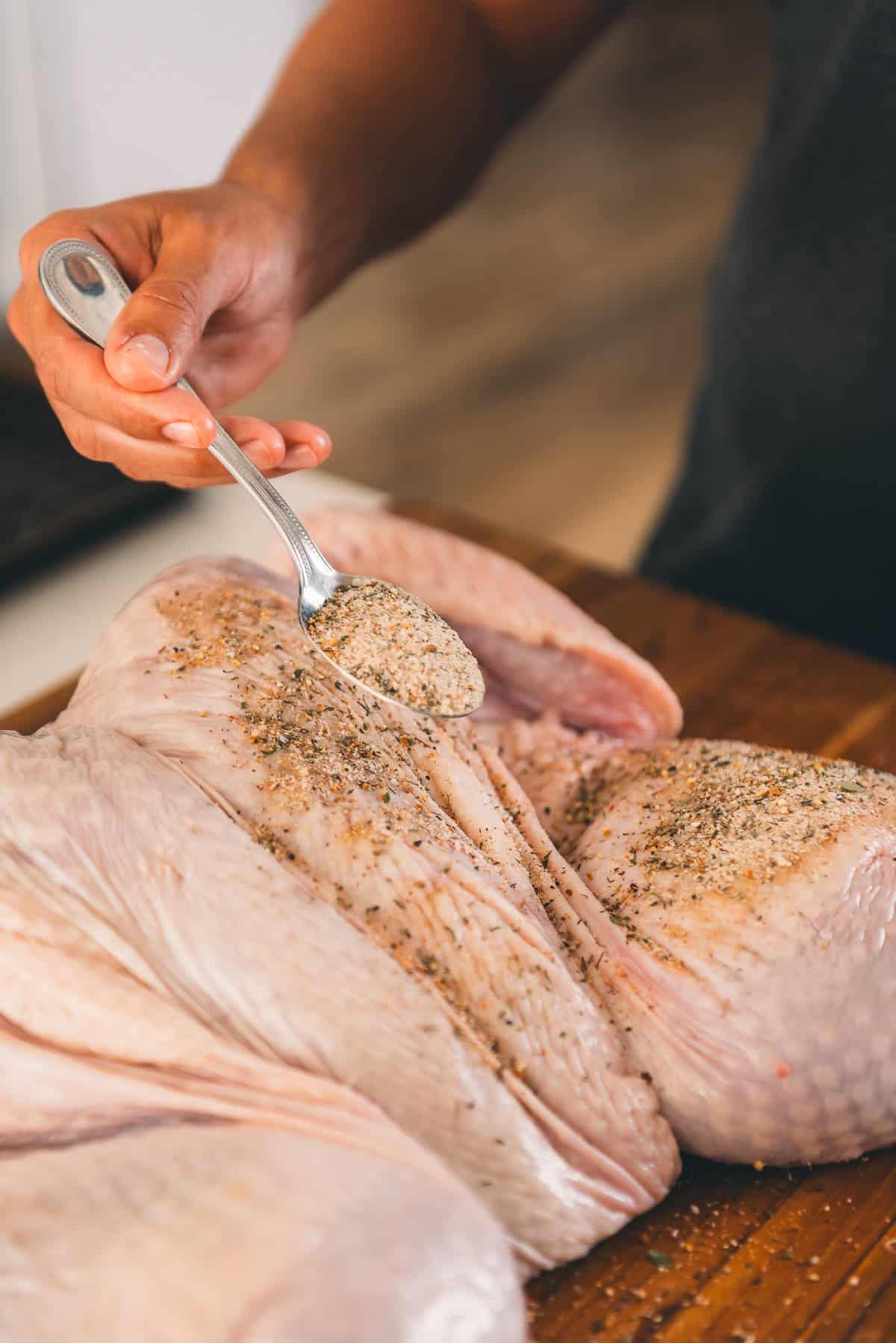
Dry brining is a straightforward process of evenly sprinkling a salt mixture over the meat’s surface and letting it rest in the refrigerator. During this time, the salt draws out moisture from the meat, which, in turn, combines with the salt and seasonings, resulting in a flavorful and moist environment that gets reabsorbed by the meat. In short, it’s the fast and east way to juicy turkey.
A brine is a salt solution used to impart flavor and moisture to meat. A brine works through osmosis, a process in which the moisture from the inside of the bird comes to the surface to dilute the salt. Eventually, the concentrations of salt and water are equal on both sides, producing super flavorful and juicy meat.
Brining also works as a tenderizer, as the salt breaks down the muscle fibers in the meat. As a result, the meat becomes super tender and easy to eat.
This method is very similar to using a marinade, but marinades rely on acidity to break down the muscle proteins and add flavor, whereas brines rely on a salt mixture.
⚖️ Dry Brine vs. Wet Brine Turkey
This page is the dry brine: salt goes on the bird, nothing goes in a bucket, and the skin comes out drier than it went in, which is the whole reason it crisps. It wins on skin, it wins on refrigerator space, and on the meat itself the gap is small enough that skin and space should decide it. Use the wet brine instead when you are cooking a lean or previously frozen bird that needs the moisture, or when you specifically want citrus and herb flavor carried into the meat rather than sitting on the surface.
🔪 Dry Brine Ingredients
This is a quick and easy recipe that you can easily adjust depending on how many pounds of turkey you have to cook.
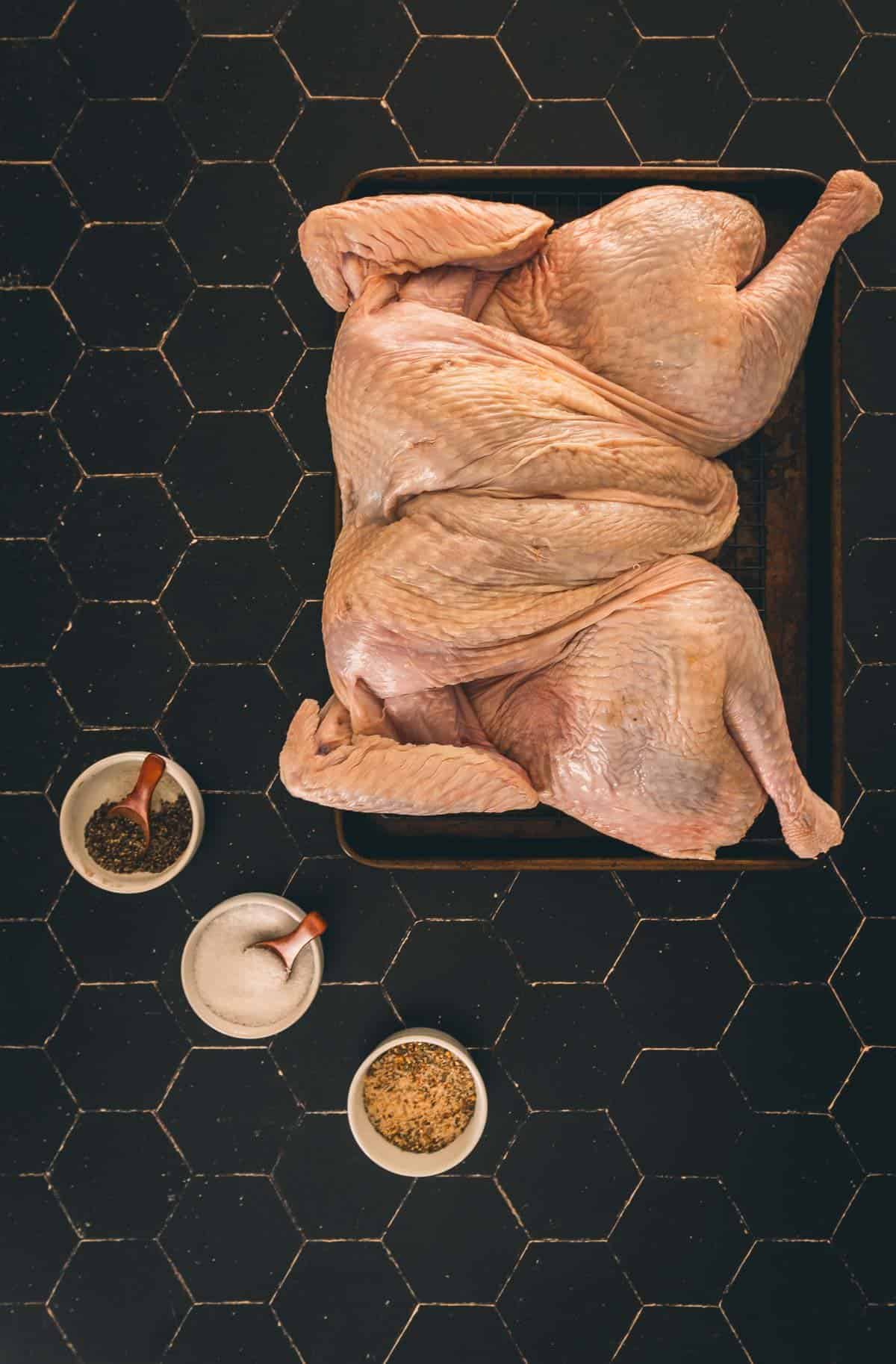
- 12-14 pound fresh turkey – Its important to note not to dry brine Kosher turkeys, as they have already been heavily salted.
- Kosher salt
- Fresh Rosemary, thyme, sage (or poultry blend)
- Lemon pepper (or use ground black pepper)
📝 How to Dry Brine a Turkey
This is the easiest way to get the best turkey on the table with minimal effort. We love dry brining all of our poultry, but when combined with the spatchcock method, we think it makes the most beautiful Thanksgiving feast. If the legs need tying, here is how to truss a turkey.
- For the best results, start with a thawed turkey. Is your turkey still frozen solid? Check out our guide on how to thaw a turkey.
- Remove the bird from the package and set aside the giblets and neck. Then pat the bird dry with paper towels, making sure to get under the folds of the wings and legs and inside the cavity.
- Combine the salt and remaining ingredients in a small bowl. Mix to combine.
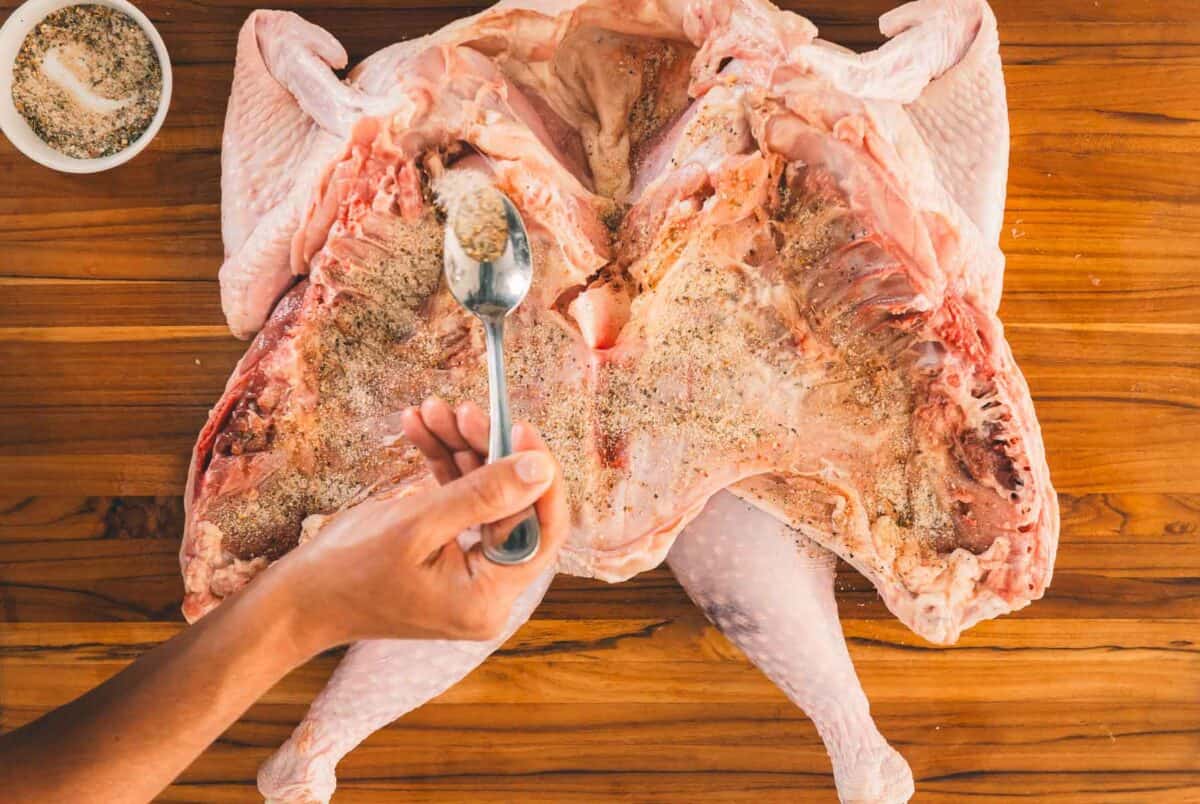
- Rub the outside of the turkey on all sides and under the skin liberally with the salt mixture.
- Transfer the turkey to a wire rack over a rimmed baking sheet, breast side up, and refrigerate uncovered for 24 to 48 hours. The time air drying in the fridge helps create extra crispy skin and a juicy bird that everyone loves.
- After 24 to 48 hours, you will notice the skin has dried out and gotten a hint of pink color to it. We don’t rinse our bird after dry brining it because we want the best crispy golden skin. Once the bird has brined, the next step is to cook your turkey to perfection. We love a roast turkey or a smoked spatchcock turkey.

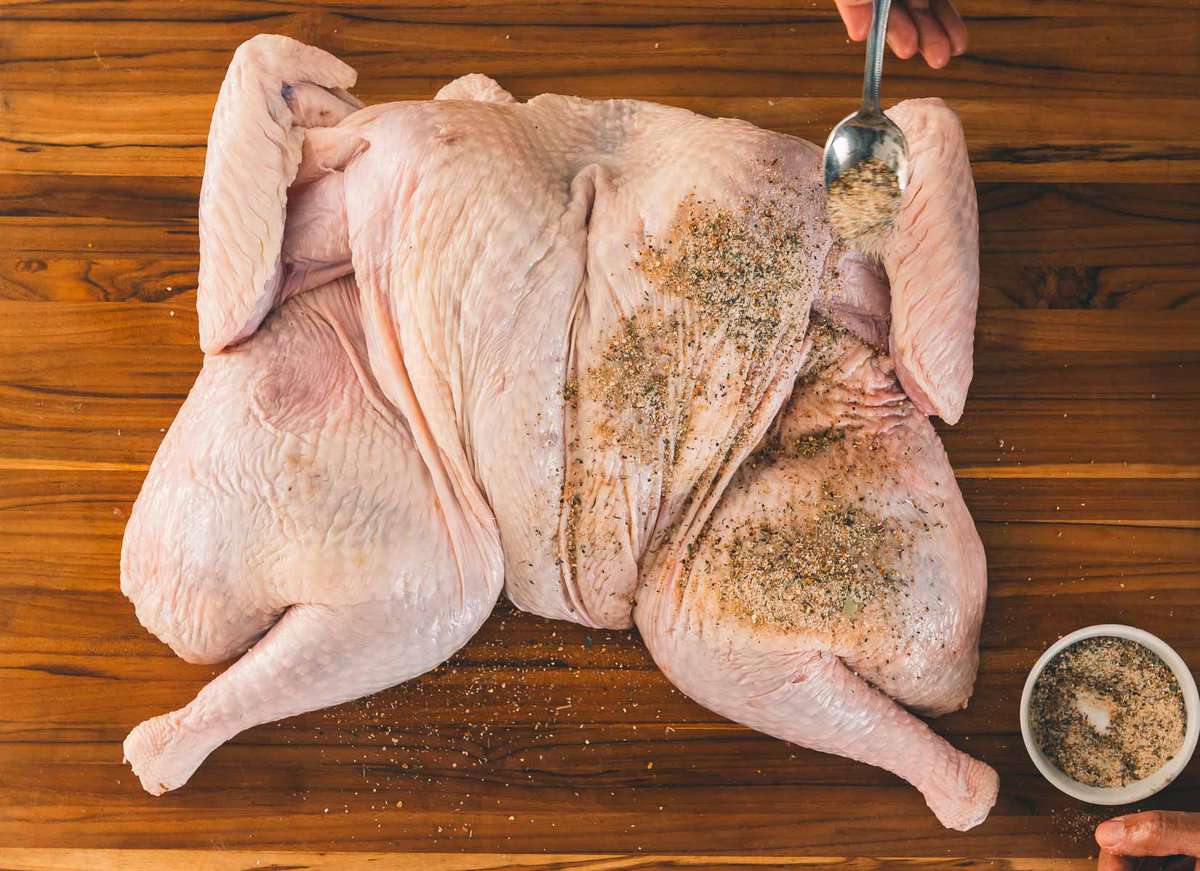
Salt it, leave it uncovered, and roast it. The recipe card below has the exact amounts for the weight of your bird.
Ready to cook it? Roast it whole with our oven roasted turkey, flatten it with our spatchcock turkey, or take it outside with our smoked Thanksgiving turkey.
🔄 Substitutions
- Swap the herbs and aromatics to taste. Dried herbs blend evenly into the salt, while fresh herbs go on the bird.
- On a kosher or self-basting turkey, skip the salt or cut it by half and hold it to a single overnight.
💡 Meat Nerd Tips
- Salt by weight, not by cup: a cup of Diamond Crystal kosher salt weighs roughly half what a cup of Morton does. Half a teaspoon of kosher salt per pound of bird is the number to hold onto, and a scale removes the guesswork entirely.
- Uncovered is the method, not a shortcut: the bird goes on a rack, open to the cold air, for the whole rest. The dehydrated surface is what crisps. Plastic wrap cancels the reason you are doing this.
- Do not rinse it off: by the end of the rest the salt is inside the meat, not sitting on it. Rinsing rewets the skin you just spent two days drying and puts raw poultry water on every surface in the kitchen.
- Salt first, herbs second: salt needs contact with skin to work. Mixing herbs and sugar into the salt insulates it. Apply the salt, then the aromatics on top.
- Two days beats one, one beats none: 48 hours is the target for a whole bird, 24 works, and a single overnight still gets you most of the seasoning. What does not work is salting the morning of.
- Internal temperature still decides: 165F in the breast and 170F in the dark meat, per the USDA, no matter how the bird was brined or how it gets cooked. Check both, and keep the probe off the bone.
- Dried herbs mix better than fresh: fresh herbs are better on the bird, but for blending into a dry brine the dried ones distribute evenly and do not clump the salt.
Have you tried this recipe? Do us a favor and rate the recipe card with the ⭐ ⭐ ⭐ ⭐ ⭐ and drop a comment to help out the next reader.
Salt Brine Turkey (Best Dry Brine for Turkey)
Ingredients
- 12-14 pound fresh turkey use fresh thawed turkey. Avoid Kosher turkeys
- ⅛ cup Kosher salt
- 1 tbsp Rosemary
- 1 tbsp thyme
- 1 tbsp sage
- 1 tsp Lemon pepper or ground black pepper and a hint of lemon zest
Instructions
- Start with a thawed turkey that has been removed from its package. Make sure the neck and giblets are set aside.
- Pat the turkey dry with paper towels over the entire surface of the skin and inside the cavity.
- Combine the salt, rosemary, thyme, sage and lemon pepper in a bowl and mix to combine.
- Using a spoon or your fingers, rub the outside of the turkey on all sides and under the skin liberally with the salt mixture.
- Transfer the turkey to a wire rack over a rimmed baking sheet, breast side up.
- Place the rack in refrigerate uncovered for 24 to 48 hours.
- Remove the turkey from the frdige after 24 to 48 hours, and cook as desired.
Video
Notes
- This dry brine works for most turkey recipes, whether left a whole traditional turkey or spatchcocked to lay flat.
- Fresh or dried herbs work for this recipe, but we find dried work easier for a brine.
- We do not recommend rinsing the bird after it has dry brined.
- Remember, no matter how you cook your turkey after you use a dry brine recipe, the internal temperature should reach 165°F in the breast meat and 170 degrees F in the dark meat with a meat thermometer, according to the USDA.
- How to Spatchcock a Turkey
- How to Truss a Turkey
- How Long to Cook a Turkey Per Pound
- How to Cook a Turkey
- How to Carve a Turkey
Save this Recipe
Nutrition
Bookmark this recipe now!
Quick Summary
Dry brining is half a teaspoon of kosher salt per pound, applied to a fully thawed bird and left uncovered on a rack in the refrigerator for 24 to 48 hours. Do not rinse it. The skin dries out in the cold air and crisps in the oven, which is why it beats the wet brine on skin and refrigerator space. For a lean or previously frozen bird, the wet brine is the better rescue.
❓ Dry Brine Turkey FAQs
You can use a dry brine for a variety of recipes, including Spatchcock Chicken, Smoked Spatchcocked Turkey, and Smoked Turkey Breast!
Yes! Just make sure you thaw the turkey partially before adding the dry brine so you can remove any giblets from the cavity of the turkey. Check out our guide for learning How to Thaw a Turkey!
No. You’d be better off choosing one or the other. If you prefer a marinade, try our flavorful chicken marinade!
Feel free to use any blend of dried herbs, fresh herbs, brown sugar, or citrus zest for a dry brine.
The entire process should take 24 to 48 hours. Anything within that time frame is fair game! We do not recommend brining a turkey for longer than that.
Nope! You don’t want to remove any of those flavors that developed during the brining process. The only thing you should do is pat the whole turkey down with paper towels to remove excess moisture.
We recommend dry brining a turkey for 24 to 48 hours.
Yes, you can over-brine any cut by leaving it to rest with the dry brine (or soaking it in the wet brine) for too long. Over-brining results in an unnatural, mushy texture and an overly salted bird.
Uncovered, on a rack, in the refrigerator. Leaving it open to the cold dry air is not a side effect of dry brining, it is half the point. The surface dehydrates while the salt works, and that dry surface is what browns and crisps in the oven. Covering it traps moisture and cancels the advantage.
Not at full salt. Kosher birds are salted during processing and anything labeled self-basting or enhanced has already been injected with a salt solution. If that is the bird you have, skip the salt entirely and apply only the herbs and aromatics, or cut the salt by half and hold it to a single overnight.
Yes, and it is easier. A bone-in breast needs about 24 hours and a boneless one needs 12 to 18. Use the same salt ratio by weight, put it on a rack uncovered, and remember that a breast has no dark meat to hide behind, so the temperature check matters more here than on a whole turkey.
Less so than from a wet brine, because the salt went into the meat rather than into liquid sitting around it. Still build the gravy with unsalted stock and taste before you season. Salt the gravy at the end, never at the roux.
No. One overnight is worth doing. You will get most of the seasoning benefit and some of the skin benefit, just less of both than a full 48 hours would give you. What you cannot do is salt it in the morning and roast it that afternoon, because the salt has not finished drawing back in and the bird will taste salty on the outside and plain in the middle.












Have you had any success with baking soda??
Yes, we use it on our chicken wings and love it.