Wondering why your meatballs come out dry even when you followed the recipe? We got you.
Most meatball advice is either half right or flat wrong. Sear them to seal in the juices. Bring them to room temperature first. Just buy fattier beef. Two of those do nothing for moisture, one of them is a food safety problem, and the technique that matters more than all of them put together usually gets a single sentence in passing.
That technique is a panade. Bread and dairy, soaked into a paste, worked into the meat before anything else goes near it. Get that right and the rest of this is cleanup.
🍞 Start with a panade, not a handful of crumbs
A panade is bread soaked in liquid until it collapses into paste. Roughly half a cup of panko or torn white bread to a third of a cup of whole milk or buttermilk, per pound of ground meat. Stir it, walk away for five minutes, come back when it looks like wet spackle. That is the stage where it is ready.
Two things happen once it goes into the meat. The starch in the bread swells and traps water, so there is moisture held inside the meatball that was never part of the meat to begin with. And the paste physically gets between the meat proteins, so when they contract in the heat they cannot pull themselves into a tight, dense net and wring the water out. You end up with a meatball that is loose enough to stay tender and wet enough to taste juicy.
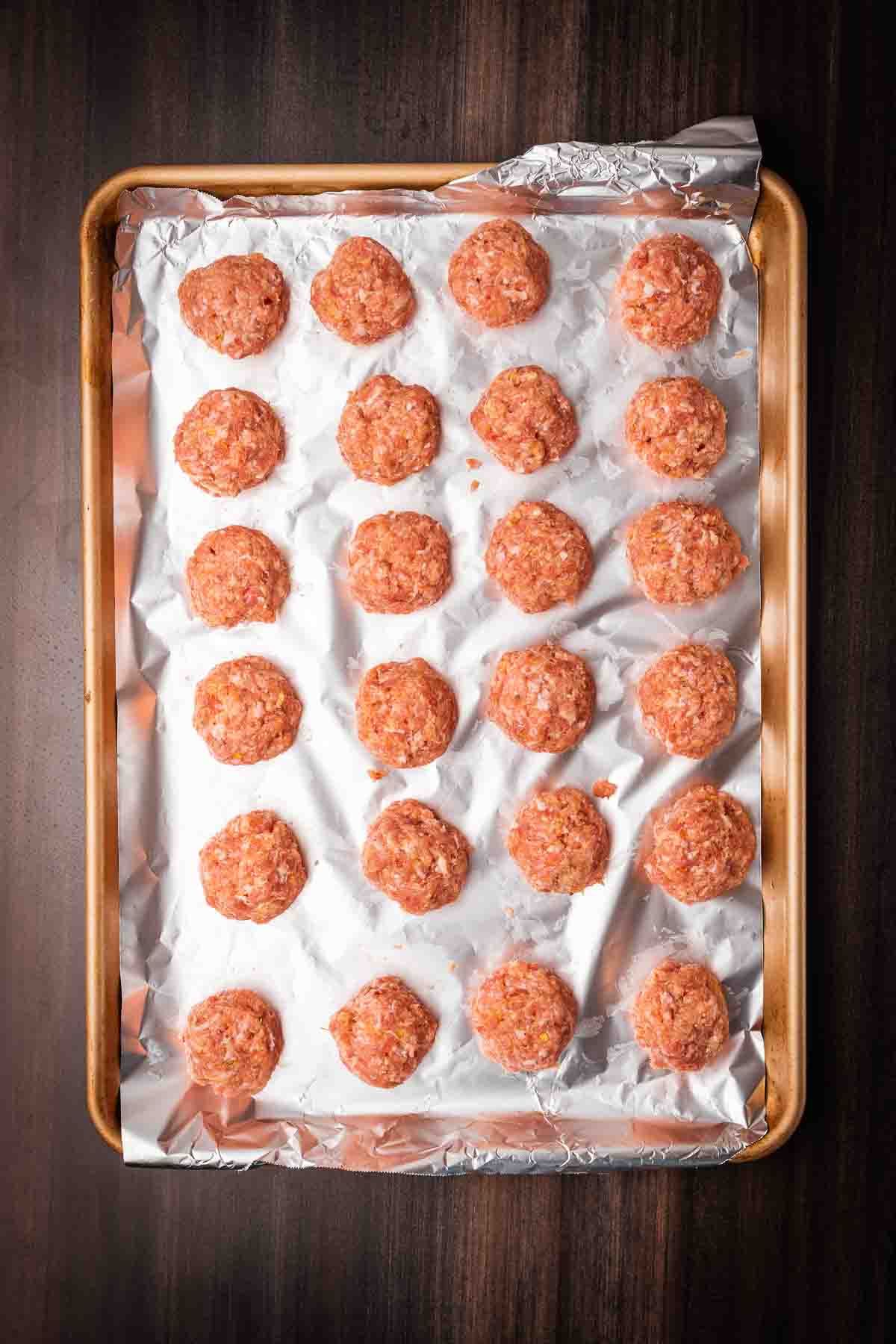
Dry breadcrumbs shaken straight into the bowl do the opposite job. They hit raw meat and start pulling moisture out of it to hydrate themselves, which is exactly backwards from what you want. If your recipe says to add dry crumbs, soak them first anyway. It costs five minutes and it is the single biggest change most people can make.
Buttermilk is worth a try if you have it. The acid gives you a touch more tenderness than plain milk. Stale bread, torn small, beats panko for texture. And no, the panade does not make them taste like bread. At this ratio you will not find it.
🥩 Fat helps, but it is not moisture
Eighty twenty is the right call for beef meatballs and it is worth asking the counter for it rather than grabbing whatever is stacked in front. But there is a limit to what fat can do here, and a lot of advice leans on it like it is the whole answer.
Fat renders and carries flavor. Water is what your mouth reads as juicy. Going to seventy thirty does not give you a juicier meatball, it gives you a greasy one that shrinks harder in the pan. Fat is a supporting player. The panade is the lead.
Where the meat choice earns its keep is texture. Beef alone runs firm. Pork loosens it and adds fat that renders soft. Veal is the traditional third for a reason, and it is the one most people skip. If you have never done the classic three way split, our veal meatballs are where to start. Working with leaner ground turkey or chicken? Then the panade stops being optional and starts being the whole structural plan, and you lean harder on grated onion for moisture.
🤲 Mix it less than feels right
Ground meat has a texture switch in it. Work it hard, especially once salt is in, and the proteins link up into the springy, bouncy, snappy texture you want in a hot dog or a summer sausage. In a meatball that same texture reads as rubbery, and it squeezes moisture out under heat.
Use your hands, not a stand mixer. Fold until the panade disappears into the meat and then stop, even if it looks like it could use another turn. It could not. Roll with a light touch too, and if the mix is sticky, wet your palms instead of packing them tighter.
One egg per pound is plenty. Eggs bind, they do not moisten, and past one per pound they push you toward that same rubbery end of the scale.
🔥 Searing does not seal in the juices
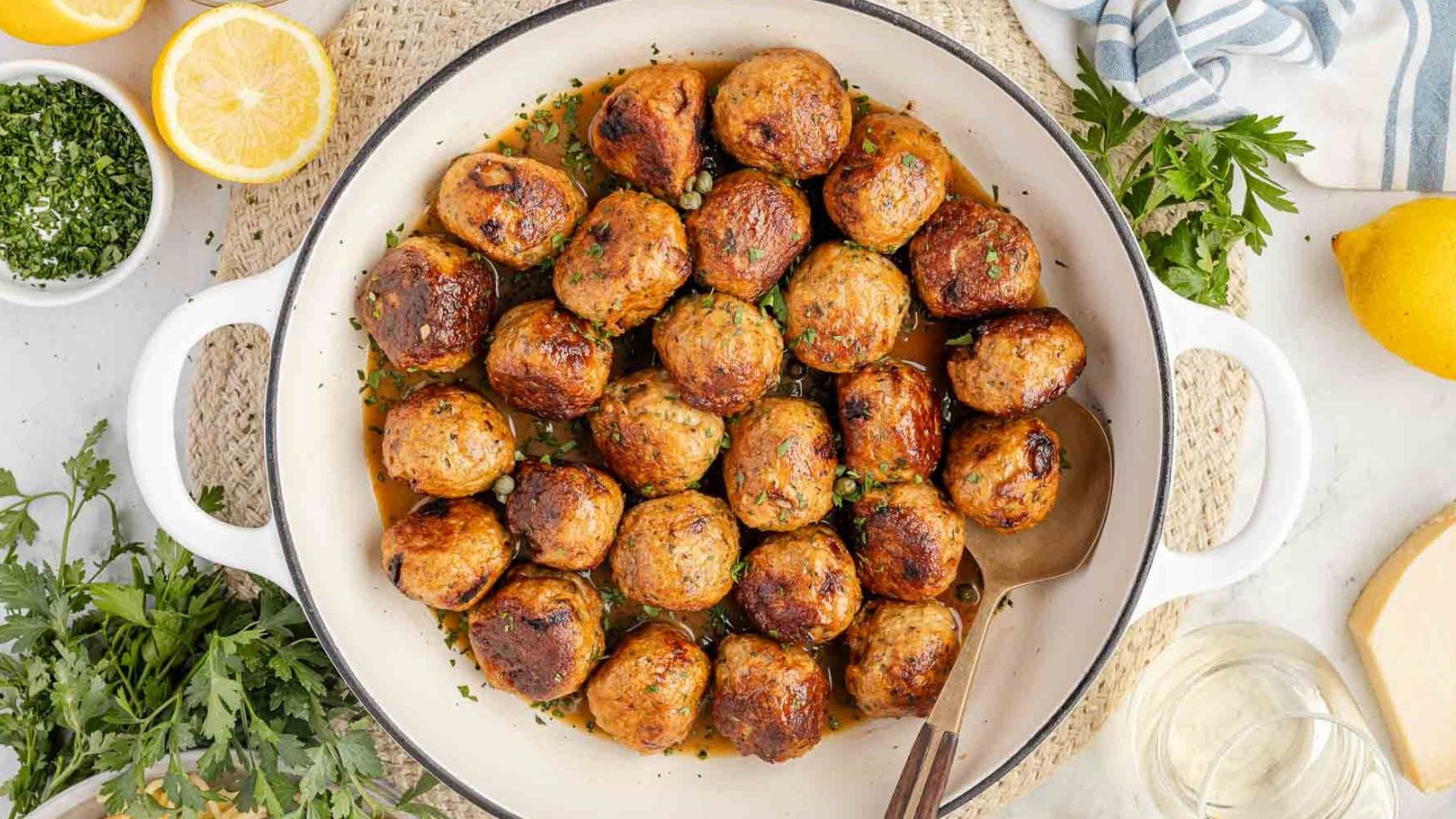
This one has been repeated in kitchens for well over a century, and it has been wrong the entire time. The idea traces back to a German chemist in the 1840s who proposed that a hard sear forms a crust that locks moisture inside. Cooks loved it. Food scientists have been testing it ever since, and seared meat consistently loses slightly more moisture than unseared meat, not less. There is no seal. A browned crust is not waterproof.
Sear anyway. Just sear for the right reason, which is that browning builds flavor compounds you cannot get any other way. That is the Maillard reaction doing the work, and it is the difference between a meatball that tastes like a meatball and one that tastes like boiled beef. Hot pan, do not crowd it, leave them alone long enough to actually take color.
What this means practically: if you are baking your meatballs and they come out dry, the missing sear is not why. Keep reading.
🌡️ Cook to 160°F and stop there
Here is the one that dries out more meatballs than every other mistake combined, and almost nobody names it.
Ground beef gets cooked to an internal temperature of 160°F. That number is not a suggestion and it is not what is making your meatballs dry. What is making them dry is that you are not measuring, so you are cooking to 175°F or 185°F and calling it done when it looks right. Every degree past 160 squeezes out water the panade worked to hold, and by the time you are up near 180 you have wrung most of it back out.
Probe the center of the biggest one in the pan. A meat temperature guide is worth bookmarking, and a Thermapen is worth owning. I keep two in the kitchen and three in the travel bag, and it is the only way to know when to stop instead of guessing.
Poultry meatballs run to 165°F and the same rule applies, harder. Ground turkey has less fat to hide an overshoot.
❄️ Skip the room temperature rest
Plenty of recipes tell you to let the meatballs come to room temperature before they hit heat. Do not do this with raw ground meat. Ground beef should not sit out for more than two hours, and only one hour if your kitchen is above 90°F. Grinding takes whatever is on the surface of the meat and mixes it all the way through, which is the whole reason ground beef gets its own handling rules and its own temperature.
You also gain nothing. A meatball is small. It comes up to temperature fast no matter what it started at, and cold meat browns better because the surface dries before the interior catches up.
Do the opposite instead. Roll them, put the tray in the fridge for twenty to thirty minutes, then cook. They hold their shape, they do not slump in the pan, and the fat stays put long enough to render properly.
🍅 Finish them in the sauce
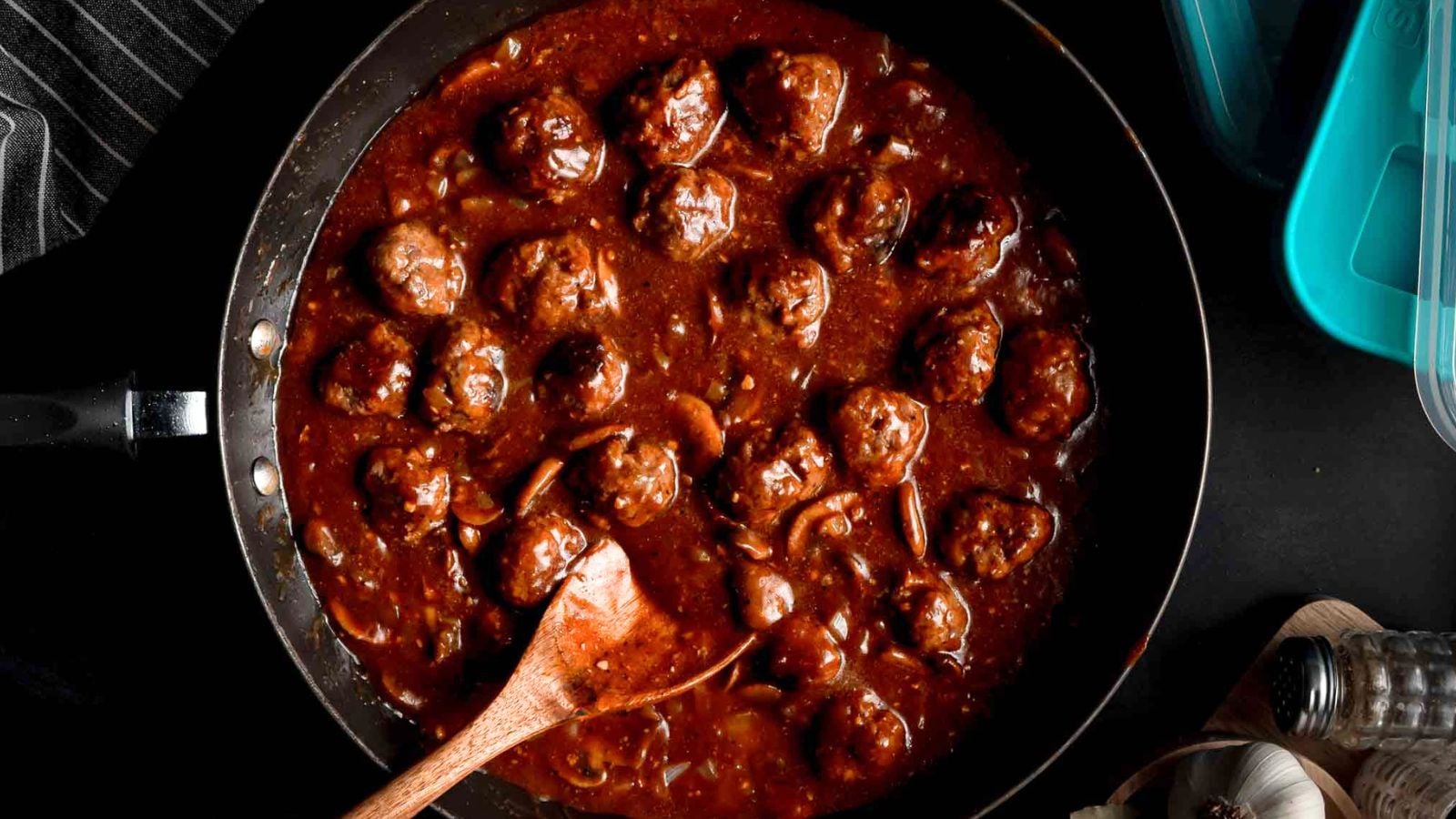
Sear for color, then move them into sauce and let them go at a bare simmer. This is the most forgiving way to cook a meatball and it is what the nonnas have been doing the whole time.
A simmering sauce caps out around 200°F and surrounds the meatball in liquid, so the outside is not being blasted at 400°F while you wait for the middle. You get a much wider window between cooked and overcooked, and the meatball picks up flavor from the sauce while the sauce picks up fond from the meatballs. Both sides win.
Gravy counts too. Our French onion meatballs and meatball stroganoff both run this play, and smoked meatballs prove the same thing works low and slow over wood.
🥩 Meat Nerd Tips
- Panade ratio. Half a cup of torn bread or panko to a third of a cup of milk per pound of meat. Soak five minutes until it is paste, not crumbs.
- Grate the onion. Do not dice it. Grated onion releases its water into the mix and disappears into the meatball instead of sitting in it as crunchy chunks.
- Salt late. Salt plus heavy mixing is how you get sausage texture. Add it with the panade and fold gently.
- Test one first. Fry a small pinch of the mix, taste it, adjust the seasoning before you roll thirty of them.
- Uniform size. A scoop is worth using. Evenly sized meatballs finish at the same moment, so nothing waits in the pan drying out while its neighbors catch up.
- Pull at 160°F. Probe the biggest one. A Thermapen answers it in two seconds and takes the guessing out entirely.
Quick Summary
Dry meatballs are usually a panade problem and a thermometer problem, not a fat problem. Soak your bread in milk until it is paste before it goes anywhere near the meat, mix with your hands only until it disappears, and pull the meatballs at 160°F instead of cooking until they look done. Searing does not seal in juices, so brown them for flavor and then let them finish in sauce where the window between cooked and overcooked is a lot wider.
❓ FAQs
Yes. Unsweetened plain oat milk or stock both work, though you lose a little of the tenderizing the milk proteins give you. Stock is the better swap of the two because it brings flavor with it. Keep the same ratio and soak until the bread breaks down into paste.
Not because of the oven. They come out drier because a sheet pan makes it easy to lose track and overcook them. Bake on a rack, probe the biggest one, and pull at 160°F and they hold up fine.
Usually too much liquid in the panade, no egg, or a sauce at a hard boil instead of a bare simmer. Chill the rolled meatballs for twenty to thirty minutes first, sear them for a set crust, then lower the sauce until it is barely moving before they go in.
It matters more there than it does with beef. Lean poultry has almost no fat to carry it, so the panade is doing nearly all the moisture work. Use the full ratio, add grated onion, and cook to 165°F.
📚 Keep reading
- 10 meatball recipes to make any nonna proud, the full collection once you have the technique down
- Easy pork meatballs, the panade and the mix in a straightforward weeknight build
- The meat temperature guide, every number worth knowing in one place
Hungry for more? Subscribe to our newsletter and become part of the world’s best meat community! From grilling tips to smoky secrets, we send you the best recipes, guides, and expert advice to master every cut.