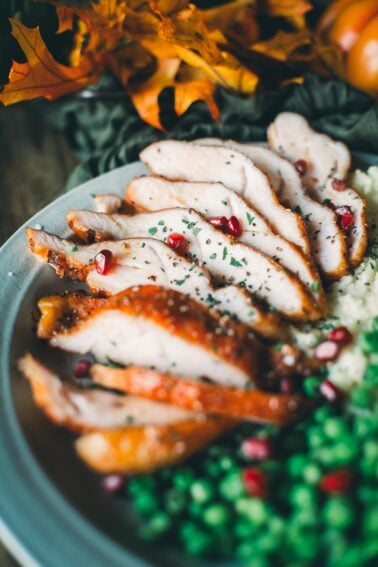
Wondering whether a brine is worth the bucket, the fridge space, and half a day of waiting? We got you.
Brining gets treated like kitchen folklore, something your grandmother did to the Thanksgiving turkey for reasons nobody wrote down. The chemistry is well documented, and once you know what salt does to muscle, you can tell in about four seconds whether a given piece of meat needs it.
🔪 The short answer
Yes, and it is measurable. Salt dissolves myosin in the muscle and makes the protein lattice swell apart, so the meat holds more of its own water through cooking. Cook’s Illustrated weighed an 11 pound turkey taking on close to three quarters of a pound over a 12 hour brine, and brined birds finished roasting 6 to 8 ounces heavier than unbrined ones of the same size.
🧪 What salt does to muscle
Two things happen when meat sits in salt water. Osmosis pulls liquid in, and diffusion carries salt through the muscle until the seasoning is even from edge to center. That part most people know.
The part that does the real work is what happens to the proteins. Salt dissolves some of the myofibrillar protein, mostly myosin, and it changes the electrical charge on the protein filaments so they push away from each other. The lattice they form swells apart, and water sits in the gaps. USDA’s own explanation puts it plainly: the salt dissolves a bit of the protein in the muscle fibers and lets the meat absorb the brine and retain moisture during cooking.
You will see this described elsewhere as salt unraveling or denaturing the proteins. Worth knowing that meat scientists use denaturation to mean something close to the opposite, a loss of water binding ability. The swelling is an ionic effect, not an unfolding one. The practical outcome is the same either way, but if you are the kind of cook who wants the mechanism right, that is the mechanism.
💧 Wet brine or dry brine
A wet brine is full submersion: salt dissolved in water, meat in the liquid, hours in the fridge. It earns its keep on lean cuts that dry out fast, which is why the turkey brining guide is the busiest page on this site every November.
A dry brine skips the water. Salt goes straight on the surface, pulls moisture out, dissolves into it, and gets reabsorbed carrying seasoning deep. Same chemistry, no bucket, and the surface stays dry enough to sear hard. For steak, dry is the only way we do it now. The full method is in how to dry brine a steak, and the dry brine turkey proves it scales to the holiday bird.
The trade-off: a wet brine pulls in some plain water along with the salt, so you gain juiciness and give up a little concentration of flavor. A dry brine seasons without diluting. That is most of the reason serious cooks have drifted toward dry over the last decade.
⚖️ The ratio moves with the clock
Concentration and time trade against each other, which is the part most brine charts leave out. Roughly 3 to 8 percent salt by weight of water covers the working range. Use the strong end for a 30 to 60 minute soak on chops or breasts. Use the weak end for anything sitting overnight. USDA’s default is 3 tablespoons of table salt per quart, which lands near 5.8 percent.
Measure by weight, not by volume, or at minimum know which salt you are holding. The same cup of Diamond Crystal kosher weighs about half what a cup of table salt weighs. A cook following a table salt recipe with kosher salt and a measuring cup lands near 3 percent and wonders why nothing tasted seasoned.
Sugar rounds off the salt and helps the surface brown. Herbs and whole aromatics mostly flavor the outer layer, so save the good peppercorns for the finish rather than the bucket. Timing does the rest: thin cuts want an hour or two, whole birds want the better part of a day.
🏷️ When not to brine
A lot of supermarket meat arrives already brined, and brining it again gives you dinner that eats like deli ham.
Read the front of the package, and read it for a percentage rather than a word. Federal labeling rules require raw meat and poultry with added liquid to carry the cut, the percentage of added solution as a number with a percent sign, and the solution ingredients in descending order, all in one font and color. USDA’s own example is pork tenderloin, 15% added solution of water and salt. Shoppers and even butchers still say enhanced out of habit, but FSIS specifically prohibits that word in the product name, so looking for it is looking for something that cannot legally be there. Look for the percent sign.
Poultry has its own version. Bone-in birds labeled basted or self basted may carry up to 3 percent added solution, boneless up to 8 percent.
Kosher birds are the other trap. Koshering involves covering the surface in coarse salt, resting it, then rinsing it off, and the meat holds seasoning from that process. Brine a kosher bird on top of that and you have double salted dinner. Well marbled beef does not need the help either. A ribeye has fat doing the moisture work already, which is why it gets a dry brine for seasoning and crust, never a soak.
🥩 Meat Nerd Tips
- Weigh the water, not just the salt. Percentages are by weight of the water. A gallon is about 3,785 grams, so 5 percent is roughly 190 grams of salt. A scale removes every kosher versus table argument.
- Cold brine only. The whole bucket has to stay under 40 degrees F the entire time. If it will not fit in the fridge with room to spare, brine in a cooler with ice and check it.
- Dry the surface after a wet brine. A bird straight out of the liquid has a soaked skin and will steam instead of browning. Rack it uncovered in the fridge for a few hours before it goes in the oven.
- Salt at the plant counts. If the label shows a percentage of added solution, treat the meat as already brined and season only at the surface.
⚡ Lightning round
Pat it dry rather than rinsing it under the tap. Running water over raw poultry sprays bacteria around the sink, which is why FSIS advises against washing raw birds at all. Paper towels do the job, and a few hours uncovered on a rack in the fridge does it better.
It rounds off the edge of the salt and it helps the surface brown, since sugar takes part in the browning reactions. It does not tenderize and it does not penetrate meaningfully. Skip it in a long brine on a fatty cut where you want a clean savory finish.
No. Once raw meat has sat in it, the liquid is contaminated and it has also given up much of its salt to the meat. Mix a fresh batch. If you want the flavor twice, make extra before anything goes in and hold the clean portion separately.
Dry, every time. A steak has no drying-out problem that water solves, and a wet surface is the one thing standing between you and a hard sear. Salt it, rack it uncovered in the fridge, and let the cold air work on the surface overnight.
Quick Summary
Brining works, and the mechanism is salt swelling the protein lattice so meat holds its own water through cooking. Run 3 to 8 percent salt by weight of water, strong for a short soak and weak for an overnight one, and weigh it rather than scooping it. Before you brine anything from the supermarket, check the front of the package for a percentage of added solution, because that meat has already been brined.
📚 Keep reading
- How to dry brine a steak, the method and the timing for the version that matters most at home
- Why your steak does not brown, which is the same surface moisture problem from the other direction
- Ask the Butcher, the rest of the questions people bring to the counter
Hungry for more? Subscribe to our newsletter and become part of the world’s best meat community! From grilling tips to smoky secrets, we send you the best recipes, guides, and expert advice to master every cut.