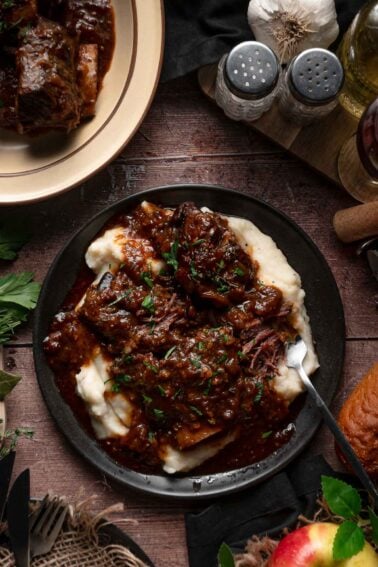
This is oven-braised brisket for a classic holiday table (the Ashkenazi kind and not the Texas kind that is). It’s braised low and slow in red wine and tomato with onions, garlic, and herbs, for a recipe that turns up for Rosh Hashanah, Passover, Hanukkah, and Shabbat dinners. It comes out fork-tender every single time, with potatoes and carrots from the same pot and a quick gravy blended from the braising liquid.
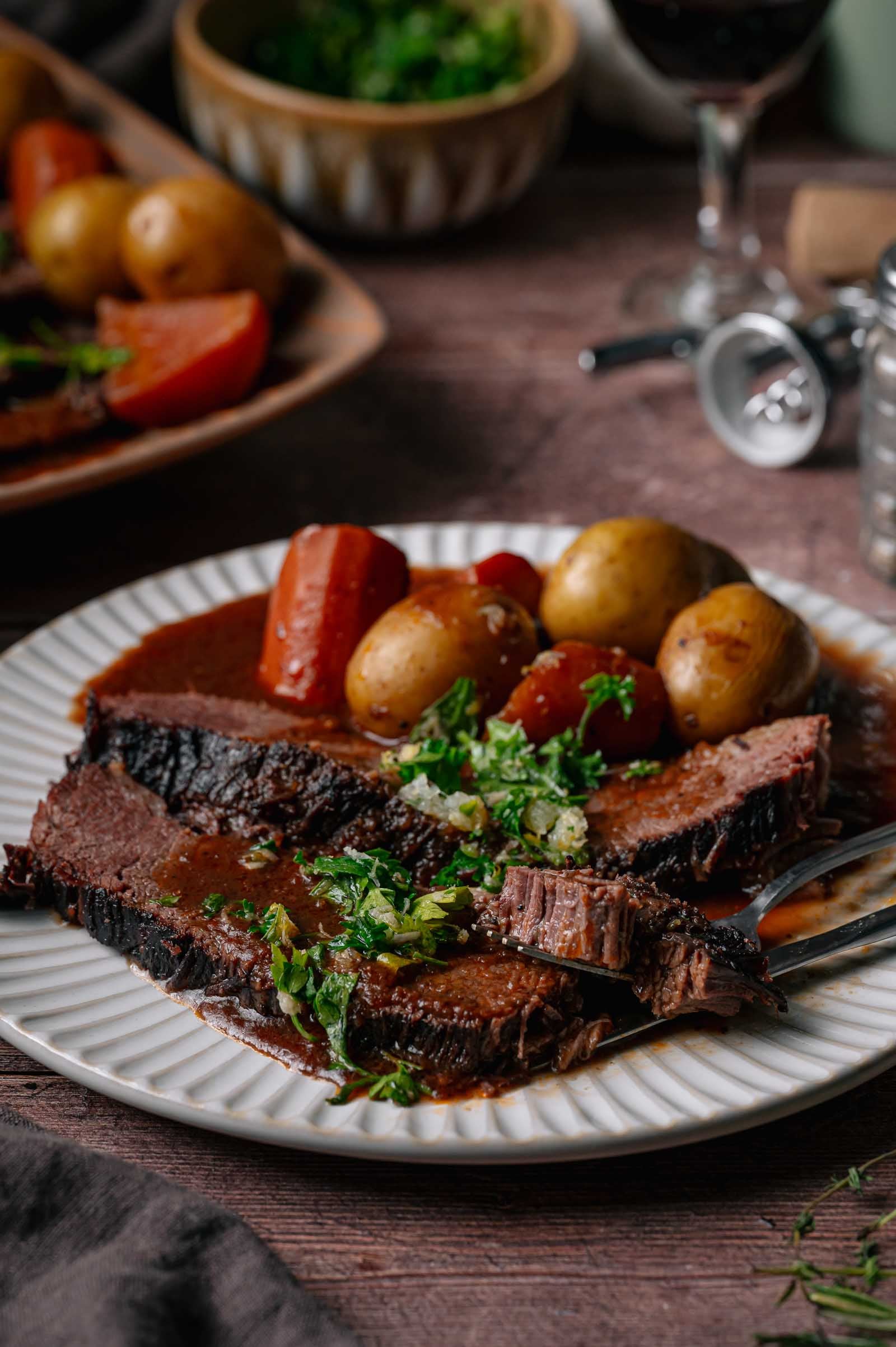
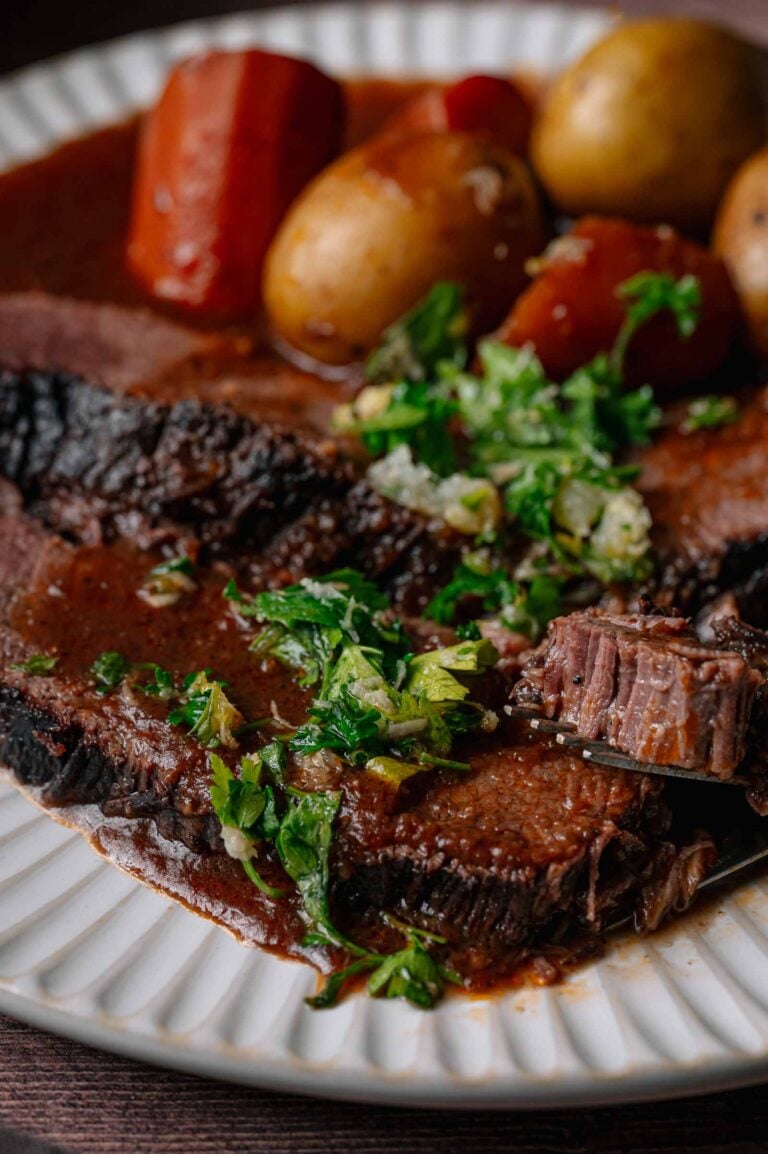
We use the brisket flat, also called the first cut, because it gives you clean, even slices. You want slices that are fork-tender but still hold together, not the bites that shred apart with light pressure, and it’s the hardest part of this recipe. That’s why we judge doneness by feel at about 195°F to 200°F: the probe slides in with little resistance and the meat gives when you twist a fork, but it doesn’t fall apart. Much past 205°F, brisket starts to shred.
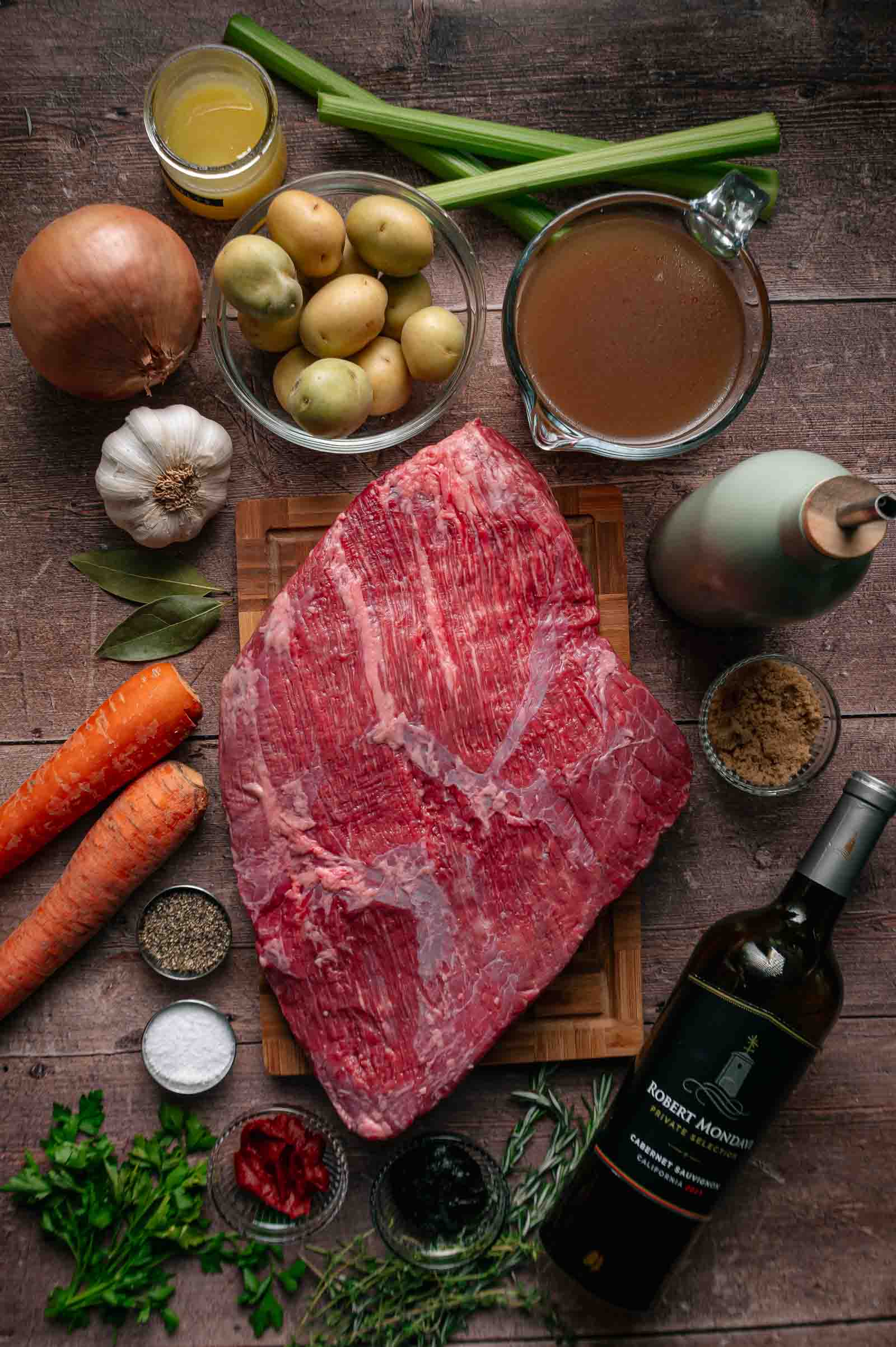
🔪 Ingredients for Braised Brisket
Braised brisket lives in the same family as our Apple Cider Braised Short Ribs, and there’s plenty more where it came from in our brisket recipes and braising recipes.
- Beef brisket flat: The flat gives you even, uniform slices. Trim the fat to about ¼ inch.
- Kosher salt
- Black pepper
- Avocado oil: Schmaltz is a richer option. See the substitutions below.
- Yellow onions
- Celery
- Garlic
- Tomato paste
- Dry red wine: Merlot or Cabernet Sauvignon.
- Low-sodium beef broth: Low sodium keeps the gravy from getting too salty as it reduces.
- Roasted beef base: Better Than Bouillon, stirred into the broth.
- Brown sugar
- Fresh thyme, rosemary, and bay leaves: Tied into a bundle so they come out in one piece.
- Carrots
- Baby gold potatoes: Leave the skins on. They’re thin and help the potatoes hold together.
- Fresh parsley: For the finish, plain or turned into horseradish gremolata.
Equipment
- Large oval Dutch oven: The oval shape fits a brisket flat without curling it.
- Kitchen twine: For the herb bundle.
- Thermapen or an oven-safe probe thermometer
- Immersion blender: Turns the braised vegetables and liquid into gravy right in the pot.
- Tongs, wooden spoon and slotted spoon
- Sharp carving knife and a large cutting board
📝 How to Make Braised Brisket
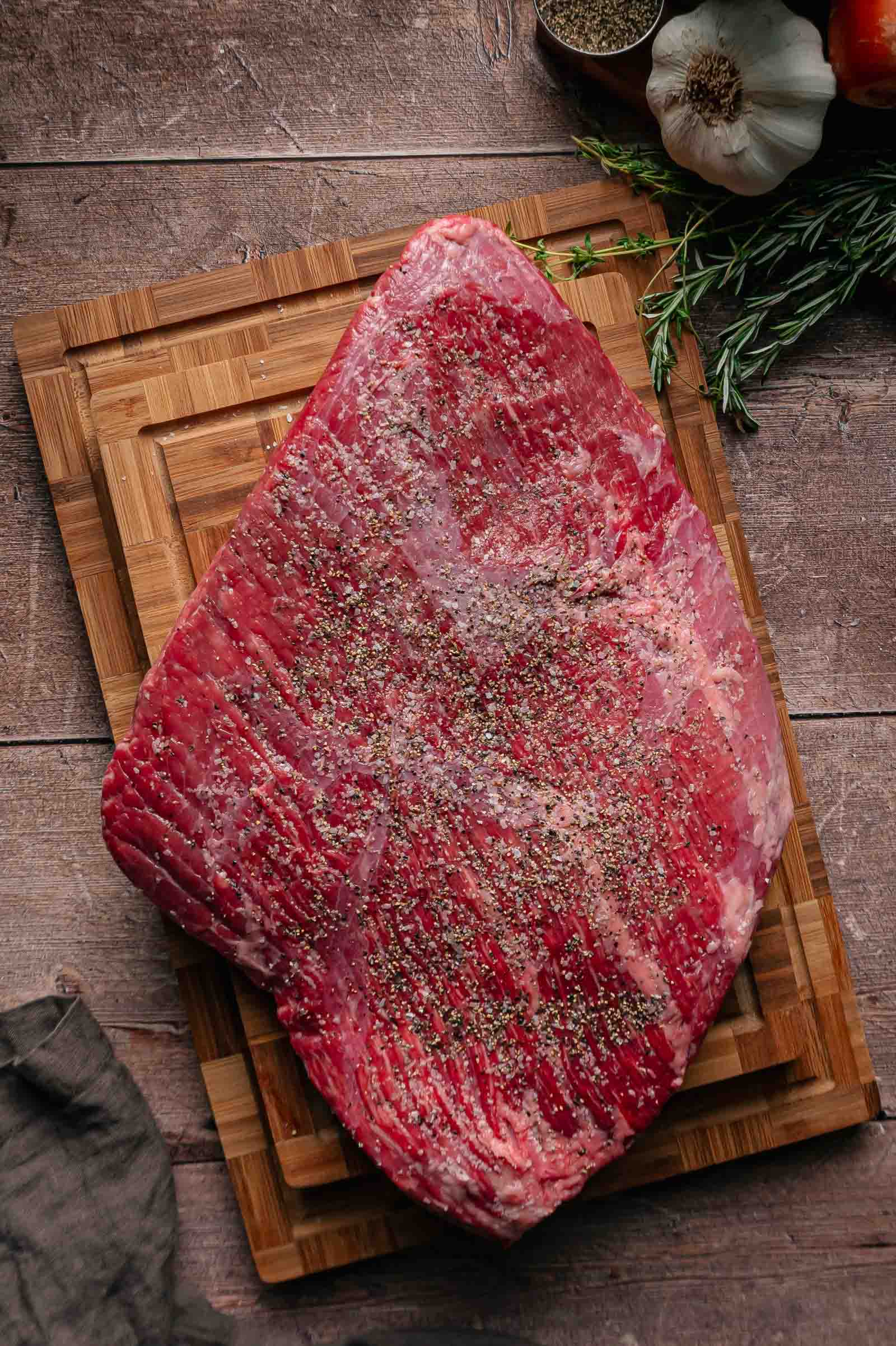
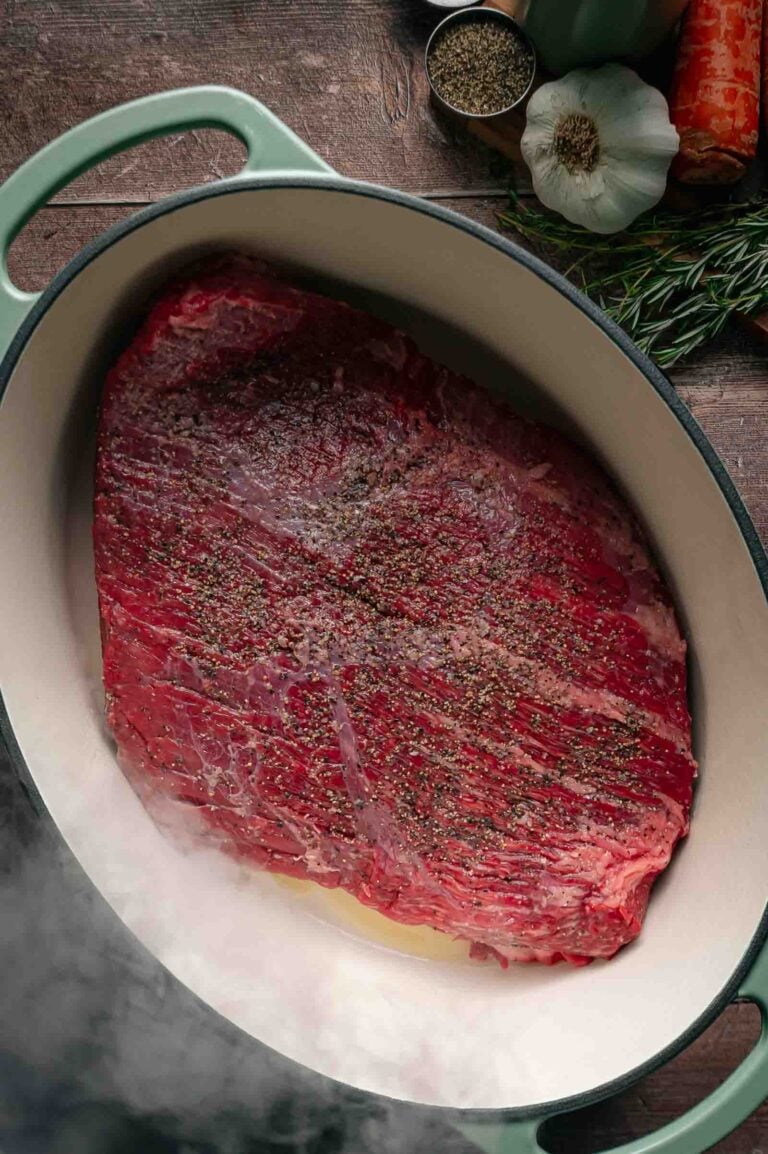
- Season the brisket. Heat the oven to 300°F. Pat the brisket dry, trim any thick, hard fat down to a ¼ inch layer, and season it all over with salt and pepper.
- Tie the herbs. Bundle the thyme, rosemary and bay leaves with kitchen twine, making sure the bay leaves are held in.
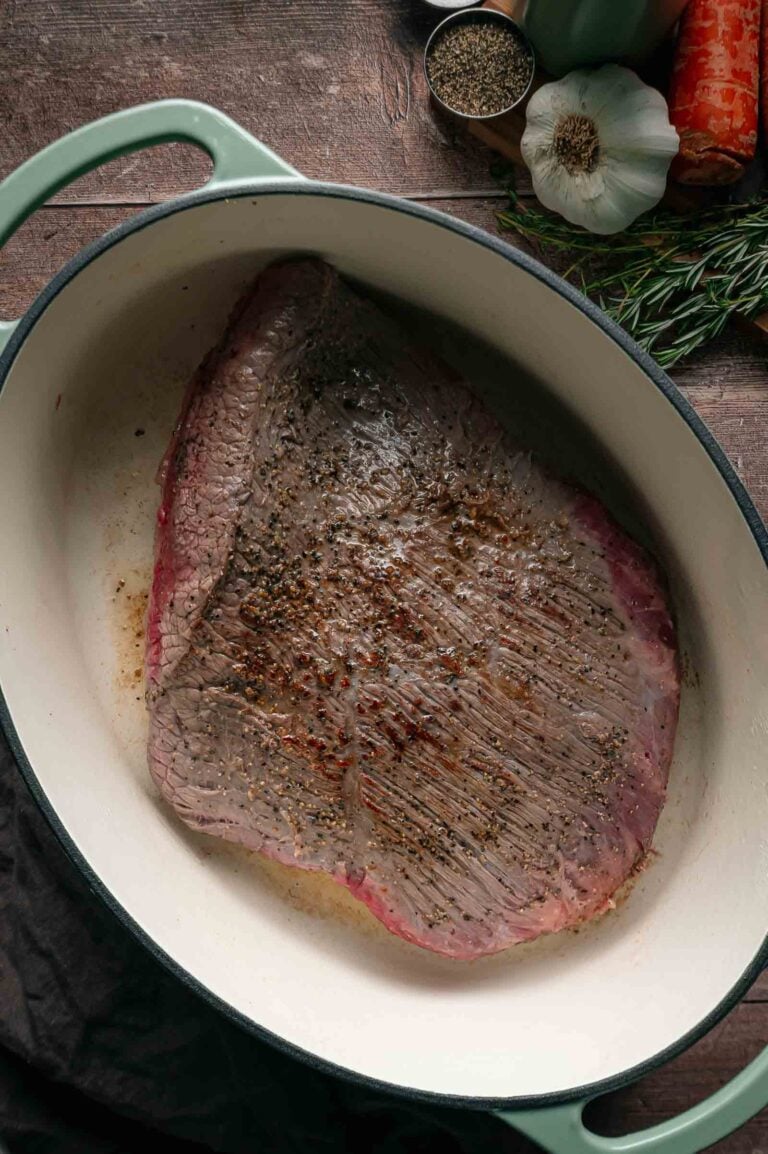
- Sear. Heat the avocado oil in the Dutch oven over medium high. Sear the brisket fat side down for 5 to 6 minutes without moving it, until well browned, then flip and sear the other side for 4 to 5 minutes. Set it aside.
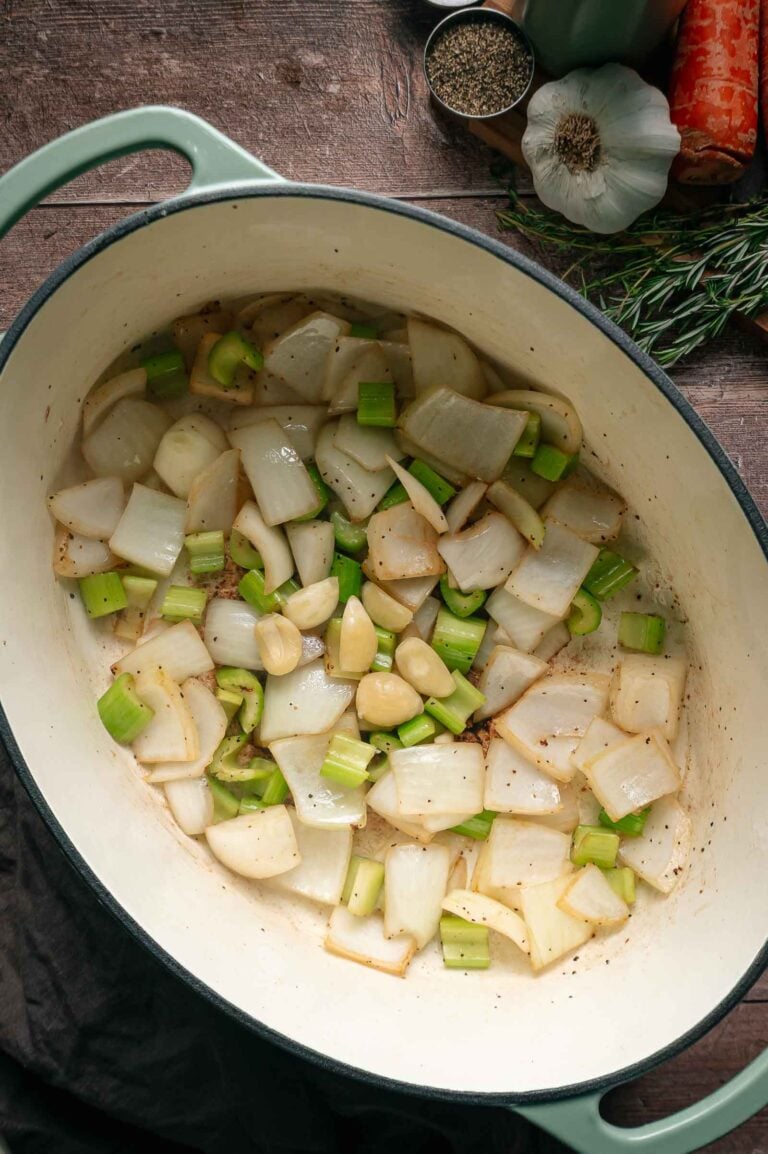
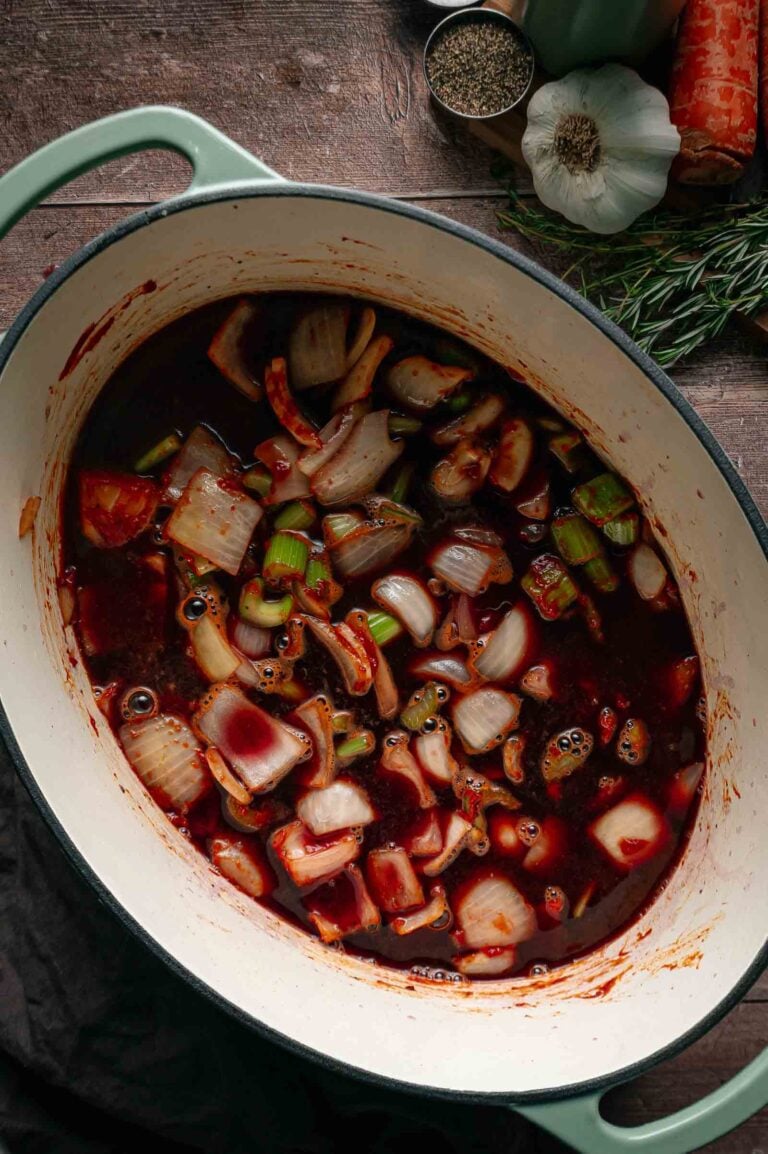
- Cook the vegetables. Drop the heat to medium. Cook the onions and celery for 4 to 5 minutes, then add the garlic for 30 seconds, until fragrant.
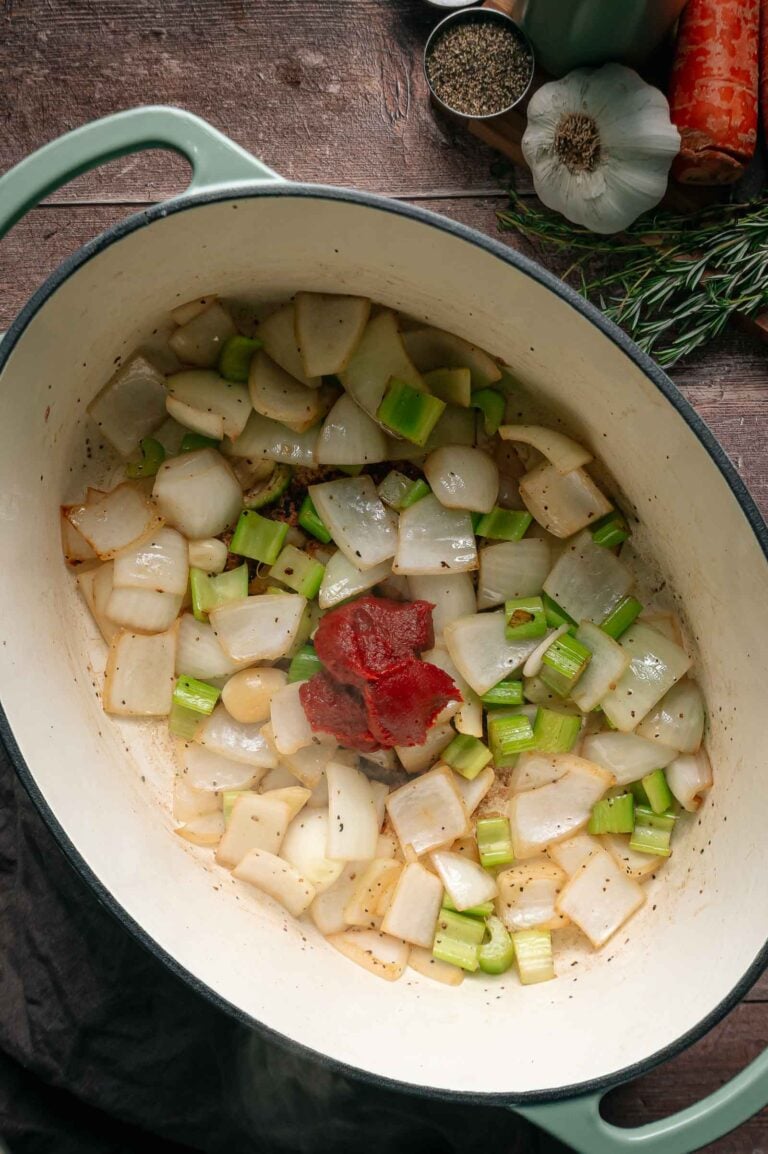
- Toast the tomato paste. Stir in the tomato paste and cook 2 minutes, until it darkens slightly.
- Deglaze. Pour in the red wine, turn the heat to medium high and scrape up the browned bits. Simmer 4 to 5 minutes, until the wine has reduced slightly.
- Build the braise. Stir in the beef broth, beef base and brown sugar until dissolved. Add the herb bundle and bring it to a simmer.
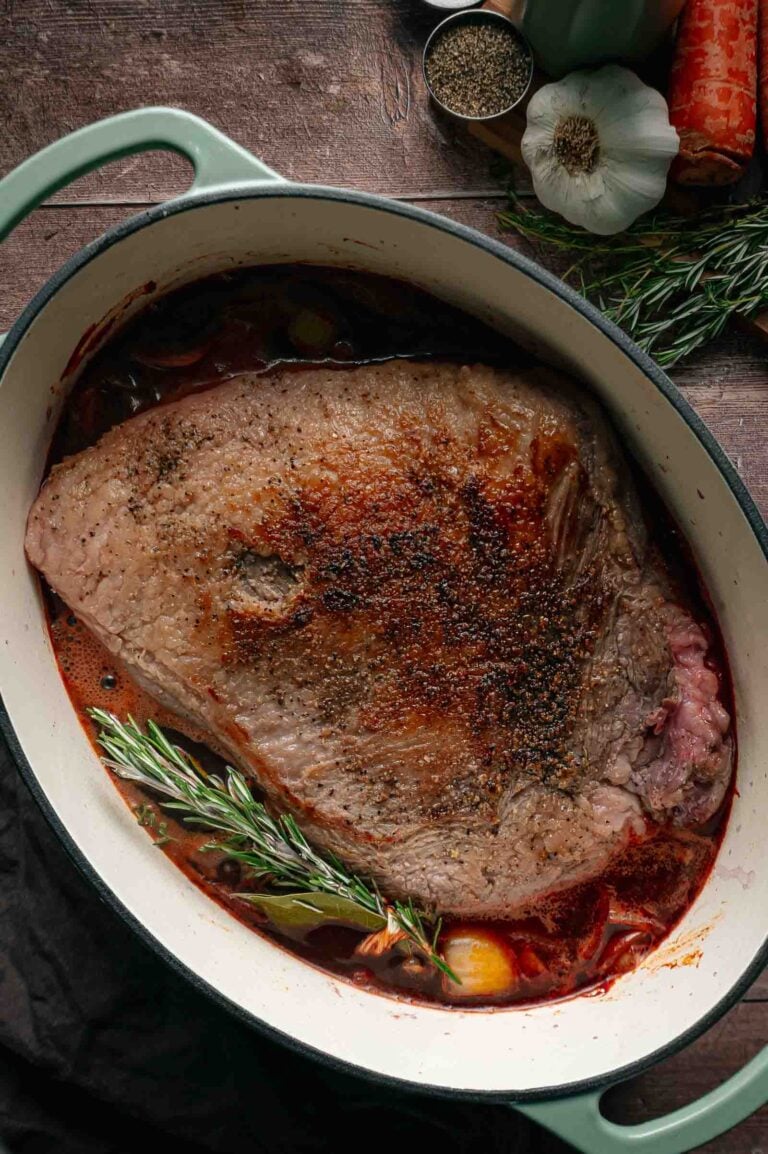
- Braise. Nestle the brisket back in, fat side up. The liquid should come partway up the sides, not cover it. Cover and braise in the oven for 2 hours.
- Add the potatoes and carrots. Tuck the carrots and potatoes around the brisket, cover, and keep braising 1 to 2 hours more.
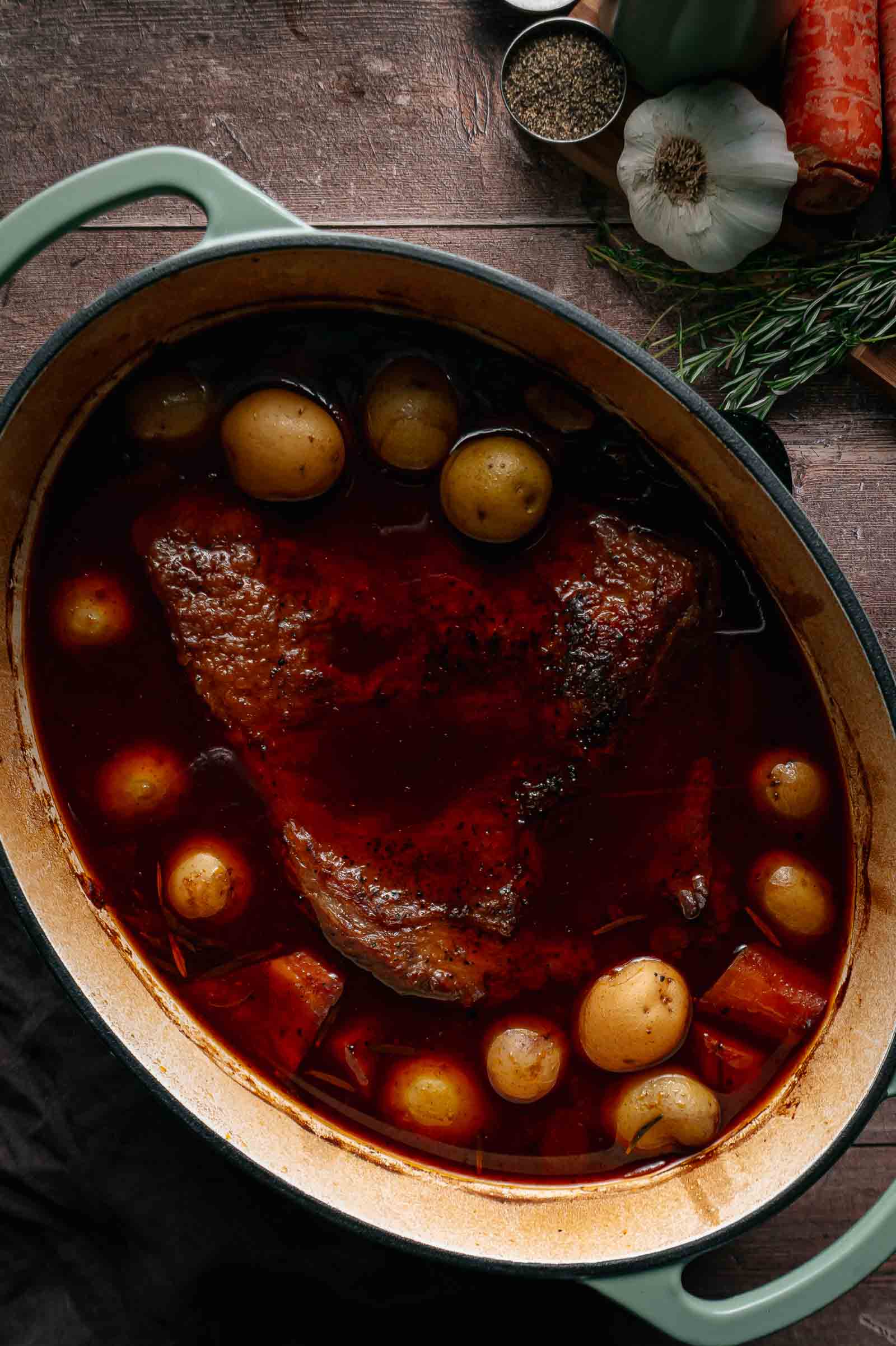
- Check for tender. Start checking at the 3 hour mark. Once the thickest part reads 195°F, probe it in several spots. It’s done when the probe slides in with very little resistance and the meat gives when you twist a fork but still holds together, usually around 195°F to 200°F. Keep braising and checking every 20 to 30 minutes until it gets there, even past 4 hours, but don’t push much past 205°F or it starts to shred.
- Rest. Move the brisket to a cutting board, tent with foil and rest at least 30 minutes.
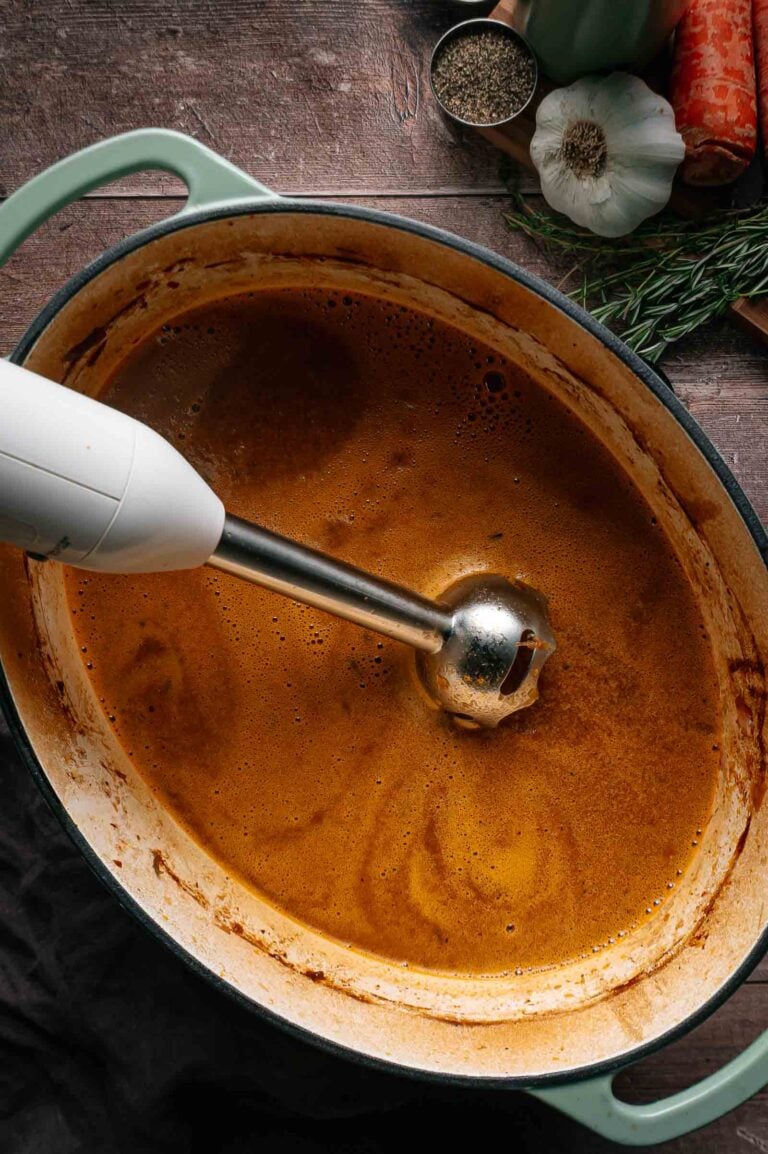
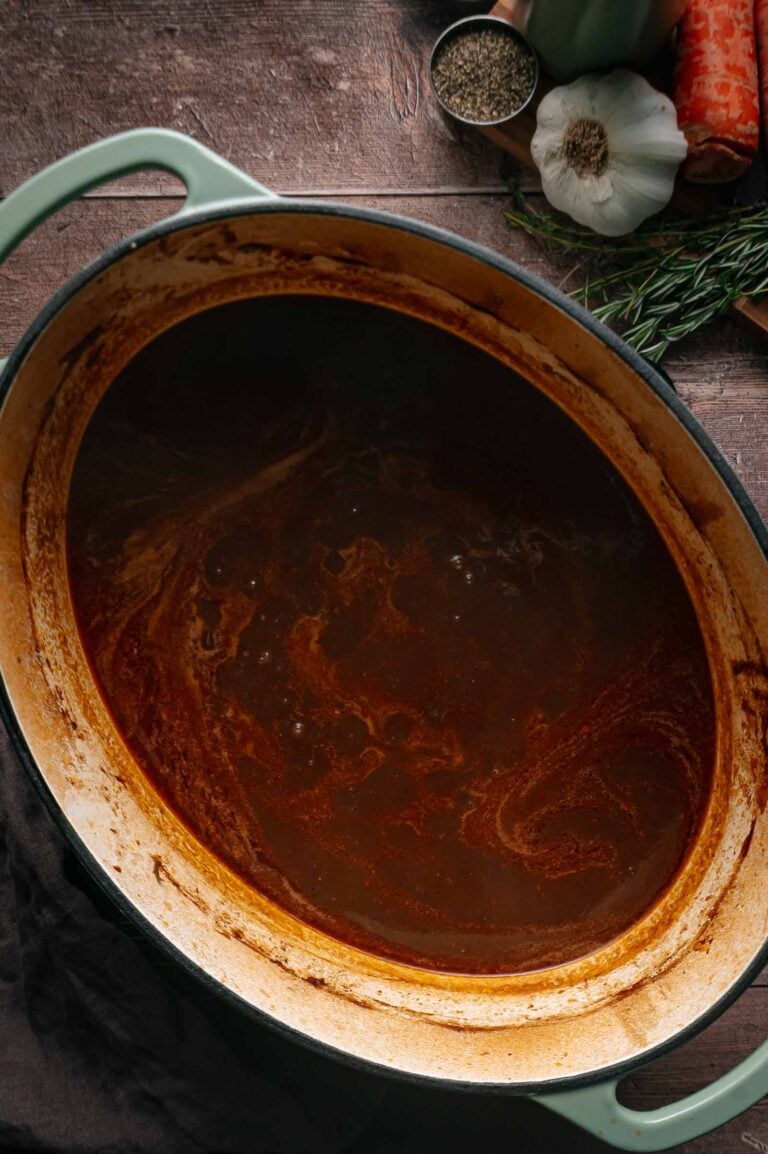
- Make the gravy. Pull out the herb bundle, lift out the potatoes and carrots, and skim some fat off the liquid. Blend the vegetables and liquid smooth with the immersion blender, then simmer uncovered 5 to 10 minutes, until the gravy coats the back of a spoon. Taste for seasoning.
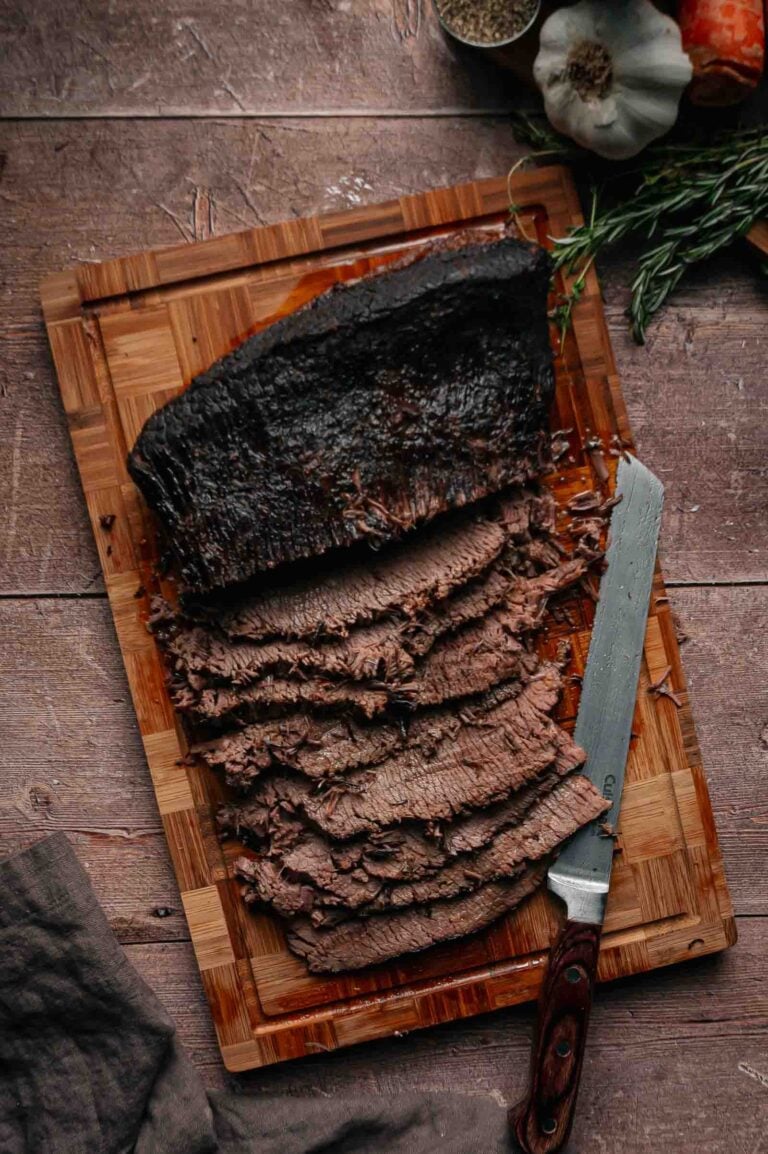
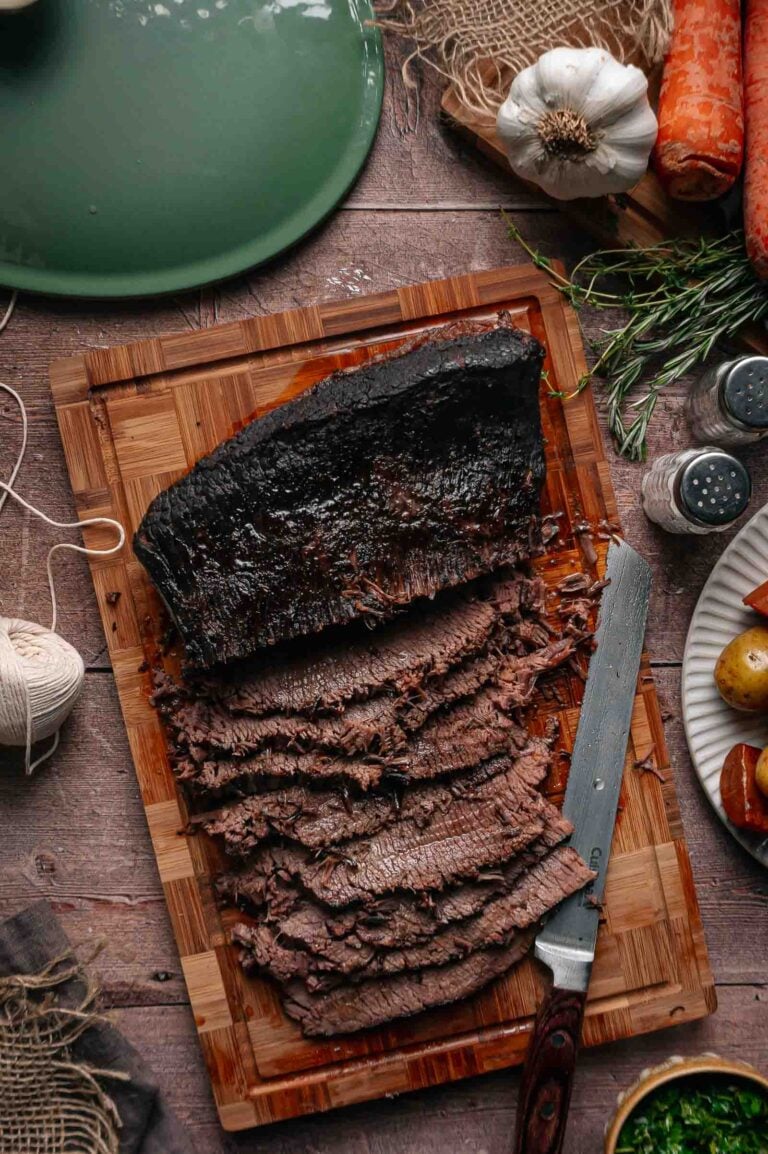
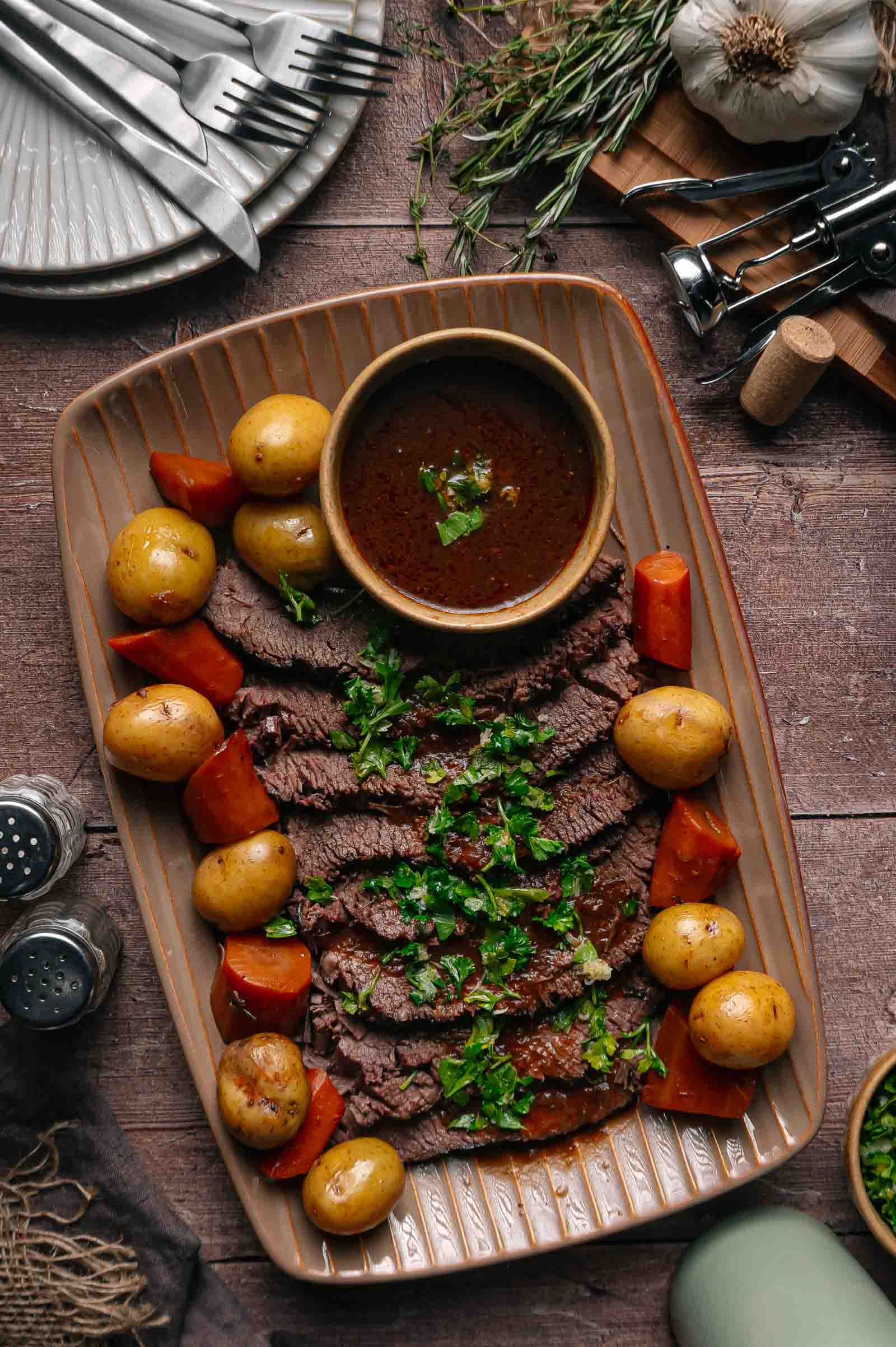
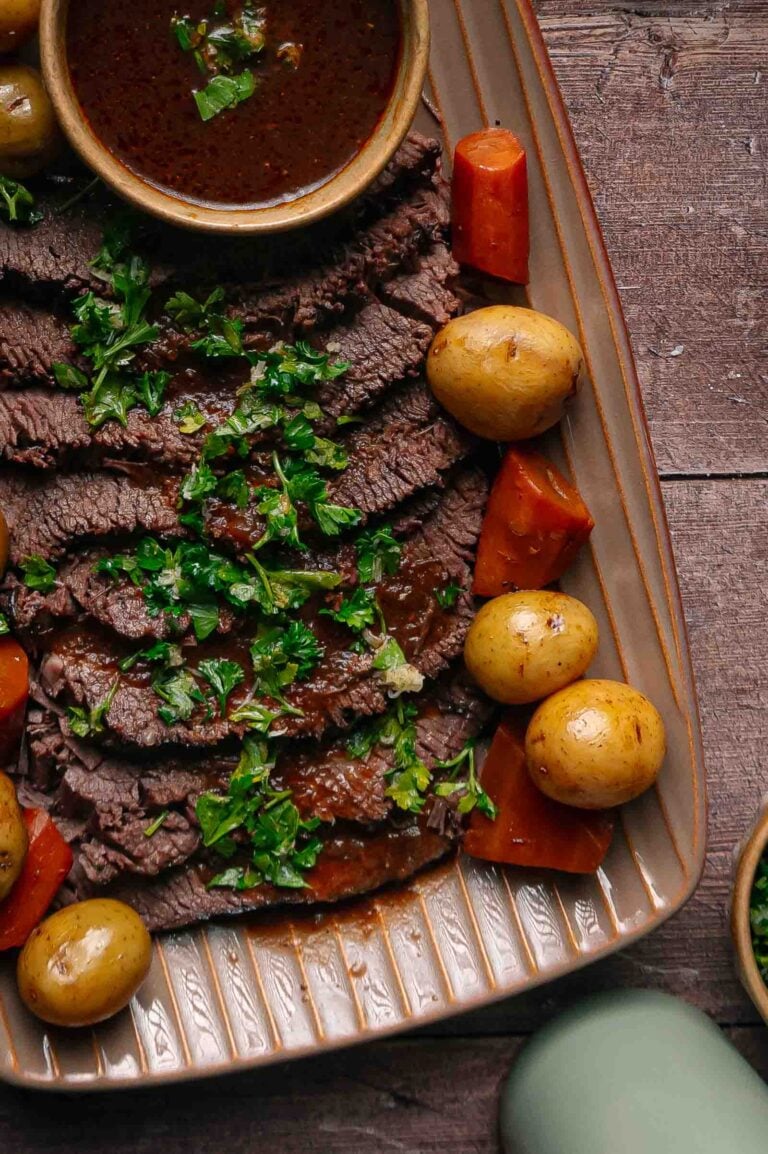
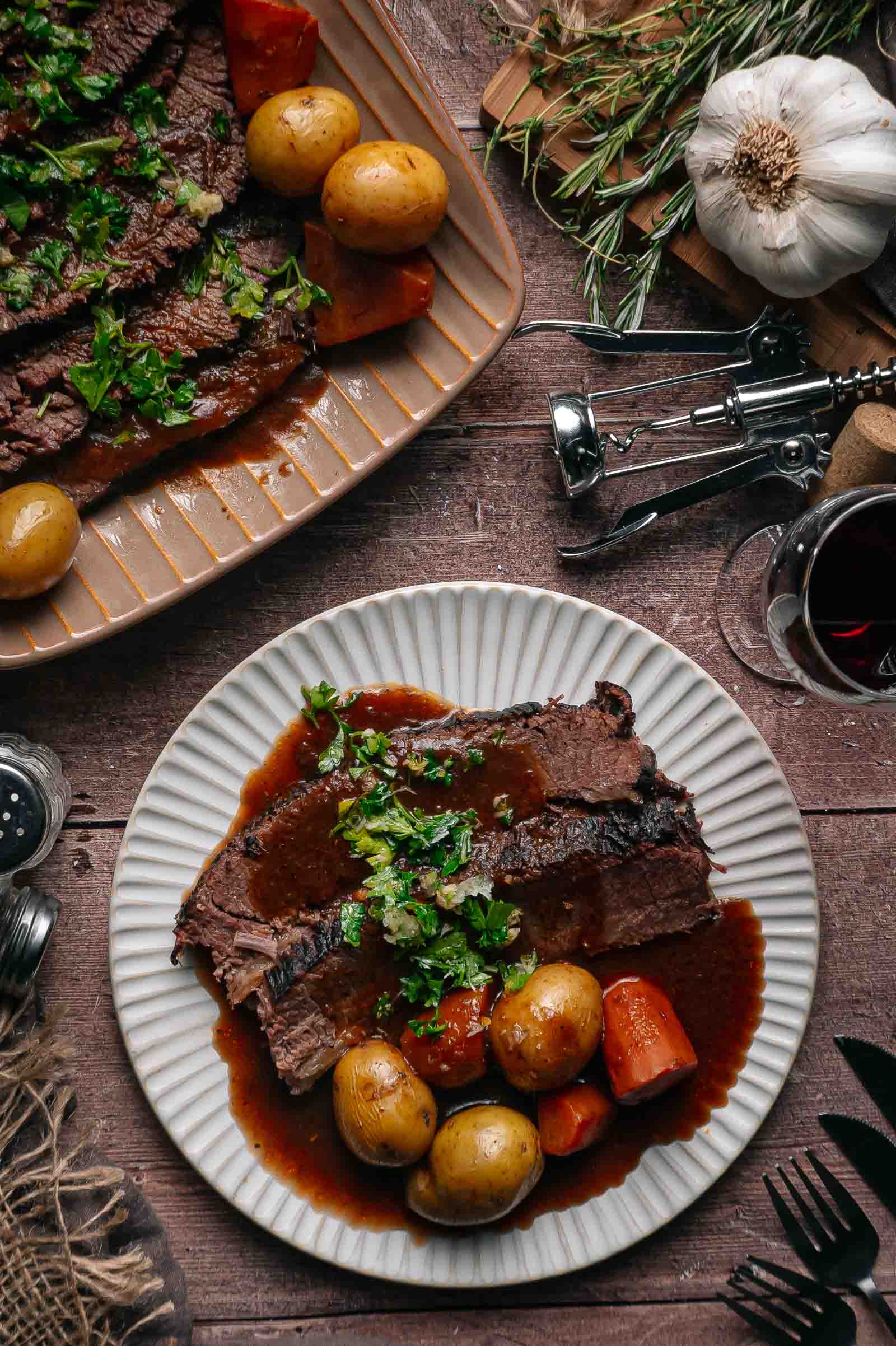
- Slice and serve. Slice against the grain about ¼ inch thick. Fan the slices on a platter with the potatoes and carrots, spoon gravy over the top, finish with horseradish gremolata or chopped parsley and pass extra gravy at the table.
📅 Make It a Day Ahead
Plenty of cooks braise their holiday brisket the day before, and it’s worth it if you want clean slices with no stress on the day. America’s Test Kitchen tested it: after a night in the fridge, the fat came off without trouble and the cold brisket sliced without shredding.
- Chill it in the liquid. Let the brisket cool, then refrigerate it overnight right in its braising liquid.
- Lift off the fat. The fat sets on top, so you can lift it straight off.
- Slice it cold. Slice against the grain while it’s cold. Straight from the fridge it can be too firm to slice by hand, so use an electric knife or a long, sharp slicer, or let it sit out 20 to 30 minutes first.
- Reheat in the sauce. Lay the slices in the defatted sauce, cover, and reheat at 325°F to 350°F for 30 to 45 minutes.
🌿 Finish It with Horseradish Gremolata
Chopped flat-leaf parsley with the braised carrots is the minimalist classic, and it’s how Dee finishes this one. Our favorite finish is a horseradish gremolata: chopped flat-leaf parsley, citrus zest, freshly grated horseradish and a pinch of flaky salt, scattered over the slices right before serving. Horseradish already has a seat at the Seder table, and its bite cuts right through the rich gravy. It’s a cousin of the gremolata we spoon over our osso buco.
🔄 Substitutions
- Schmaltz for the avocado oil: Rendered chicken fat is a traditional choice for searing a holiday brisket, and it adds a rich, savory backbone to the braise. A great place to use a jar left over from making schmaltz.
- Point cut for the flat: Works, but the extra fat makes softer meat and less even slices. Cook time changes with the thickness and marbling, so go by the probe.
- Dried herbs for fresh: 1 teaspoon dried thyme and ½ teaspoon dried rosemary, stirred straight into the braising liquid instead of bundled.
- Baby red or small Yukon Gold potatoes for baby golds: Any small waxy potato that holds its shape.
- Rustic gravy for blended: Skip the immersion blender and reduce the liquid until it’s as thick as you like, with the vegetables left in pieces.
💡 Meat Nerd Tips
- Go by thickness, not weight. A thick flat can blow past 4 hours. Keep braising in 20 to 30 minute rounds, and lift the potatoes and carrots out once they’re cooked so they don’t fall apart while the brisket finishes.
- Judge it by feel, not the number. Around 195°F to 200°F, the probe should slide in with little resistance and the meat should give when you twist a fork while still holding together. If it’s still tough, keep going in short rounds, but much past 205°F brisket starts to shred.
- The rest makes it sliceable. Brisket is delicate after hours in the pot. Thirty minutes under foil lets it settle so it holds together on the board instead of shredding.
- Let the vegetables thicken the gravy. Blended onions, celery and garlic give it body with no flour or cornstarch. Too thin, simmer it longer. Too thick, loosen it with a splash of warm beef broth.
🍽️ What to Serve with Braised Brisket
- Challah or crusty bread: Built for mopping up the extra gravy.
- Roasted green beans or asparagus with olive oil and lemon: Something green and crisp next to all that richness, and dairy free like the brisket.
- A sharp, crunchy salad: Cucumber, radish or cabbage dressed with vinegar keeps the plate bright.
🧊 Leftovers and Storage
- Fridge: Refrigerate within 2 hours, in shallow airtight containers so it cools fast. Keeps up to 4 days. Store the slices covered in gravy so they don’t dry out.
- Freezer: Freeze the brisket in its gravy in airtight, freezer-safe containers for up to 3 months for best quality.
- Reheat: Slices sitting in their defatted gravy, covered, at 325°F to 350°F for 30 to 45 minutes, until hot all the way through.
Red Wine Braised Brisket
Recommended Equipment
- Large oval Dutch oven
- Kitchen twine
- Wooden spoon
- Instant read meat thermometer or oven safe probe thermometer
- Slotted spoon
- Immersion blender
- Sharp carving knife
- large cutting board
Ingredients
- 4 pounds beef brisket flat with fat trimmed to ¼ inch
- 1 tablespoon kosher salt
- 1 ½ teaspoons black pepper
- 2 tablespoons avocado oil
- 2 yellow onions roughly chopped
- 2 celery stalks chopped
- 6 cloves garlic peeled and smashed
- 3 tablespoons tomato paste
- 2 cups dry red wine such as Merlot or Cabernet Sauvignon
- 2 cups low sodium beef broth
- 1 tablespoon Better Than Bouillon roasted beef base
- 2 tablespoons brown sugar
- 4 sprigs fresh thyme
- 2 sprigs fresh rosemary
- 2 bay leaves
- 3 medium carrots peeled and cut into 2-inch pieces
- 1 ½ pounds baby gold potatoes
- horseradish gremolata for garnish, or chopped fresh parsley
Instructions
Prep the Brisket
- Preheat oven to 300°F. Pat the brisket thoroughly dry with paper towels. Trim away any thick, hard sections of fat, leaving a ¼-inch layer. Season all over with salt and black pepper.
- Gather the fresh thyme, rosemary, and bay leaves into a bundle. Secure with kitchen twine, making sure the bay leaves are held in place. Set aside.
Sear and Build the Braise
- Heat the avocado oil in a large Dutch oven over medium high heat. Place the brisket fat side down and sear for approximately 5 to 6 minutes without moving it, until well browned. Flip and sear the opposite side for another 4 to 5 minutes.
- Reduce the heat to medium. Add the onions and celery to the Dutch oven. Cook for 4 to 5 minutes, stirring occasionally. Add the smashed garlic cloves and cook for another 30 seconds.
- Stir the tomato paste into the veggies and cook for 2 minutes, stirring frequently, until the paste darkens slightly.
- Pour in the red wine and increase the heat to medium high. Scrape the bottom of the Dutch oven with a wooden spoon to release the browned bits. Bring to a simmer and cook for 4 to 5 minutes, until the wine has reduced slightly.
- Stir in the beef broth, beef base, and brown sugar until dissolved. Add the herb bundle and bring the mixture to a simmer.
Braise Until Tender
- Return the brisket to the Dutch oven, fat side up. The liquid should come partway up the sides of the meat. It doesn’t need to cover the brisket. Cover and transfer to the oven. Braise for 2 hours.
- After two hours, add the carrots and potatoes to the braising liquid, arranging them around the brisket. Return covered to the oven. Continue braising for another 1 to 2 hours, until the brisket is tender.
- Begin checking the internal temperature after 3 hours of braising. Insert a meat thermometer into the thickest part. The brisket will generally become tender between 195°F and 205°F. Once it reaches 195°F, check the texture by inserting the thermometer probe into several areas. The probe should slide into the meat with very little resistance. Continue braising and checking every 20 to 30 minutes until tender, even if it takes longer than 4 hours total.
Rest and Make the Gravy
- Transfer the brisket to a large cutting board. Tent with aluminum foil and let rest for at least 30 minutes before slicing.
- Remove the herb bundle from the Dutch oven. Remove the carrots and potatoes with a slotted spoon and set aside. Skim some of the fat from the surface of the braising liquid. Use an immersion blender to blend the onions, celery, garlic, and braising liquid until smooth. Place the Dutch oven over medium heat and simmer uncovered for approximately 5 to 10 minutes, stirring occasionally, until the gravy coats the back of a spoon. Taste for seasoning.
Slice and Serve
- Identify the direction of the muscle fibers and slice the brisket against the grain into approximately ¼-inch-thick slices.
- Arrange the brisket on a serving platter, slightly overlapping them. Place the carrots and potatoes around the meat. Spoon some of the gravy over the brisket and garnish with chopped fresh parsley. Serve immediately with additional gravy on the side.
Notes
- Schmaltz can stand in for the avocado oil for a richer sear. Got a jar from making schmaltz? Use it here.
- Finish with horseradish gremolata, or keep it minimal with chopped flat-leaf parsley.
- Doneness is about feel: around 195°F to 200°F the probe slides in with little resistance and the meat gives when twisted but holds together. Much past 205°F it starts to shred.
- Make ahead: chill the brisket overnight in its braising liquid, lift off the set fat, slice cold against the grain, and reheat the slices covered in the defatted sauce at 325°F to 350°F for 30 to 45 minutes. Straight from the fridge it may be too firm to slice by hand, so use an electric knife or long slicer, or let it sit out 20 to 30 minutes first.
- Cooking time depends on the thickness of the brisket, not just its weight. If it isn’t tender after 4 hours, keep braising in 20 to 30 minute rounds and pull the potatoes and carrots once they’re cooked.
- Too thin, simmer the gravy longer. Too thick, stir in a little warm beef broth.
Save this Recipe
Nutrition
Bookmark this recipe now!
Quick Summary
This braised brisket is an Ashkenazi-style holiday brisket: a beef brisket flat seared in a Dutch oven, then braised covered at 300°F in red wine, tomato paste, beef broth and herbs. Potatoes and carrots go in after 2 hours. It’s done when a probe slides in with little resistance and the meat still holds together, about 195°F to 200°F. Rest it at least 30 minutes, blend the braising vegetables into gravy, and slice against the grain about ¼ inch thick. To make it ahead, chill it overnight in the liquid, lift off the fat, slice cold and reheat the slices covered in the sauce.
❓ FAQs
About 195°F to 200°F, but judge it by feel. The probe should slide into the thickest part with little resistance, and the meat should give when you twist a fork but still hold together. Much past 205°F, brisket starts to shred.
Yes. Chill it overnight in its braising liquid, lift off the set fat, slice it cold against the grain, then reheat the slices covered in the defatted sauce at 325°F to 350°F for 30 to 45 minutes. America’s Test Kitchen found the fat came off without trouble and the cold brisket sliced without shredding. If it’s too firm to slice by hand straight from the fridge, use an electric knife or let it sit out 20 to 30 minutes.
No. Baby gold potatoes have thin, tender skins that help hold the potatoes together during the braise.
The brisket needs a lot more time than the vegetables. Added at the start, the potatoes and carrots would turn too soft before the meat is tender.
Resting lets the temperature settle and cuts down on the moisture lost when you slice. Brisket is delicate after hours of braising, and 30 minutes makes it easier to carve without falling apart.
Yes. The point has more fat, so the meat comes out softer and the slices are less even. Cook time depends on thickness and marbling, so go by the probe, not the clock.
Want this one ready for your next holiday table? Get on our email list and we’ll send recipes like it, plus the meat know-how behind them, straight to your inbox so they’re saved and waiting when you need them.