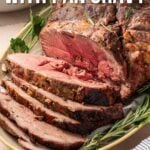
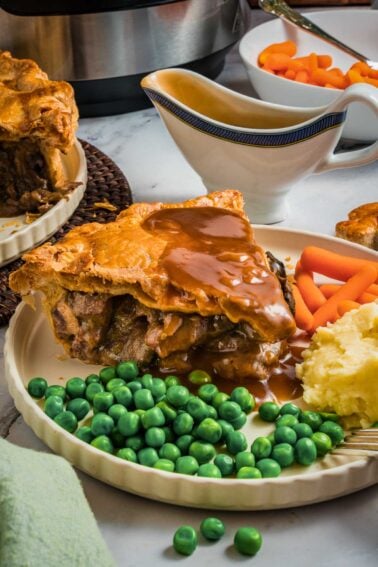
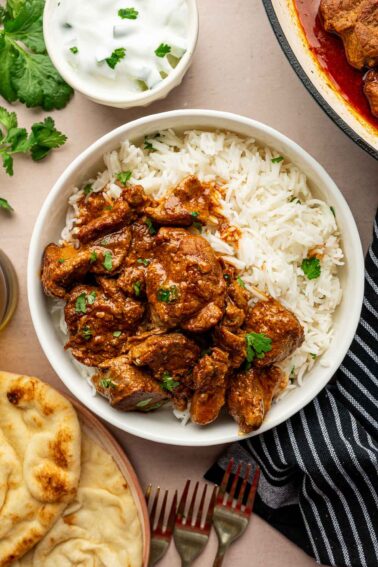
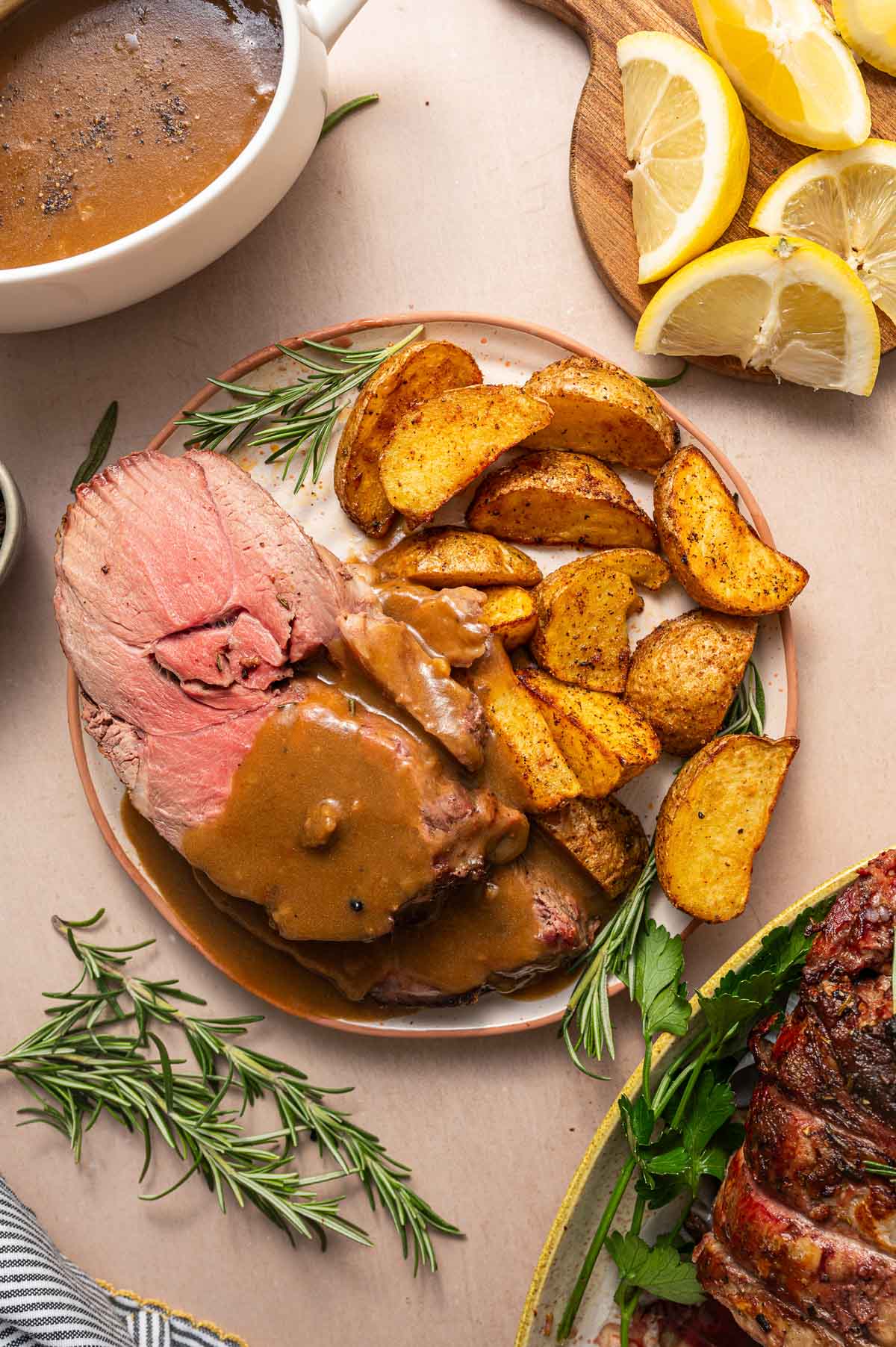
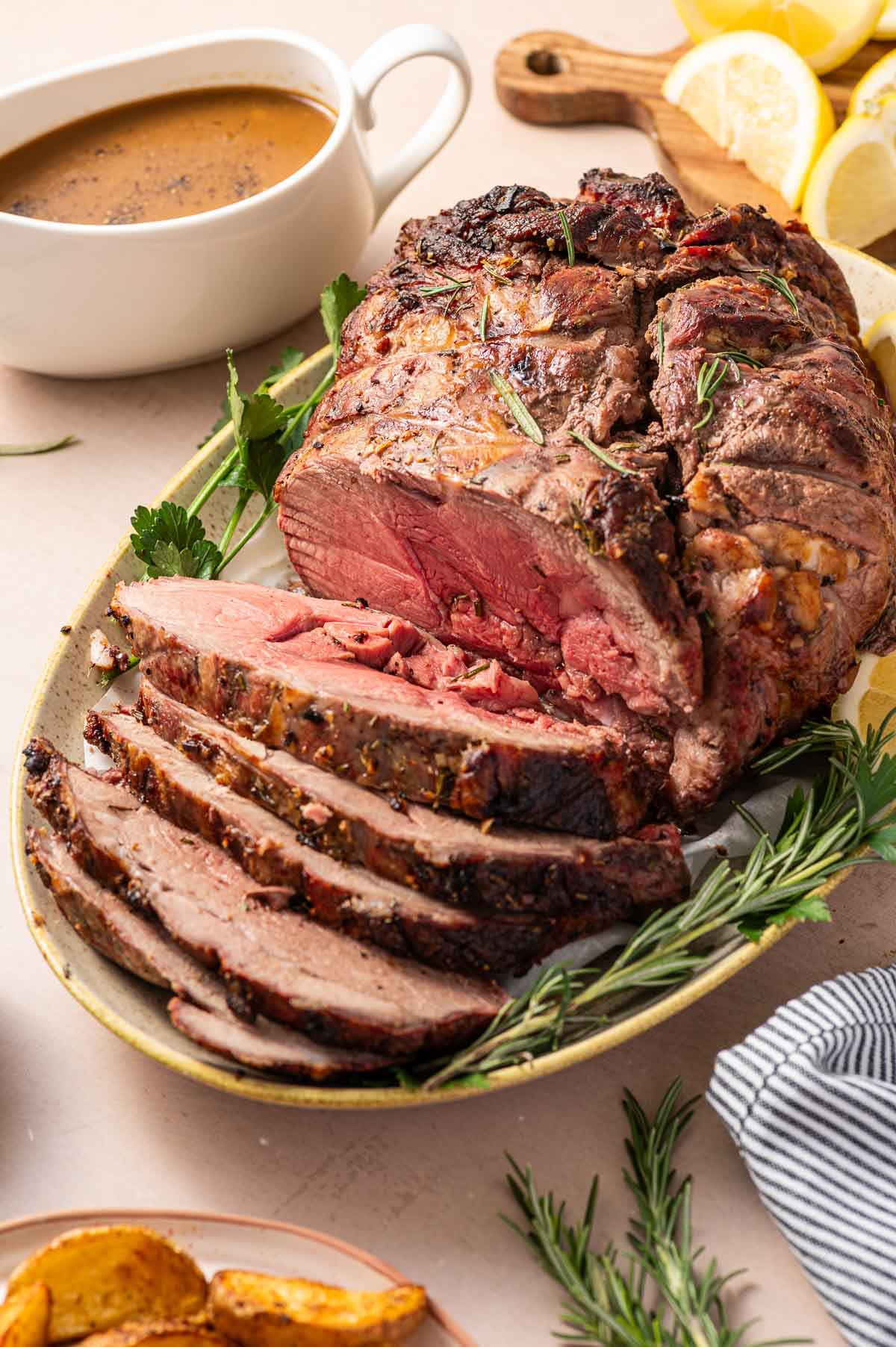
Sunday dinner just got a new standard. This is the classic roast lamb recipe with a pan gravy built from the drippings; it’s rich, silky, and the reason nobody pushes back from this table early.
In this recipe:
Most people avoid lamb because they’re afraid of overcooking it… or undercooking it… and serving something that tastes ‘gamey’. This recipe takes all of that off the table. First, we found a lamb company whose lamb tastes incredible every time, with none of the grassy, gamy flavor you think lamb is supposed to have (we link to it in the ingredients list so you can check it out for yourself).
Blast it at 425°F for 15 minutes to lock in the crust, drop the heat, and let the oven do the work until the center hits 135°F. A thermometer tells you exactly when to pull it. No guessing, no cutting in to check, no dry grey meat.
The pan gravy built from the drippings is the pro move; silky enough to coat every slice and smother your potatoes. Trust us, don’t skip the gravy. This is the recipe we use whether we’re cooking for six or sixteen. Master this once, and you own lamb forever.
If you’re not cooking a full roast, our Air Fryer Lamb Chops deliver big flavor in a fraction of the time.
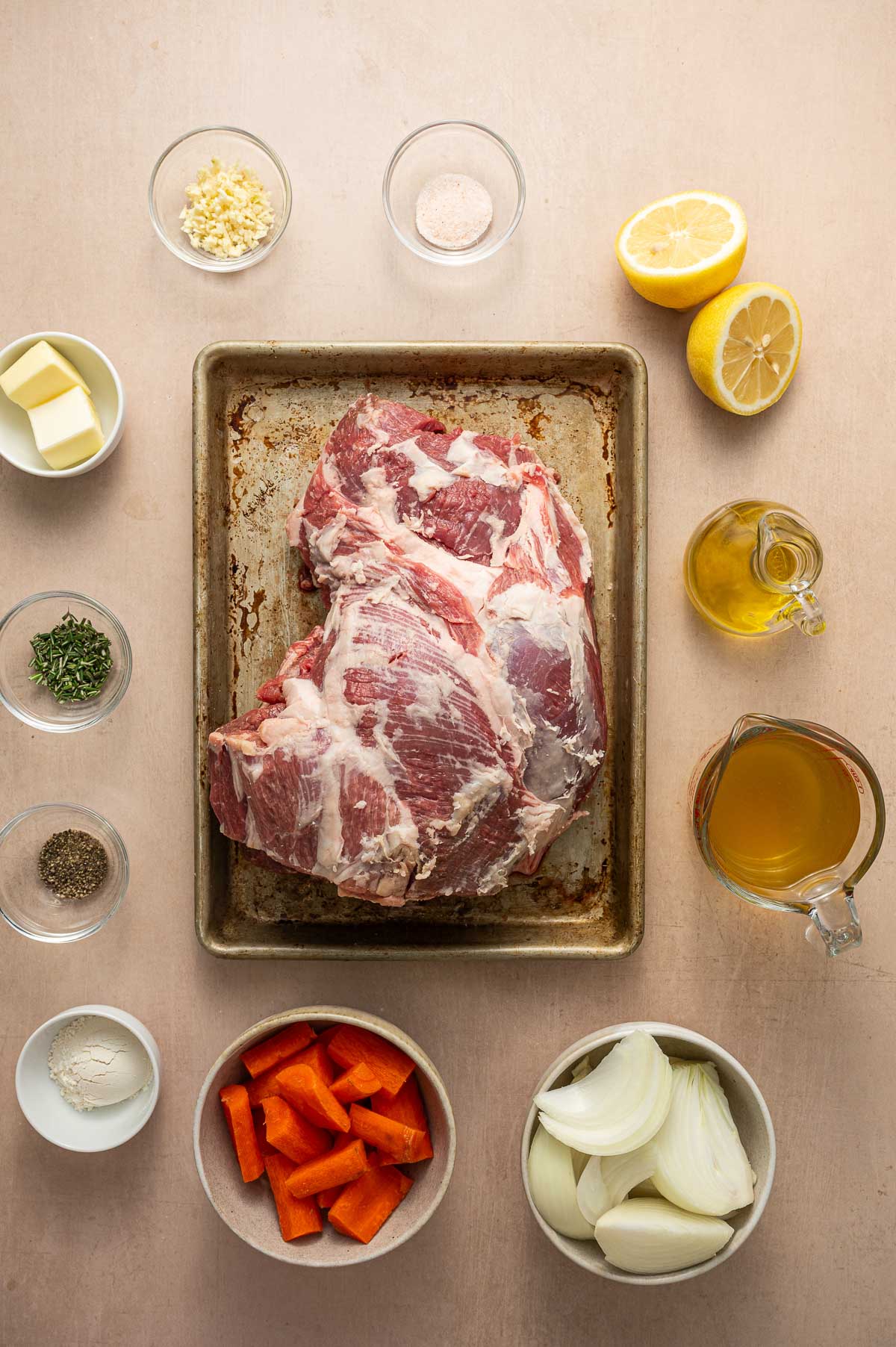
🔪 Ingredients for classic Roast Lamb with Gravy
- Boneless leg of lamb: Choose one that’s evenly thick. If untied, roll and tie it so it cooks evenly. We buy our lamb from Freedom Run Farm because it’s USDA-Certified American lamb with no gamey flavor and beautiful marbling.
- Olive oil
- Kosher salt & Freshly ground black pepper
- Garlic: Use fresh.
- Fresh rosemary: Chop fine so it sticks and doesn’t burn.
- Fresh lemon juice
Roasting Bed
- Onion & Carrots
- Whole garlic cloves: Keep whole so they don’t burn. We’ve even been know to cut off the top 1/4 and use a whole heat of garlic
- Fresh rosemary sprigs
- Low-sodium chicken broth: Keeps the drippings from burning and becomes the gravy base.
Pan Gravy
- Salt and pepper
- Unsalted butter
- All-purpose flour
- Low-sodium chicken broth: Warm it a bit to prevent lumps.
- Strained pan drippings
Equipment
- Roasting pan with rack
- Instant-read thermometer (a non-negotiable for perfect doneness)
- Kitchen twine
- Small saucepan
- Fine mesh strainer
Choosing the Right Leg of Lamb
Bone-in vs boneless: Bone-in looks impressive, but boneless cooks more evenly and is easier to carve. For consistent slices from edge to center, a boneless leg of lamb is the smarter move.
Size, marbling, and thickness: Most legs run between 5 to 8 pounds. Plan on about ½ pound per person. Look for American lamb with light, even marbling and firm white fat. Thickness matters more than weight. An evenly shaped roast cooks better, while tapered ends overcook before the center is ready.
📝 How to Roast Boneless Leg of Lamb
- Prep the oven. Set a rack in the lower-middle position and preheat to 425°F.
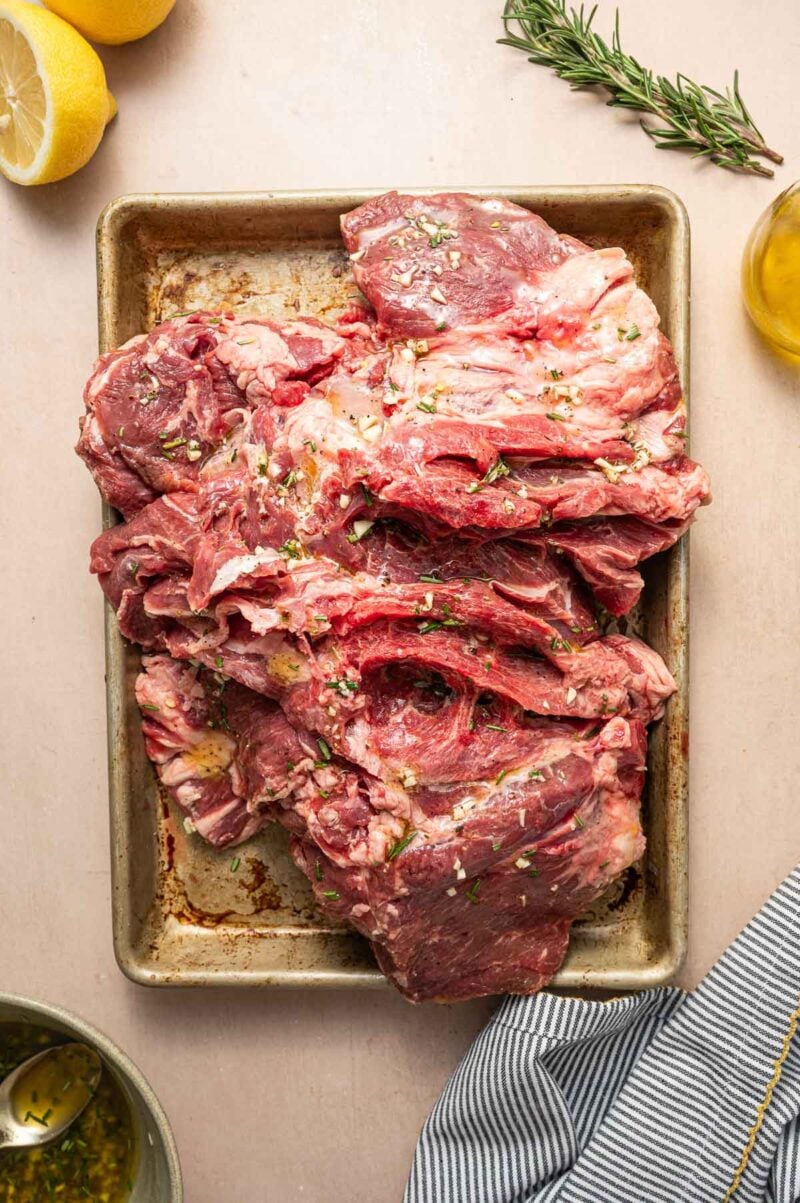
- Make the paste. Mix olive oil, salt, pepper, garlic, rosemary, and lemon juice into a thick paste.
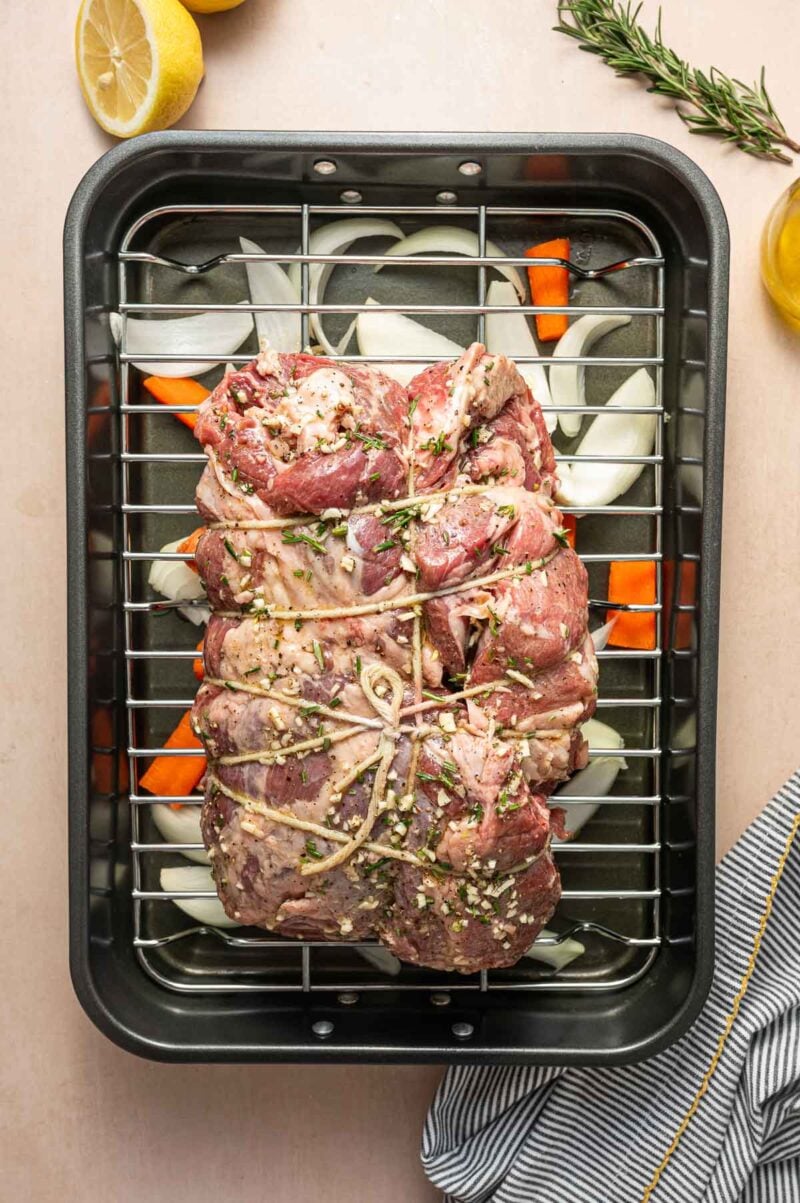
- Season aggressively. Pat the lamb dry. Rub the paste all over and into any seams or folds. If the roast is unrolled, fold it and roll it into a tight cylinder, then tie it with twine every 1½ inches to guarantee even cooking.
- Marinate. Refrigerate 2–24 hours. The longer the rest, the deeper the garlic-rosemary flavor. Let the lamb sit at room temp 20–30 minutes before roasting so it cooks evenly.
- Build the roasting base. Scatter onion, carrots, whole garlic, and rosemary in the roasting pan. Pour in 1 cup of broth. Set the rack over the vegetables.
- Start hot for color. Place the lamb seam-side down. Roast at 425°F for 15 minutes uncovered to build a browned crust, just when you’re roasting a prime rib.
- Lower and finish. Reduce the heat to 400°F. Continue roasting until the center reaches:
- 130–135°F for medium-rare135–140°F for medium
- Rest properly. Transfer to a cutting board. Tent loosely with foil and rest 15–20 minutes. Internal temp will rise 5–10 degrees from carryover cooking.
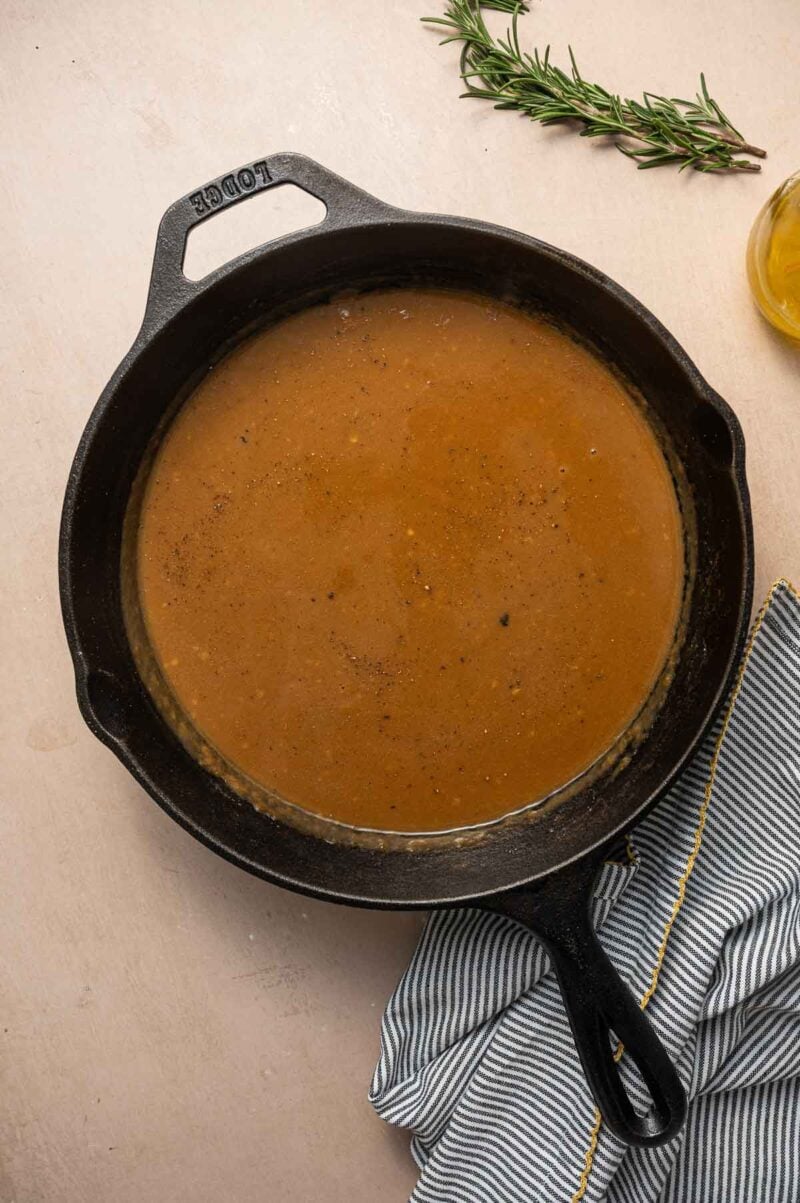
- Make the pan gravy.
- Melt butter over medium heat.
- Whisk in the flour and cook for 1–2 minutes, until pale golden and nutty-smelling.
- Slowly whisk in warm broth and strained pan juices.
- Simmer 3–5 minutes until thick enough to coat the back of a spoon.
- Season to taste.
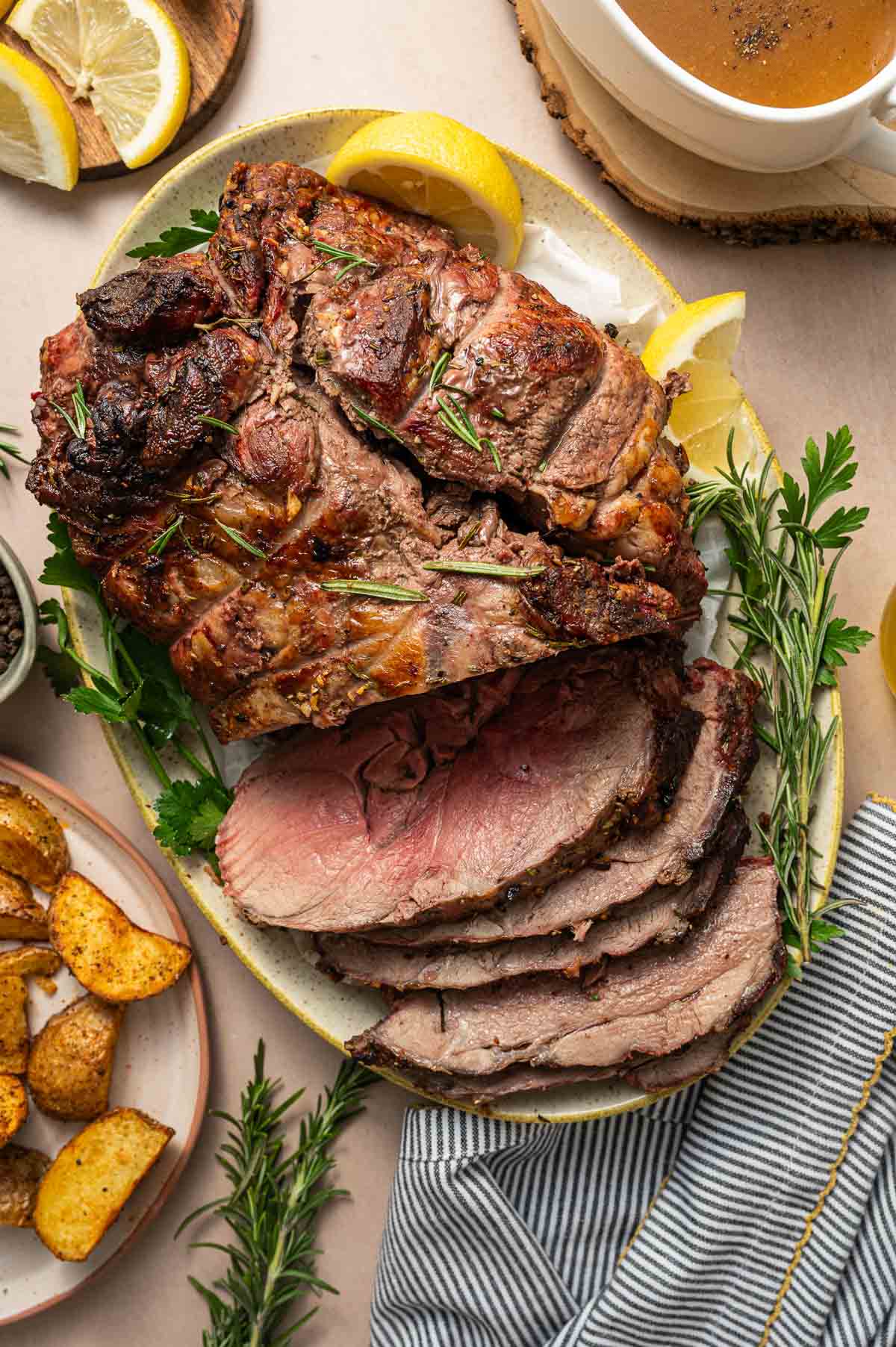
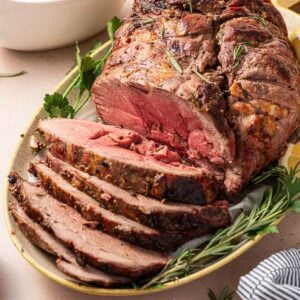
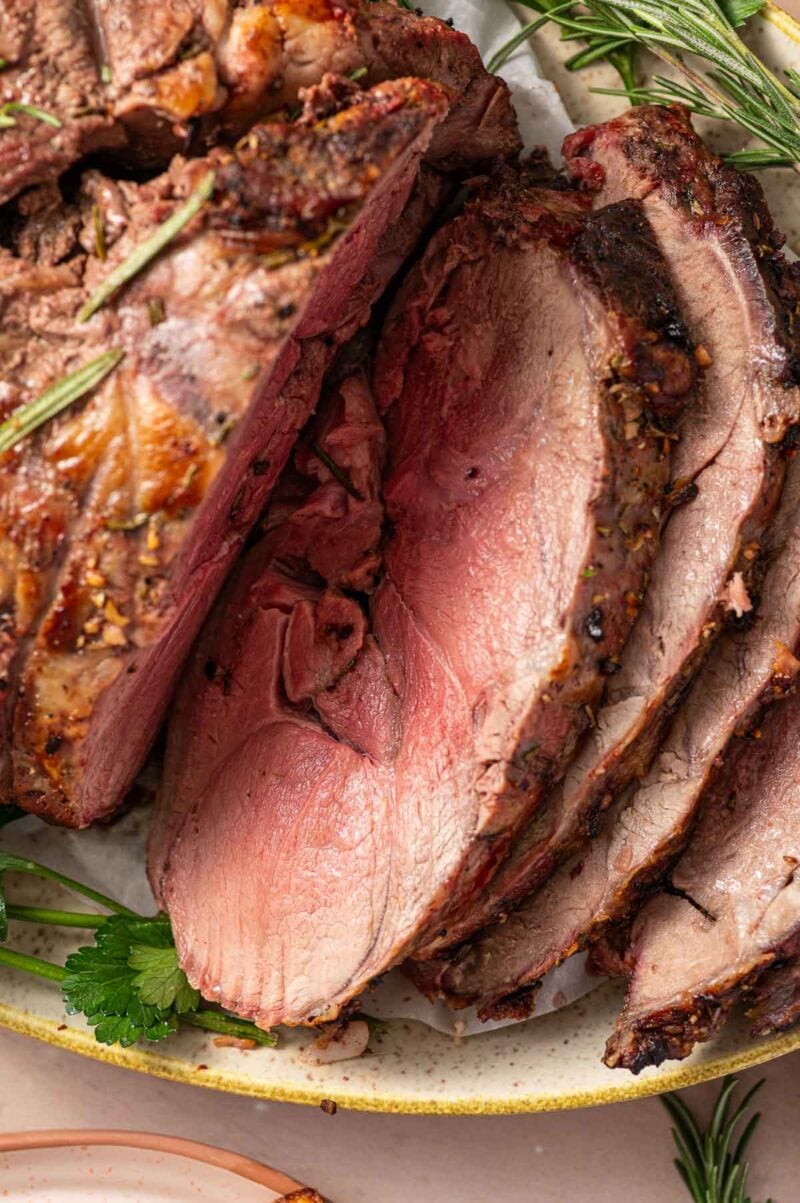
- Slice correctly. Snip the twine. Slice across the grain into ¼–½-inch slices for maximum tenderness.
🔄 Substitutions & Variations
- Shoulder instead of leg: Richer and slightly fattier. Roast a bit longer; still pull at temperature.
- Herb swap: Add thyme or oregano with the rosemary. Or go for a rack of lamb and try our herb crusted rack of lamb.
- Mustard boost: Add 1 tablespoon Dijon to the paste for sharper depth.
- No flour gravy: Deglaze the pan with broth or white wine and reduce for a lighter jus and let it simmer to thicken.
💡 Meat Nerd Tips
- Leg is lean; cook to temperature, not time. A boneless leg of lamb has far less internal fat than a shoulder. That means there’s less margin for error. Pull it at 130–135°F and let carryover do the rest. Cooking times are only a suggestion.
- Dry the surface thoroughly. Pat the lamb dry before applying the herb paste. Surface moisture steams the meat and kills your crust.
- Create even thickness before tying. If one end is thinner, fold it under before rolling and tying. A uniform cylinder cooks evenly and prevents dry edges. Use twine every 1½ inches to keep the roast compact, so heat penetrates evenly from edge to center.
- Use a thermometer. Always. Guessing is how expensive lamb turns gray. An instant-read thermometer takes 5 seconds and saves the roast.
- Protect the pan drippings. If the vegetables start to darken too quickly or the liquid evaporates, add ¼–½ cup broth. Burnt drippings mean bitter gravy.
- Rest it. Let the lamb rest 15–20 minutes before slicing. Cut too soon, and the juices run out onto the board instead of staying in the meat.
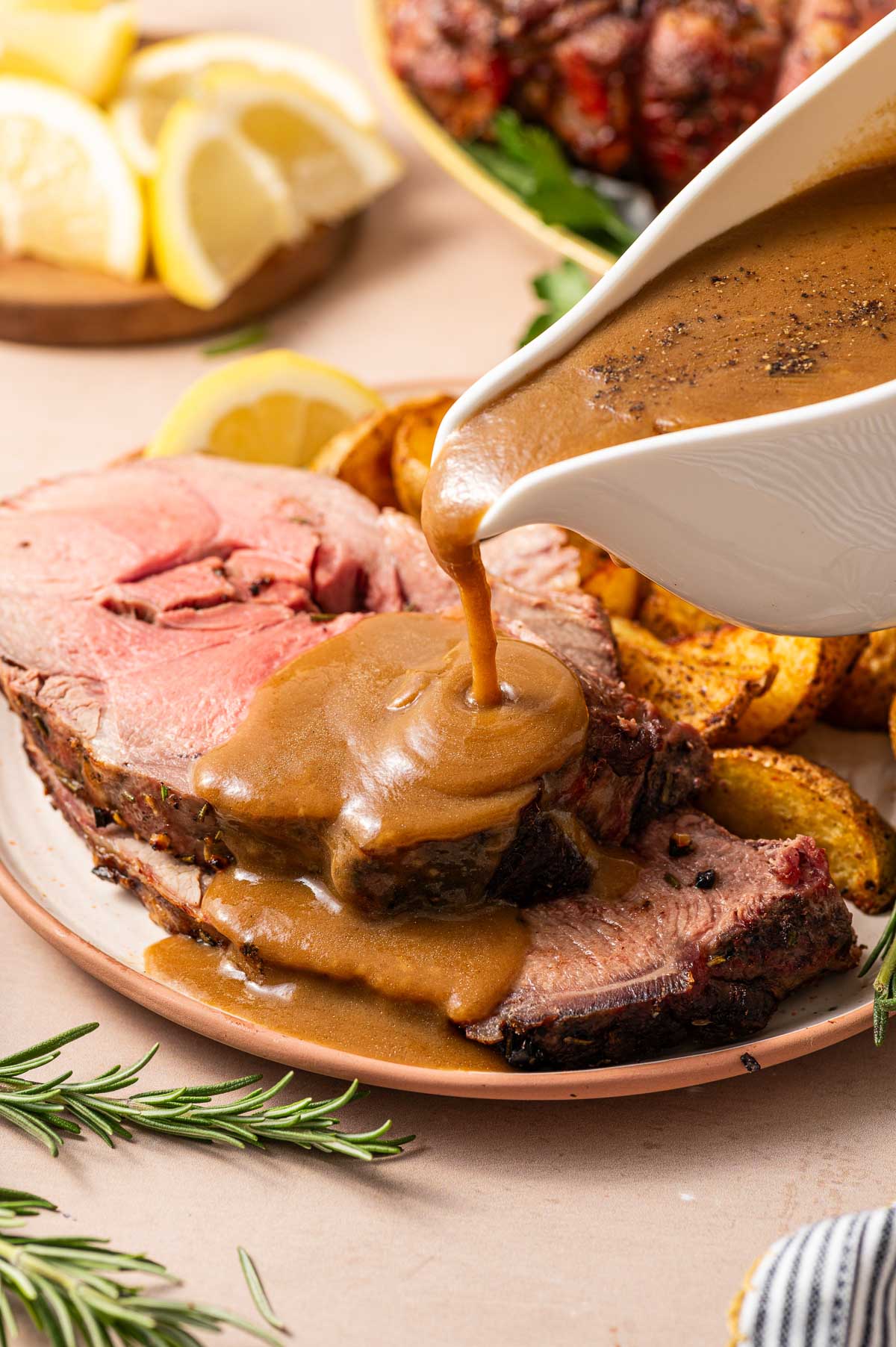
🍽️ What to Serve with a Lamb Roast
- Roasted potatoes or creamy mashed potatoes
- Simple green salad with lemon vinaigrette
- Charred green beans or roasted baby broccoli
- A bold red wine (Cabernet or Syrah)
🧊 Leftovers & Reheating
- Refrigerate leftovers up to 4 days in an airtight container.
- Reheat in a 300°F oven with a splash of broth, covered.
- Slice cold leftovers thin for sandwiches or wraps.
- Freeze sliced lamb (without the gravy) up to 2 months.
Have you tried this recipe? Do us a favor and rate the recipe card with the ⭐ ⭐ ⭐ ⭐ ⭐ and drop a comment to help out the next reader.
Classic Lamb Roast Recipe with Gravy
Recommended Equipment
- Kitchen twine
- Small saucepan
- Fine Mesh Strainer
Ingredients
Lamb
- 7-8 lb boneless leg of lamb We love the flavor of Freedom Run Farm USDA-Certified American Lamb
- 4 tablespoons olive oil or avocado oil
- 1½ teaspoons kosher salt
- 1 teaspoon black pepper
- 4 garlic cloves minced
- 1 tablespoon fresh rosemary chopped
- 2 tablespoons lemon juice
Roasting bed
- 1 large onion thick wedges
- 2 carrots chunked
- Fresh Rosemary
- 4 garlic whole cloves
- 1 cup low-sodium chicken broth
Pan Gravy
- 2 tablespoons unsalted butter
- 4 tablespoons all-purpose flour
- 2 cups low-sodium chicken broth
- ½ teaspoon salt
- ½ teaspoon ground pepper
Instructions
Prep the lamb
- Set a rack in the lower-middle of the oven and preheat to 425°F.
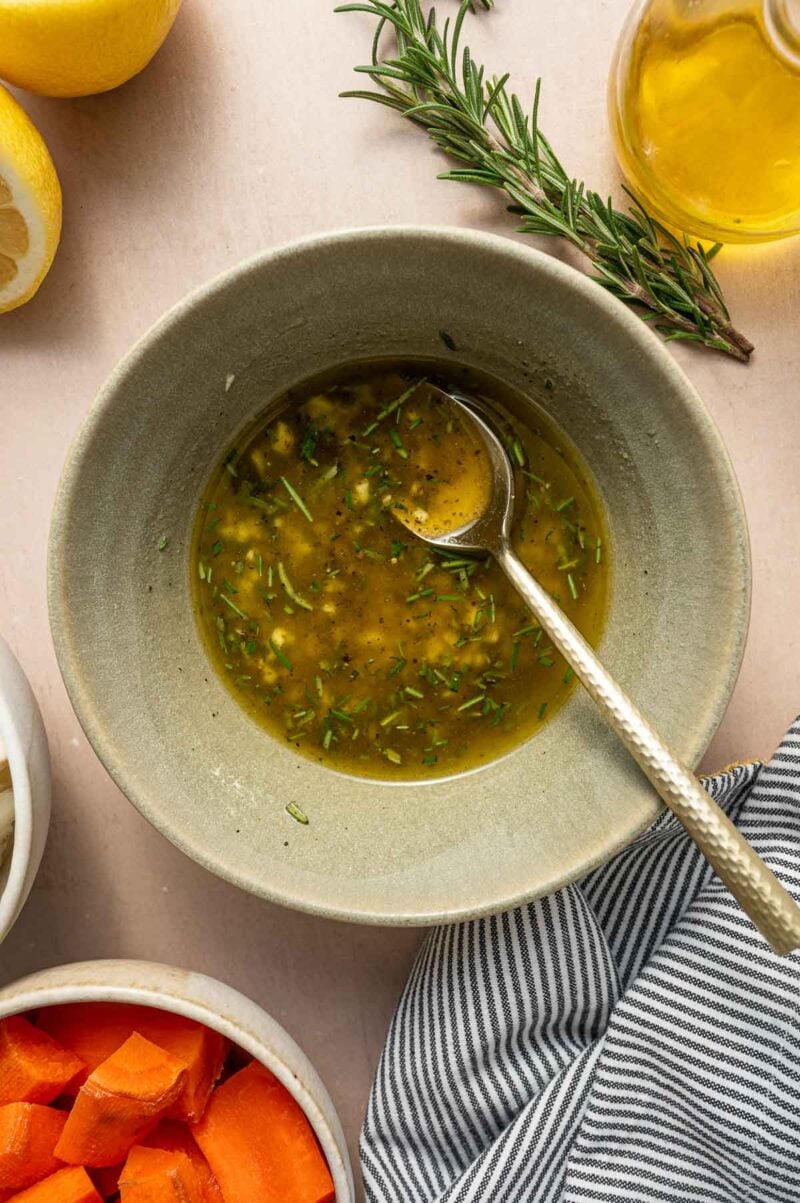
- In a bowl, combine olive oil, salt, pepper, garlic, rosemary, and lemon juice to make a paste.

- Rub the lamb all over and under any surface seams. Marinate at least 2 hours or overnight. Roll into a cylinder and tie with kitchen twine.
- In a roasting pan, scatter onion, carrot, garlic, and rosemary. Pour in 1 cup broth and set a rack over the vegetables.
Roast the Lamb
- Place the lamb seam-side down. Roast for 15 minutes at 425°F to start browning, then reduce to 400°F and continue roasting about 60 minutes (time varies by thickness) until the center reaches 135°F for medium. Start checking early.
- Transfer the lamb to a board, tent loosely with foil, and rest 15–20 minutes.
Make the Gravy
- In a saucepan, melt butter over medium heat. Whisk in flour and cook 1–2 minutes to a blond roux. Slowly whisk in warm stock and the strained pan juices from the roasting pan. Simmer 3–5 minutes until silky. Season with salt and pepper.
Slice and Serve
- Snip the twine. Slice the lamb across the grain into ¼–½-inch slices and serve immediately with the pan gravy.
Notes
- Cook to internal temperature, not time. Pull at 130–135°F for medium-rare or 135–140°F for medium. The roast will rise 5–10 degrees while resting.
- Pat the lamb dry before applying the herb paste to ensure proper browning.
- If one end of the roast is thinner, fold it under before tying so it cooks evenly.
- If the roasting pan begins to dry out, add ¼–½ cup broth to prevent burnt drippings (which will make the gravy bitter).
- Let the lamb rest 15–20 minutes before slicing to keep the juices in the meat.
- Warm the broth before whisking into the roux to prevent lumpy gravy.
Nutrition
Bookmark this recipe now!
❓ FAQs
For juicy slices, remove the lamb at 130–135°F for medium-rare or 135–140°F for medium. The temperature will rise 5–10 degrees while resting.
No. Roast uncovered so the exterior browns properly. Tent loosely only while resting.
Typically 60–90 minutes at 400°F after the initial high-heat blast. Always cook to internal temperature rather than time alone.
You can make the roux and warm broth ahead. Finish the gravy with strained pan drippings after roasting for full flavor.
Most often it was overcooked past 145°F or sliced before resting. Use a thermometer and let it rest before carving.