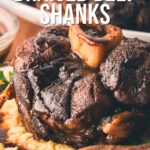
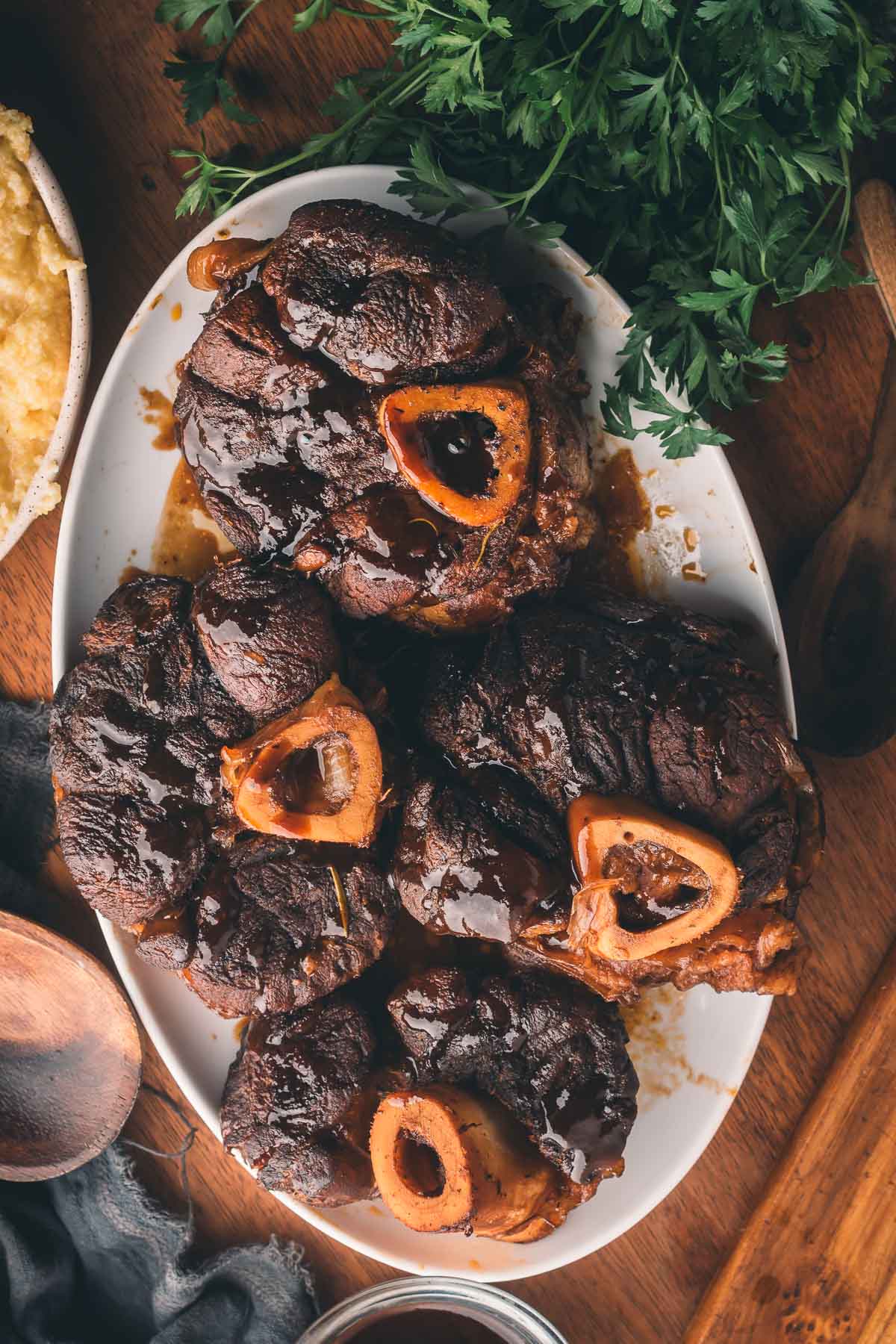
When that Dutch oven lid comes off of these braised beef shanks, the smell alone will stop conversation. Rich malt, roasted coffee, and savory beef… And suddenly everyone remembers they’re hungry.
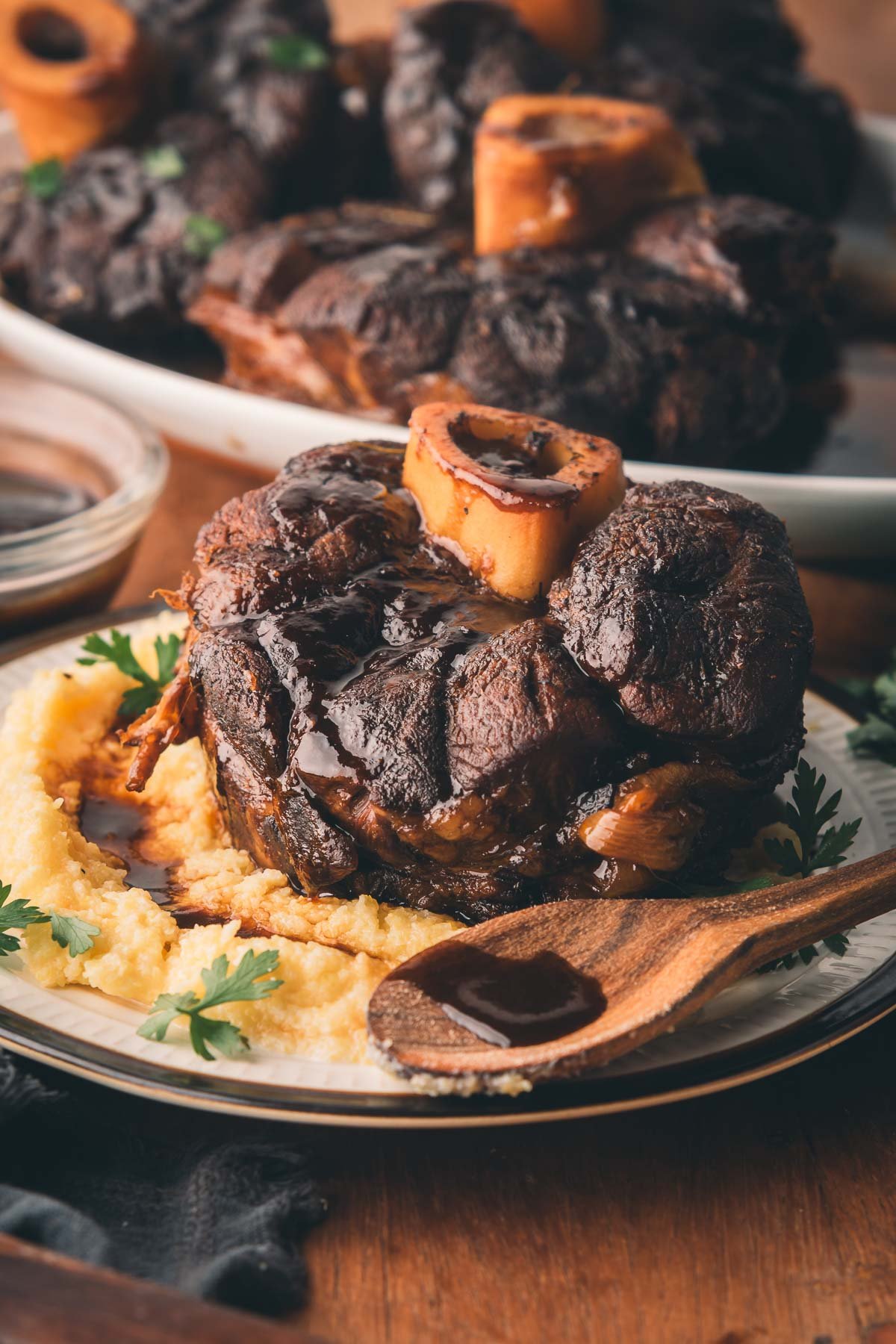
Most people walk past beef shanks because they take time. Like many cuts in our beef recipe collection, shanks reward patience with flavor you can’t rush. That’s exactly why they’re worth it. Shanks are loaded with collagen, and when cooked properly, that collagen is the payoff. Low heat and patience turn it into gelatin, transforming thin broth into glossy sauce and tough muscle into fork-tender meat that still holds its shape on the bone.
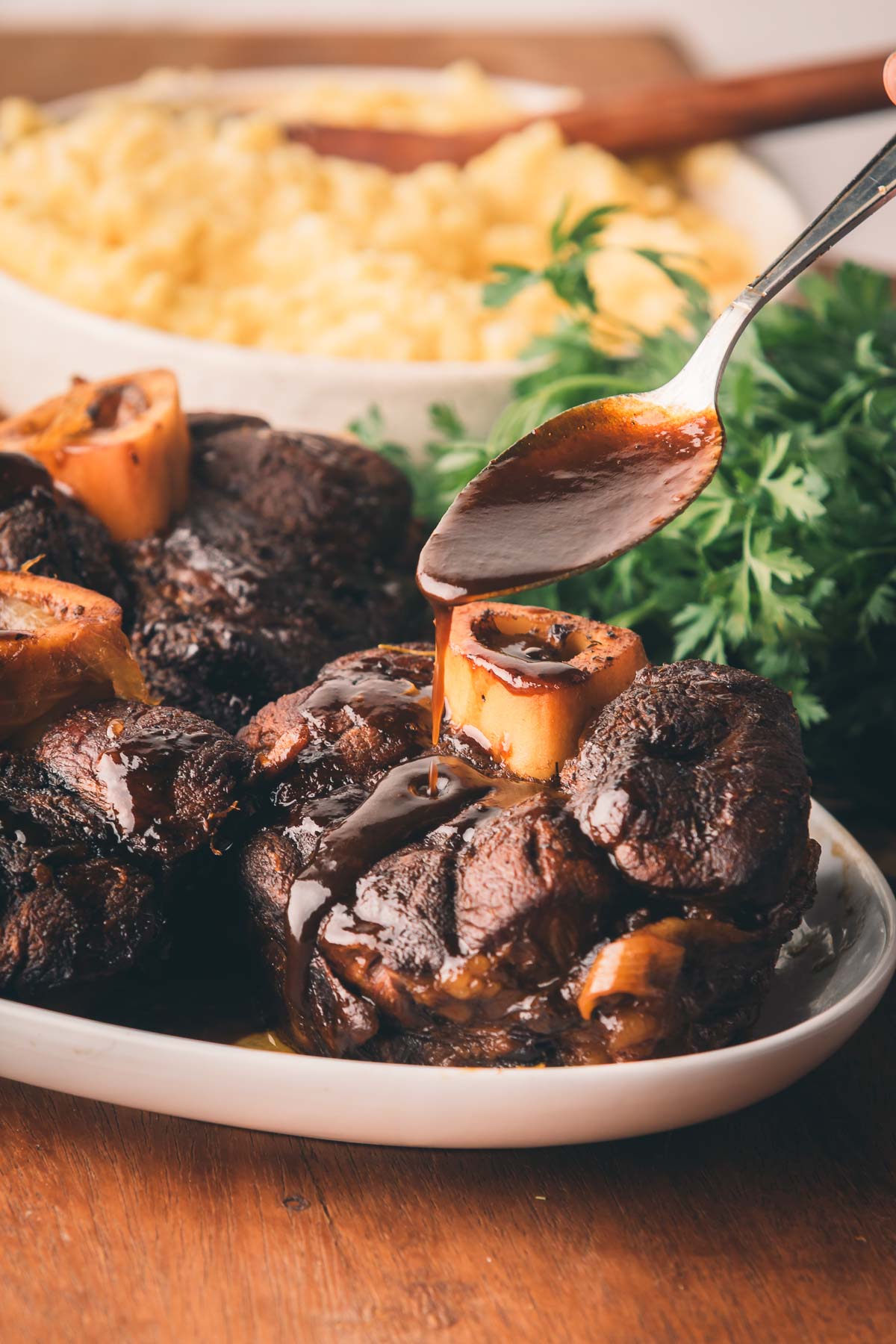
We braise in stout for roasted depth, add strong coffee to sharpen the richness without tasting like coffee, and finish with just enough honey to round the edges. Then we reduce the liquid until it coats a spoon – a proper glaze over all that braised meat.
Make it once, and you’ll understand why serious cooks always have a braising recipe in their back pocket. After this, beef shanks won’t look intimidating; they’ll look like an opportunity. And the leftovers make epic Irish Nachos.
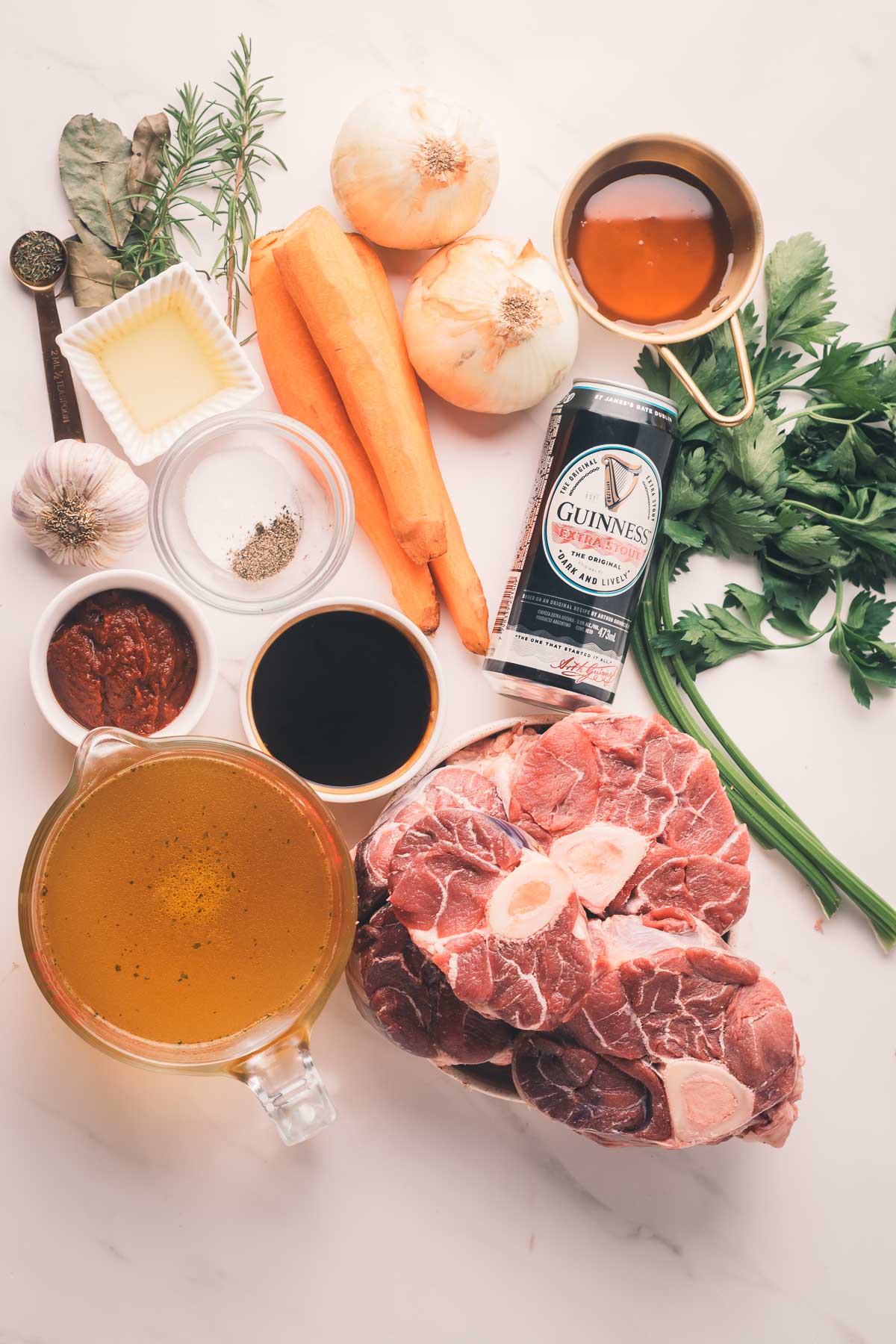
🔪 Ingredients for Braised Beef Shanks
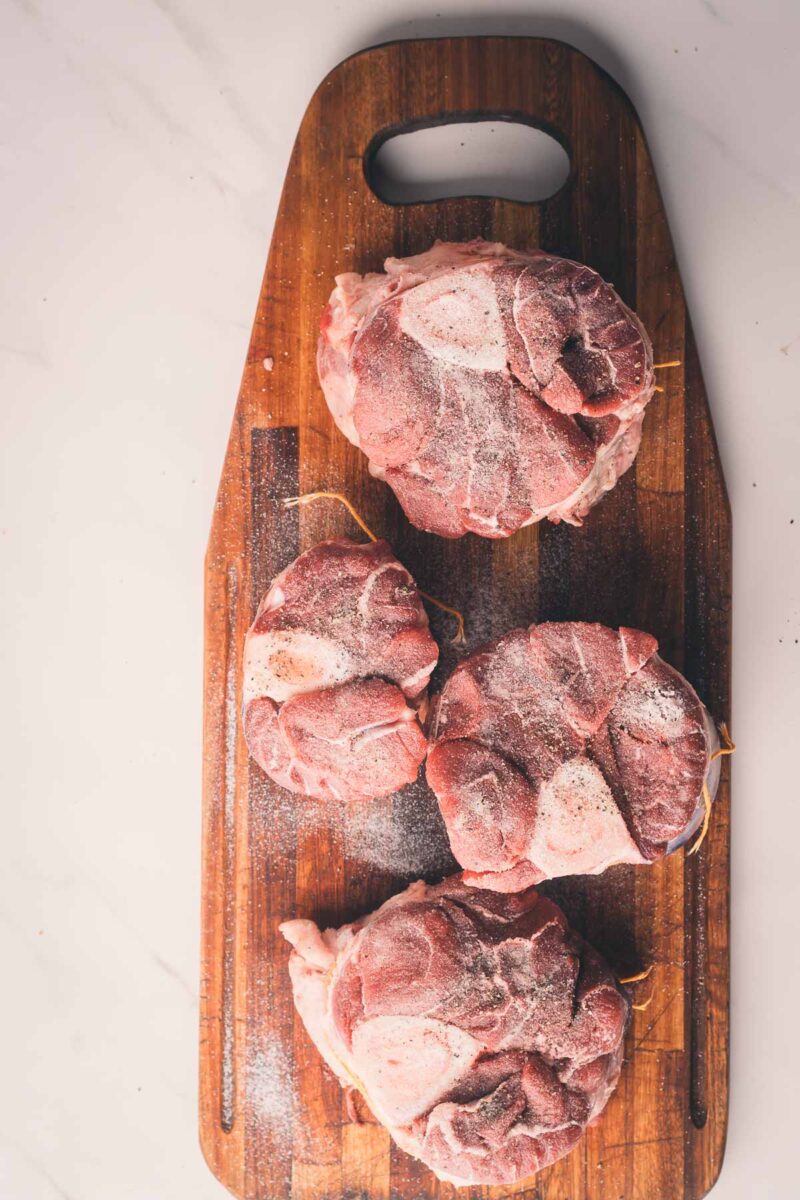
- Beef shanks (ossobuco cut), 1½ inches thick minimum – thicker cuts give you better structure and presentation.
- Salt & freshly cracked black pepper – don’t be shy.
- Neutral oil – high smoke point for proper browning.
- Kitchen twine – keeps the shanks from curling as they cook.
- Onions, Carrots, Celery
- Tomato paste
- Dry Irish stout (Guinness-style)
- Strong brewed coffee
- Low-sodium beef broth
- Honey
- Whole head of garlic, halved crosswise
- Fresh thyme, rosemary, & Bay leaves
- Cold butter (optional finish)
Equipment
- Dutch oven (6–7 quart)
- Kitchen twine
- Tongs
- Wooden spoon
- Fine mesh strainer
📝 How to Make Braised Beef Shanks (Step-by-Step)
1. Dry and Tie the Shanks
- Pat the shanks completely dry. If they’re damp, they’ll steam instead of brown.
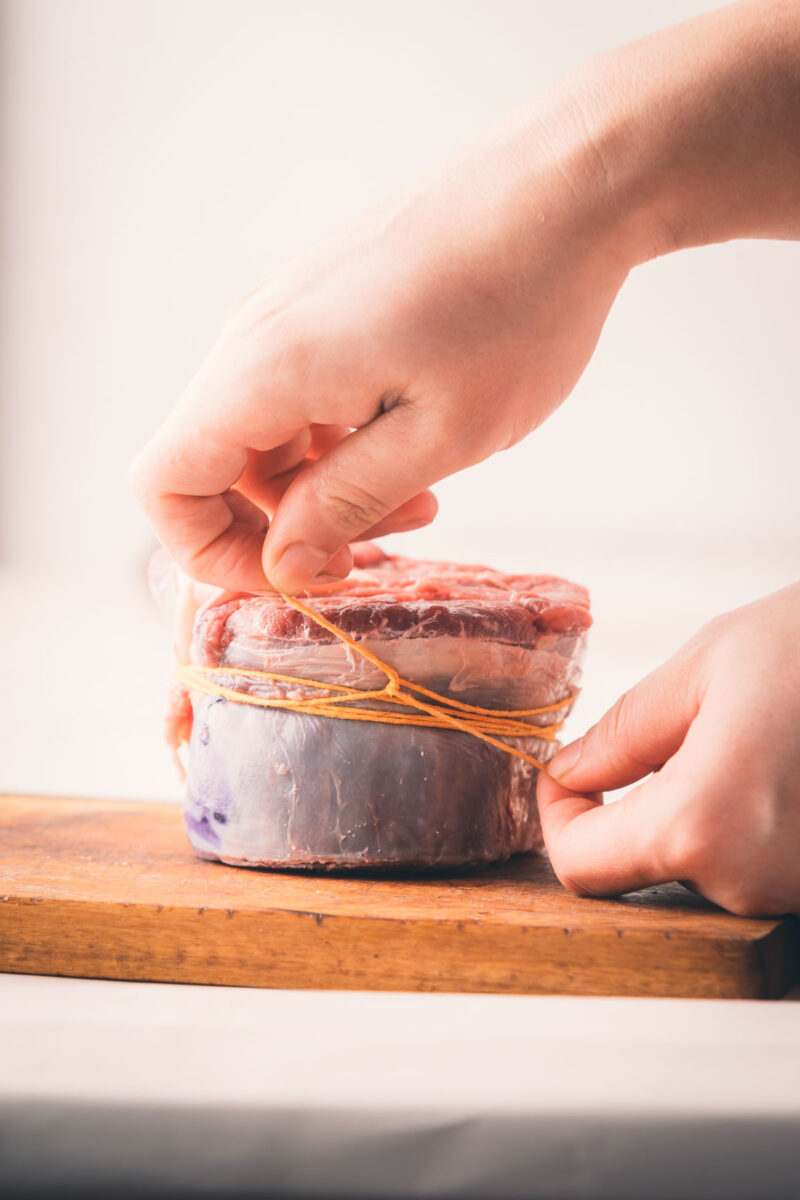
- Tie the kitchen twine snugly around the outer edge of each shank. As the meat cooks, the exterior membrane tightens faster than the center. Tying keeps them round instead of curling and pulling off the bone.
2. Sear Until Dark
- Heat oil in a heavy Dutch oven over high heat. Season the beef generously.
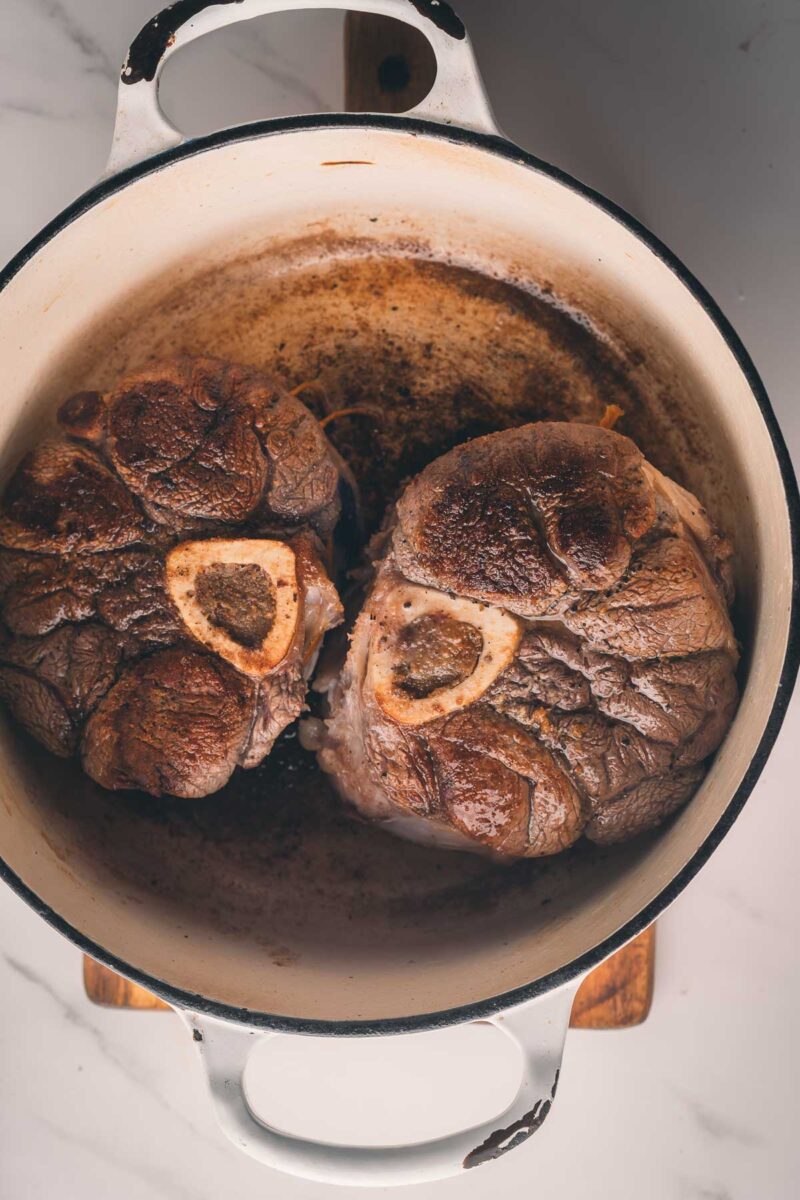
- Sear 3–4 minutes per side until deeply browned, not golden, not light brown. You’re looking for a dark, almost mahogany crust.
- If the pan starts filling with liquid, your heat’s too low. That crust is the foundation of your sauce.
- Once seared, remove and set aside.
3. Build the Base
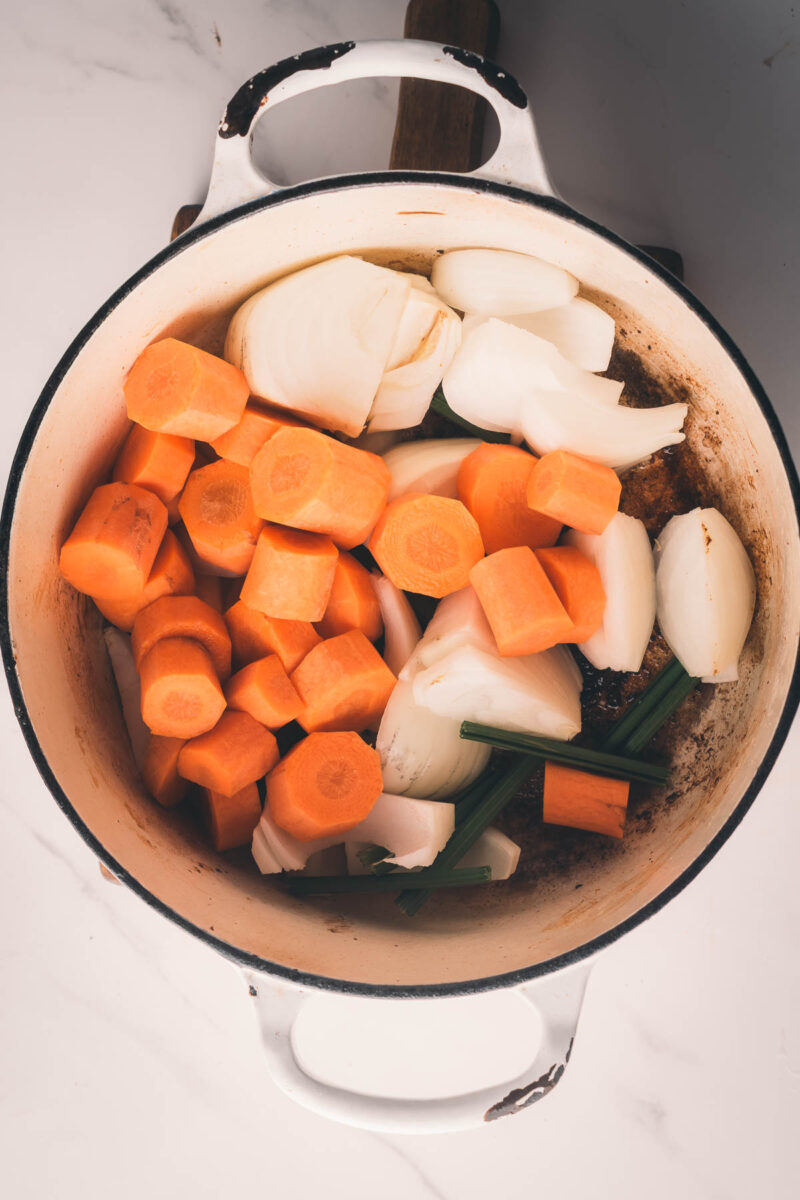
- Lower the heat to medium. Add onions, carrots, and celery to the rendered fat.
- Cook until softened and lightly browned — about 5–7 minutes.
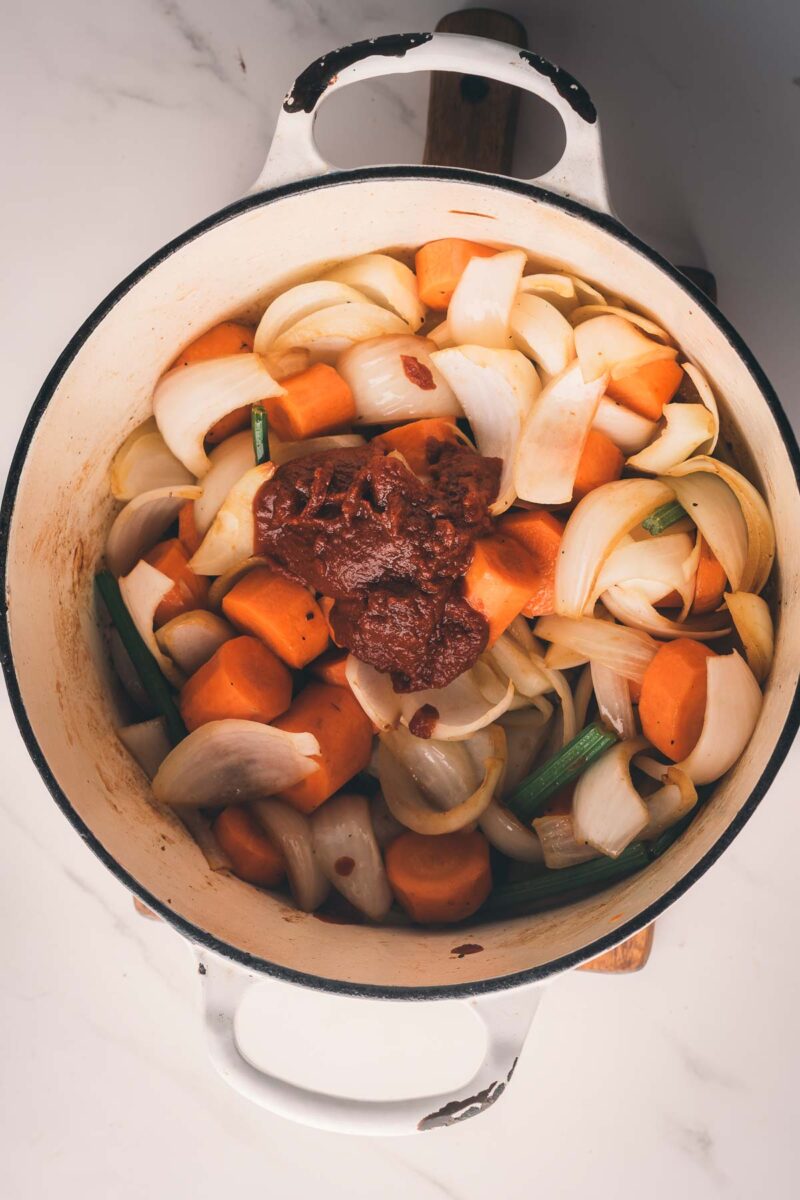
- Stir in tomato paste and cook until it darkens to brick red and smells slightly sweet instead of sharp. That step removes the raw edge and deepens the sauce.
4. Deglaze and Layer
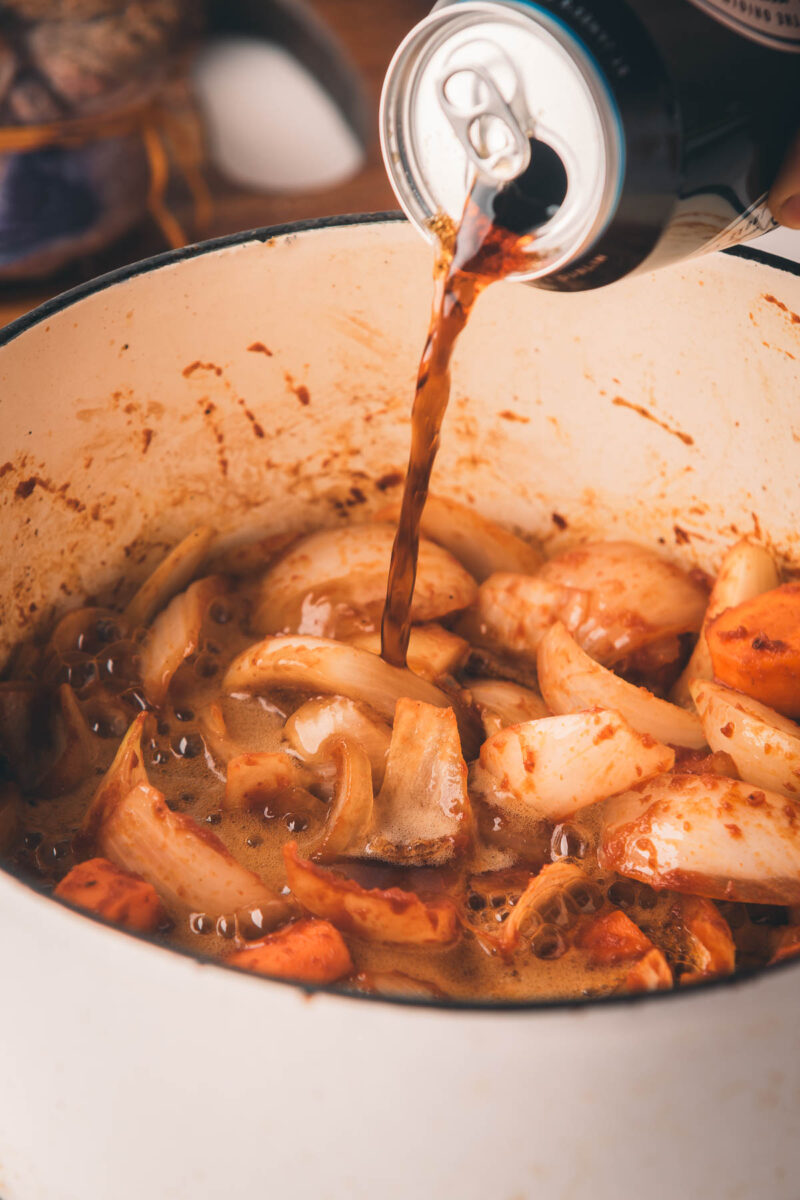
- Pour in the stout and scrape up every browned bit stuck to the bottom. That fond is concentrated flavor, don’t leave it behind.
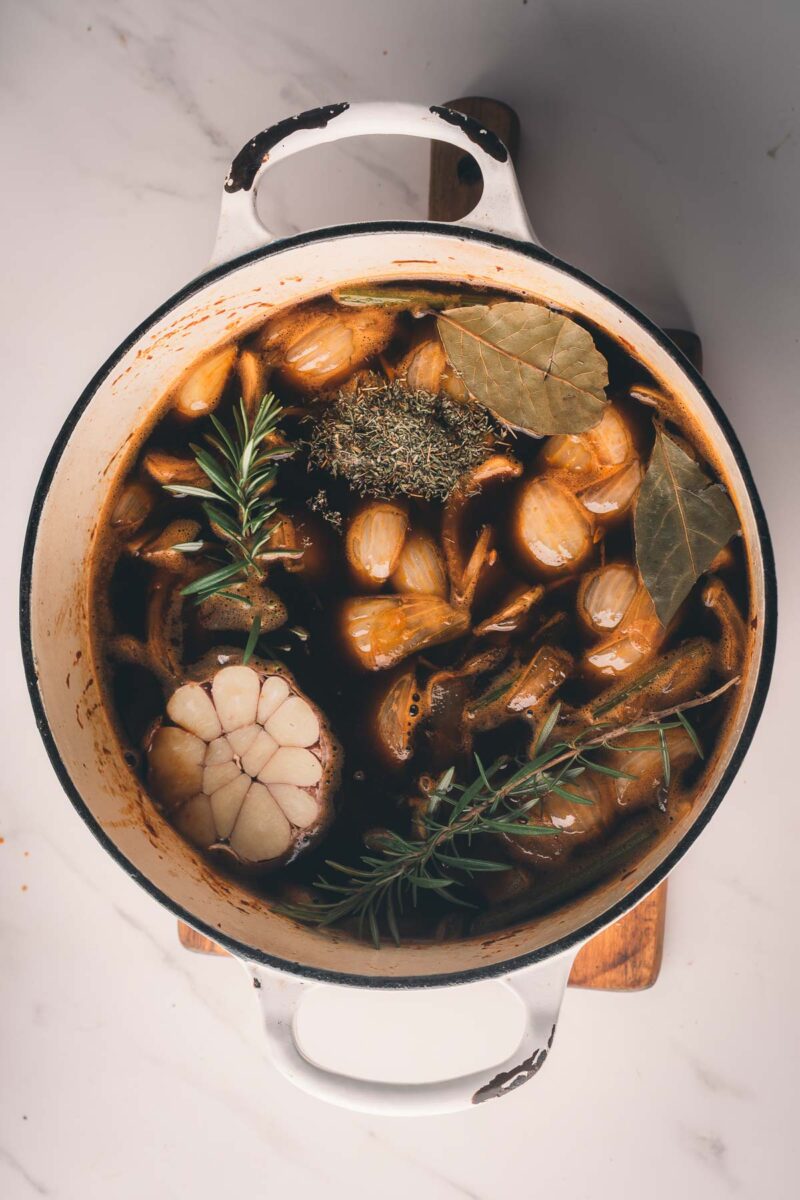
- Add the coffee, honey, herbs, bay leaves, and the halved garlic head.
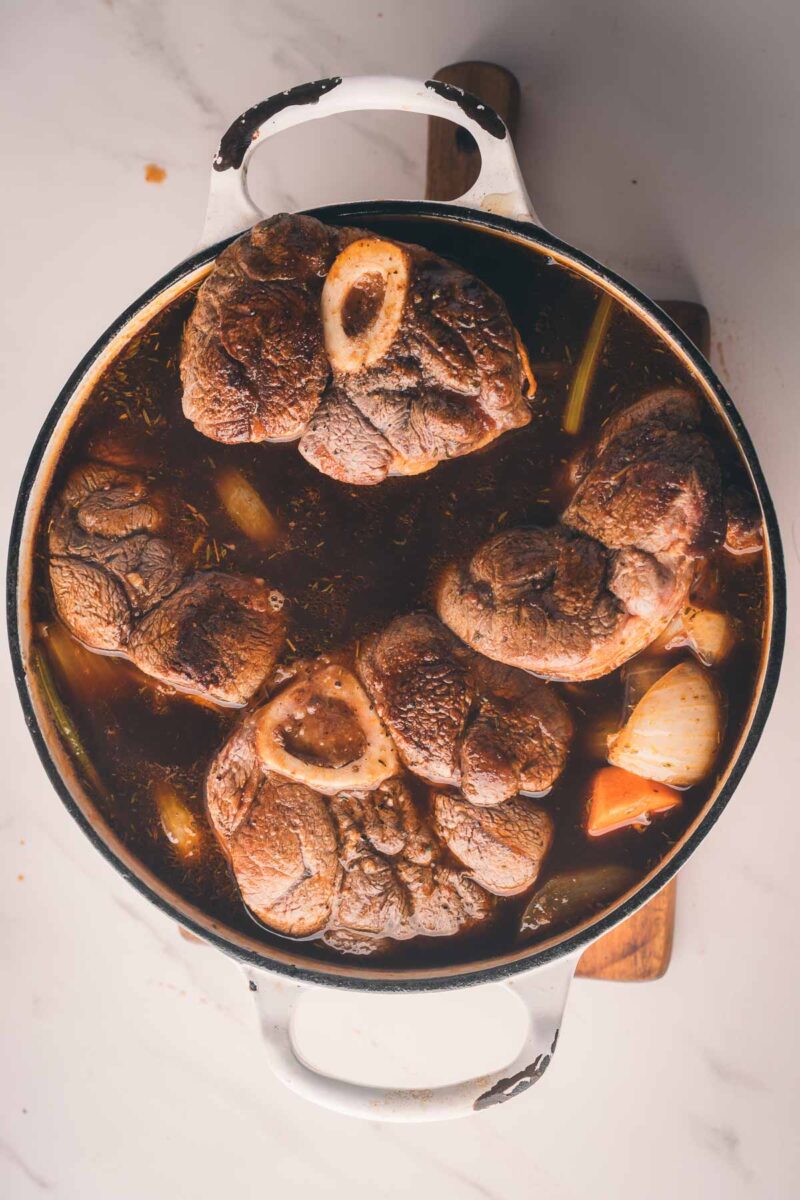
- Return the shanks to the pot. Add beef broth until the meat is about 80% submerged.
- The garlic goes in raw intentionally. It gently poaches during the braise, turning mellow and sweet instead of sharp.
5. Braise Low and Steady
- Cover and transfer to a 320°F oven and cook 2½ to 3 hours. You want a gentle simmer, small, lazy bubbles around the edges. If it’s aggressively boiling, the oven’s too hot, and the meat will tighten.
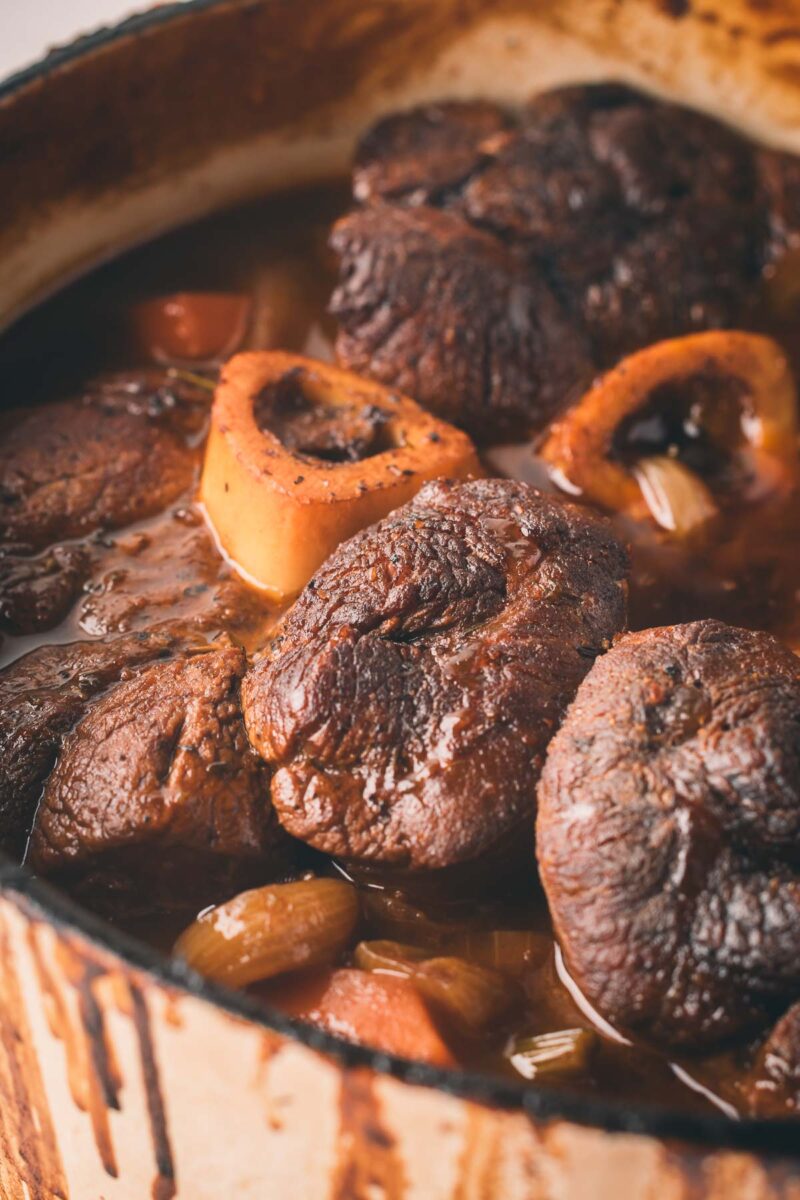
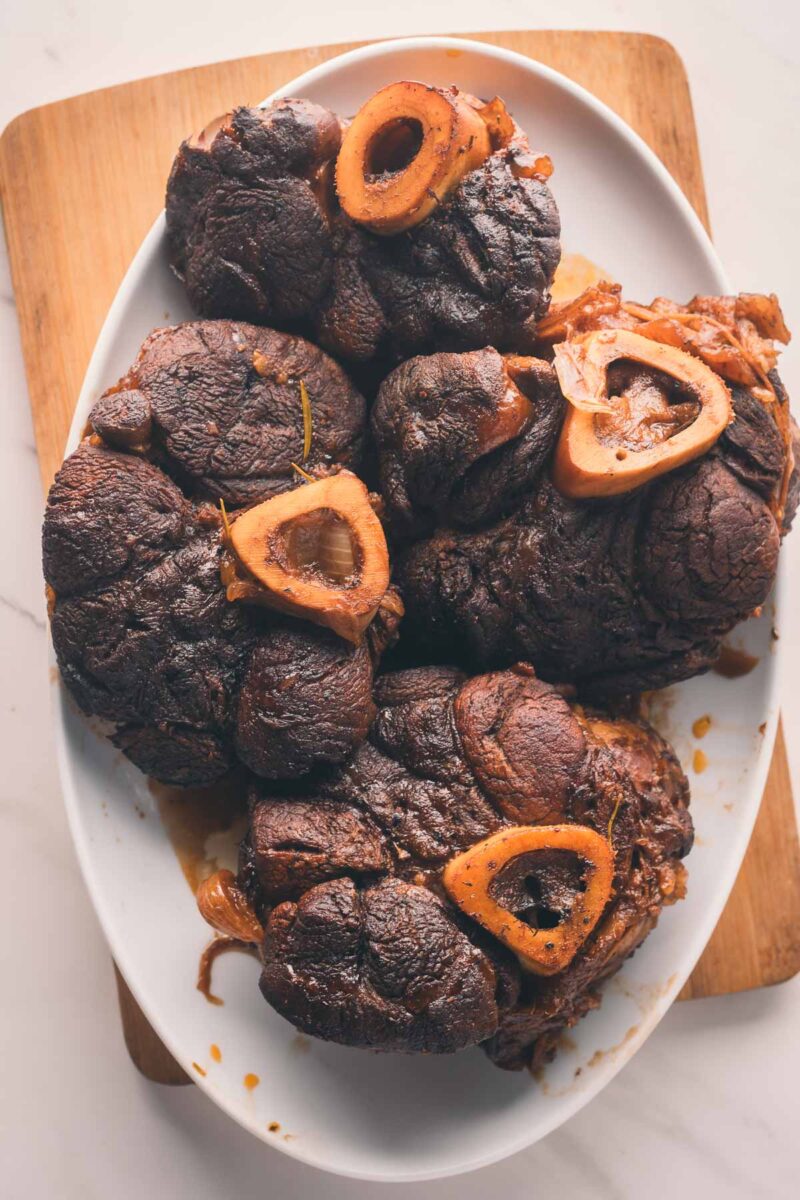
- How to tell when it’s ready: Slide a fork into the thickest part. It should glide in easily, but the meat should still hold together and stay anchored to the bone. If it collapses into shreds, it’s slightly over — still delicious, but no longer sliceable.
- The internal temp will usually land around 195–205°F when collagen has fully converted to gelatin.
6. Reduce to a Proper Glaze
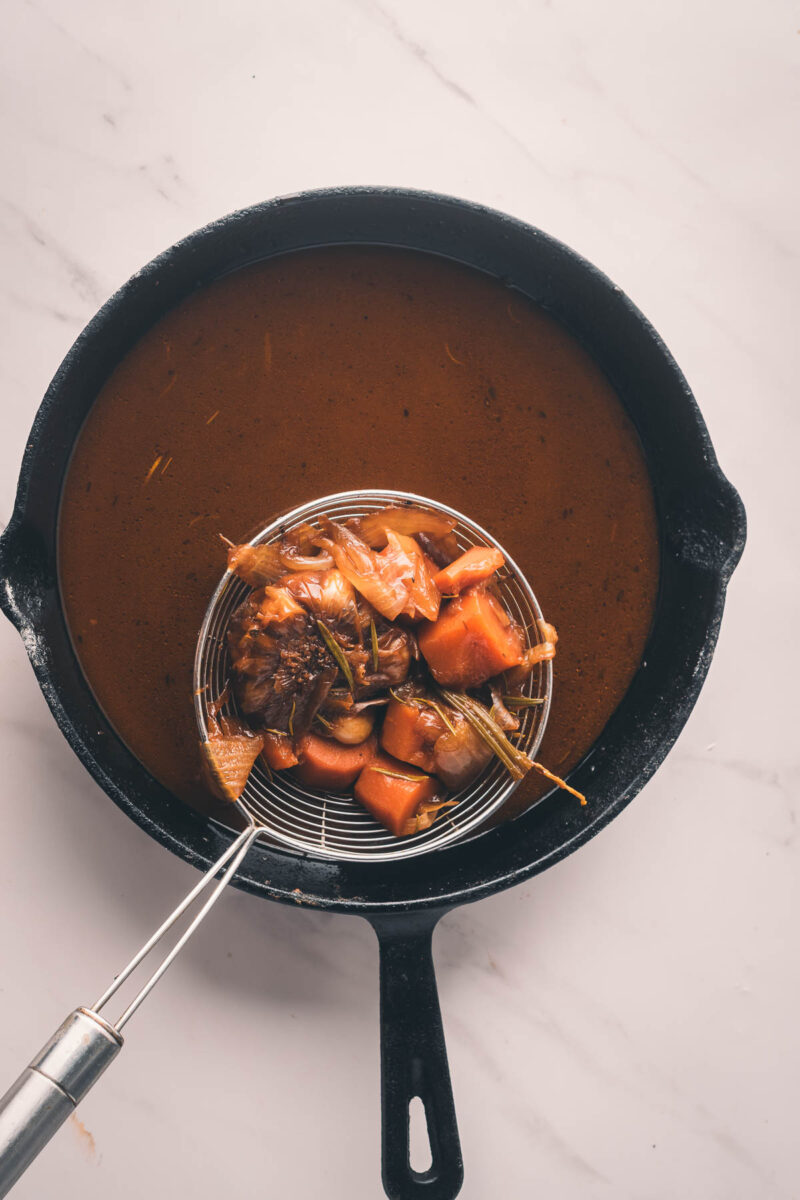
- Remove the shanks carefully. Strain the braising liquid into a clean saucepan. Discard the solids.
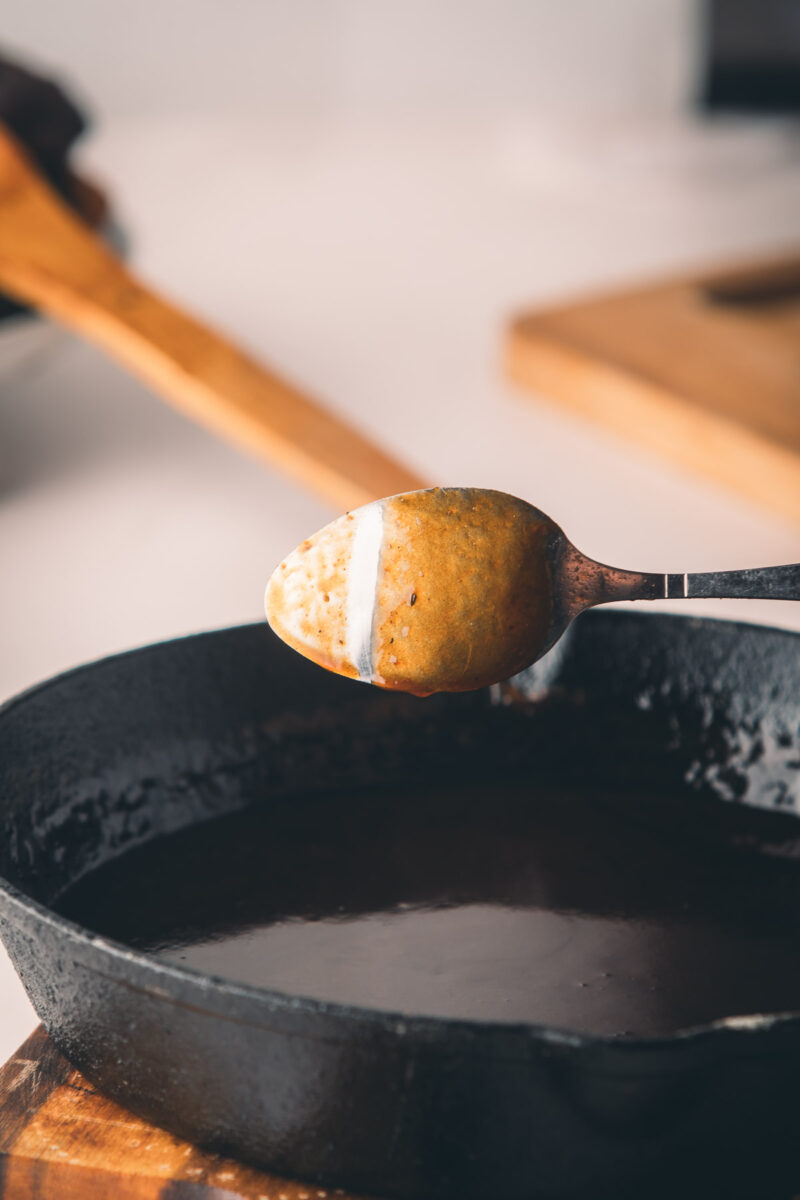
- Boil over high heat until reduced by about half. The sauce should drag slowly across the back of a spoon and leave a clean line when you swipe your finger through it. This is the same reduction technique we use when building a proper gravy – concentrating flavor until the sauce has body instead of just liquid.
- If it tastes slightly bitter from the stout, add a small drizzle of honey or a splash of balsamic vinegar to balance it.
- Whisk in cold butter at the very end for shine. Finally, spoon it generously over the shanks and serve.
- Save a couple of cups of the braised beef and turn it into these flaky stout beef hand pies the next day.
🔄 Substitutions & Variations
- Short ribs – Best swap. They have a similar collagen and richness, with a slightly less dramatic presentation.
- Chuck roast (large chunks) – Works, but expect a softer, shreddable texture.
- Skip the stout? Use porter or 1 cup dry red wine + extra broth. Avoid sweet stouts.
- No alcohol? Replace with more broth + 1 tablespoon balsamic.
- No coffee? Add 1 teaspoon unsweetened cocoa or reduce the sauce a bit longer.
- Want extra depth? Stir in 1–2 teaspoons whole grain mustard or a splash of Worcestershire during reduction.
💡 Meat Nerd tips
- Don’t rush the sear. That crust is the foundation of the entire sauce and a step we never skip.
- Keep the braise gentle; a rolling boil toughens meat.
- Let the dish rest 10 minutes before serving. The sauce thickens slightly and clings better.
- This tastes even better the next day.
🍽️ What to Serve with Braised Beef Shanks
This is rich. You need something to catch the sauce.
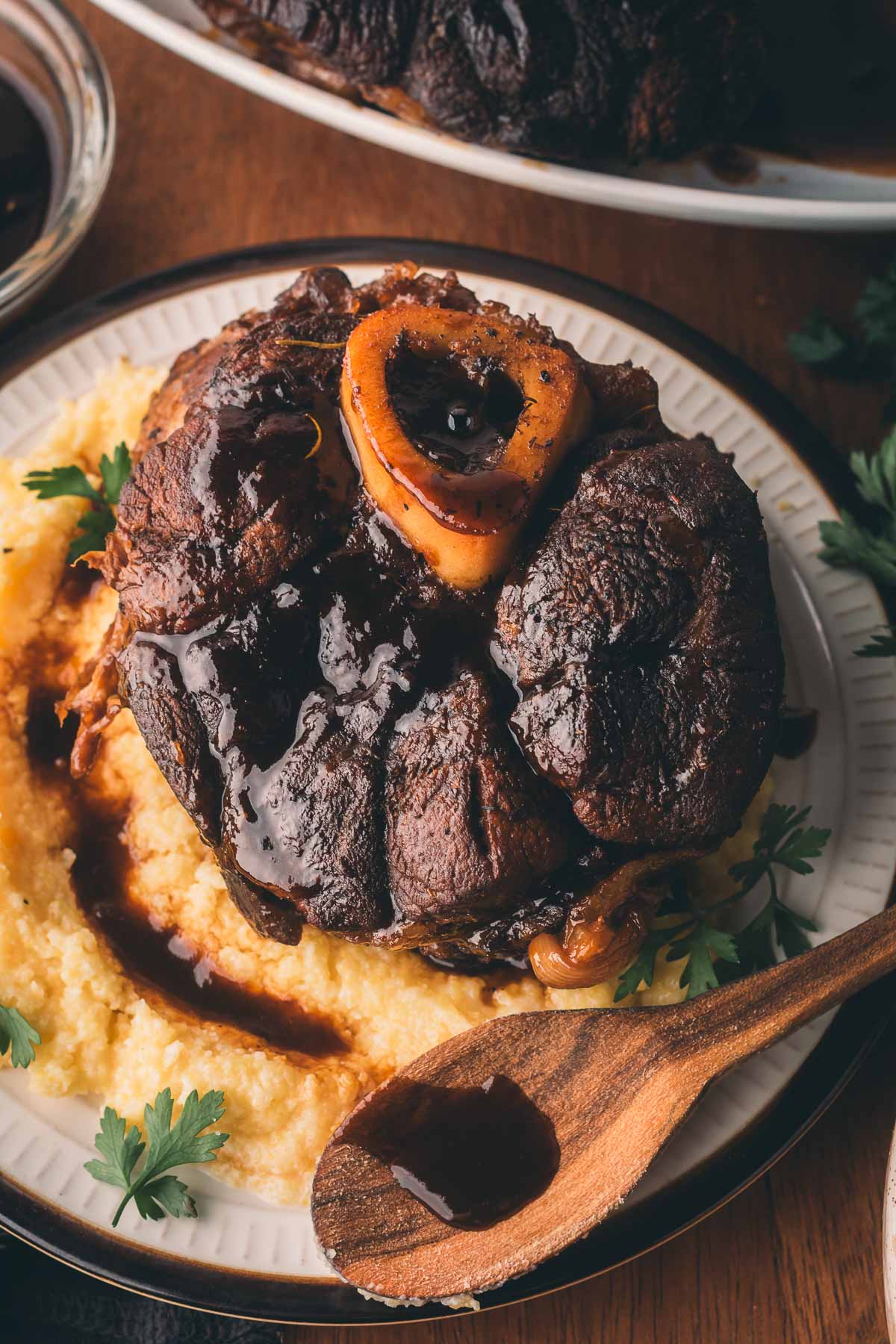
- Creamy polenta
- Mashed potatoes (perfect for catching every drop of that sauce)
- Buttered egg noodles
- Rustic sourdough
Pair with a bold red wine like Cabernet Sauvignon or Syrah.
If you like rich braises like this, you’ll also want to try our lamb ragu over pappardelle or our classic roast lamb with pan gravy.
🧊 Leftovers & Make Ahead
- Refrigerate up to 3 days.
- Reheat over low heat on the stovetop, covered, with a splash of stock or water if needed to keep it moist.
- Freeze (without the reduction) up to 2 months. We pull the meat from the bones and vacuum seal it for easy leftover dinners.
Like all braises, the flavor of this improves overnight.
What to Make with Leftover Braised Beef
If you’re lucky enough to have leftovers, braised beef turns into incredible second meals:
Have you tried this recipe? Do us a favor and rate the recipe card with the ⭐ ⭐ ⭐ ⭐ ⭐ and drop a comment to help out the next reader.
Stout & Coffee Braised Beef Shanks (Dutch Oven Recipe)
Recommended Equipment
- dutch oven (6–7 quart)
- Kitchen twine
- Wooden spoon
- Fine Mesh Strainer
Ingredients
Beef
- 6 to 7 lb beef shanks (cross-cut ossobuco), cut 1½-inch thick or thicker
- Kosher salt for seasoning
- Freshly cracked black pepper
- 2 tbsp neutral oil canola, avocado, or vegetable
Mirepoix
- 2 large onions roughly chopped
- 3 medium carrots chopped
- 2 celery stalks chopped
- 3 tbsp tomato paste
Braising Liquid
- 4 cups stout beer dry Irish stout like Guinness
- 1 cup strong brewed coffee
- 4 cups low-sodium beef broth
- 2-3 tbsp honey
Aromatics & Finish
- 1 head garlic halved crosswise
- 2-3 sprigs fresh thyme
- 1 sprig fresh rosemary
- 2 bay leaves
- 1 tbsp cold butter optional
Instructions
Prep the Beef
- Pat the beef shanks completely dry with paper towels. Tie kitchen twine around the outside of each shank to help them keep their shape during the braise.

Sear the Shanks
- Season the shanks generously with salt.
- Heat oil in a large Dutch oven over high heat. Sear the shanks in batches until a deep brown crust forms, about 3–4 minutes per side. Avoid overcrowding the pot so the meat browns instead of steaming.
- Transfer the shanks to a plate and set aside.
Cook the Mirepoix
- Reduce heat to medium. Add the onions, carrots, and celery to the pot and cook 5–7 minutes, stirring occasionally, until softened and lightly browned.
- Stir in the tomato paste and cook 1 minute to deepen the flavor and color.
Deglaze and Build the Braise
- Pour in the stout beer and scrape up the browned bits from the bottom of the pot.
- Add the brewed coffee, honey, garlic halves, thyme, rosemary, and bay leaves.
- Return the seared beef shanks to the pot.
Braise the Beef
- Add beef broth until the shanks are about 80% submerged.
- Cover and transfer to a 320°F oven to braise the beef shanks for 2½ to 3 hours, until the meat is fork-tender but still holds together on the bone.
Reduce the Sauce
- Carefully remove the shanks and set aside.
- Strain the braising liquid through a fine mesh sieve into a clean saucepan and discard the solids.
- Bring the liquid to a boil and reduce by about half until it thickens enough to coat the back of a spoon.
- Whisk in the cold butter if desired for shine and richness.
- Spoon the sauce over the beef shanks to serve.
Notes
- Keep the braise at a gentle simmer. Rapid boiling can tighten the meat and make it tougher.
- The beef is ready when a fork slides in easily but the meat still holds its shape on the bone.
- Braised dishes often taste even better the next day.
Save this Recipe
Nutrition
Bookmark this recipe now!
❓ FAQs About Braised Beef Shanks
Collagen begins breaking down around 190°F and fully converts into gelatin by about 205°F. The meat should be fork-tender but still hold its shape on the bone.
Coffee reinforces roasted, bitter notes from the stout and the sear. It balances richness without making the dish taste like coffee.
Yes, but sear and build the base on the stove first, otherwise you’re sacrificing flavor. Then put it in a crockpot and cook on low for 8 hours. You’ll still need to reduce the sauce separately to achieve a thick glaze.
Either they haven’t cooked long enough for collagen to break down, or the braise was too aggressive and tightened the muscle fibers. Keep the simmer gentle and give it time.