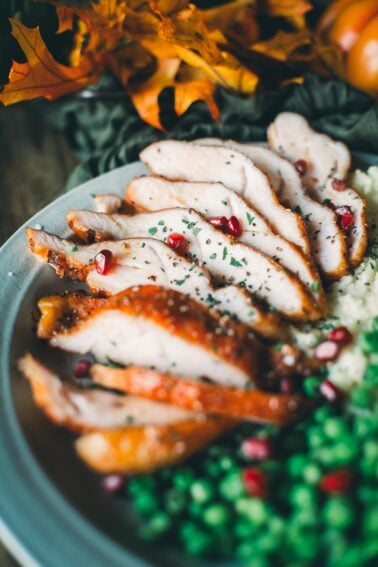
Wondering why your roast chicken comes out with skin like a wet paper bag when the bird in the magazine looks lacquered? We got you.
Crispy skin is what people talk about on the drive home, and it is not luck. Chicken skin runs roughly half water and a third fat, and crisping it means getting the water out and the fat rendered. Every technique below serves one of those two goals.
🔪 The short answer
Dry the skin hard and cook it hot. Salt the bird, set it uncovered on a rack in the fridge for 12 to 24 hours so cold air pulls moisture out, then roast at 425 degrees F or higher. Skin cannot brown while water is still evaporating off it, so every rubbery bird is a bird that went into the oven wet.
🧪 Why skin crisps, and why yours does not
Raw chicken skin is somewhere around 50 percent water and a third fat, with the rest mostly collagen. As long as that water is present, the surface cannot climb past the boiling point, and skin sitting at boiling temperature steams rather than browns. Once the water is gone, the surface temperature climbs, the fat renders into the pan, and what is left behind goes thin, brittle, and golden.
Two variables, then: less water, more rendered fat. Fix both and you get crackling skin from the oven, the grill, or the smoker.
💨 Dry the skin like you mean it
Pat the bird down with paper towels until they come away dry, then go further. Salt it all over, set it on a wire rack over a sheet pan, and park it uncovered in the fridge. Twelve hours minimum, 24 if you have it, which is the same window Cook’s Illustrated uses for its crisp roast chicken. Fridge air pulls moisture out of the skin while the salt seasons the meat underneath. The skin should look taut and slightly leathery when it is ready.
This step matters more than anything you do at the stove. A wet bird in a hot oven still steams.
🧂 The baking powder move
For wings and cut pieces, add baking powder to the dry brine. Baking powder, not baking soda, and the tested ratio is 1 part baking powder to 3 parts kosher salt. Cook’s Illustrated uses a tablespoon of kosher salt to a teaspoon of baking powder on a whole bird.
You will see this explained as baking powder raising the pH of the skin to speed browning. That is the mechanism for baking soda, which is a straight alkali. Baking powder carries its own acid and is buffered, so it is a poor pH raiser. What it does on skin is behave like a salt, drawing moisture to the surface where it can evaporate, and helping break down skin proteins along the way. Dehydration is doing the work, which is a better reason to use it than the one usually given.
Mix it, toss the pieces, give them that same uncovered fridge rest, then cook a batch of smoked chicken wings or lemon pepper wings and compare them to any wing you have made before.
🔥 The heat numbers that matter
In the oven, 425 degrees F is a reliable middle. High dry heat renders fat fast and evaporates surface moisture before the meat overcooks. If crisp skin is the whole reason you are cooking, go higher: Cook’s Illustrated runs its crisp roast chicken at 450 and finishes at 500, and its butterflied version at 500 throughout.
On the smoker, do not run a whole bird at 225 start to finish. Low temperatures render fat too slowly and leave the skin gummy. We run our smoked whole chicken at 325 for that reason, and it gives you real smoke with skin that still bites. If you want it crisper than that, split the cook: an hour around 250 to take on smoke, then raise the pit to 375 to render and tighten the skin.
Shape matters too. A trussed whole bird hides half its skin from the heat. Spatchcock the chicken and every inch of skin faces up, flat, and exposed. It is a five minute job with kitchen shears, and our grilled spatchcock chicken shows what it pays off on live fire.
🌡️ The temperature question underneath the skin
USDA’s safe minimum for poultry is 165 degrees F, breast and thigh alike, with no rest time required. That is a floor, not a target, and it is worth being precise about because the next number is a preference rather than a rule.
Breast meat is at its best right at that floor, since it dries out fast past it. Thigh is a different animal. Dark meat is full of connective tissue that turns to gelatin somewhere between about 140 and 195 degrees F, so thighs genuinely eat better pulled at 175, and better still closer to 190. That is a texture choice made well above the safety line, not instead of it. Check with a Thermapen in the thickest part, away from bone.
🚫 The mistakes that undo it all
Crowding the pan traps steam, and steam is the thing you just spent 24 hours evicting. Give the pieces room.
Basting gets blamed for soggy skin more than it deserves. When Cook’s Illustrated tested it head to head, the basted bird browned better, not worse, because drippings carry fat and protein that feed the browning reactions, and moisture loss came out statistically the same across birds. Their real objection is that basting costs you oven heat every time you open the door and extends the cook for no measurable gain. If you want butter flavor, brush it on near the end, and use clarified butter if you are worried, since whole butter is about 16 percent water.
Sauce is the genuine hazard. Toss wings the moment before they hit the table, never earlier, or the crust you built goes soft on the platter.
🥩 Meat Nerd Tips
- Rack it, always. A bird sitting flat on a sheet pan steams its own underside in rendered fat. A wire rack lets air move underneath and gives you crisp skin on the bottom too.
- Loosen the skin before salting. Slide your fingers between skin and breast meat and season under there as well. You get seasoned meat without a wet surface.
- Do not cover it to rest. Foil traps steam against skin you worked a full day to dry. Rest it uncovered and it will still be plenty hot.
- Leftover skin crisps again. A few minutes in a hot dry skillet, skin side down, brings back most of the texture. The microwave never will.
⚡ Lightning round
Past about 24 hours the skin keeps drying but the meat starts to firm up and take on a cured, ham-like texture near the surface. Twelve to 24 hours is the window worth planning around. If you need more lead time, salt it later and let the uncovered fridge time do the drying.
A thin film helps conduct heat and encourages even browning, but it is not what makes skin crisp. Water leaving is. Too much oil on an already fatty skin just pools in the pan. A light coat is plenty, and skip it entirely if the bird has had a long uncovered rest.
Usually crowding. An air fryer works by moving hot air across the surface, and a full basket blocks that airflow while the pieces steam each other. Cook in batches with space between the pieces, and start with skin that has already been dried in the fridge.
Yes, and it matters more on a turkey because the bird is in the oven long enough for skin to go leathery in the wrong way. Salt it, rack it uncovered in the fridge for a day or two given the size, and skip any wet brine, since a soaked skin fights everything you are trying to do.
Quick Summary
Crisp chicken skin comes down to removing water and rendering fat, and the fridge does more of that work than the oven. Salt the bird, rack it uncovered for 12 to 24 hours, add baking powder at 1 part to 3 parts kosher salt for wings, and cook at 425 degrees F or hotter. Pull the breast at USDA’s 165 degrees F floor and take the thighs to 175 or beyond, where the connective tissue turns to gelatin.
📚 Keep reading
- How to spatchcock a chicken, the five minute job that exposes every inch of skin to the heat
- Does brining really make meat juicier, including why a wet brine works against crisp skin
- Ask the Butcher, the rest of the questions people bring to the counter
Hungry for more? Subscribe to our newsletter and become part of the world’s best meat community! From grilling tips to smoky secrets, we send you the best recipes, guides, and expert advice to master every cut.