You know that moment when you buy the good salmon – the stuff that costs enough to make you wince – and you’re standing in your kitchen thinking “don’t screw this up”?
This tartare recipe is your insurance policy.
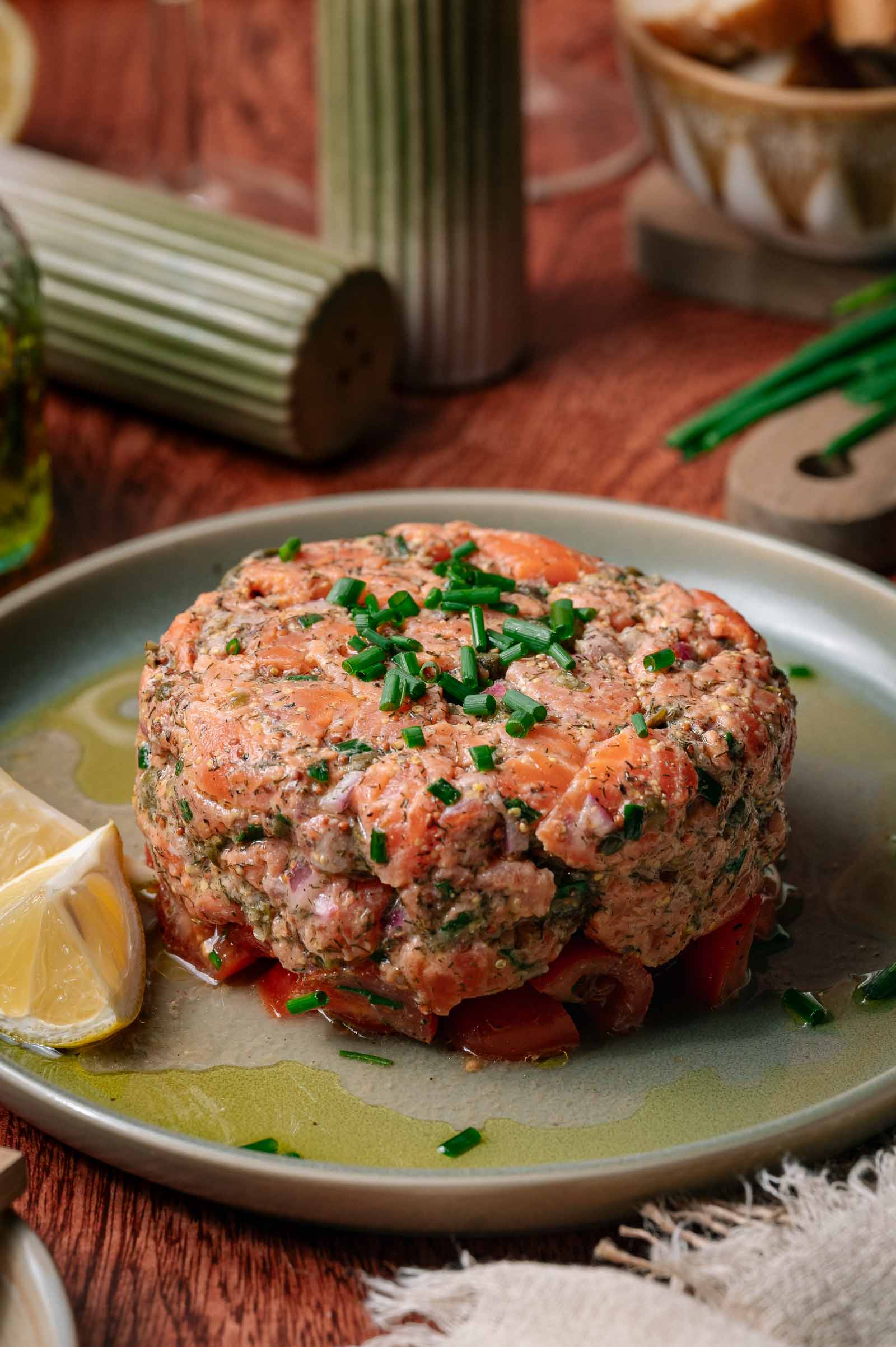
This is salmon that tastes like salmon, brightened with whole grain mustard, punched up with capers, made interesting with fresh dill. The chive tomatoes underneath aren’t just garnish – they’re structural support that catches all those flavors and adds this burst of acidity and texture that cuts through the richness. If you’re into seafood that’s clean and precise, you’ll find more of that in our Seafood Recipes collection. The two things that matter most with raw salmon are keeping it cold and keeping your tools clean — temperature and cross-contamination are the only real risks.
The best part? It takes 30 minutes total, and 10 of those are just letting it chill while you panic-clean your kitchen before guests arrive. No special knife skills, no blow torch, no pretending you understand what “brunoise” means. Just good fish treated right, stacked pretty, and guaranteed to shut down conversation for at least 30 seconds while everyone processes what just happened in their mouth. And if this gets you hooked on small plates, we’ve got plenty more Appetizer Recipes to play with.
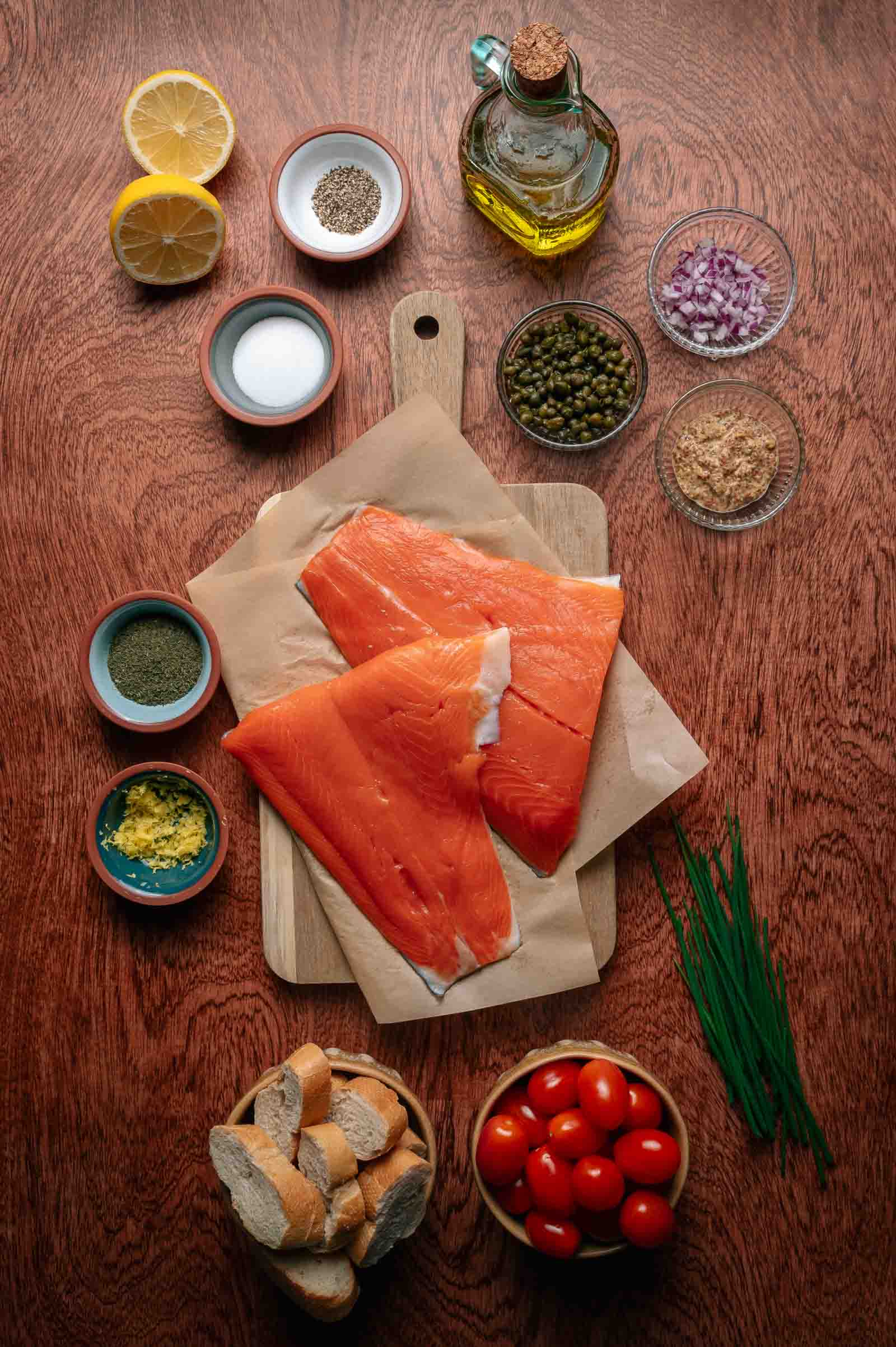
🔪 Ingredients & Tools You’ll Need
For the Salmon Tartare
- Whole grain mustard: Adds texture and a gentle bite; Dijon works if you prefer smooth.
- Fresh lemon juice: Keeps the tartare bright and balanced.
- Extra-virgin olive oil: Adds richness and helps the dressing emulsify.
- Red onion, finely minced: Shallot is a softer, sweeter swap.
- Fresh chives, finely chopped: A clean onion note without overpowering the fish.
- Dried dill: A classic pairing with salmon; parsley works too.
- Capers, chopped: Salty punch that cuts through the richness.
- Lemon zest: Boosts citrus aroma without extra acidity.
- Sea salt and black pepper: Season lightly at first—raw fish doesn’t need much.
- Salmon, diced into ⅛–¼-inch pieces: Ask for fresh salmon fillets, center-cut salmon for the most even texture. If you’re unsure what to buy, our quick guide on what salmon is best for tartare breaks down freshness cues and why center-cut matters.
And if you can get your hands on Copper River Salmon, the best. Look for firm, glossy flesh with no gaps or browning, and avoid fillets sitting in liquid. Center-cut salmon gives you the most consistent dice. If you don’t see what you need at the counter, ask directly if the fish is safe for raw dishes.
For the Tomato Base
- Cherry tomatoes, quartered: Adds acidity and freshness underneath the salmon.
- Extra-virgin olive oil: A light gloss helps the tomatoes settle as a base.
- Fresh chives: Ties the layers together visually and flavor-wise.
- Sea salt and black pepper: Season to taste; tomatoes need salt to come alive.
For Finishing
- Extra-virgin olive oil: A small drizzle adds sheen and richness.
- Fresh chives: For clean, bright garnish.
- Toasted baguette or crackers: A crisp contrast to the soft tartare.
If you’re new to serving raw seafood at home, skim our raw fish safety tips first. It’s simple, practical stuff that keeps things safe without making you feel like you need a hazmat suit.
Pro Tip
Chill your knife for 5 minutes before dicing. Cold steel slides through raw salmon cleanly and keeps the texture sharp instead of smeared.
📝 Step-by-step: How to Make Salmon Tartare
- Mix the dressing.
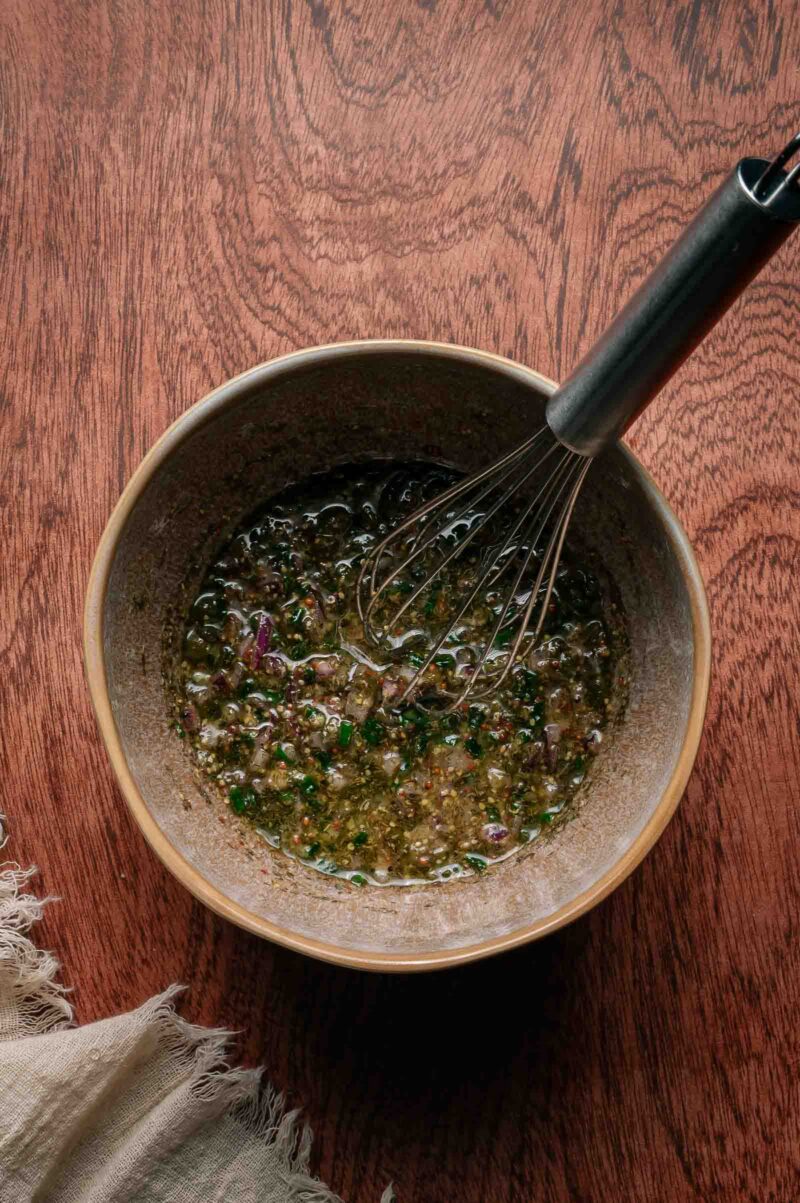
Whisk the mustard, lemon juice, olive oil, red onion, chives, dill, chopped capers, lemon zest, salt, and pepper in a bowl until the mixture looks emulsified. - Prep the salmon.
Pat it dry. Dice into small, even pieces—⅛ to ¼ inch. Even cuts matter. If you want a quick visual walkthrough, see how to dice salmon for tartare. The more consistent the cut, the cleaner the final texture. - Combine and chill.
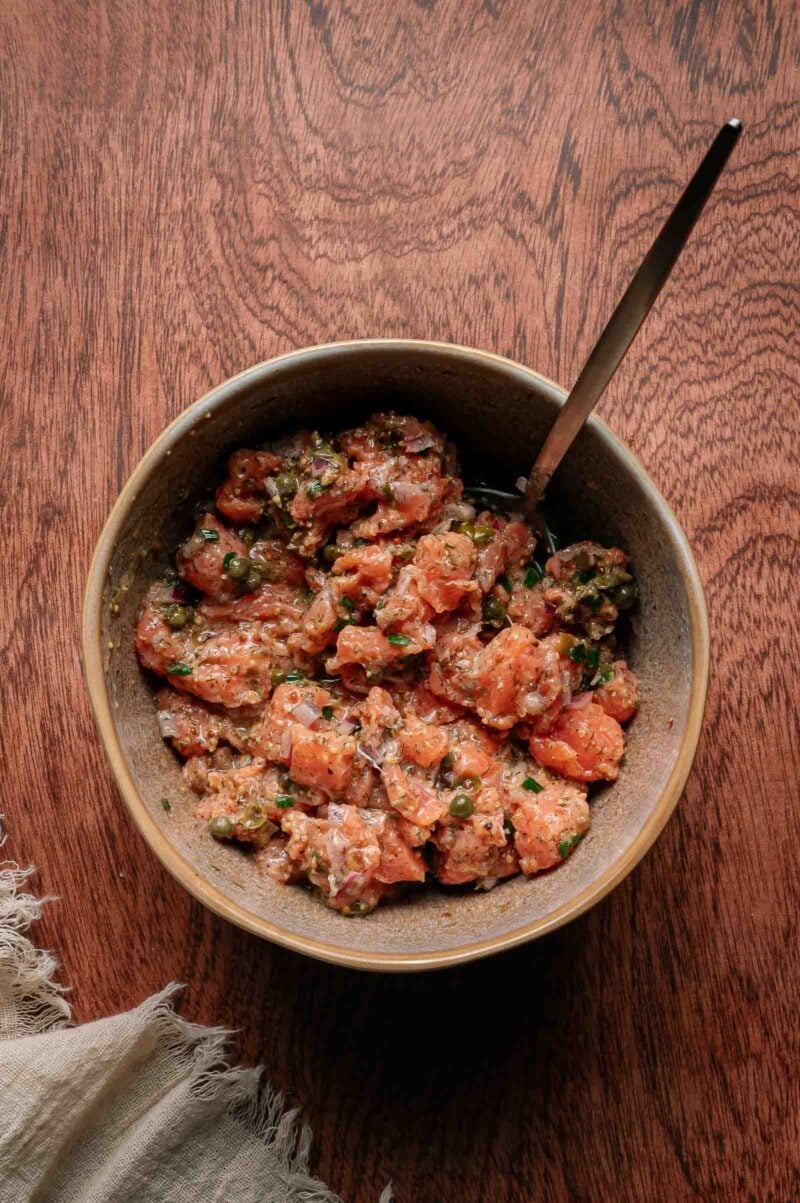
Fold the salmon into the dressing so every piece is coated. Cover and chill for 10 minutes to let the flavors settle. When it’s ready, the salmon should look glossy and evenly coated — if it starts looking dull or weepy, it sat too long. - Make the tomato base.
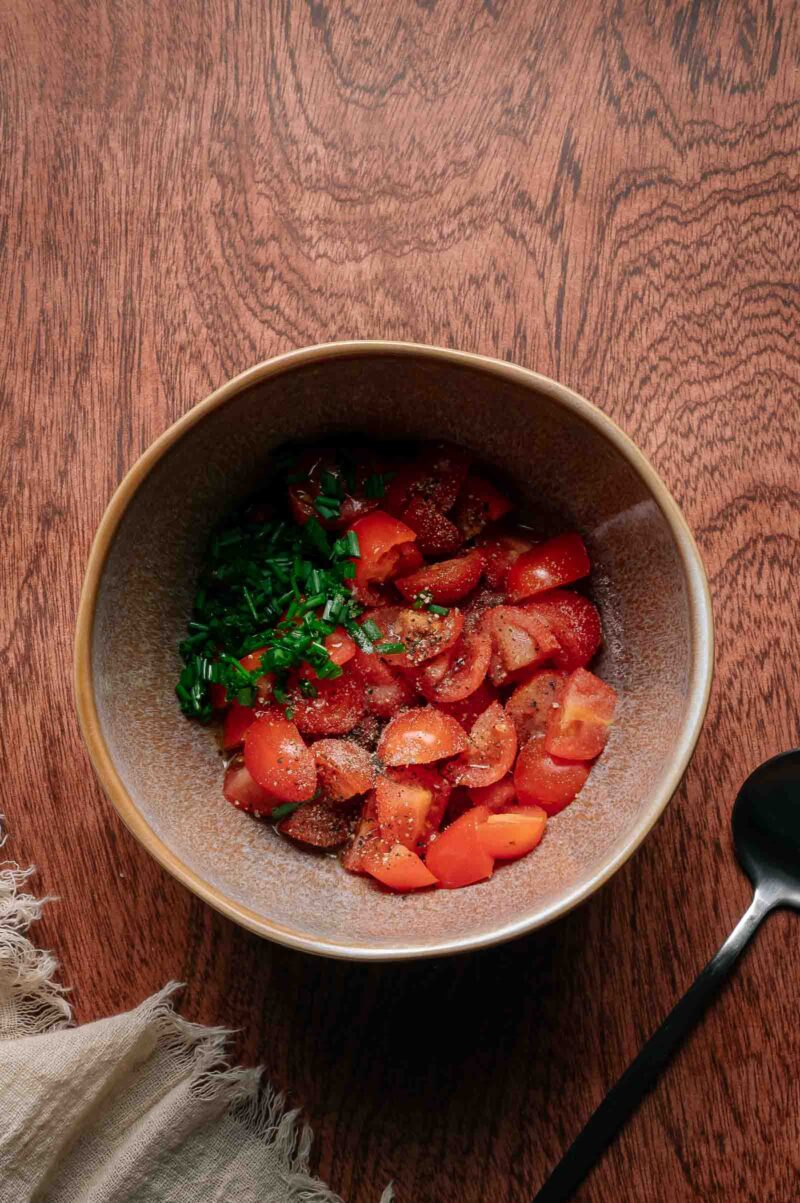
Stir together the tomatoes, olive oil, chives, salt, and pepper. Keep everything cold. - Mold the tartare.
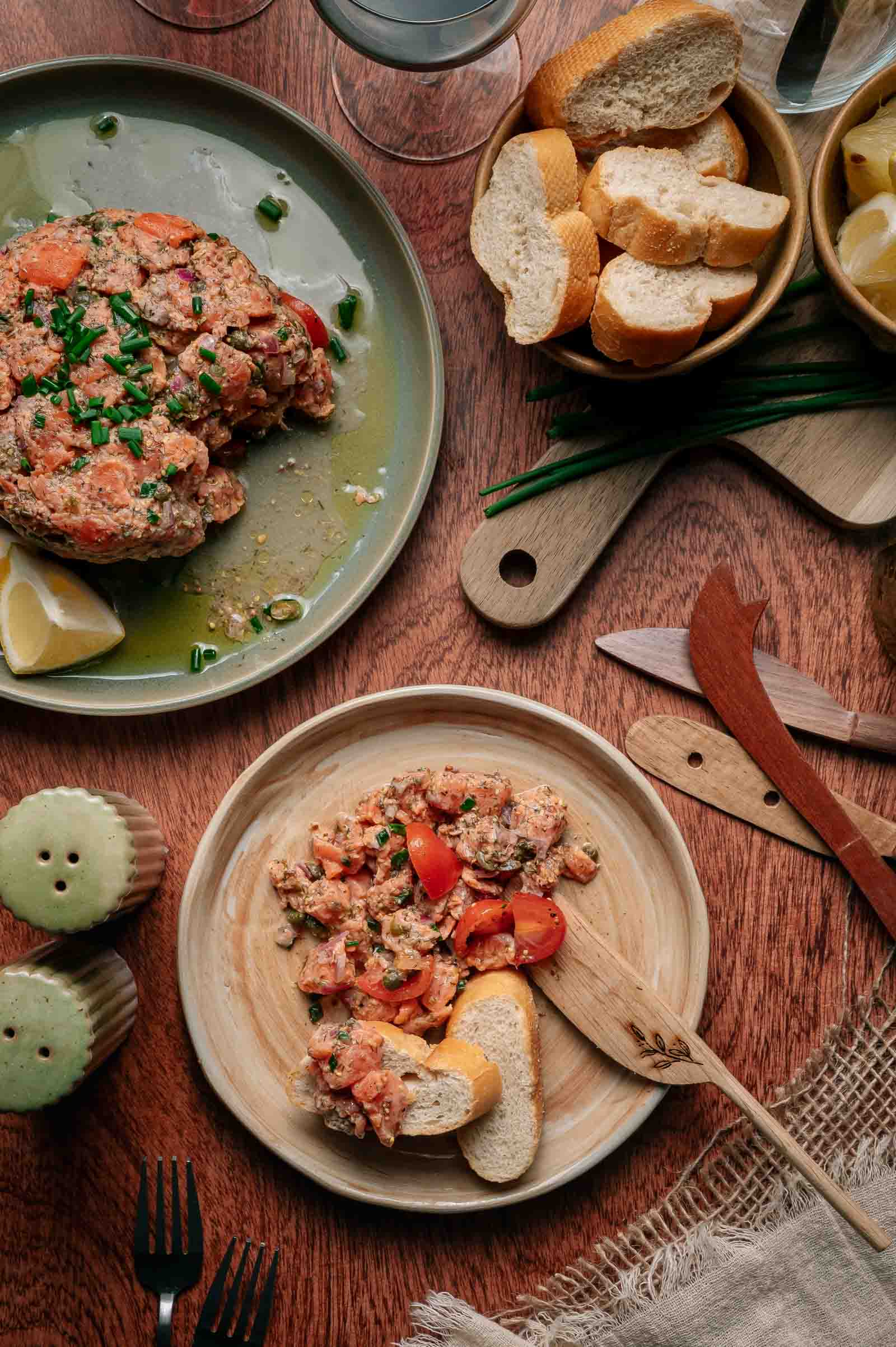
Place a ring mold on a plate. Add a layer of tomatoes and press lightly. Spoon salmon tartare on top and smooth the surface. Lift the mold straight up. - Finish and serve.
Drizzle with a thin stream of olive oil, sprinkle with chives, and serve with toasted baguette or crackers.
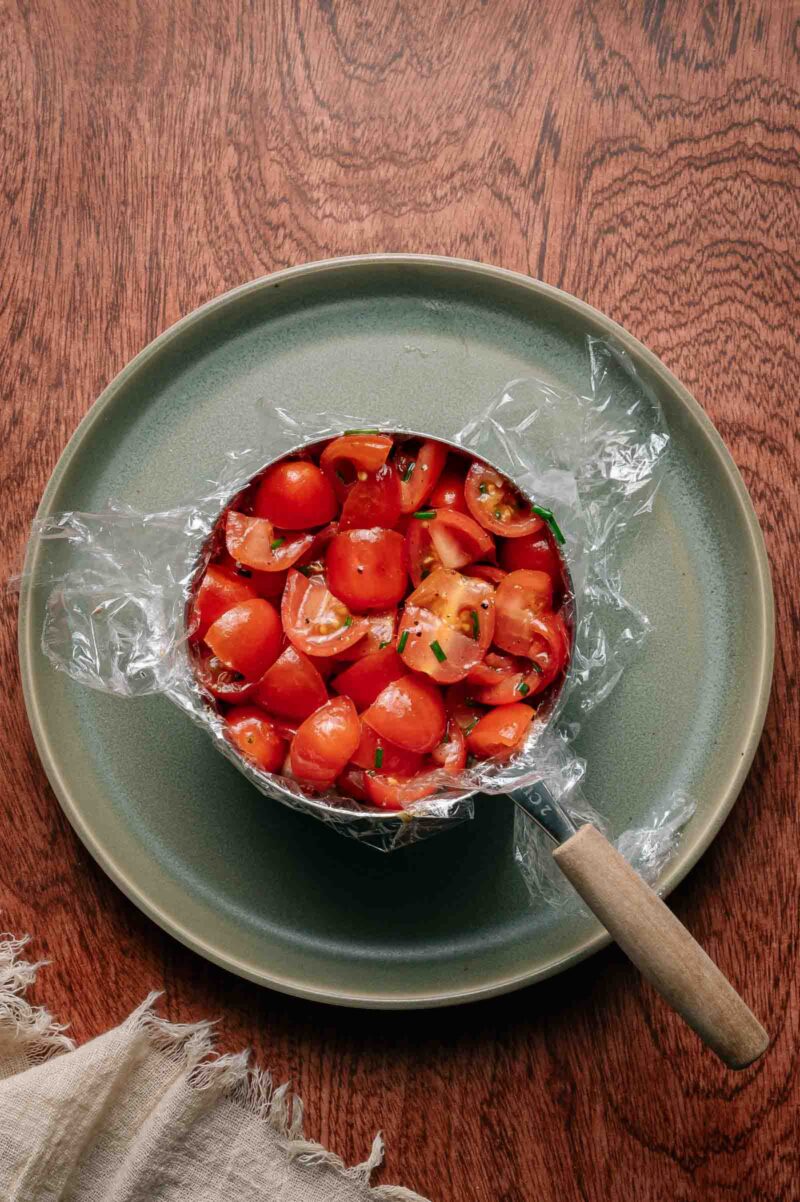
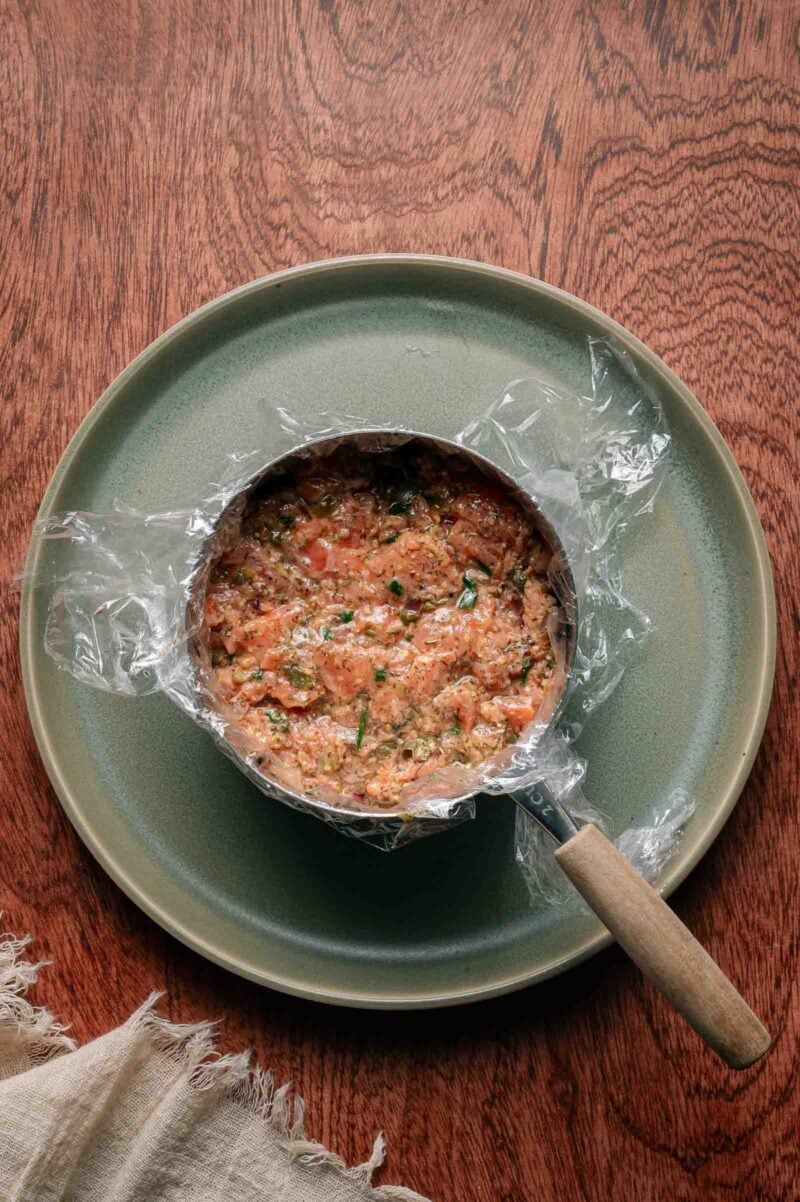
If using a ramekin: lightly oil or line with plastic wrap, layer tomatoes → salmon, invert onto a plate, lift to release. You can also follow our guide on how to shape tartare without a ring mold for a few other easy, restaurant-style options.
🔄 Substitutions & Variations
- Swap the whole grain mustard for Dijon for a smoother dressing.
- Use lime juice for a sharper citrus profile.
- Shallots work instead of red onions if you want something softer.
- Flat-leaf parsley can replace dill for a greener, brighter flavor.
If you want more seafood variations after this one, try our Pan-Seared Scallops for another clean, technique-forward dish, or Crab Stuffed Flounder for an elegant holiday classic. For bold flavors, New Orleans BBQ Shrimp never disappoints.
And if shopping for fish stresses you out more than cooking it, our seafood buying guide walks you through how to pick the good stuff every time.
💡 Meat Nerd Tips
- Keep the salmon ice-cold from store to prep; warmth ruins the texture.
- For the cleanest cuts, use a sharpened knife and avoid pressing down on the fish – a dull knife smears raw fish. This is the exact boning knife we trust in our test kitchen.
- Cut the salmon into consistent pieces so every bite eats cleanly.
- Slice tomatoes last to keep their juices off your cutting board until you’re ready.
- Taste the dressing before adding the salmon; raw salmon doesn’t hide mistakes.
- Don’t over-salt — capers and mustard already bring plenty.
- Make sure the tartare is fully coated in dressing; it protects the salmon and keeps it glossy.
- Keep the mold or ramekin lightly oiled or lined to prevent sticking.
- Remove the mold with one confident lift; hesitation smears the layering.
- Only mix the salmon right before serving. Raw fish loses snap if it sits too long. Need a refresher on handling raw fish? Our raw fish safety tips cover everything from temperature control to storage.
🍽️ Serving Suggestions
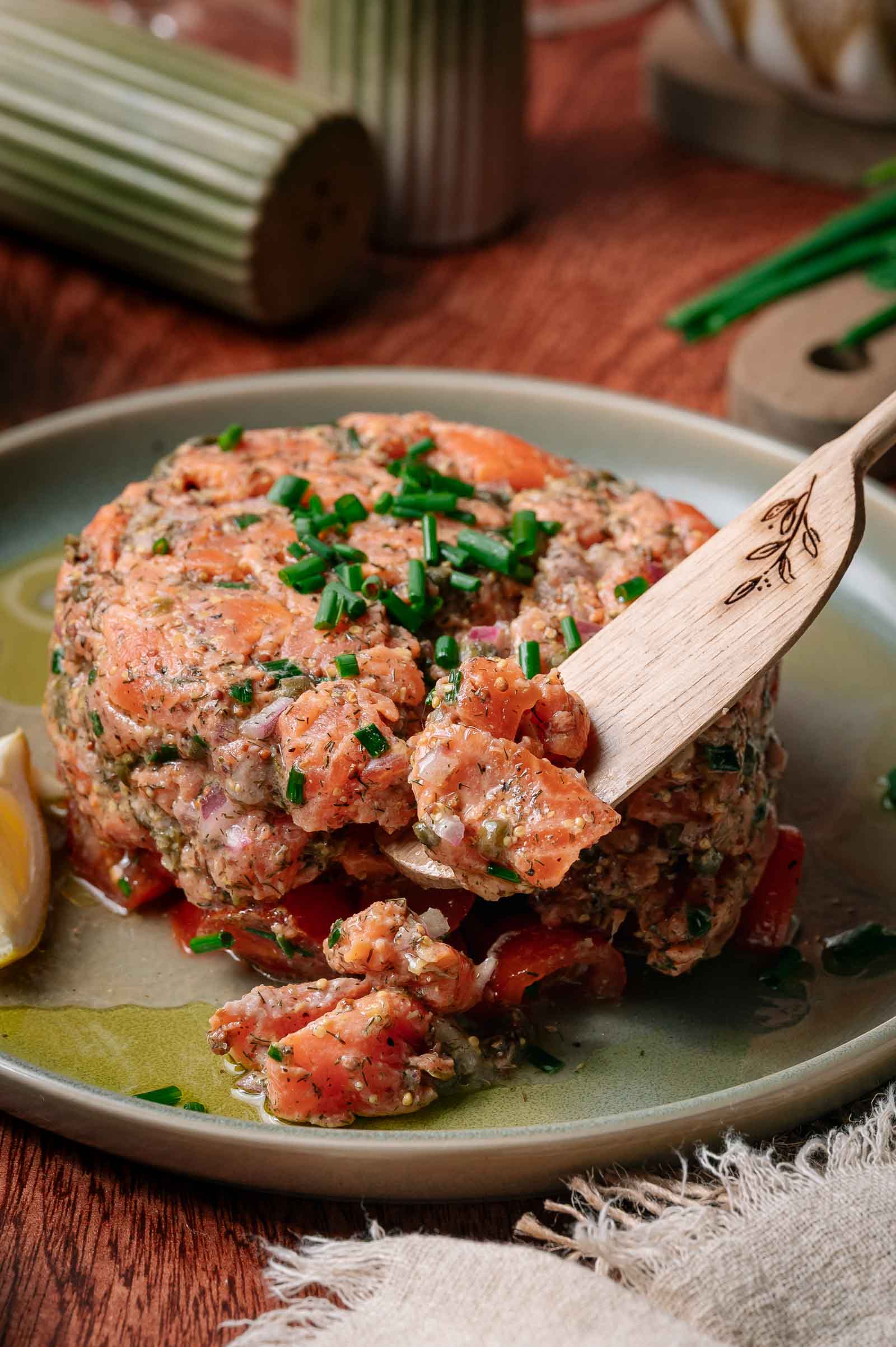
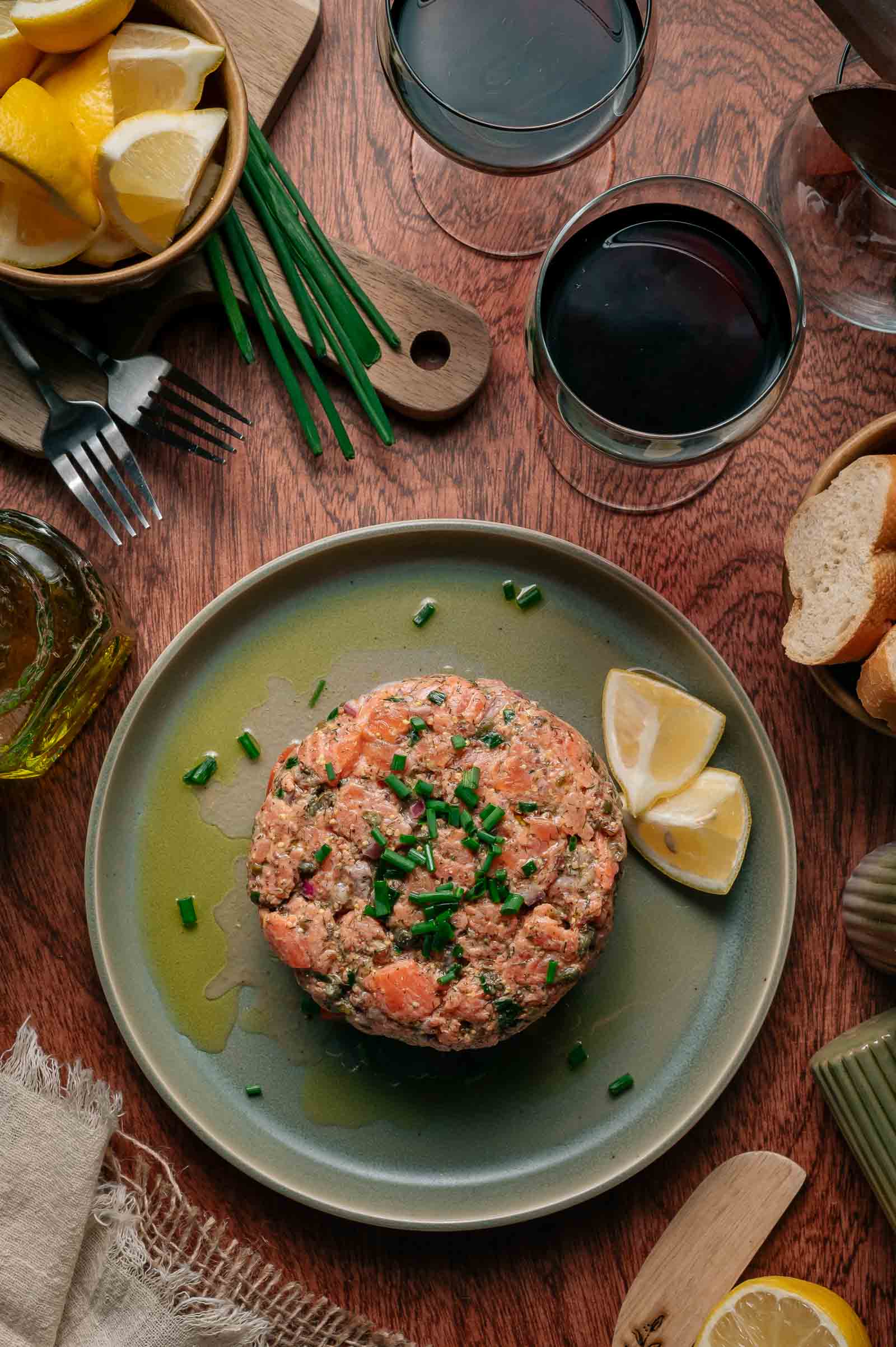
- Serve as a plated starter with toasted baguette rounds.
- Add microgreens for garnish if you want the “restaurant” look.
- For a surf-and-turf board, pair it with garlic butter steak bites or seared lamb lollipops.
- And if you want a drink to match the vibe, grab a crisp cocktail from Libation Chronicles—a martini or holiday spritz fits perfectly.
🧊 Storage & Make Ahead
- Tartare is best made and served the same day.
- Prep components separately (dressing, diced salmon, tomatoes) and keep cold.
- Only combine and mold just before serving.
- Leftovers? Don’t. Raw fish dishes aren’t meant for next-day eating.
Have you tried this recipe? Do us a favor and rate the recipe card with the ⭐ ⭐ ⭐ ⭐ ⭐ and drop a comment to help out the next reader.
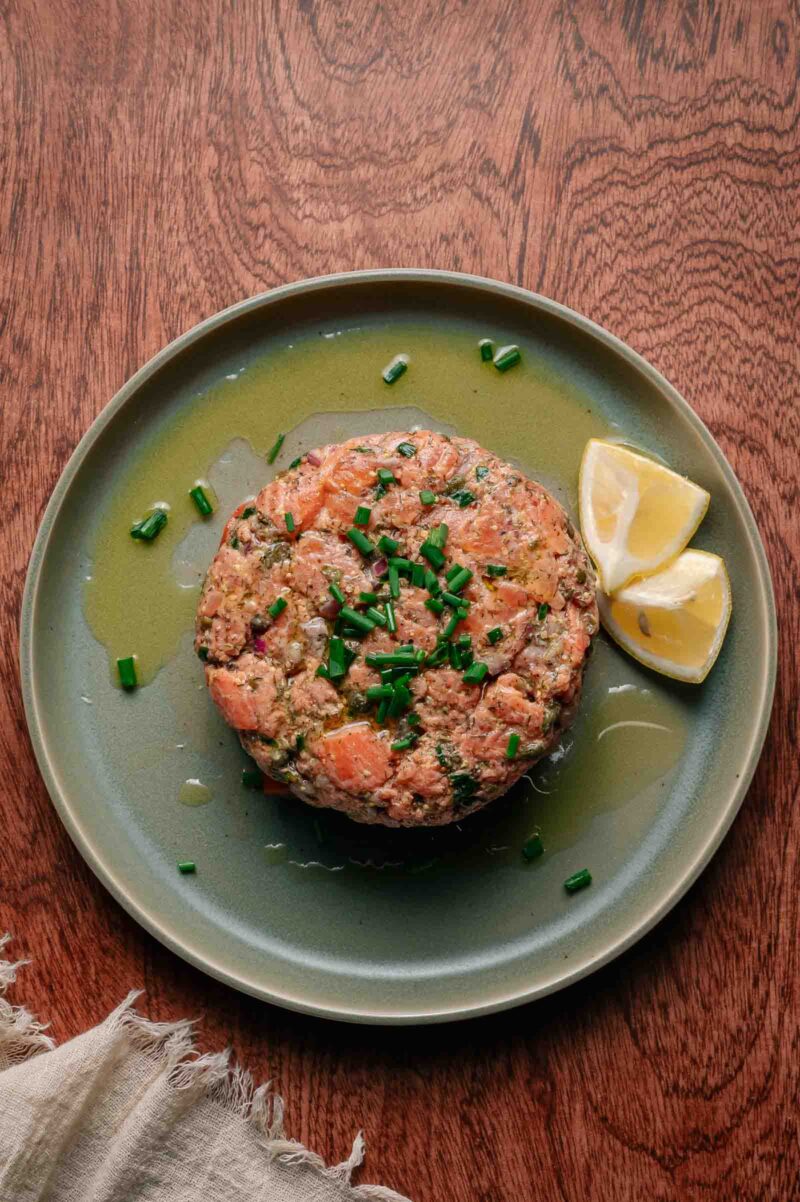
Salmon Tartare with Chive Tomatoes
Recommended Equipment
- Sharp chef’s knife (non-negotiable for clean cuts)
- Mixing Bowls
- Ring mold or small ramekin
- Plastic wrap (if molding in a ramekin)
Ingredients
For the salmon tartare:
- 1 tablespoon whole grain mustard
- 2 tablespoons fresh lemon juice
- 2 tablespoons extra virgin olive oil
- 2 tablespoons red onion finely minced
- 2 tablespoons fresh chives finely chopped
- 1 teaspoon dried dill
- 1 tablespoon capers chopped
- zest of ½ lemon
- 1 teaspoon sea salt
- 1/2 teaspoon black pepper
- 1 pound salmon fresh caught or farm raised, skin removed
For the tomato base:
- 1 cup cherry tomatoes quartered
- 1 tablespoon extra virgin olive oil
- 1 tablespoon fresh chives finely cut
- ¼ teaspoon sea salt
- ¼ teaspoon black pepper
For finishing and serving:
- extra virgin olive oil
- fresh chives toasted
- baguette or crackers
Instructions
- Whisk the whole grain mustard, lemon juice, olive oil, red onion, chives, dill, capers, lemon zest, salt, and pepper in the medium mixing bowl.

- Pat the salmon dry with paper towels. Then dice it into small pieces about 1/8 to 1/4 inch in size.
- Add the diced salmon to the bowl with the dressing and fold with a spoon or spatula until every piece is coated.
- Cover the bowl with plastic wrap and chill for about 10 minutes.
- Stir the tomatoes, olive oil, chives, salt, and pepper in a small mixing bowl.
- Set a ring mold in the middle of a plate. Spoon a portion of the tomato mixture into the bottom of the mold and press it lightly so it forms an even base.Note: Use a small ramekin if you do not have a ring mold. Lightly oil the inside or line it with plastic wrap, then spoon tartare into the bottom of the ramekin and top it with the tomato mixture so the layers sit in reverse. Place a serving plate on top of the filled ramekin and hold both together. Turn them over in one motion, set the plate down, and lift off the ramekin so the tomato layer rests on the plate and the tartare sits on top.

- Spoon a portion of the chilled salmon tartare on top of the tomato layer inside the ring. Smooth the surface gently with the back of the spoon.
- Lift the ring mold straight up. Repeat with the remaining tomato mixture and tartare on the other plates.
- Drizzle the molded tartare with olive oil and fresh chives. Serve with toasted baguette or crackers.
Notes
- Use the freshest salmon you can get. Tartare only works when the fish is clean, cold, and smells like the ocean—not “fishy.” Buy it the same day you plan to serve it.
- Keep everything cold while you work. Warm fish turns soft and loses its structure. If needed, set your mixing bowl over ice.
- Cut the salmon, don’t mash it. A sharp knife makes a big difference. Aim for small, even cubes so the tartare eats smoothly.
- Taste the dressing before adding the salmon. This is your only chance to adjust the seasoning without overmixing the fish.
- Tomatoes go on the bottom for a reason. They add acidity and moisture that lifts the salmon without watering it down.
- No ring mold? No problem. A small ramekin lined with plastic wrap pops out cleanly and looks just as polished.
- Serve immediately. Raw salmon sits well for about 10 minutes in the fridge, but this dish is all about freshness.
Nutrition
Bookmark this recipe now!
❓FAQs for Salmon Tartare
You can prep all the components, but don’t mold or mix until right before serving. Raw salmon loses texture if it sits too long.
Yes, but they definitely add a texture to the recipe. You can mold only the tartare and spoon the tomatoes around the plate instead.
Fresh, center-cut fillets are best. For a full breakdown on freshness, sourcing, and why center-cut matters, see our guide on what salmon is best for tartare.
Yes, but only to kill surface parasites if you’re working with wild fish. Freeze solid for 24 hours, then thaw in the fridge. Never serve previously frozen fish if it feels mushy.
Aim for ⅛–¼-inch pieces. Too big and the texture is clunky; too small and it turns paste-like.
Yes—when made with fresh salmon handled properly. Buy salmon intended for raw consumption, keep it cold, and serve immediately. Our raw fish safety tips explain how to handle, store, and prep fish for raw dishes.
“Sushi-grade” isn’t a regulated term, but it signals fish handled for raw use. Always ask your fishmonger if it’s appropriate for tartare. We cover what ‘sushi-grade’ actually means in our seafod buying guide.