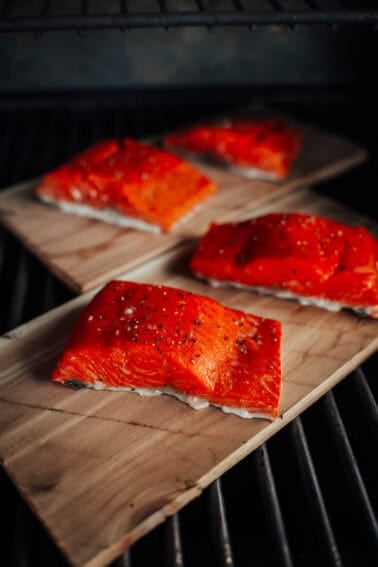
Fresh salmon gives you a wide temperature range depending on how you’re preparing it. Here’s the breakdown so you never overcook—or undercook—it again.
Quick Salmon Temperature Guide
| Preparation Style | Target Temp | Texture Result |
|---|---|---|
| Raw (Tartare, Poke, Crudo) | 32–38°F (cold storage) | Firm, clean, no heat applied |
| Medium-Rare | 115–125°F | Silky, soft, restaurant-style |
| Classic Cooked | 130–135°F | Moist, flaky, fully cooked |
| Well-Done | 140–145°F | Firm; upper end of USDA guidance |
🔥 For Raw Preparations (Tartare, Poke, Crudo)
32–38°F (standard refrigeration temperature)
- Keep salmon ice-cold and serve immediately.
- Temperature matters even when you’re not “cooking”—cold fish stays firm and safe to handle.
This category covers salmon tartare, poke, crudo, and any other raw preparations.
🌡️ For Gently Cooked or Medium-Rare Salmon
115–125°F
- Soft, silky, restaurant-style texture
- Ideal for slow roasting or careful pan-searing
This is the temperature range chefs gravitate to for the most tender bite. If you want a recipe that hits this range perfectly, try our Pan-Seared Salmon—crisp edges, tender center, and easy to nail with an instant-read thermometer.
🌡️ For Classic Cooked Salmon
130–135°F
- Moist, flaky, fully safe, and still juicy
- The sweet spot for most home cooks
This is where the majority of salmon recipes aim to finish.
🌡️ For Firm, Well-Done Salmon
140–145°F
- USDA recommendation for fully cooked salmon
- Safe, but can start to dry out at the upper end
If you prefer your salmon firmer, stay at the lower end of this range.
Visual Cues You Can Trust
These cues help even when you’re not using a thermometer:
- Albumin (the white protein) showing?
You went too hot or too long. - Flesh separating into clean flakes?
That’s 130°F+ territory. - Glossy, translucent center?
That’s a gentle 115–120°F finish.
Use both the thermometer and your eyes—salmon is forgiving when you understand what you’re looking at.
Make This Make Sense in Your Kitchen
Once you dial in the right temperature, everything improves: your sear, your texture, your confidence.
If you’re working on raw preparations, start with our Salmon Tartare—it shows exactly how temperature affects texture even when there’s no heat involved.
If you want to explore more ways to cook fish, browse our full collection of Seafood Recipes.