What I’m Cooking This Month: the put-a-lid-on-it edition.
November is for the cuts nobody else is buying. Beef cheeks, shanks, chuck and shoulder are the hardest-working muscles on the animal, and all that work is exactly why they turn spoonable after a few hours in a low oven. Seven pots are on my list this month. Every one of them ends in a sauce worth mopping up with bread, and you can save all seven and pull one shopping list from the bottom of the page.
Here’s the part that matters when you’re standing at the meat case deciding what to buy. A tender steak is done in minutes because it has almost nothing to break down. These cuts need time, liquid and a lid, and in exchange they give you a sauce no steak can. Every recipe on this list goes into a 320 to 325°F oven, and our pot roast, cider pork and pork shanks all come out somewhere between 195 and 205°F inside. That is far past “done” on paper, and it is exactly where collagen melts and the meat lets go.
So pick a Sunday. Put a pot in the oven. Let the house smell like this for an afternoon.
On the menu this month
- Braised beef cheeks with a glossy red wine sauce (4 hours, serves 6)
- Stout and coffee braised beef shanks (3 hours 30 minutes, serves 6)
- Classic beef bourguignon (3 hours 35 minutes, serves 6)
- Dutch oven pot roast with red wine gravy (2 hours 45 minutes, serves 6)
- Braised pork shanks with gremolata (3 hours 45 minutes, serves 4)
- Apple cider braised pork shoulder (3 hours 55 minutes, serves 8)
- Dutch oven lamb stew (2 hours 20 minutes, serves 6)
Jump to the collection and shopping list
🐄 Beef that rewards the wait
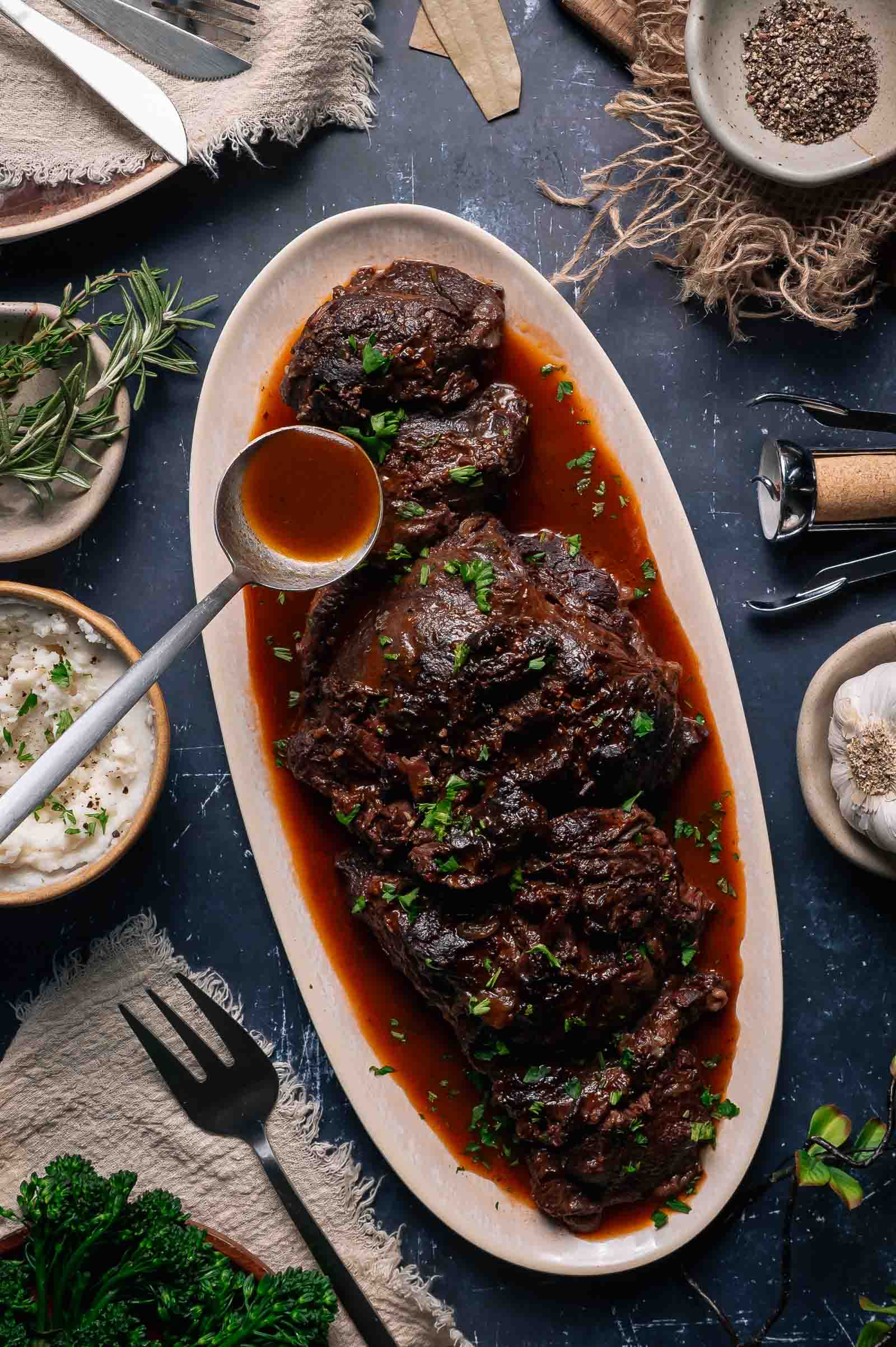
1. Braised beef cheeks with a glossy red wine sauce
Silkiest sauce on the list, and it isn’t close.
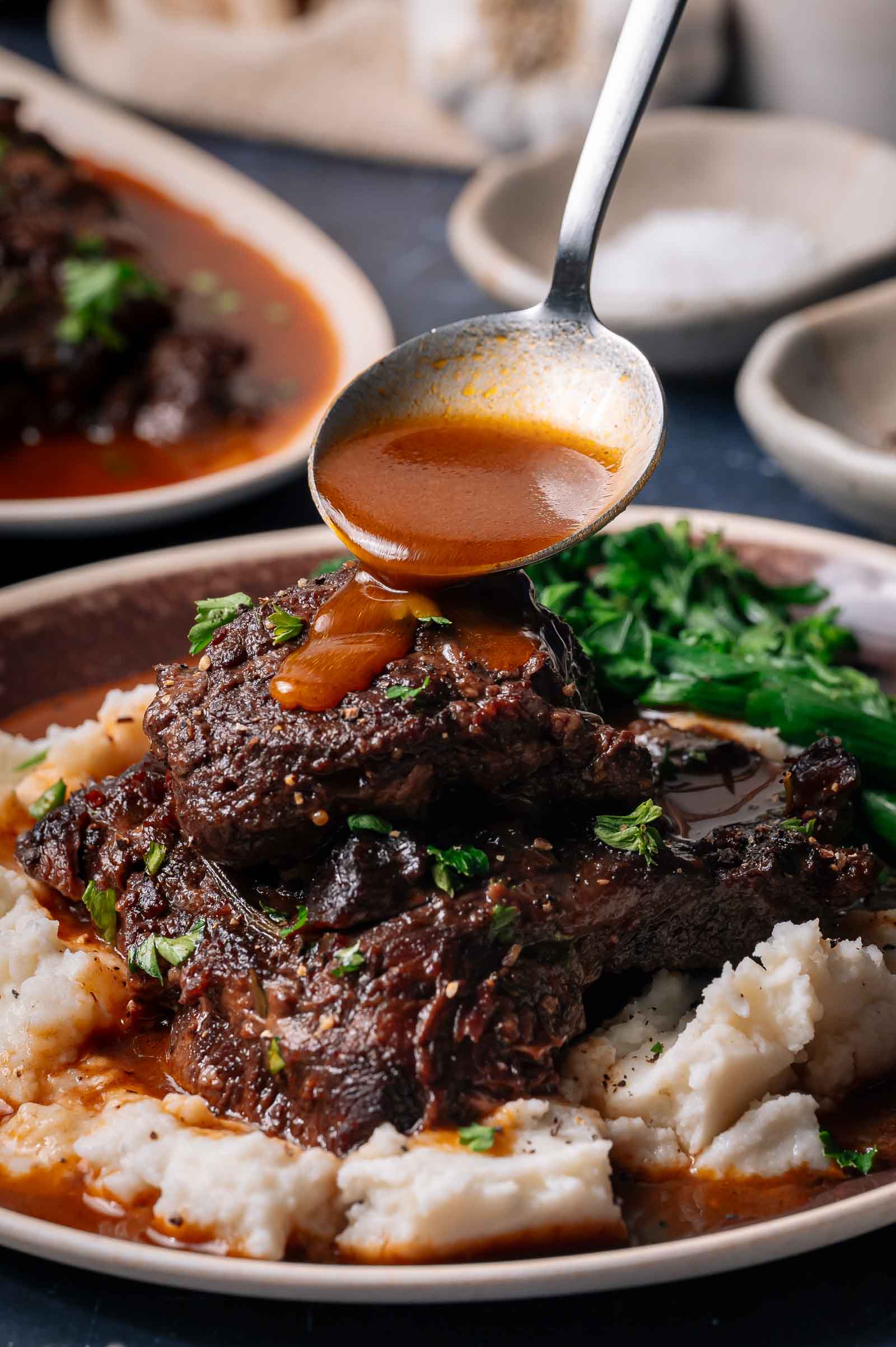
If you only try one new cut this month, make it this one. Beef cheeks are the muscle a cow chews with all day, which is why they are dense, lean-looking and loaded with the stuff that melts under heat. Raw, they look like they’d never give in. After three hours in red wine with onion, carrot, celery, thyme and rosemary, they cut with the side of a spoon.
Two things make this version work. First, trim the silvery membrane and any thick gristle before you sear, because that layer stays chewy no matter how long it cooks. Second, don’t skip the finish. We strain the braising liquid, simmer it down, then whisk in cold butter a few cubes at a time until it turns silky and shiny. Spoon that over mashed potatoes and you’ll understand why butchers keep cheeks for themselves.
Get the braised beef cheeks recipe
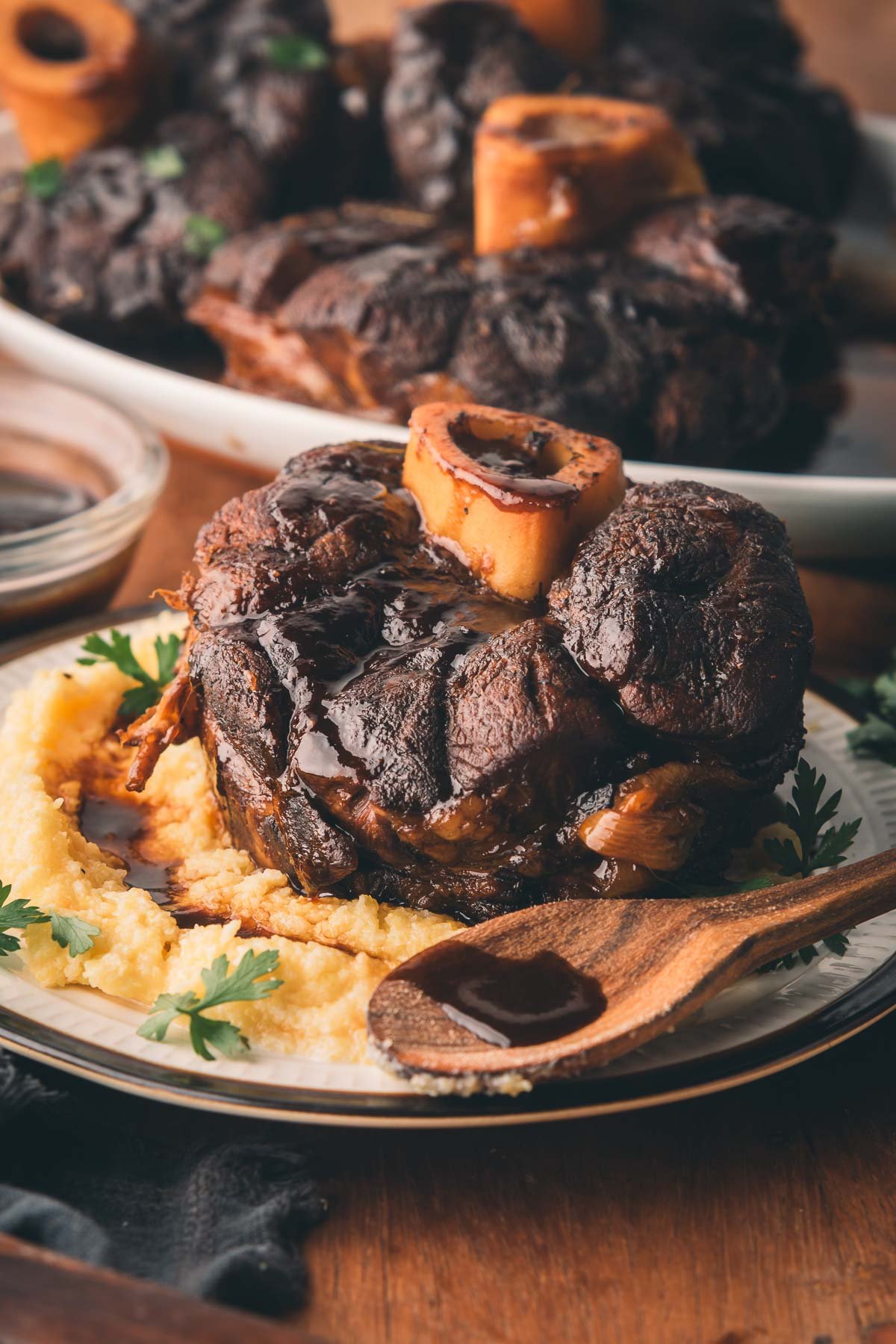
2. Stout and coffee braised beef shanks
Biggest reveal when the lid comes off.
Beef shanks are the cut for people who want dinner to look like an event. Buy them cross-cut and at least an inch and a half thick. Each one has a ring of marrow bone in the middle and a wall of meat around it that goes from tough to buttery over the course of the braise. We tie kitchen twine around each shank before searing so they keep their shape and come to the table looking like they came from a steakhouse kitchen.
The braise is dark and a little bitter in the best way: four cups of dry Irish stout, a cup of strong brewed coffee, a couple spoonfuls of honey and a whole head of garlic, cooked at 320°F for two and a half to three hours. Then the liquid gets strained and boiled down by about half until it coats a spoon. That reduction is the glaze. It’s sticky, deep and slightly sweet, and it clings to every piece of beef you pull off the bone.
Get the stout and coffee beef shanks recipe

3. Classic beef bourguignon
A whole bottle of red goes in. Pour your glass first.
Bourguignon is the dish that makes people think you trained in France, and it asks for about 40 minutes of real work. Chuck roast cut into big cubes gets dusted in flour and seared in rendered bacon fat. Then a whole bottle of dry red wine goes into the pot. Côtes du Rhône, Pinot Noir, Cabernet Franc or Merlot all work, so pour something you’d be happy to drink.
After two to two and a half hours in a 325°F oven, the beef is fork tender and the wine has turned into a deep, velvety sauce. The finishing move is classic for a reason. Brown quartered mushrooms and pearl onions in butter in a separate skillet, then fold them into the stew right before serving so they stay meaty instead of soggy. Ladle it over mashed potatoes and let the sauce do what it does.
Get the beef bourguignon recipe

4. Dutch oven pot roast with red wine gravy
Fewest dishes in the sink: one pot, gravy included.
Every November list needs a pot roast, and this is the one we keep coming back to. A three to four pound chuck roast gets seared five to seven minutes per side, then braised on a bed of onion, carrot, celery, parsnip and rutabaga with red wine, beef broth, Worcestershire and rosemary. Parsnip and rutabaga are what set it apart. They turn sweet and earthy in the braise and give the gravy more depth than carrots alone ever could.
We take it out when a Thermapen hits 195 to 200°F and a fork slides in without a fight, usually two and a half to three and a half hours depending on the roast. The gravy happens right in the same pot: a little more broth, a cornstarch slurry, five to seven minutes of stirring. One pot, one roast, and enough leftovers for sandwiches the next day.
🐖 Pork and lamb for the low oven

5. Braised pork shanks with gremolata
Biggest payoff for the smallest effort: five minutes of prep.
Pork shanks are the beef shank’s more forgiving cousin, and they deserve way more attention than they get. Brown them fat side down first, 7 to 10 minutes all around, then build the braise in that rendered pork fat with onion, carrot, celery, red wine and a can of crushed tomatoes. Add enough chicken broth to come about two thirds of the way up the shanks, cover, and let the oven take it from there.
We check them every 45 minutes or so and add a splash of broth if the liquid drops. They’re ready around 205°F, when the meat shreds with the tines of a fork. The bright finish is what keeps this from feeling heavy: a sprinkle of gremolata over the top cuts right through the rich tomato sauce. Serve it over polenta or mashed potatoes and set out extra bread.
Get the braised pork shanks recipe
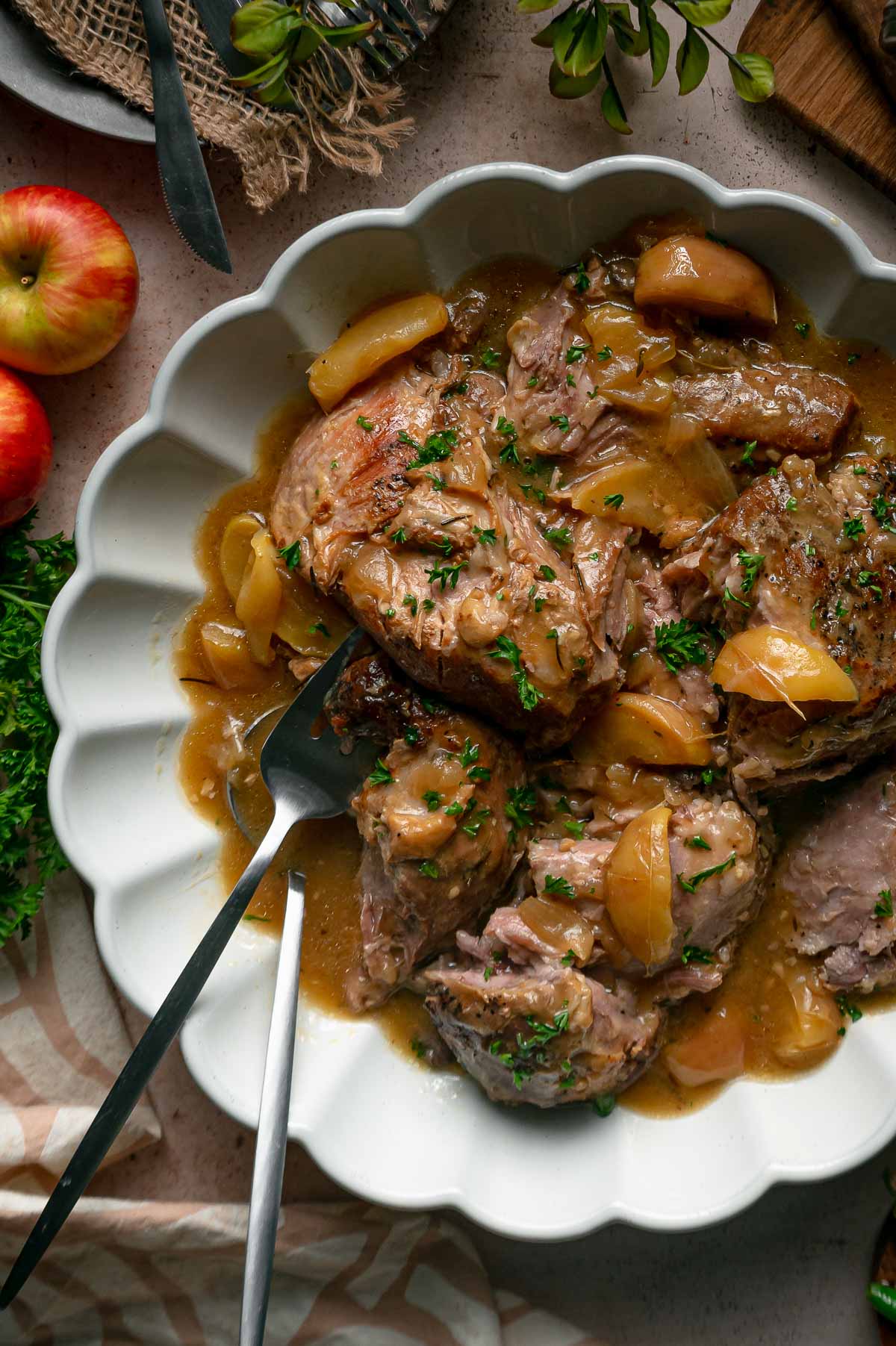
6. Apple cider braised pork shoulder
Feeds the most: eight people from one shoulder.
This is the one that makes the whole house smell like fall. A four pound pork shoulder gets a hard sear, then braises in fresh apple cider and chicken broth with Dijon, red onion, thyme, rosemary and bay. The cider reduces a little before the pork goes back in, so the sauce starts out concentrated and only gets better from there.
The trick is timing the apples. Add Honeycrisp wedges too early and they collapse into sauce. We wait until the pork reaches about 180 to 185°F, then add the apples for the last 35 to 45 minutes so they turn tender and still hold their shape. Pull the pork around 200 to 203°F, thicken the liquid into gravy, and finish it with a spoonful of apple cider vinegar to wake everything up. Bring the pot straight to the table.
Get the apple cider braised pork recipe

7. Dutch oven lamb stew
Fastest pot here: dinner in 2 hours 20 minutes.
Lamb shoulder is one of the most underrated stew cuts there is. It has enough fat and connective tissue to stay juicy through a long cook, and enough flavor to stand up to a pot full of vegetables. We use American lamb from Freedom Run Farm, cut into chunks, seared in batches and simmered in chicken broth thickened with a little flour and tomato paste.
Timing keeps the vegetables from turning to mush. The lamb braises alone for an hour at 325°F, then carrots and potatoes go in for the last 30 to 45 minutes, and frozen peas get stirred in on the stovetop right at the end. You end up with tender lamb, potatoes that still have some shape, and a broth that tastes like it took all day. It’s a little over two hours start to finish, which makes it the quickest pot on this list.
🔪 How to braise any of these cuts
Every recipe above follows the same rhythm, and once it’s in your hands you can braise almost any tough cut you find. Pat the meat dry and season it well, because wet meat steams instead of browning. Sear it hard in batches so the pot never crowds, then cook your vegetables in the fat that’s left behind. Deglaze with wine, beer or cider and scrape up every browned bit from the bottom. Those bits are where the flavor of the sauce comes from.
Keep the liquid partway up the meat, two thirds to most of the way, so the tops roast while the bottoms simmer. Cover the pot and give it a low oven. Then trust the thermometer and the fork more than the clock. Size, thickness and how much connective tissue a piece carries all change the timing, so start checking at the low end of each recipe’s range. When the meat gives way with almost no pressure, it’s ready.
🍽️ What to serve with a braise
A braise is half meat and half sauce, so whatever goes underneath has one job: soak it up. Mashed potatoes are the obvious move and the right one for the bourguignon, the cheeks and the pot roast. Creamy polenta is our pick under the pork shanks, where the tomato sauce and gremolata need something soft and mild to land on. Buttered egg noodles work with almost anything here.
Then add something sharp on the side. A simple green salad with a mustardy vinaigrette, quick pickled red onions or a pile of roasted green beans with lemon will keep a rich plate from feeling like too much. And always, always set out crusty bread. Nobody should leave sauce in the bottom of a bowl.
🥩 Buying the right cut
Beef cheeks and pork shanks don’t always sit in the case, so call ahead or ask at the butcher counter. Most butchers can get them with a day or two of notice. For chuck, look for a roast with visible streaks of fat running through it rather than a lean, tightly trimmed piece. For shanks, ask for thick cross-cuts so the meat holds onto the bone through the long cook.
Pick the one that made you hungriest, put it on this weekend’s list, and save the rest for the cold nights still ahead.
Save all seven and shop the list
Every braise from this month is below. Save the collection to your own recipe box, then pull up one shopping list built from all seven recipe cards.
Quick Summary
Seven braised dinners for November, all built on tough, collagen-rich cuts: beef cheeks, beef shanks, chuck for bourguignon and pot roast, pork shanks, pork shoulder and lamb shoulder. Each one goes into a covered Dutch oven in a low oven, and the meat is ready when a fork slides in with almost no resistance, usually somewhere around 195 to 205°F. Serve them over mashed potatoes, polenta or egg noodles with something sharp on the side, and make them a day ahead when you can, since many get better overnight.
❓ FAQs
Tough cuts like cheeks, shanks, chuck and shoulder carry more connective tissue, and a long, wet, low-temperature cook melts it into the meat and the sauce. That’s where the rich body of a braise comes from. Tender cuts don’t have it to give, so they dry out long before a braise is done.
Yes, and many of them get better overnight. Cool the pot, refrigerate it, and lift off the fat that hardens on top before you reheat it gently with the lid on. It’s the easiest way to have a cozy dinner ready on a busy weeknight.
A heavy Dutch oven with a tight lid. It sears well on the stovetop, holds steady heat in the oven, and keeps the liquid from cooking off too fast. Every recipe on this list is built around one.
📚 Keep reading
Hungry for more? Subscribe to our newsletter and become part of the world’s best meat community! From grilling tips to smoky secrets, we send you the best recipes, guides, and expert advice to master every cut.