Freezer Meals Series · Vegetable
If you grew up like me, cheesy broccoli came out of a bag sad and mushy. It turns out that it doesn’t have to be that way though… cheesy broccoli can be fresh, have texture AND still be covered in cheese. We can that a win win.
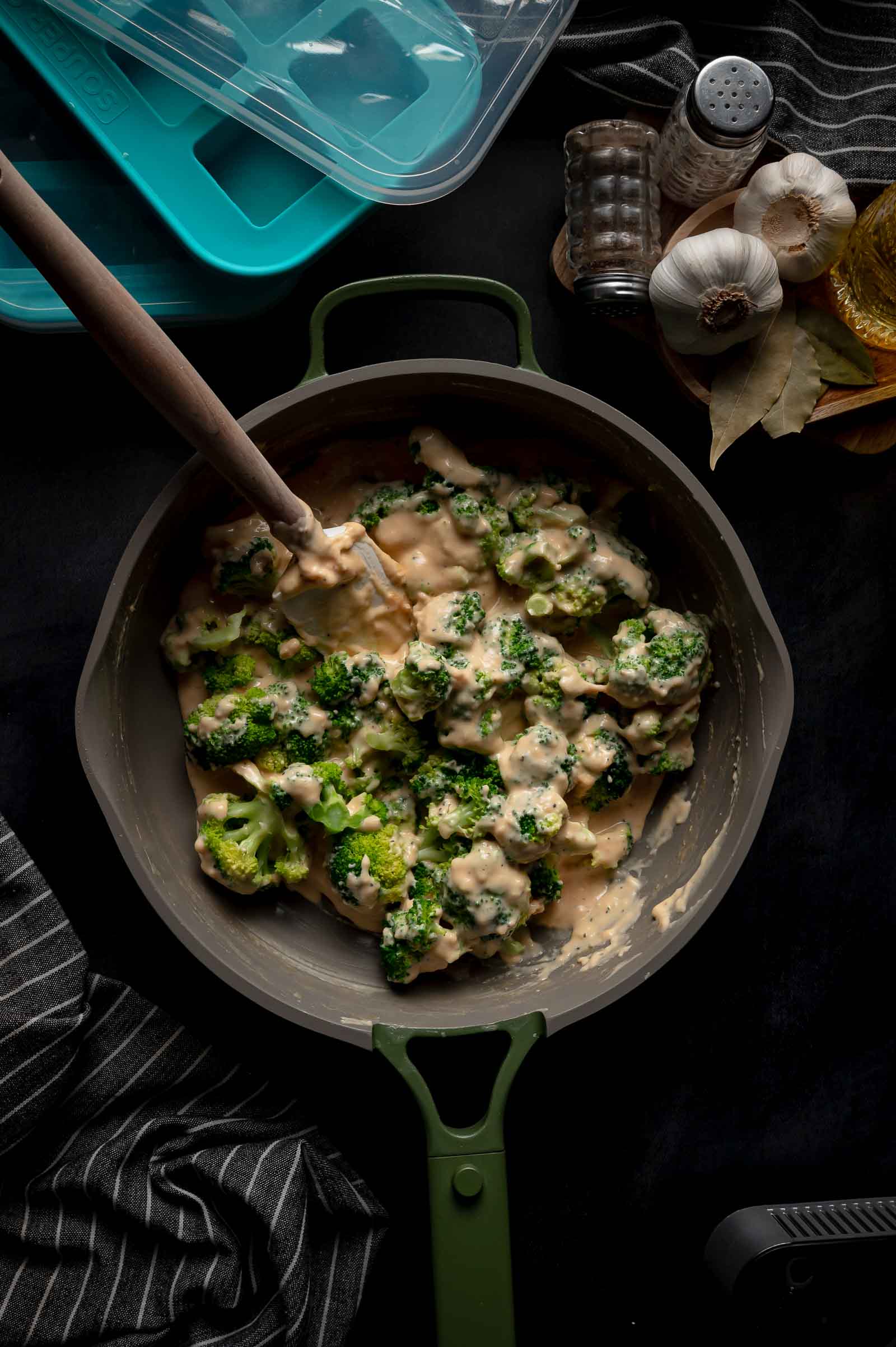
We tested this specifically for the GC Freezer Meal System, where vegetables, proteins, and starches are portioned separately and mixed together for quick dinners later and the trick isn’t the cheese sauce. It’s everything you do to the broccoli before the sauce ever touches it. Steam it just enough to turn bright green and stop, dry it completely on a towel, and portion it into Souper cubes while the sauce is still warm enough to flow into the gaps. Skip any one of those three steps and you get watery sauce pooling at the bottom of a freezer bag instead of broccoli that reheats like you just made it.
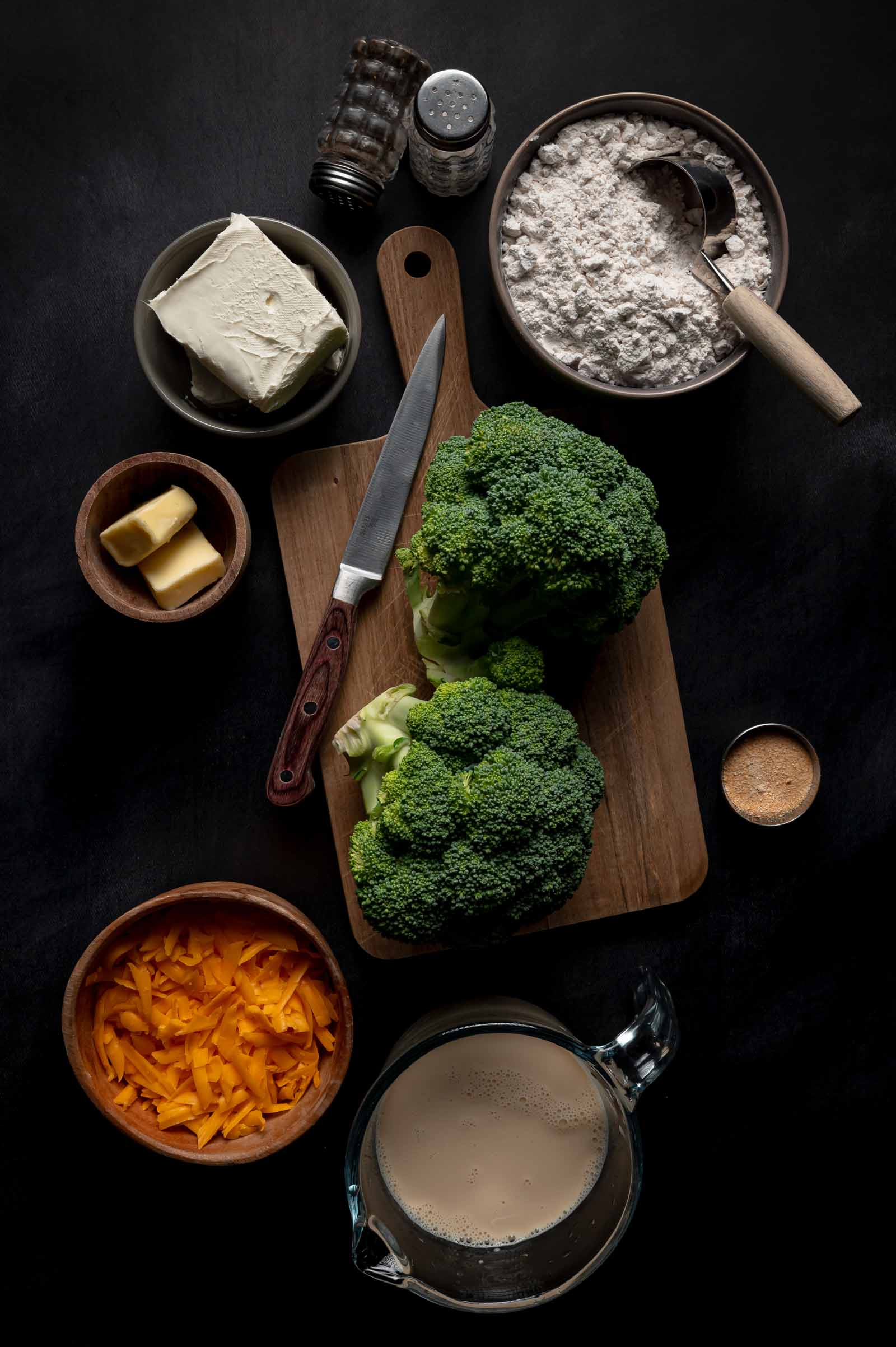
🔪 Ingredients for Cheesy Broccoli
- Fresh broccoli florets, cut into even 1-inch pieces. Uniform size means uniform steaming, so nothing turns to mush while the rest is still crisp.
- Butter and all-purpose flour. A basic roux gives the sauce structure that survives freezing and reheating instead of breaking into oil and liquid.
- Evaporated milk. Its concentrated milk proteins are what keep the sauce smooth after a trip through the freezer, where a sauce built on regular milk tends to separate.
- Garlic powder, kosher salt, and black pepper. These season the sauce itself, not just the broccoli.
- Cream cheese. It stabilizes the cheddar so the sauce doesn’t split into grease and curds when it gets reheated.
- Sharp cheddar, shredded from a block. Block cheese melts smoother than the pre-shredded bag stuff, which is coated in anti-caking starch that can leave a frozen sauce grainy.
Equipment
- Large pot with a steamer basket and lid. You want the broccoli cooked by steam, not sitting in water it’ll carry into the sauce.
- 1-cup silicone freezer molds. Silicone flexes enough to pop the frozen portions out clean.
- Freezer-safe bags or airtight containers, for storage once the portions are out of the molds.
- A vacuum sealer and bags, optional, if you want to push the freezer life further. Freeze the portions solid first, then seal.
Full picks and links for every mold, sealer, and bag in this system: Freezer Meal Prep Equipment Guide.
📝 How to Make Cheesy Broccoli
- Steam the broccoli. Fill a large pot with water below a steamer basket and bring it to a simmer over medium-high heat. Add the broccoli, cover, and steam for 2 to 3 minutes, until it turns bright green but still bites back. It’s going to cook more later during reheating, so pull it before you’d call it done.
- Dry it completely. Spread the broccoli on a towel-lined sheet pan in a single layer and let it steam-dry for 10 minutes, blotting away any visible moisture. Don’t rinse it. Water left on the broccoli is what turns the sauce watery once it’s frozen and thawed.
- Start the roux. Melt the butter in a medium saucepan over medium heat, whisk in the flour, and cook for 1 minute, stirring constantly, until smooth and lightly toasted-smelling.
- Build the sauce. Slowly whisk in the evaporated milk until no lumps remain, then cook for 4 to 6 minutes, stirring frequently, until it coats the back of a spoon.
- Season and add the cream cheese. Stir in the garlic powder, salt, and pepper, drop the heat to low, then add the cream cheese and cook for 1 to 2 minutes, until it melts completely into the sauce.
- Melt in the cheddar off heat. Pull the saucepan off the burner before you add the cheddar. Stir it in a handful at a time, letting each addition melt before adding more. Do not put the sauce back over heat once the cheddar’s in, or it turns oily and grainy instead of smooth.
- Combine. Pour the warm sauce over the broccoli in a large bowl and fold gently until every piece is coated. Let it cool for about 10 minutes before portioning, but no longer. The sauce needs to still be pourable when it hits the molds.
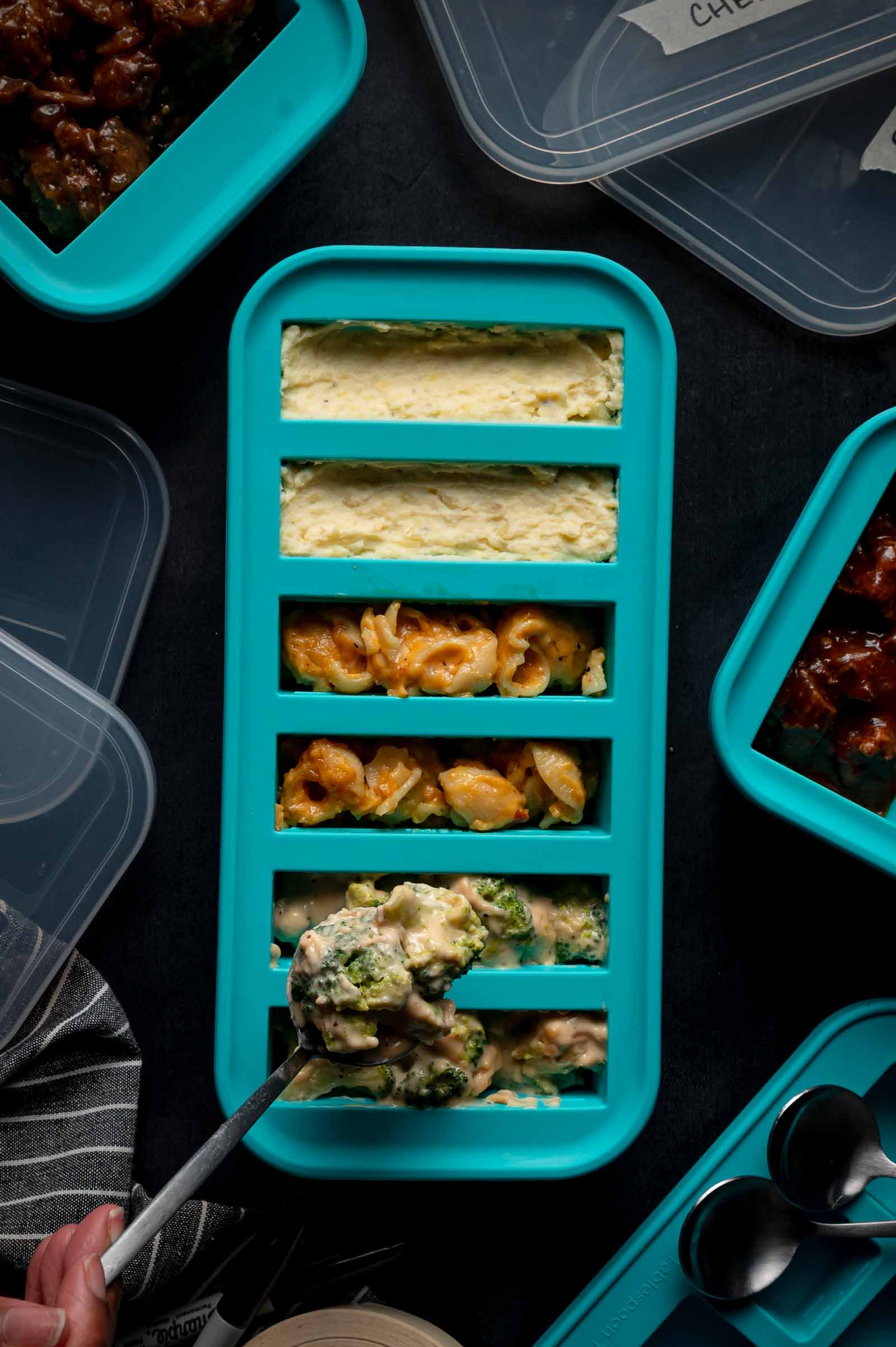
Portioning and Meal Prep Assembly
Work fast while the sauce is still warm enough to move. Divide the cheesy broccoli evenly among six 1-cup silicone mold cavities, filling each one to about ¼ inch below the rim. Split the broccoli and sauce evenly between cavities so every portion gets a similar ratio of both. Press down gently with the back of a spoon so the warm sauce flows into the gaps between the florets, without crushing the broccoli itself. Smooth the tops while the sauce still moves, then wipe any sauce off the edges of the molds before they go in the fridge.
- 1-cup molds: the standard, six portions, sized for a side dish serving.
- ½-cup molds: makes about twelve smaller portions, good for mixing into single-serving meal prep containers.
- 2-cup molds: skip these unless you’re making a shared portion. Larger cubes take longer to reheat evenly and need more stirring along the way.
Don’t let the broccoli sit and thicken in the bowl before you portion it. Once the sauce cools, it clumps instead of filling the molds cleanly. Transfer it while it’s still warm and pourable, not after.
| Mold Size | Portions | Fill Level | Best For |
|---|---|---|---|
| 1-cupRecommended | 6 | ¼ inch below the rim | Standard side dish portion, mix-and-match with a protein + starch |
| ½-cup | ~12 | Level with the top | Smaller portions. Skip 2-cup molds unless sharing, they reheat unevenly. |
Freezing Instructions
- Rest briefly at room temperature. Let the filled molds sit for no more than 15 minutes, until they stop giving off visible steam.
- Chill before freezing. Move the molds to the refrigerator for 1 hour. This cuts down on condensation and helps the sauce freeze more evenly.
- Freeze until solid. Set the molds on a level freezer shelf and freeze for 4 to 6 hours, until the portions are completely solid all the way through.
- Pop and transfer. Remove the frozen portions from the molds and move them straight into freezer-safe bags or airtight containers.
- Label and store. Mark the package with the recipe name, the freeze date, the portion size, and how to reheat it. Freeze for up to 3 months.
If you’re vacuum sealing, seal after the portions are frozen solid, not before. Sealing warm or soft portions crushes them.
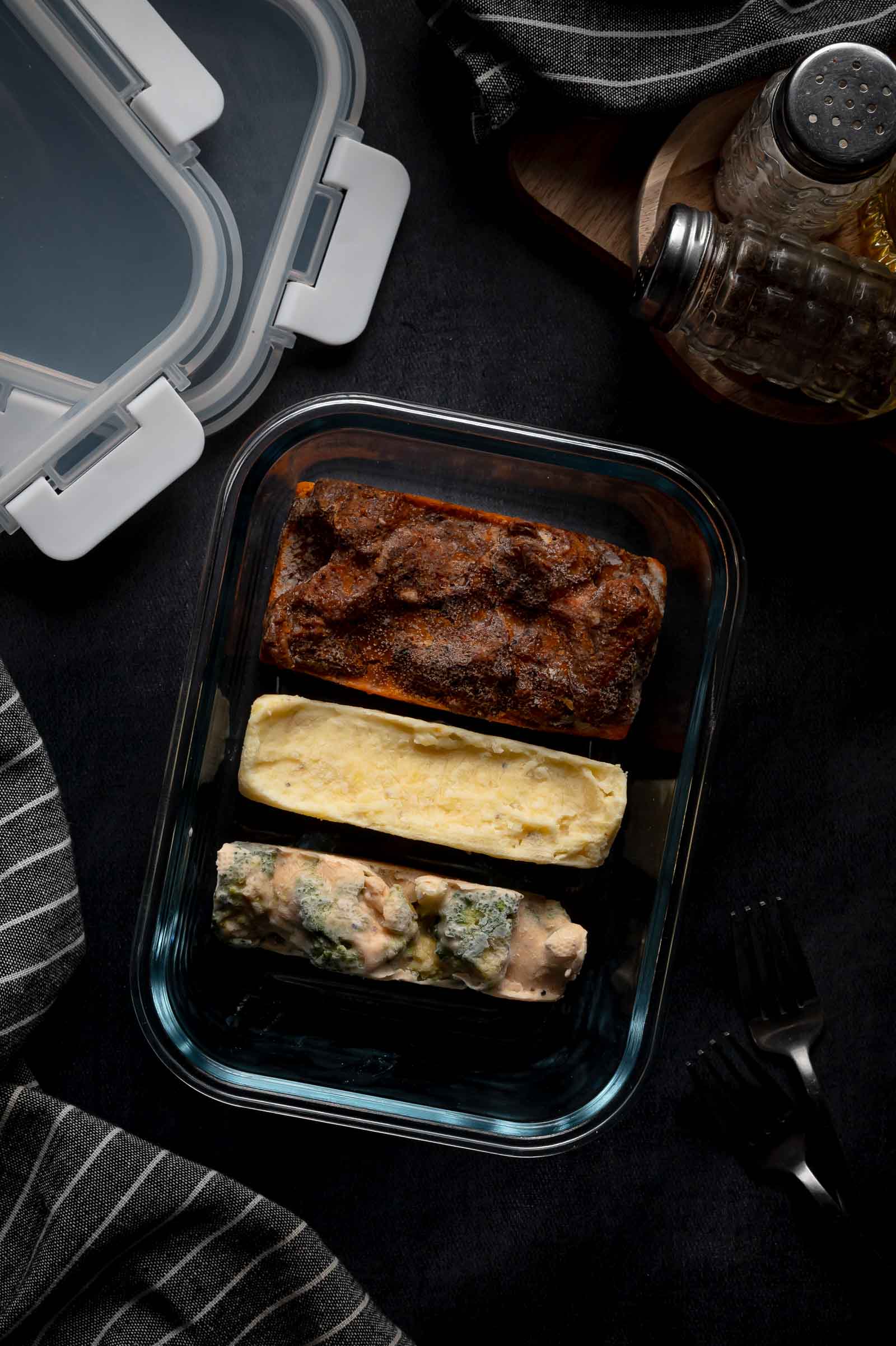
Reheating Instructions
The cheesy broccoli reheats straight from frozen, but thawing overnight in the refrigerator gives you the most even texture with the least stirring.
- Cover loosely
- Microwave 3 minutes
- Break apart, stir, 2-3 minutes more
- Rest 1 minute before serving
- Cover loosely
- High 1 minute, stir
- 30-second intervals, 1-2 minutes more
- Rest 1 minute before serving
- Medium-low heat, covered
- Stir frequently
- Splash of evaporated milk if sauce thickens too much
Troubleshooting
| Problem | Fix |
|---|---|
| Broccoli turns mushy after reheating | Undercook it going in. 2 to 3 minutes of steam, no more. It finishes cooking during reheating, not before freezing. |
| Sauce is diluted or icy | Dry the broccoli completely before saucing it. Any water left on the florets thins the sauce and forms ice crystals. |
| Cheese sauce turns oily or grainy | Pull the pan off the heat before adding the cheddar, and add it in small handfuls so it melts without breaking. |
| Portions leave gaps in the mold | Cut the broccoli into consistent 1-inch pieces so the sauce fills evenly instead of pooling around big florets. |
| Molds overfilled before freezing | Leave a little headroom in each cavity. The portions expand slightly as they freeze solid. |
🔄 Substitutions
- Cauliflower for up to half the broccoli. Cut it into 1-inch pieces, steam for 3 to 4 minutes, and dry it thoroughly before adding the sauce, same as the broccoli.
- Mild cheddar for sharp cheddar. Works fine if you want a milder flavor. Doesn’t change anything about the freezing or reheating.
- White cheddar for yellow cheddar. No changes to the process either. Purely a color and flavor swap.
- Frozen broccoli instead of fresh. It’ll work, but expect a softer texture. Thaw it completely, drain it well, press out as much moisture as you can, and skip the steaming step since it’s already been cooked once.
- What doesn’t work: skipping the dry-down step on the broccoli, no matter which vegetable you use. Any substitution that leaves moisture behind dilutes the sauce the same way, regardless of what’s under the cheese.
💡 Meat Nerd Tips
- Evaporated milk isn’t optional. Its proteins are more concentrated than regular milk, which is exactly what keeps the sauce from breaking into a grainy mess after it’s been frozen and thawed.
- Cream cheese is doing structural work, not just flavor. It stabilizes the cheddar in the sauce, which is why the sauce holds together through reheating instead of separating into grease and curds.
- The broccoli finishes cooking in the microwave, not the pot. Steaming it for only 2 to 3 minutes on the stove looks underdone on purpose. It picks up the rest of its cook time during reheating.
- Portion while the sauce still moves. Warm sauce fills the gaps between florets. Cooled sauce thickens and clumps, so you lose the even coating that makes each bite work.
- Block cheese melts cleaner than bagged shreds. Pre-shredded cheese is dusted with an anti-caking starch that can leave a frozen-and-reheated sauce grainy instead of smooth.
The GC Freezer Meal Formula: Build Your Plate
This cube is one piece of a bigger freezer meal prep system we’re building out, so you can stock your freezer like a choose-your-own-adventure series.
The GC Freezer Meal System works differently. Each recipe is built as a component that freezes, reheats, and pairs well with the others.
Think of it like building a plate: Protein cube + starch cube + vegetable cube = dinner
Each build is designed around matching portions and mold sizes, so you can mix and match straight from the freezer. Make a few components on prep day, then build different dinners throughout the week without starting from scratch every night.
This build combines 5 freezer components designed to work together. Make the full build during one prep session, or choose only the pieces that fit your freezer.
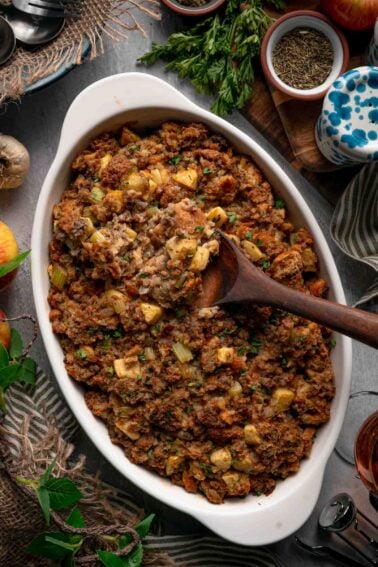
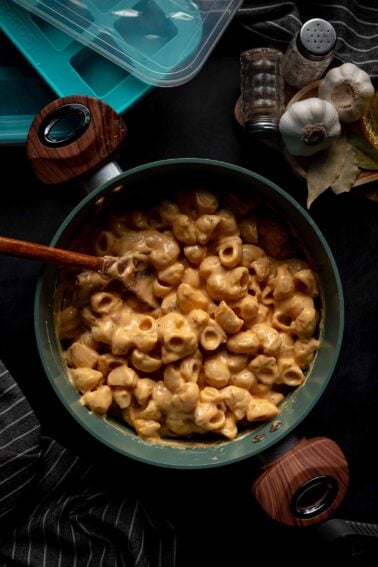
Salisbury steak meatballs cube + Stovetop mac and cheese cube + Cheesy Broccoli cube = dinner from frozen in under 5 minutes. Or swap in the Salisbury Steak Meatballs or Stovetop Mac and Cheese for a different combo. Each recipe is designed to mix and match across the system.
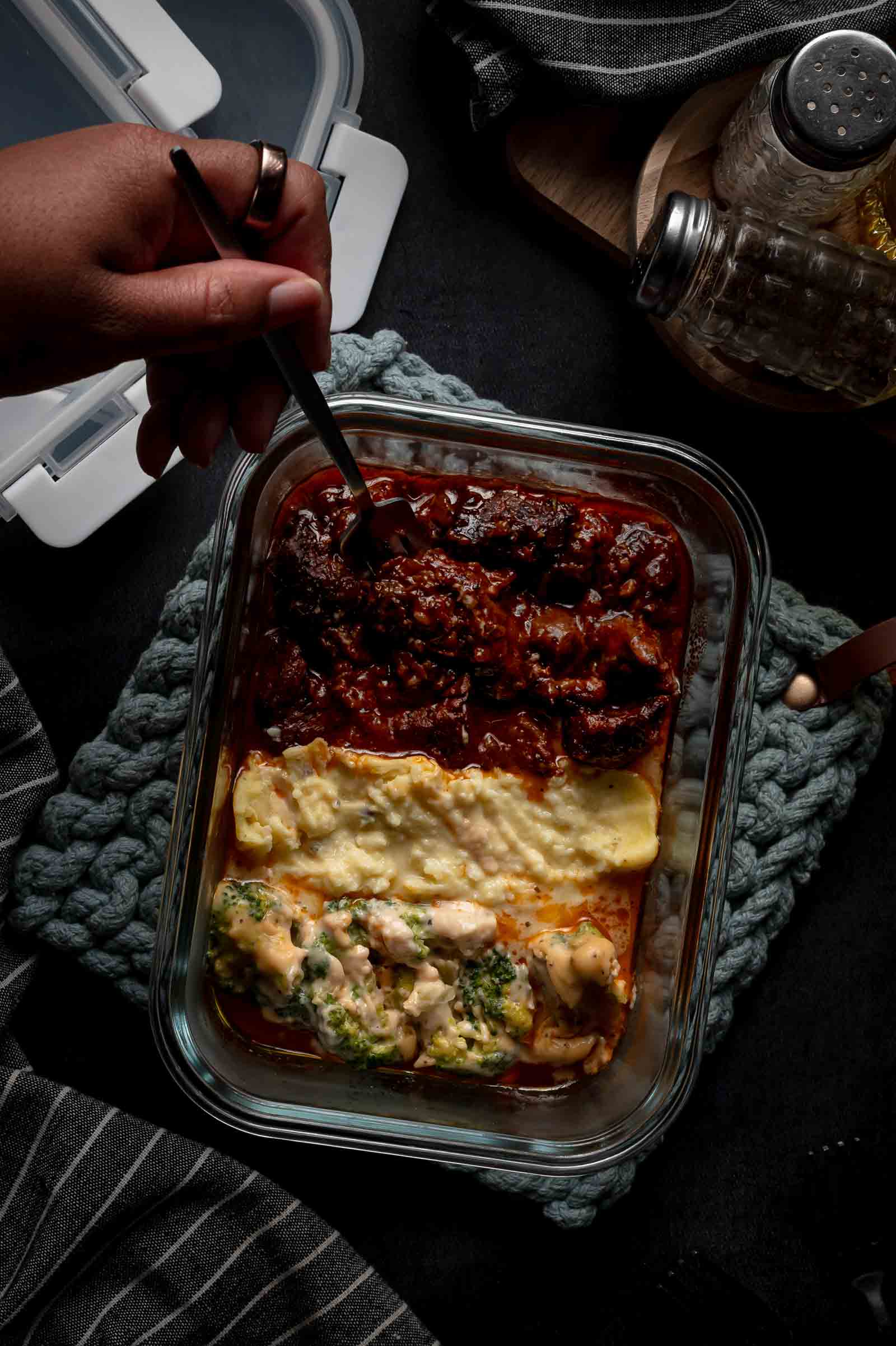
🍽️ What to Serve with Cheesy Broccoli
- Braised Beef Tips in Gravy: the two freeze and reheat on the same timeline, so they land on the plate together straight from the freezer.
- Salisbury Steak Meatballs: another Batch 3 protein that reheats in the same few-minute window as the broccoli.
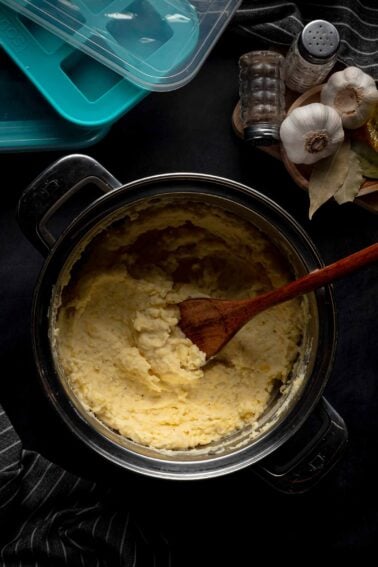
- Cream Cheese Mashed Potatoes: rounds out the plate formula with a starch that shares the same 1-cup mold system.
- Freezer Lemon Garlic Broccolini: if you want a lighter, non-cheese broccoli option to rotate in from the freezer.
🧊 Leftovers and Storage
- Fridge: up to 4 days in an airtight container, for broccoli that was made fresh and never frozen.
- Freezer: up to 3 months, portioned in freezer-safe bags or airtight containers.
- Thawing: thaw overnight in the refrigerator when you can. It gives you the most even texture with the least stirring.
- Reheat summary: from frozen in the microwave in about 5 to 6 minutes total, or from thawed in 1 to 2 minutes in the microwave or 5 to 7 minutes on the stovetop.
- Don’t refreeze: once a portion has been thawed and reheated, it’s done. Refreezing wrecks the texture.
Quick Summary
Cheesy broccoli holds up in the freezer because of what happens before the sauce ever gets involved: steam the broccoli just short of done, dry it completely, and portion it while the sauce is still warm enough to flow. Get those three things right and you’ve got a side dish that reheats in under five minutes and tastes like you just made it. Skip the drying step and you’ll know immediately, because watery sauce doesn’t lie.
Cheesy Broccoli (Freezer-Friendly Meal Prep)
Recommended Equipment
- Large pot with a steamer basket and lid
- Freezer-safe storage bags or containers
- Vacuum Sealer and vacuum-seal bags (optional)
Ingredients
Broccoli
- 6 cups fresh broccoli florets cut into 1-inch pieces
Cheese Sauce
- 2 tablespoons butter
- 2 tablespoons all-purpose flour
- 1 (12-ounce) can evaporated milk
- 1 teaspoon garlic powder
- 1 teaspoon kosher salt
- ½ teaspoon black pepper
- 2 ounces cream cheese softened and cubed
- 6 ounces sharp cheddar cheese freshly shredded
Instructions
Steam the Broccoli
- Fill a large pot with water below a steamer basket and bring to a simmer over medium-high heat. Add the broccoli, cover, and steam for 2 to 3 minutes, until bright green but still crisp and firm. Keep it undercooked; it finishes cooking during reheating.
Dry the Broccoli
- Transfer the broccoli to a towel-lined sheet pan, spread into a single layer, and let it steam-dry for 10 minutes. Blot away any visible moisture. Do not rinse.
Start the Roux
- Melt the butter in a medium saucepan over medium heat. Whisk in the flour and cook for 1 minute, stirring continuously, until smooth.
Build the Sauce
- Slowly whisk in the evaporated milk until no lumps remain. Cook for 4 to 6 minutes, stirring frequently, until the sauce coats the back of a spoon.
Season and Melt In the Cream Cheese
- Stir in the garlic powder, salt, and pepper, and reduce the heat to low. Add the cream cheese and cook for 1 to 2 minutes, stirring until completely melted.
Melt In the Cheddar
- Remove the pan from the heat. Add the cheddar in several additions, stirring until each melts before adding more. Do not return the sauce to the heat once the cheese is in.
- Step 7: Combine Place the broccoli in a large bowl. Pour the warm cheese sauce over it and fold gently until evenly coated. Let cool about 10 minutes, no longer, before portioning.
Serve Fresh or Freeze
- If you're eating tonight, stop here. Serve the cheesy broccoli warm. Everything from this point on is for the freezer.
Portion
- Divide the broccoli evenly among six 1-cup silicone mold cavities, filling each to about ¼ inch below the rim. Press down gently with the back of a spoon so the sauce flows into the gaps, without crushing the broccoli. Smooth the tops while the sauce still moves and wipe any sauce from the mold edges.
Cool and Chill
- Let the filled molds stand at room temperature for no more than 15 minutes, until they stop releasing visible steam. Transfer to the refrigerator and chill for 1 hour.
Freeze
- Place the chilled molds on a level freezer shelf. Freeze for 4 to 6 hours, until completely solid. Do not overfill the cavities; leave a little room for expansion.
Bag and Label
- Pop the frozen portions out of the molds. Transfer to freezer-safe bags or containers, press out as much air as possible, and seal tightly. Label with the recipe name and date. Freeze for up to 3 months. To vacuum seal, freeze the portions solid first, then use a gentle or pulse setting.
Reheat From Frozen (Microwave)
- Place 1 frozen 1-cup portion in a microwave-safe bowl. Cover loosely. Microwave for 3 minutes, then break the portion apart and stir. Microwave on high for 2 to 3 minutes more, stirring after each minute, until hot and smooth. Rest 1 minute before serving.
Reheat From Thawed (Microwave) – BEST Texture
- Thaw overnight in the refrigerator. Place the portion in a microwave-safe bowl, cover loosely, and microwave on high for 1 minute. Stir, then continue in 30-second intervals for 1 to 2 minutes, until hot. Rest 1 minute before serving.
Reheat From Thawed (Stovetop)
- Thaw overnight in the refrigerator. Place the portion in a small saucepan or skillet over medium-low heat. Cover and cook for 5 to 7 minutes, stirring frequently. Add a small splash of evaporated milk if the sauce becomes too thick.
Notes
- Evaporated milk isn’t optional. Its concentrated proteins keep the sauce smooth after a trip through the freezer, where a sauce built on regular milk tends to separate.
- Cream cheese stabilizes the cheddar so the sauce holds together through reheating instead of breaking into grease and curds.
- Use cheese shredded from a block. Pre-shredded cheese is coated in anti-caking starch that can leave a frozen sauce grainy.
- Don’t overfill the molds. Leave a little headroom for the portions to expand as they freeze solid.
- Fridge up to 4 days in an airtight container. Freeze up to 3 months. Thaw overnight in the refrigerator for the smoothest, least-stirring reheat.
Save this Recipe
Nutrition
Bookmark this recipe now!
Guides Worth Bookmarking
The Gear Behind our Lego Lunch Recipes
Every step above assumes you have got the right sealer and the right molds. See the exact FoodSaver sealer and Souper Cubes mold set GC runs this whole system on, plus the budget-friendly swap, in one place.
See the Full Equipment Guide →❓ FAQs
Warm sauce flows into the gaps between the florets and coats everything evenly. Once it cools, it thickens and clumps instead of filling the molds cleanly, so you want to work fast while it’s still pourable.
It cooks again during reheating, so a short steam keeps it firm enough to survive the freezer. Cook it fully now and it comes out mushy on the other side.
Any water left on the florets dilutes the cheese sauce and forms ice crystals while it freezes. Dry it on a towel and skip rinsing it altogether.
Yes. Half-cup molds make about twelve smaller portions, good for mixing into single-serving containers. Skip 2-cup molds unless you’re feeding a crowd from one cube, since bigger portions take longer to reheat evenly and need more stirring along the way.
Yes, but freeze the portions solid first, then vacuum seal them. Sealing warm or soft portions crushes the broccoli and can pull sauce into the seal, which weakens it.