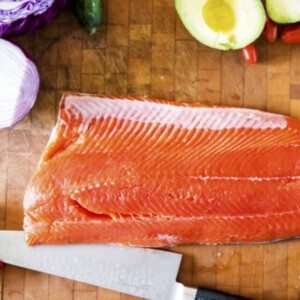
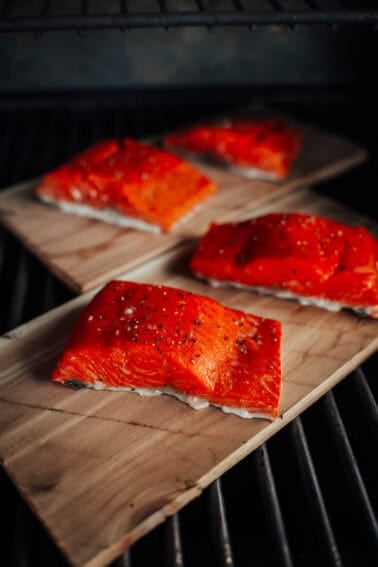
Removing salmon skin shouldn’t feel like wrestling a wet bar of soap. This is the clean, controlled method chefs use to get a perfect fillet every time—no tearing, no waste, no frustration.
🔪 What You Need
- Sharp boning knife or flexible fillet knife
- Paper towels
- Cutting board
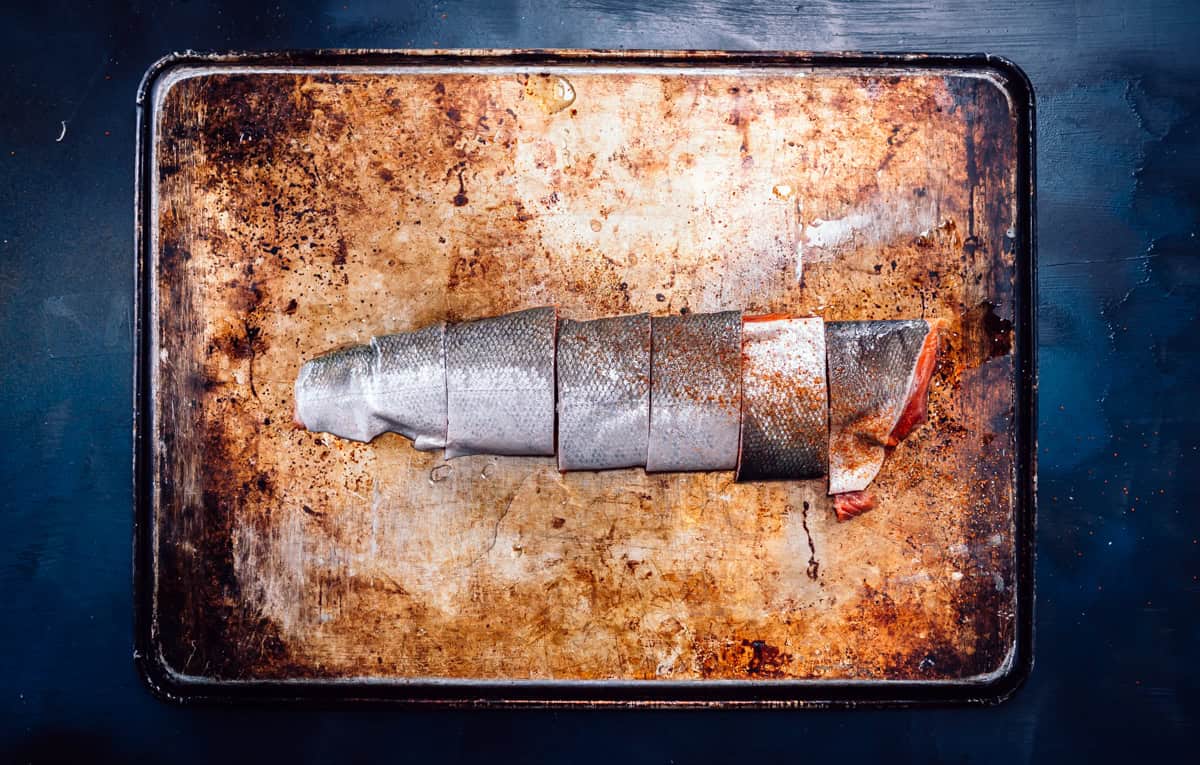
📝 Step-by-Step: How to Remove Salmon Skin
1. Start at the tail end
If your fillet has a tapered tail, that’s your anchor point.
Grip the narrow end with a paper towel so it doesn’t slip.
2. Slide the knife between the flesh and skin
Angle the blade 5–10 degrees downward, just above the skin.
Make a tiny starter cut to create a flap you can hold.
3. Keep the knife still and pull the skin
This is where most people go wrong.
The knife barely moves—the skin does the work.
Use short, gentle strokes only when needed.
4. Use long strokes once you’re halfway
Let the knife ride along the skin in clean, confident motions.
If you see silver skin on the fillet, adjust your angle slightly downward.
5. Trim the bloodline if needed
The dark red or gray strip under the skin — often called the “bloodline” or fat line — is safe, edible, and full of natural oils. Leaving it on adds richness when you’re cooking the salmon.
But for raw dishes like tartare, poke, or crudo, many cooks trim it because it carries a stronger, more pronounced flavor that can compete with the clean, bright taste of the fillet.
It’s optional — not a rule — and comes down to the flavor profile you prefer.
🧼 When to Remove the Skin
Remove the skin before cooking when you’re:
- Making tartare, poke, or crudo
- Portioning salmon for stir-fries or curry
- Slow-roasting or poaching
Leave the skin on when:
- Pan-searing (crispy skin = flavor + insulation)
- Grilling (prevents sticking)
- Smoking (keeps the fillet intact)
Clean cuts make everything easier. Master this once, and portioning becomes almost automatic.
How to Remove Salmon Skin (Clean, No-Slip Method)
Step-by-step method for removing salmon skin cleanly with a sharp knife and paper towel so you don't tear the flesh or waste meat.Recommended Equipment
Instructions
Start at the tail end
Slide the knife between flesh and skin
Hold the knife steady and pull the skin
Use long strokes to finish
Trim the bloodline if needed
Bookmark this recipe now!
❓ FAQs: How to Portion Salmon Fillets
How thick should salmon portions be?
Keep pieces as close as possible in thickness, not weight. This ensures even cooking no matter the method.How big should each portion of salmon be?Most recipes call for 6–8 oz portions, but adjust based on cooking method or appetite.
Should I remove the skin before portioning salmon?For grilling and pan-searing, portion with the skin on.
For raw dishes or slow roasting, remove the skin first, then portion.Why does the tail end cook faster?It’s thinner and less fatty, so it hits doneness quicker. Trimming it ensures evenly sized portions.
What is the best knife for portioning salmon?A sharp chef’s knife or flexible boning knife gives the cleanest cuts. Dull knives crush the flesh and lead to uneven portions.
How do I portion salmon so it cooks evenly?Cut pieces into similar thickness, not identical weights. Matching thickness ensures each portion reaches doneness at the same time.
How do restaurants get perfectly even salmon portions?They trim the tail, square the fillet, and cut straight across the grain into consistent-thickness blocks. Home cooks can use the same method.
Do I need to remove the gray fat line when portioning?No. It’s edible. Some cooks trim it for raw dishes because it has a stronger flavor, but it’s optional and based on preference.
How do I portion salmon for tartare or poke?Use trimmings or center-cut pieces and dice into even, small cubes. The tail end often works perfectly for raw dishes.
Can I portion salmon while it’s still partially frozen?Thawed salmon cuts cleaner. If the fish is too cold or icy, your knife will chunk or tear the flesh.
More Salmon Basics
- Seafood Buying Guide — how to choose fish that’s worth cooking
- Raw Fish Safety Tips — simple rules for handling raw seafood at home
- Salmon Internal Temperature Guide — from raw to well done
- Seafood Tools Buying Guide — the gear that makes seafood easier, cleaner, and more consistent
- How to Tell if Salmon is Done — visual and tactile cues chefs rely on
Want dishes that use these techniques? Explore all our Seafood Recipes.