Honey-glazed salmon sounds easy until you try it and end up with burnt sugar stuck to your pan or watery sauce that won’t cling to anything. The problem isn’t you – it’s that honey scorches if you’re not careful, and most recipes skip the part where they tell you how to prevent that.
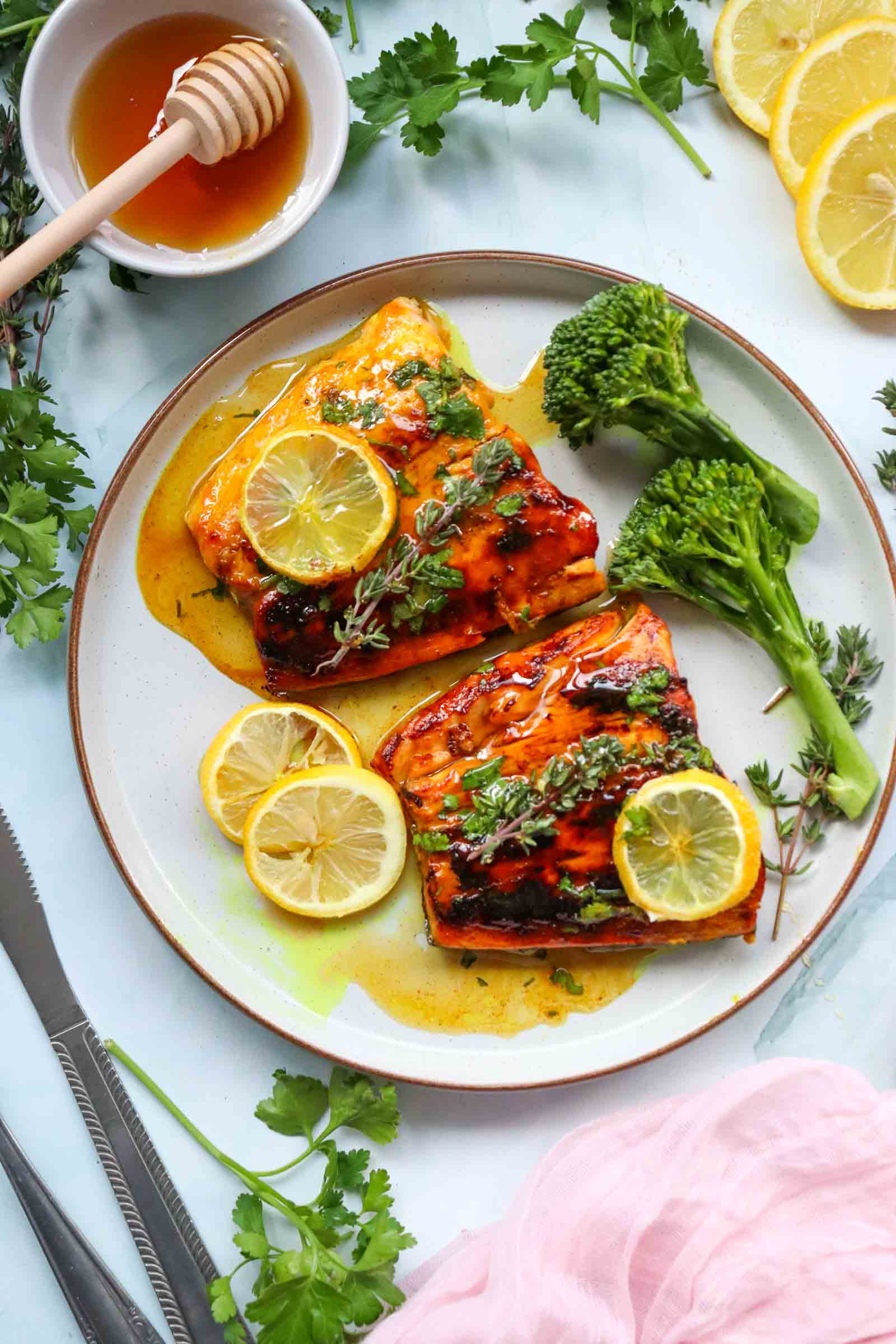
Butter and oil together is our little trick to making this work. Not one or the other. Both. They create the temperature where honey can do its caramelizing thing without turning into a sticky black mess. Then you flip your salmon first, wait, and add the glaze to the cooked side while you finish the other side. Baste it on, let it thicken and turn golden. That’s how you get the glossy, lacquered coating that looks like it came right from a photoshoot.
Turmeric and lemon keep it interesting – earthy and bright instead of just sweet. The salmon stays tender because you’re not trying to incinerate it to get the glaze right. Ten minutes and you’ve got two fillets with that thick, sticky crust that makes you want to lick your plate.
This is the version that works. Make it once, and you’ll stop second-guessing yourself every time you want impressive salmon on a weeknight.
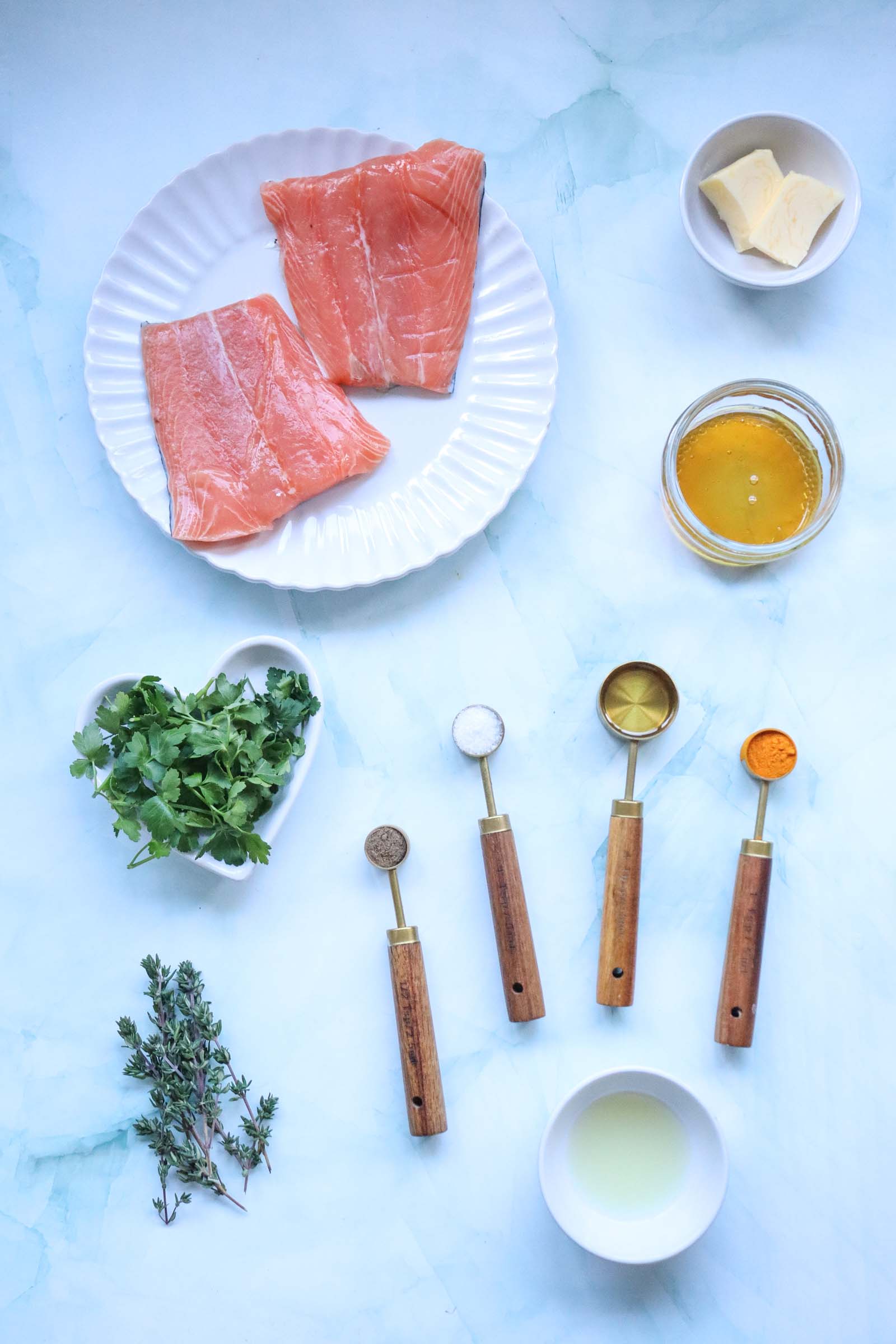
🔪 Ingredients for Honey Glazed Salmon
- Salmon fillets (2, about 6 oz each): Center-cut fillets cook evenly and are less prone to overcooking than thin tail pieces.
- Coarse kosher salt & Black pepper
- Unsalted butter
- Avocado oil
- Honey: Creates the sticky, caramelized glaze—use a mild honey so it doesn’t overpower the fish.
- Fresh lemon juice
- Turmeric
- Fresh parsley, Fresh dill or thyme
Equipment
- Large skillet (cast iron or stainless steel)
- Fish spatula
- Instant-read thermometer
📝 Step-by-Step Instructions: How to Make Honey Glazed Salmon
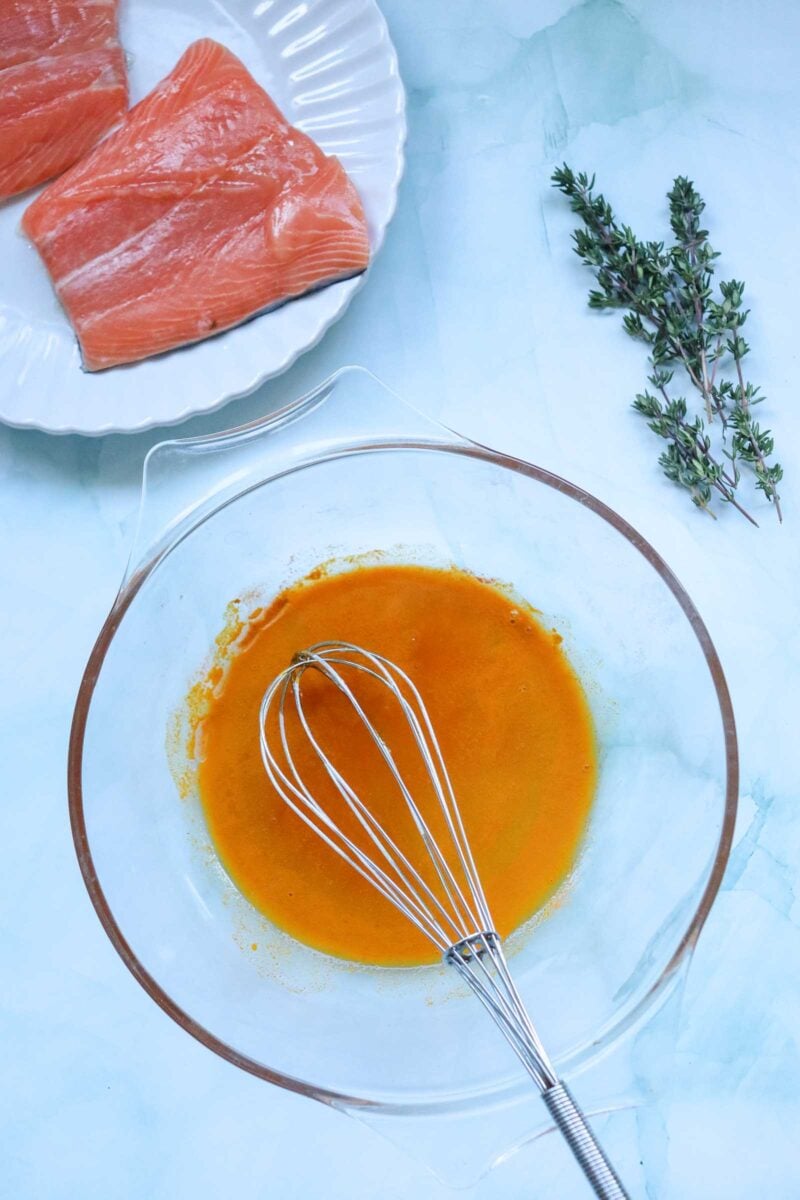
- Make the glaze: Whisk the honey, lemon juice, turmeric, and parsley in a small bowl until smooth. Set aside.
- Prep the salmon: Pat the fillets completely dry—this matters. Season both sides evenly with salt and black pepper.
- Heat the pan: Heat the butter and avocado oil in a large skillet over medium-high heat until the butter melts and starts to foam.
- Sear skin-side down: Cook undisturbed until the skin is crisp, and the flesh turns opaque about halfway up the sides (about 4–6 minutes depending on thickness).
- Flip once: Cook 30–60 seconds just to set the flesh side.
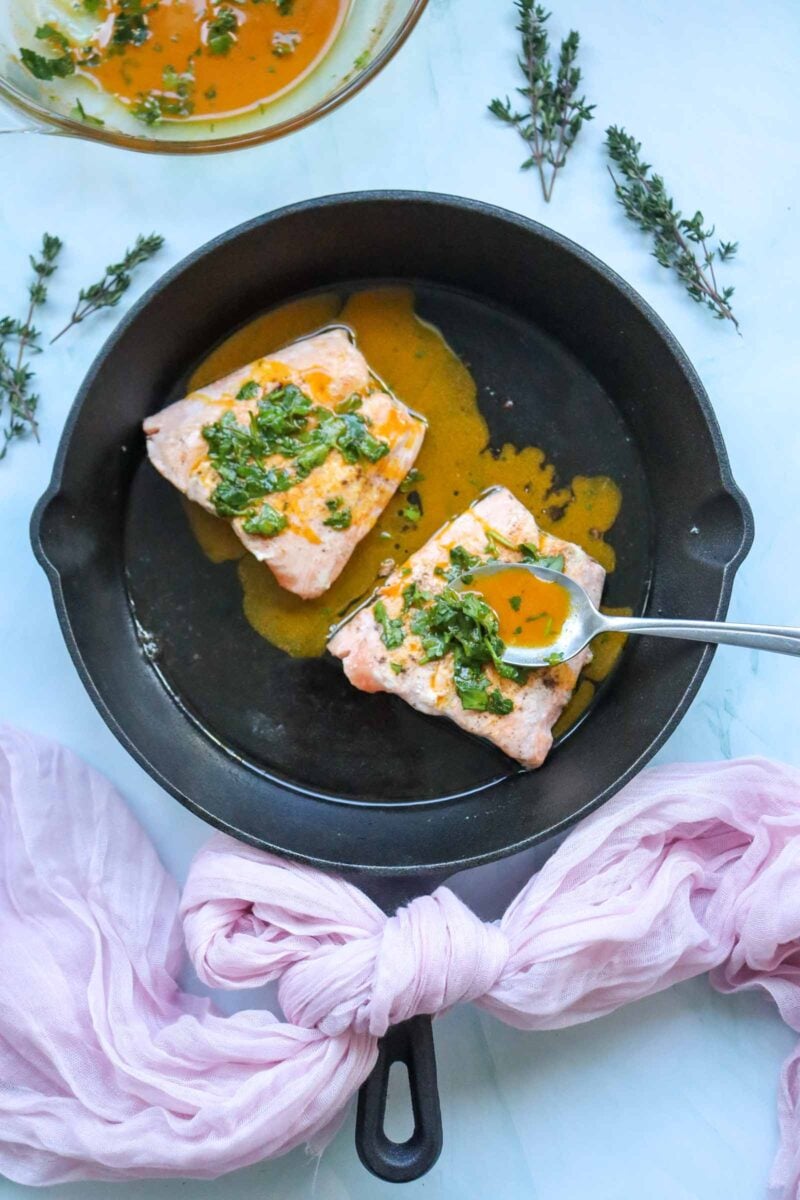
- Add glaze: Reduce the heat to low and allow the pan to cool. Pour in the honey mixture and immediately spoon it over the salmon as it bubbles and thickens. Watch to make sure it doesn’t burn. Cook another 1–2 minutes.
- Pull early: Remove at 125–130°F for juicy medium, or 135–140°F if you prefer it more done. The center should look slightly translucent, not chalky.
No flip option: Here’s How to Nail It:
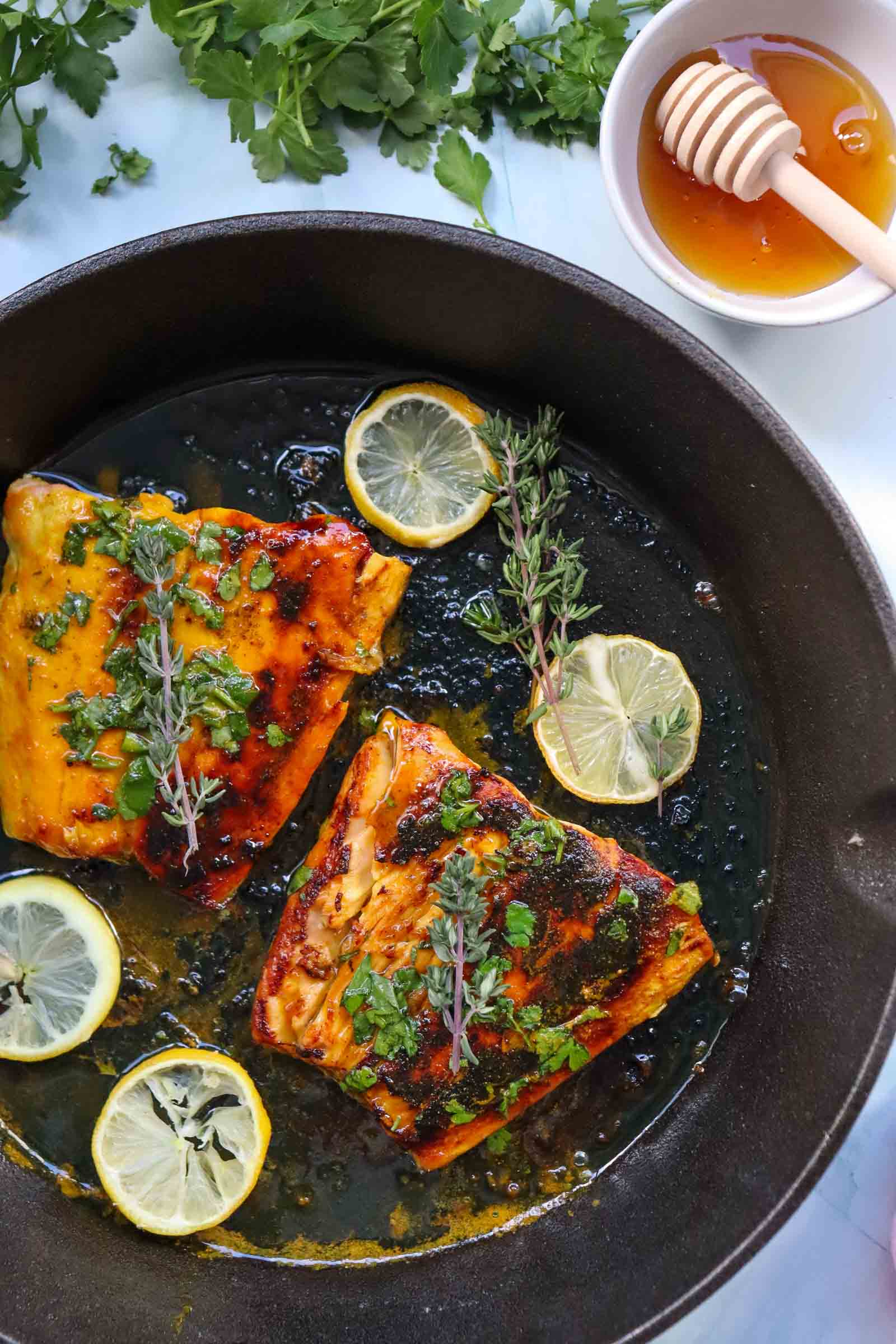
If your salmon has skin, place it skin-side down in your skillet. The skin protects the bottom from sticking, while the flesh side faces up for glazing. After about 2-3 minutes, you’ll see the sides of the salmon turning opaque and the color climbing up from the bottom. That’s your cue to add the glaze.
Pour the honey mixture over the flesh side, then start basting: use a spoon to scoop up the glaze from the pan and drizzle it back over the top every 30-45 seconds. The fish will continue cooking from the bottom heat while the glaze sets on top. You’ll see it thicken and turn a light golden-brown.
The salmon is done when it’s opaque almost all the way through with just a slightly translucent center (it’ll finish cooking off heat), or when it hits 125-130°F in the thickest part if you’re using a thermometer. The whole process takes 8-10 minutes total. The skin will release easily from the pan when it’s ready, and your glaze will be thick and sticky.
No skin? Same method – just start with either side down and don’t flip. The glaze still does all the work on top.
🔄 Substitutions & Variations
- Maple syrup can replace honey for a deeper, slightly less-sweet glaze.
- Orange juice works in place of lemon for a softer citrus note.
- Ginger or garlic can be added to the glaze if you want more punch.
💡 Meat Nerd Tips
- Skin on, always. Even if you don’t eat it, it protects the flesh during searing.
- Dry the salmon for a better sear. Wet fish steams instead of browns.
- Glossy glaze = done. If it looks matte or dark, it’s gone too far. Don’t crank the heat once the glaze goes in—honey burns fast. If the glaze thickens too quickly, add a splash of water or lemon juice to loosen it.
- Carryover cooking is real. Pull the salmon early—it finishes cooking as it rests.
🍽️ What to Serve with Honey Glazed Salmon
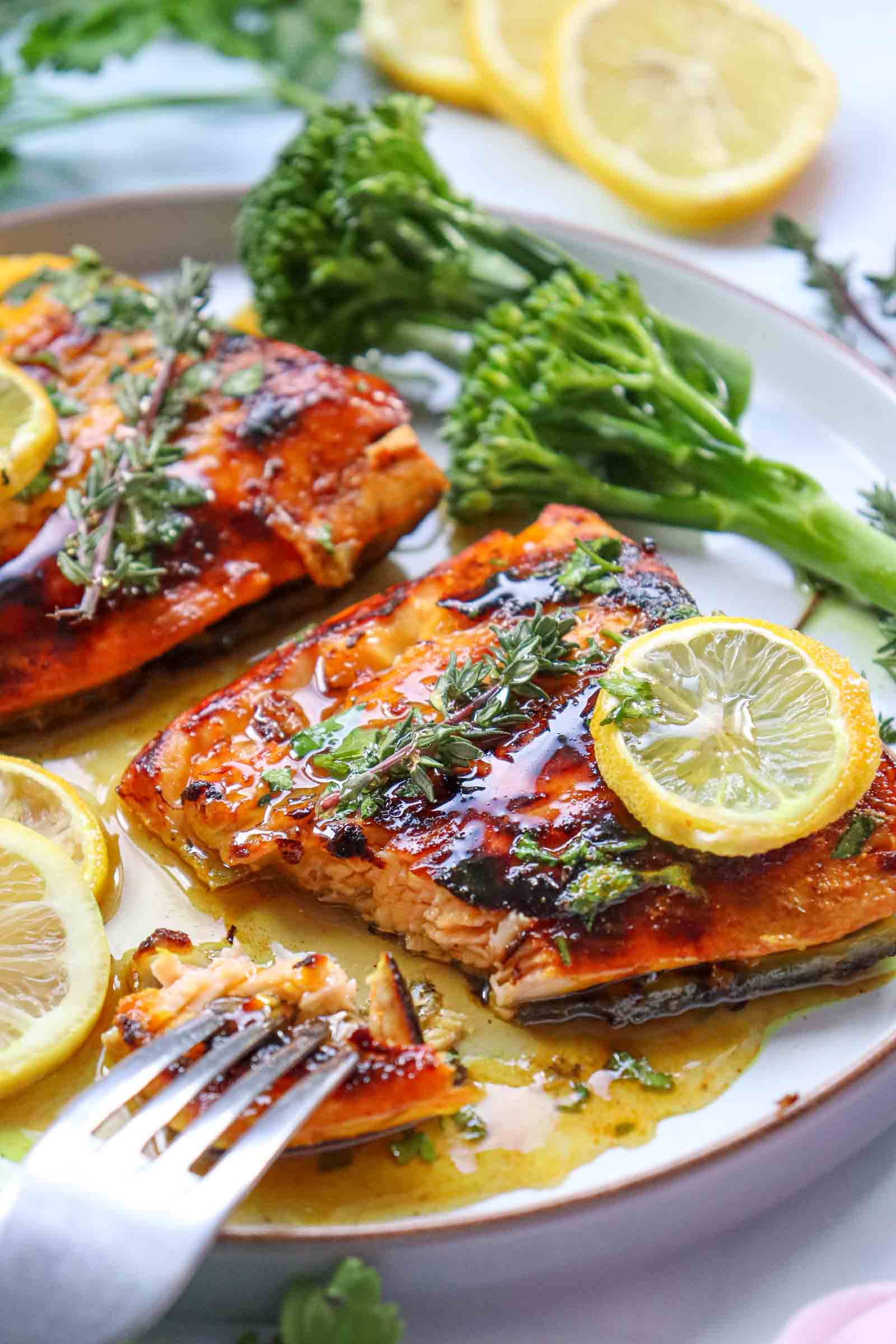
- Spoon over rice or quinoa to catch the extra glaze.
- Pair with steamed or roasted broccoli, green beans, or a crisp salad.
- Excellent flaked into tacos or grain bowls the next day.
🧊 Storage & Reheating
- Store leftovers in an airtight container for up to 2 days.
- Reheat gently in a skillet over low heat or eat cold over salad. Avoid microwaving; it will dry it out.
Have you tried this recipe? Do us a favor and rate the recipe card with the ⭐ ⭐ ⭐ ⭐ ⭐ and drop a comment to help out the next reader.
Honey Glazed Salmon Recipe

Recommended Equipment
- 10-12″ Cast Iron Skillet or other oven safe skillet or stainless steel
Ingredients
- 2 salmon fillets about 6 oz each, skin-on, center cut preferred
- 1 teaspoon kosher salt
- ½ teaspoon freshly ground black pepper
- 1 tablespoon unsalted butter
- 1 tablespoon avocado oil or other high smoke point oil
- 2 tablespoons honey
- 1 tablespoon fresh lemon juice
- 1 teaspoon turmeric
- 1 tablespoon fresh parsley finely chopped
- Fresh dill or thyme optional, for garnish
Instructions
Make the glaze & Prep the Salmon
- In a small bowl, whisk together the honey, lemon juice, turmeric, and parsley. Set aside.

- Pat the salmon completely dry with paper towels. Season both sides evenly with salt and black pepper.
Sear the Salmon
- Heat butter and avocado oil in a large skillet over medium-high heat until the butter melts and begins to foam.
- Place salmon skin-side down in the skillet. Cook undisturbed until the skin is crisp and the flesh turns opaque about halfway up the sides, about 4–6 minutes depending on thickness.
- Carefully flip the salmon and cook 30–60 seconds to set the flesh side.
Lower heat and glaze.
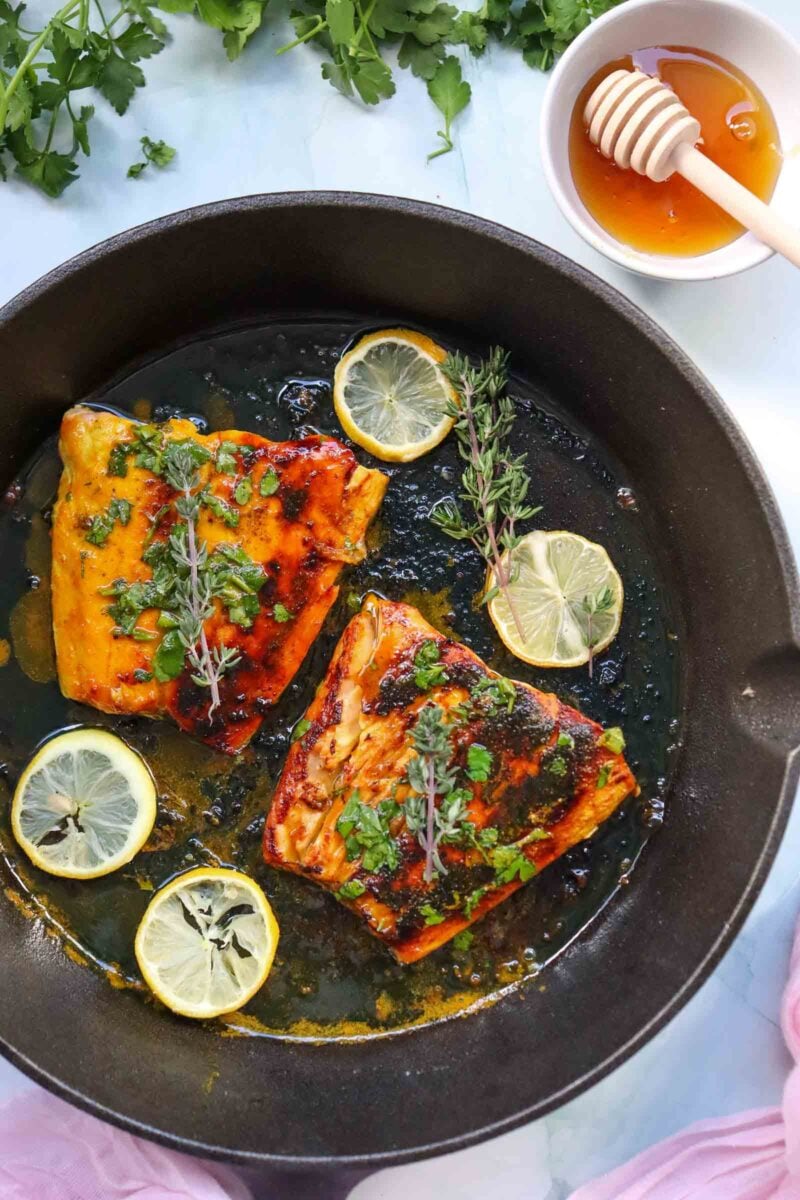
- Reduce heat to medium. Pour the glaze into the pan and immediately begin spooning it over the salmon as it bubbles and thickens. Cook another 1–2 minutes.
- Remove from heat at: 125–130°F for medium (juicy, slightly translucent center) 135–140°F for more fully cookedThe salmon should flake easily but still look moist in the center.
Rest and serve.
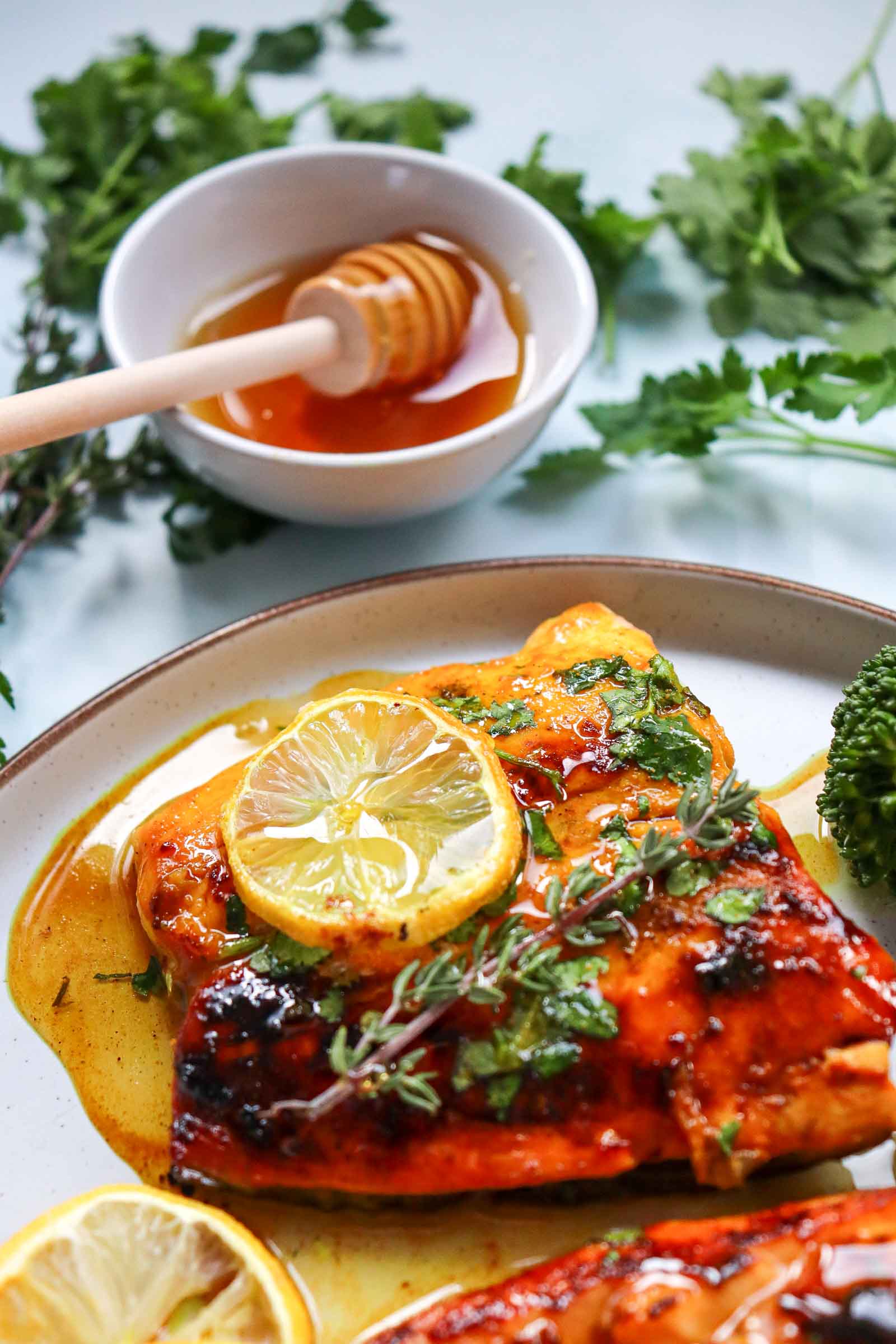
- Let rest 2–3 minutes. Spoon remaining glaze over the top and garnish if desired.
Notes
- Dry salmon thoroughly before searing for better browning and crisp skin.
- Do not move the fish while searing skin-side down; it will release naturally when ready.
- Lower the heat before adding honey to prevent burning.
- Salmon continues cooking slightly after removal due to carryover heat.
- If the glaze thickens too quickly, add 1–2 teaspoons of water or lemon juice to loosen.
- Start salmon skin-side down and don’t flip.
- After 2-3 minutes, when the sides start to turn opaque, add the glaze to the flesh side, facing up. Baste every 30-45 seconds by spooning the glaze back over the top.
- The fish cooks from the bottom heat while the glaze sets on top. The salmon is done when opaque almost all the way through with a slightly translucent center (125-130°F), about 8-10 minutes total.
- The skin releases easily when ready. No skin? Same method – pick a side and leave it down.
Nutrition
Bookmark this recipe now!
More Salmon Basics
- Seafood Buying Guide — how to choose fish that’s worth cooking
- Raw Fish Safety Tips — simple rules for handling raw seafood at home
- Salmon Internal Temperature Guide — from raw to well done
- Seafood Tools Buying Guide — the gear that makes seafood easier, cleaner, and more consistent
- How to Tell if Salmon is Done — visual and tactile cues chefs rely on
Want dishes that use these techniques? Explore all our Seafood Recipes.
❓ FAQs
When it flakes easily with a fork and reaches 125–145°F, depending on your preferred doneness.
Yes, but thaw completely and dry thoroughly before cooking.
Honey burns quickly, so the heat was too high once it hit the pan. Lower the heat before adding the honey and baste continuously.
You can, but you’ll lose the crisp edges. This recipe is built for stovetop cooking.