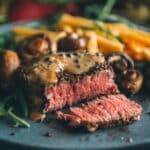
Steak au Poivre
Pepper-crusted filet mignon in a cognac cream pan sauce, built on a hard sear and a real fond — the classic bistro version.
Servings: 2 servings
Calories: 428kcal
Equipment
- A rolling pin or a second heavy skillet, for cracking the peppercorns
Ingredients
For the Steaks
- 2 filet mignon steaks 1.5 to 2 inches thick, 6 to 8 oz each
- 2 tbsp whole black peppercorns cracked coarse
- 1 tsp kosher salt
- 2 tbsp neutral oil (avocado or canola)
- 1 tbsp unsalted butter
For the Sauce
- 1 small shallot finely minced
- 1/4 cup cognac or brandy
- 1/2 cup beef stock
- 1/4 cup heavy cream
- 1 tbsp unsalted butter for finishing the sauce
Instructions
Crack the Pepper
- Crush whole peppercorns coarse under a heavy skillet or with a rolling pin.
Temper, Season, and Press
- Pull the steaks out of the fridge 20-30 minutes before cooking so they come closer to room temperature (keeps them from overcooking outside before the inside catches up). Pat dry, season with salt, then press cracked pepper firmly into both sides.
Sear and Baste
- Heat oil in a heavy skillet over high heat until shimmering. Sear steaks undisturbed 3-4 minutes, flip once, then spoon melted butter over the top and sides for the last minute (filet's round shape needs help browning on the edges).
- Pull the filet at 125°F internal for medium-rare.
- Cooking for 4: sear in two batches of two rather than crowding the pan, which drops the temperature and steams the crust instead of searing it.
Rest
- Transfer to a cutting board, tent loosely with foil.
Deglaze
- Remove the skillet from heat completely. Add shallot and cognac. Never add cognac to a pan still over an open flame. If it catches, the flame is brief and self-extinguishes in a few seconds once the alcohol burns off. Return to low heat once the shallot softens.
Build the Sauce
- Add beef stock, simmer and scrape up the fond, reduce by half, 3-4 minutes. Stir in cream, simmer until it coats the back of a spoon, 2-3 minutes.
Finish and Serve
- Off heat, whisk in finishing butter until glossy. Spoon over rested steaks, serve immediately.
Notes
- Coarse-cracked pepper only - a fine grind burns and turns bitter before the crust forms.
- One flip only - extra flips tear the crust while it's still forming.
- Cut is filet mignon, the classic choice. NY strip works better for beefier flavor; ribeye is too fatty and fights the sauce.
- No cognac on hand? Substitute brandy or dry sherry, or use extra beef stock with a splash of red wine vinegar for acidity without alcohol.
Nutrition
Serving: 1servings | Calories: 428kcal | Carbohydrates: 8g | Protein: 3g | Fat: 36g | Saturated Fat: 15g | Polyunsaturated Fat: 5g | Monounsaturated Fat: 15g | Trans Fat: 1g | Cholesterol: 64mg | Sodium: 1338mg | Potassium: 278mg | Fiber: 3g | Sugar: 1g | Vitamin A: 842IU | Vitamin C: 0.2mg | Calcium: 73mg | Iron: 1mg