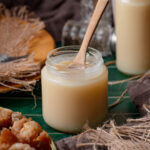
How to Render Lard (Slow Cooker Dry Rendered)
You're learning the kitchen skill your mama never had to look up, and it pays you back in a jar of lard with nothing in it but clean rendered pork fat. This animal fat carries less saturated fat than butter and more of the monounsaturated fat olive oil gets all the credit for, which is part of why cooks are bringing old world cooking back.
Servings: 48 servings (3-4 cups)
Calories: 256kcal
Equipment
- Fine Mesh Strainer
- cheesecloth
Ingredients
- 3 pounds pork fat cut into 1/2-inch cubes
Instructions
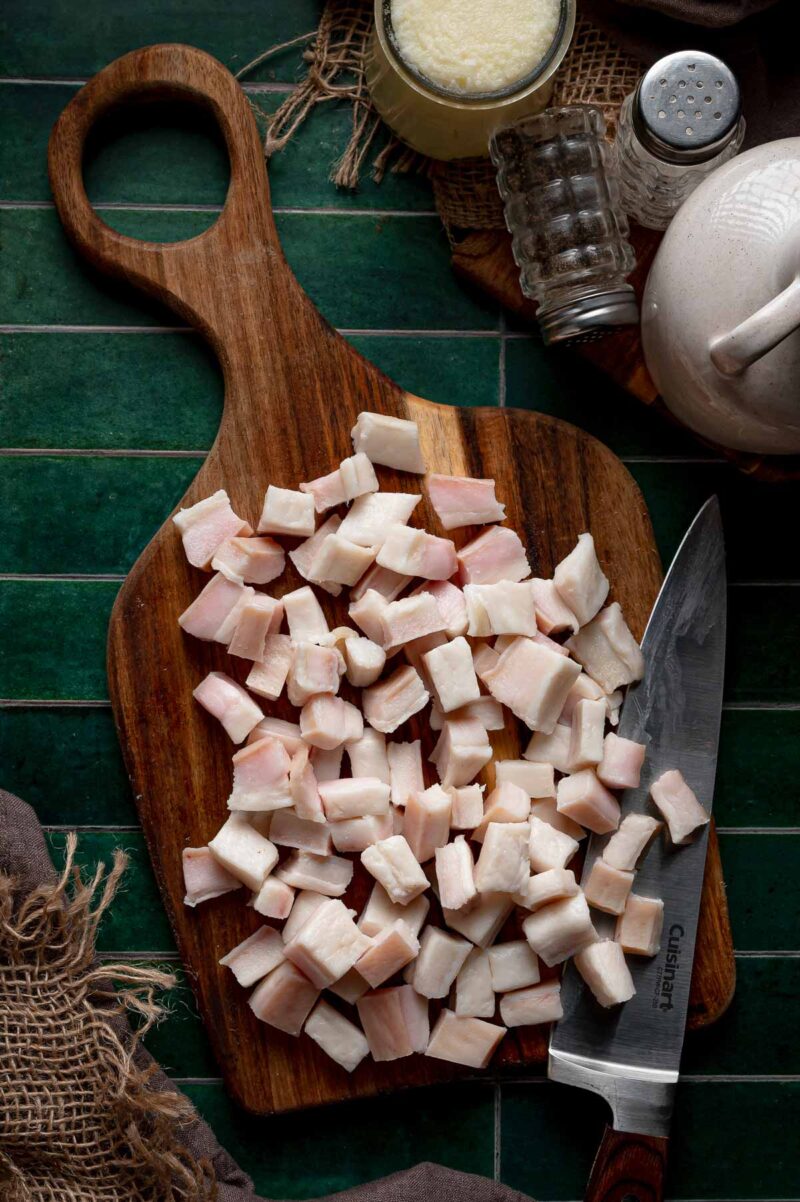
Cube the Fat
- Cut the fat into roughly 1/2-inch cubes. Trim away any large pieces of meat, but small amounts of meat attached to the fat are fine. Keep the pieces fairly uniform so the fat renders at a similar rate.
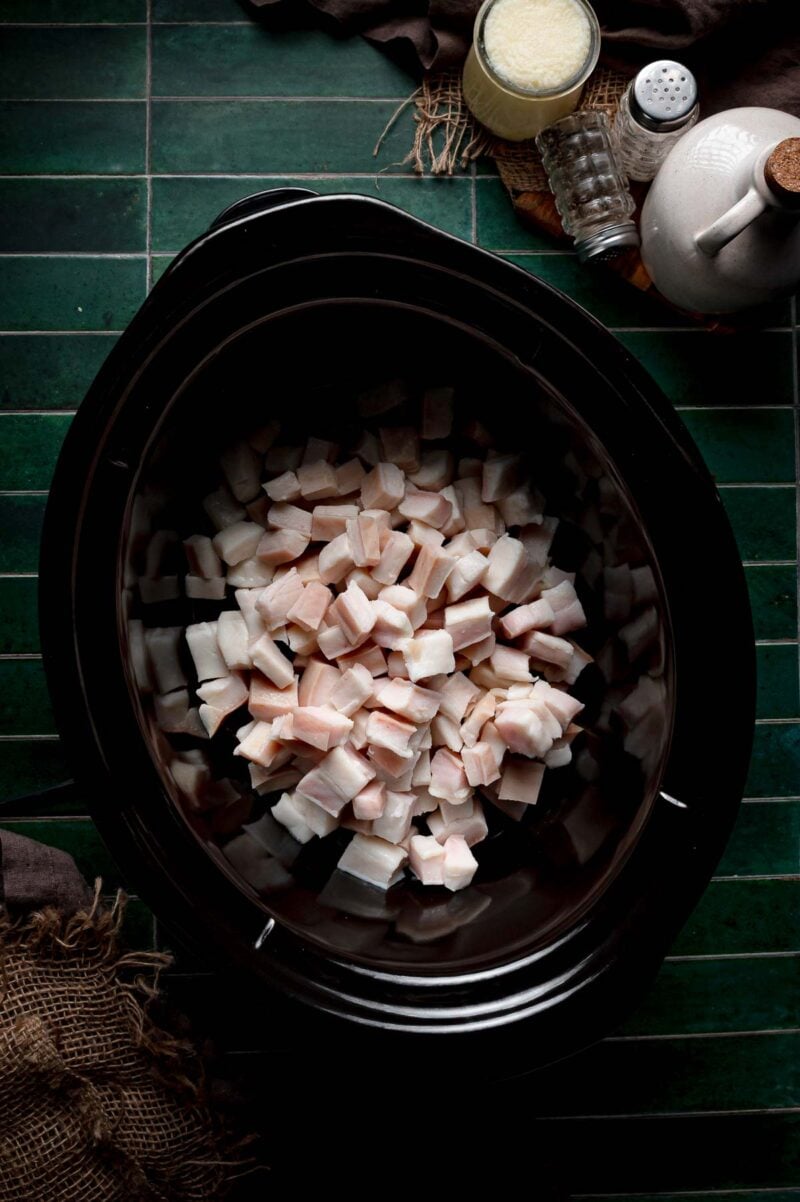
Start the Render
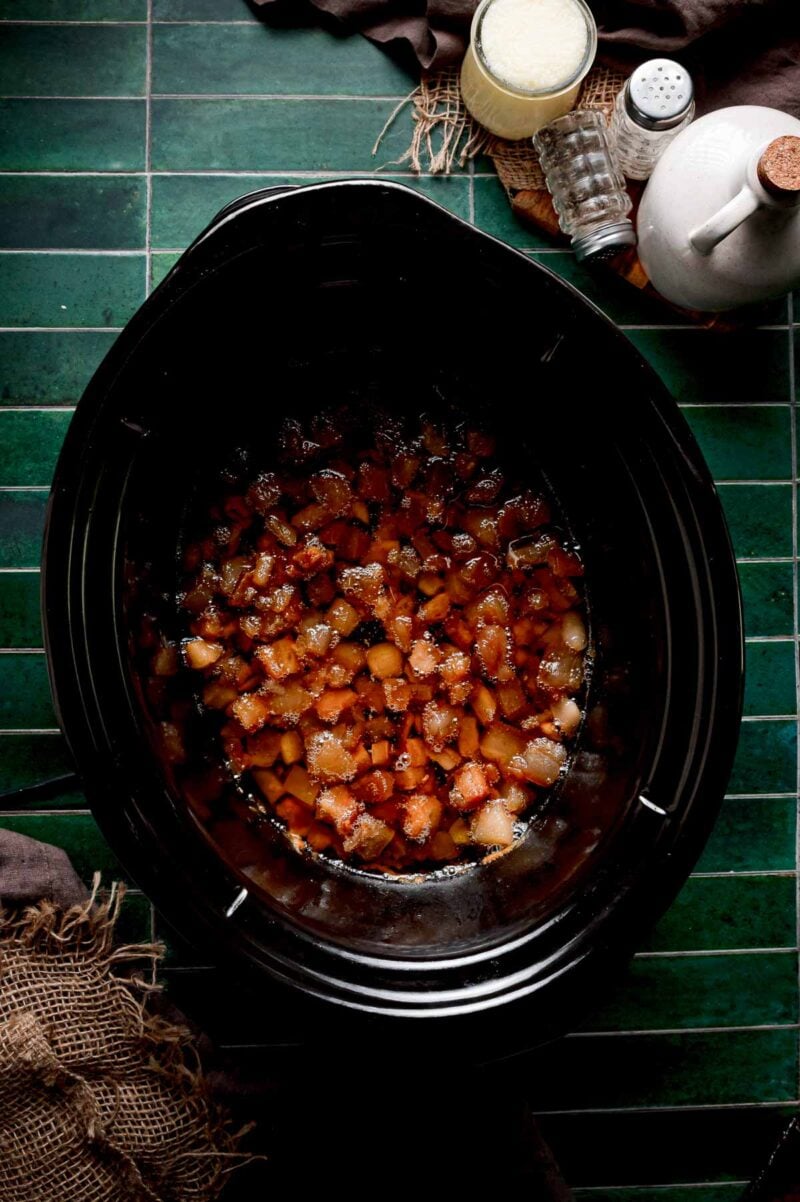
- Add the fat to the slow cooker in an even layer. Cover and cook on low for about 2 hours, until a shallow pool of liquid fat has collected around the pieces.
Stir and Continue
- Stir, scraping along the bottom and edges. Continue cooking on low for another 2 to 4 hours, stirring about once every hour. The pieces will gradually shrink as more liquid fat is released.
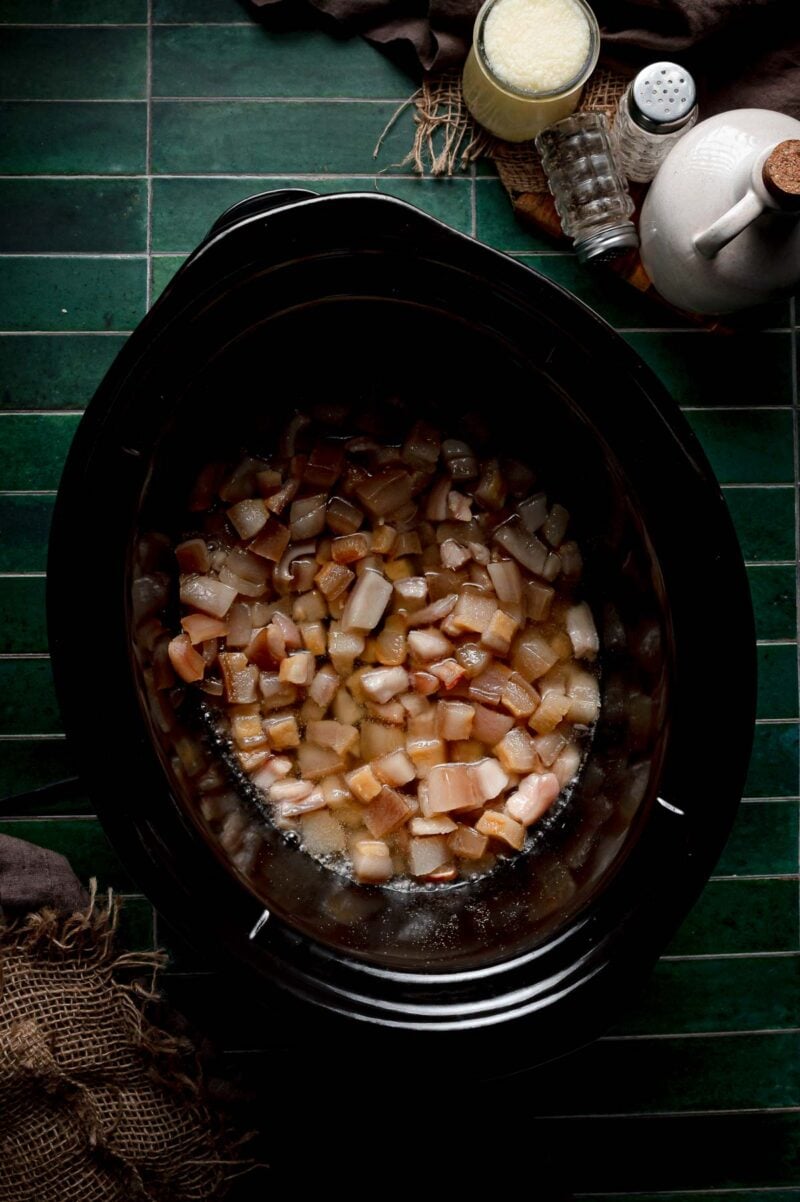
Watch the Final Stage
- Begin checking more frequently once the solids have noticeably shrunk. Stop cooking when most of the liquid fat has been released and the remaining solids are small and lightly golden.
Strain
- Line a fine mesh strainer with cheesecloth and set it over a heat safe container. Pour the fat through the strainer.
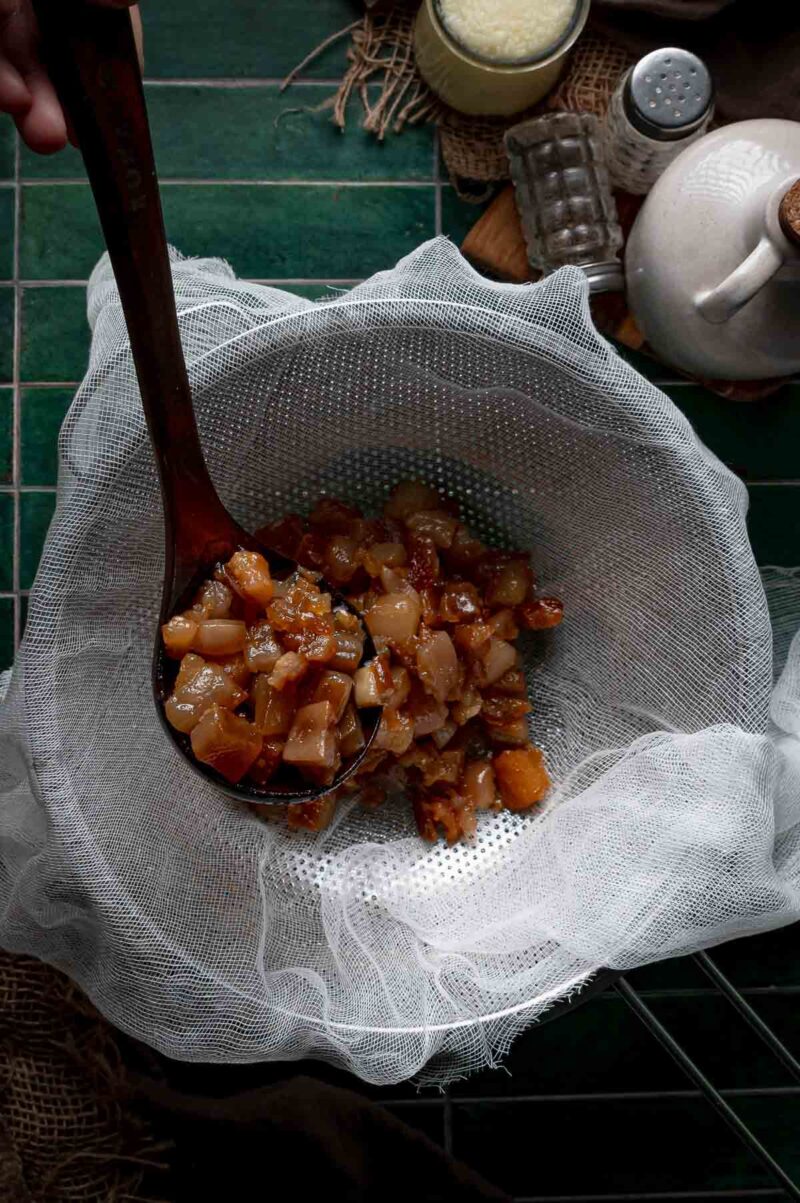
- Let it drain naturally without pressing hard on the solids, which can push small browned particles into the lard.
Jar and Chill
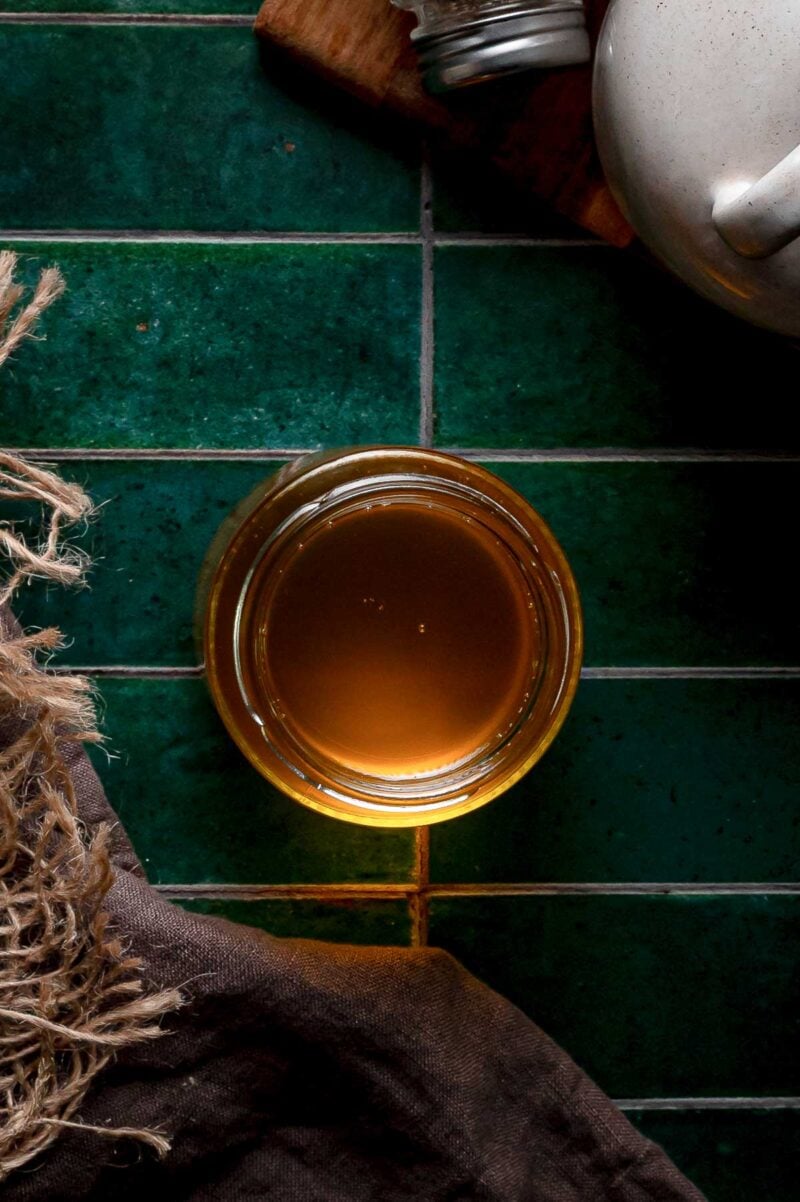
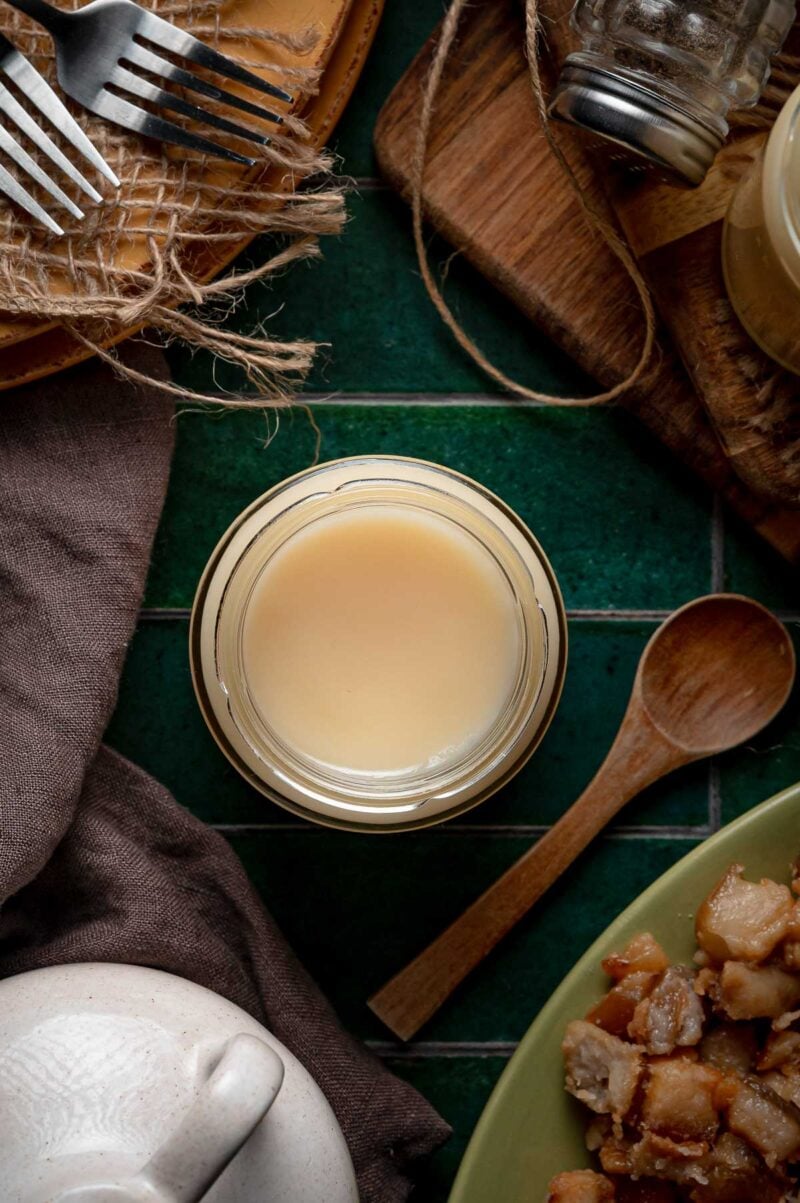
- Let the fat cool at room temperature until it's no longer hot, then pour it into clean, dry glass jars. Refrigerate until completely chilled and solidified.
Notes
- Freeze the fat for 30 to 45 minutes before cubing. Cold fat cuts cleanly into half-inch cubes; at room temperature, it smears and turns a 20-minute prep into an hour.
- Types of pork fat you can use: leaf fat, fat back, pork belly fat trimmings. Leaf fat is the mildest and best for pastry; fat back is the all-purpose choice.
- Keep the lid cracked after the first stir. A fully sealed lid drips condensation back into the fat, and water is exactly what shortens lard's shelf life.
- Slow cookers vary. If the solids start browning within the first 3 hours, yours runs hot: drop to the warm setting if it has one, and stir more often.
- Do not switch the slow cooker to high to speed things up. Higher heat browns the solids before all the fat has melted, giving darker lard and a lower yield.
- Do not wait for every solid piece to become fully crisp. By that point, the lard is already darker and more strongly flavored than you want.
- Unevenly sized pieces render unevenly. Half-inch cubes keep the small pieces from browning before the large ones have given up their fat.
- Trim large sections of lean pork before rendering. Small bits still attached are fine; large pieces darken the lard.
- The fat is hot enough to burn you when you strain it. Set the lined strainer over a wide, stable, heat-safe container and pour slowly. Double the cheesecloth.
- Cloudy warm lard is normal. Tiny particles and residual moisture make fresh fat look hazy; fine straining and a complete chill clear it up.
- Store completely cooled lard in a clean, airtight container in the refrigerator for up to a year. Always use a clean, dry utensil to avoid introducing moisture, and keep water out of the jars.
- For longer storage, portion the lard into freezer-safe containers and freeze for up to 2 years.
- Discard lard that develops a rancid, sour, or stale odor. Properly rendered fresh lard smells clean and mild.
- Make cracklings from the leftover solids: skillet over medium-low heat, stirring frequently, until deeply golden and crisp. Drain and season while hot. Strain and save the extra fat separately.
- Warm lard is amber and see-through. It turns opaque and pale as it chills, which takes about 4 hours in the fridge or overnight. The color change is the render finishing, not something going wrong.
- Ask the butcher for 3 pounds of fat and have two clean pint jars dry and ready. That is what this yields.
- The browned bits left in the cheesecloth are cracklings, not waste. Crisp them in a skillet and salt them while hot.
Nutrition
Serving: 1serving | Calories: 256kcal | Fat: 28g | Saturated Fat: 11g | Polyunsaturated Fat: 3g | Monounsaturated Fat: 13g | Cholesterol: 27mg