Hot to Render Beef Tallow (Wet Render)
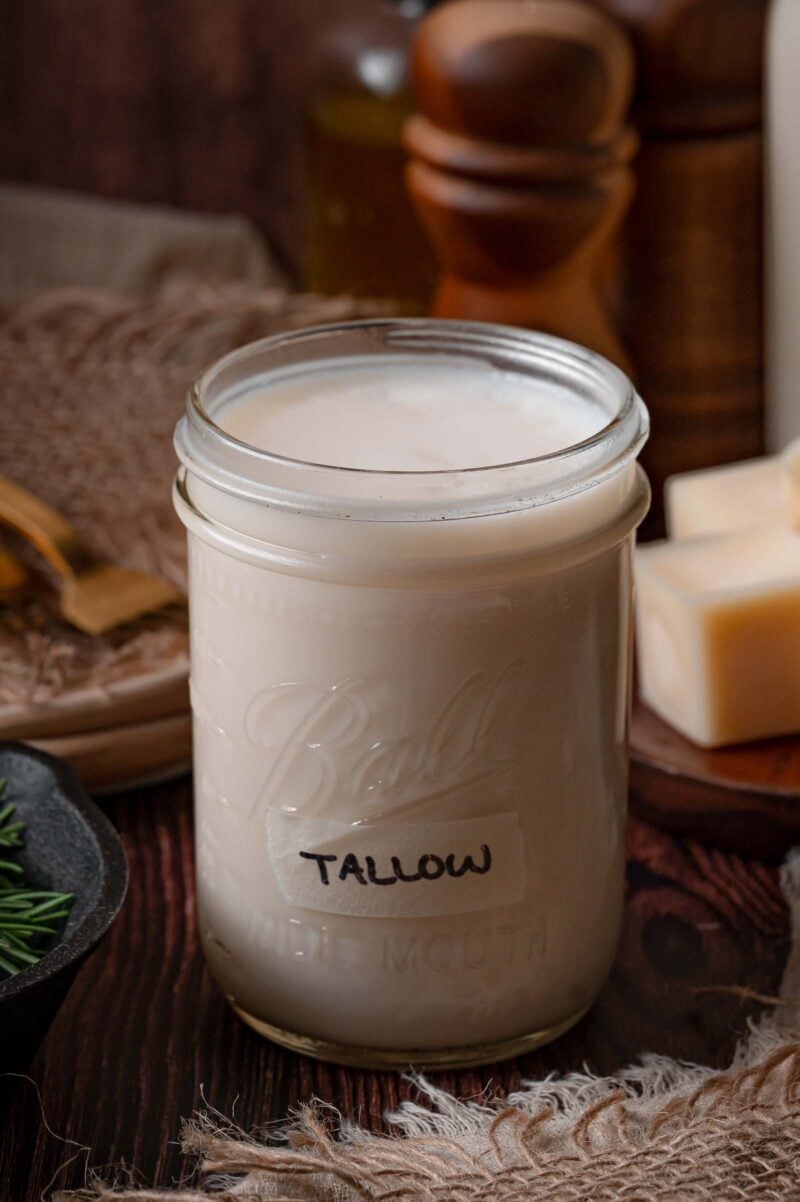
You are about to make the fat that gave diner fries their reputation, out of scraps your butcher hands over for almost nothing. Two and a half hours of low heat and you have a jar of clean white tallow that keeps for a year.
Servings: 48 servings (about 3 to 4 cups, one serving is a ~tablespoon)
Calories: 242kcal
Equipment
- Fine Mesh Strainer
- cheesecloth
- Heat safe bowl or large measuring cup
- Wide mouth glass canning jars
- Thermapen instant read thermometer
- Silicone mold or small containers (optional, for portioning)
Ingredients
- 3 pounds beef fat trimmings preferably brisket, chuck, rib, or other firm exterior fat
- 1/2 cup water
Instructions
Trim and Chop
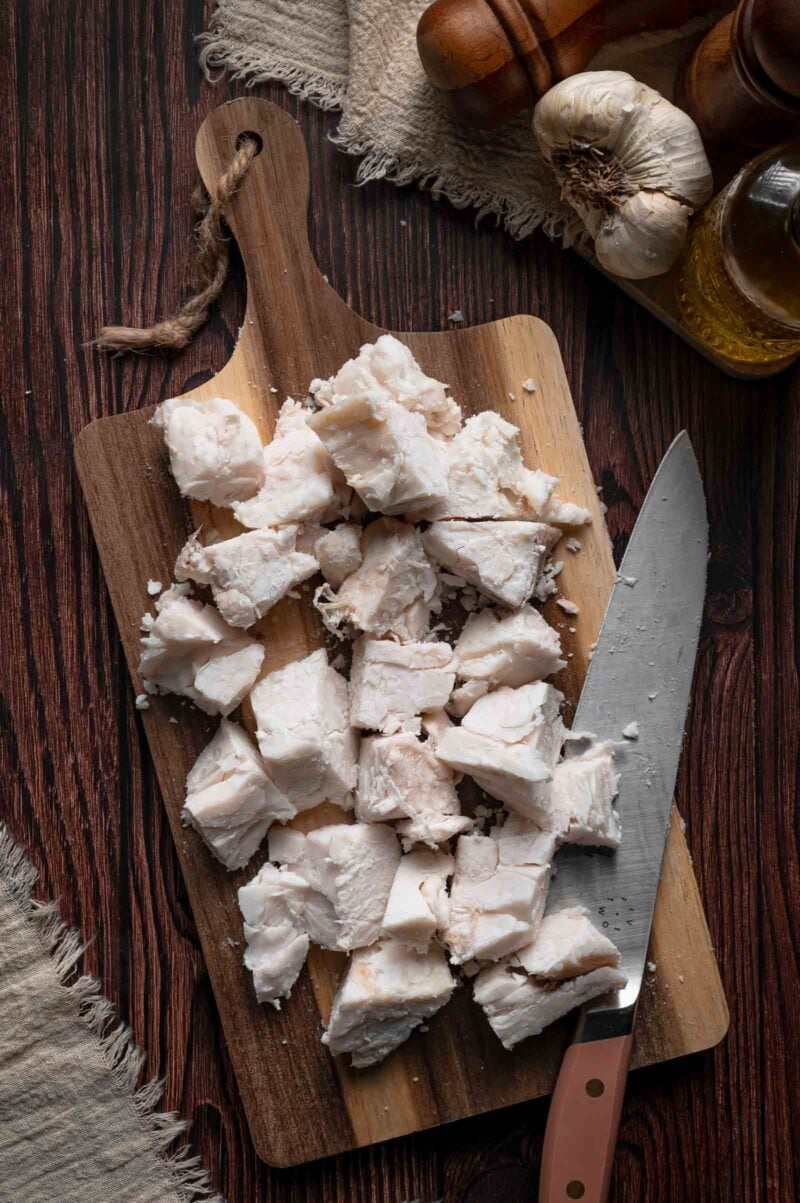
- Trim the fat, removing as much attached meat and tough tissue as possible. Cut the fat into pieces about 1/2 inch in size so it melts at an even rate.
Start the Render
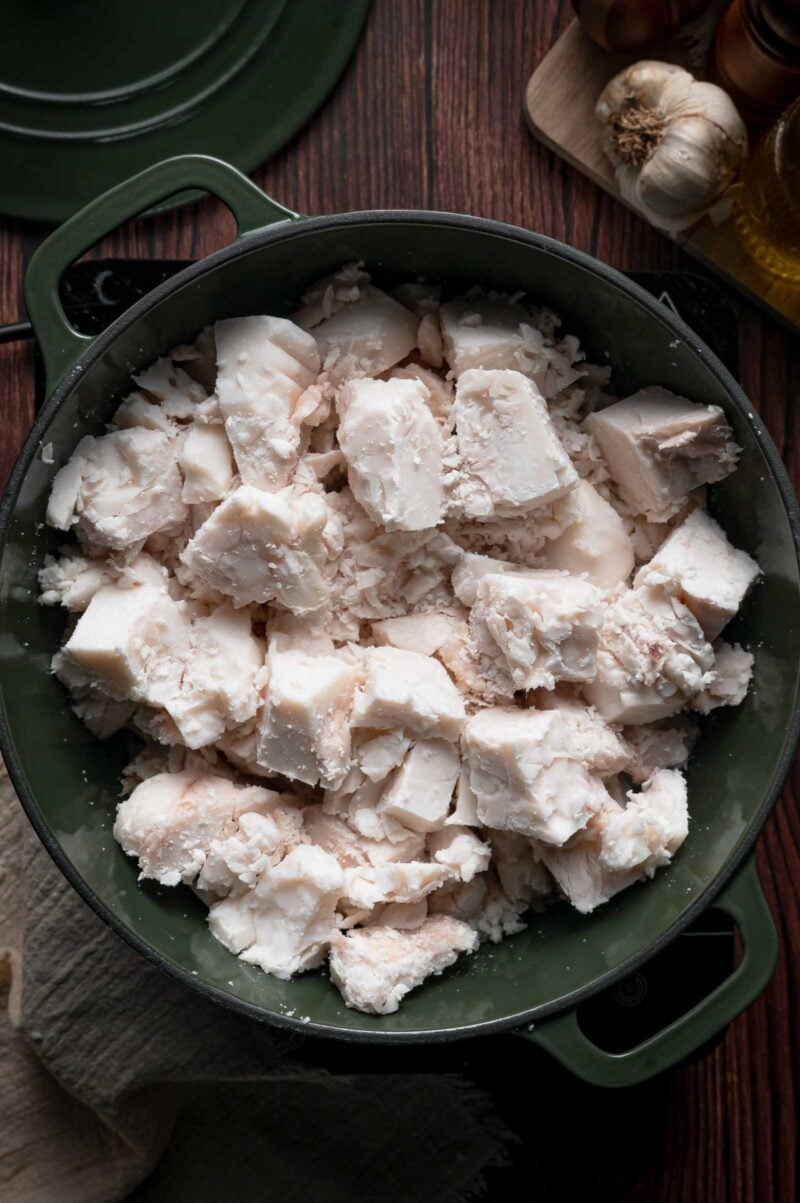
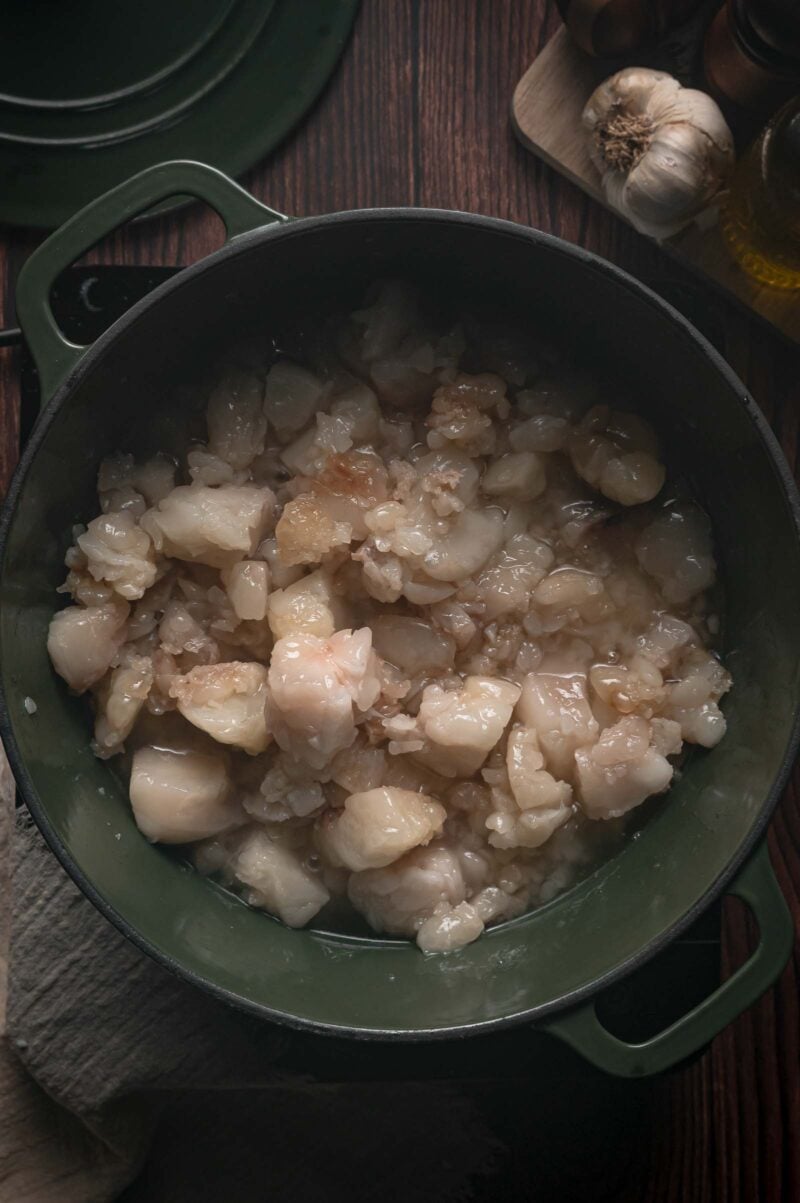
- Pour the water into a Dutch oven and add the chopped beef fat. Arrange the pieces across the bottom of the pot and set it over low heat.
The First 30 Minutes
- Cook uncovered for the first 30 minutes, stirring and scraping the bottom of the pot every 5 to 10 minutes. The water will help protect the fat from browning while the first layer of tallow begins to melt.
The Long Render
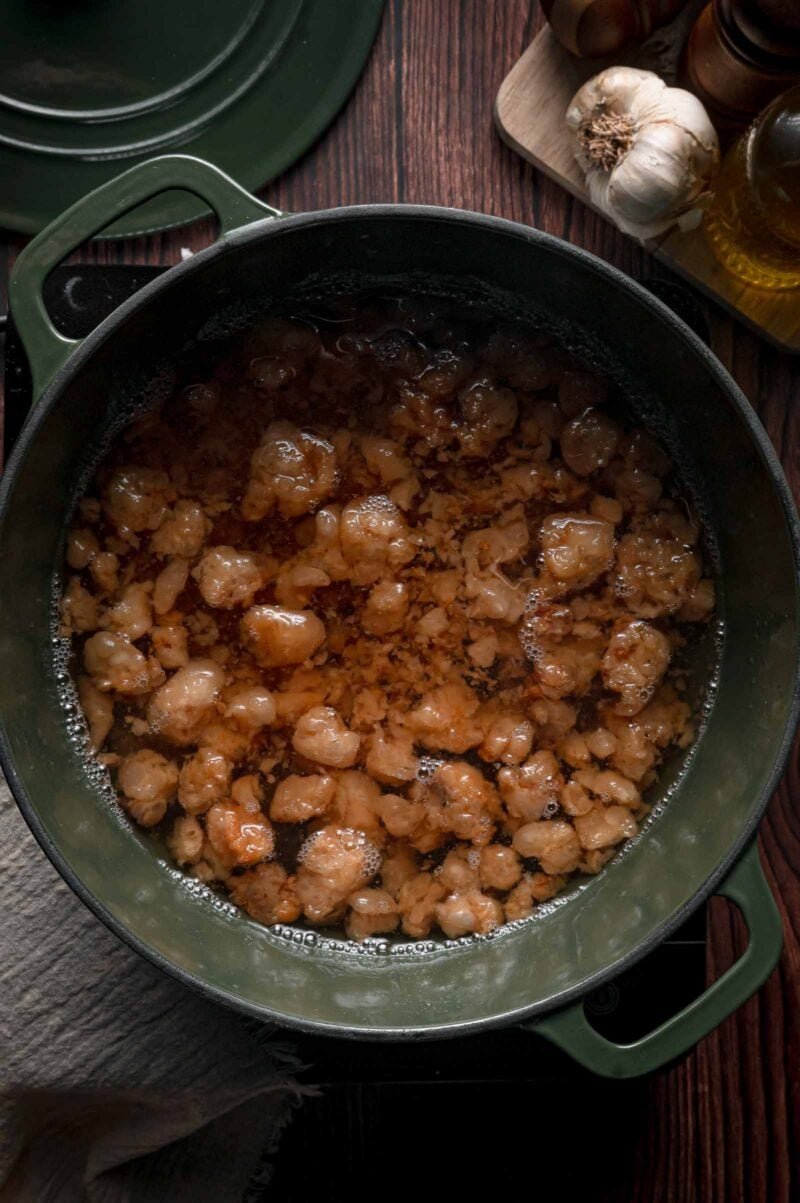
- Continue rendering over low heat once a noticeable amount of liquid fat has accumulated. Stir about every 20 to 30 minutes, keeping the heat low enough that the fat bubbles gently rather than fries or browns quickly.
The Final Stretch
- Monitor the pot more frequently toward the end of cooking. Stir about every 10 minutes.
Pull It
- Remove the pot from the heat when the remaining pieces are greatly reduced in size and lightly golden. Don't continue cooking until the solids are dark brown, because that will give the tallow a stronger roasted beef flavor.
Strain
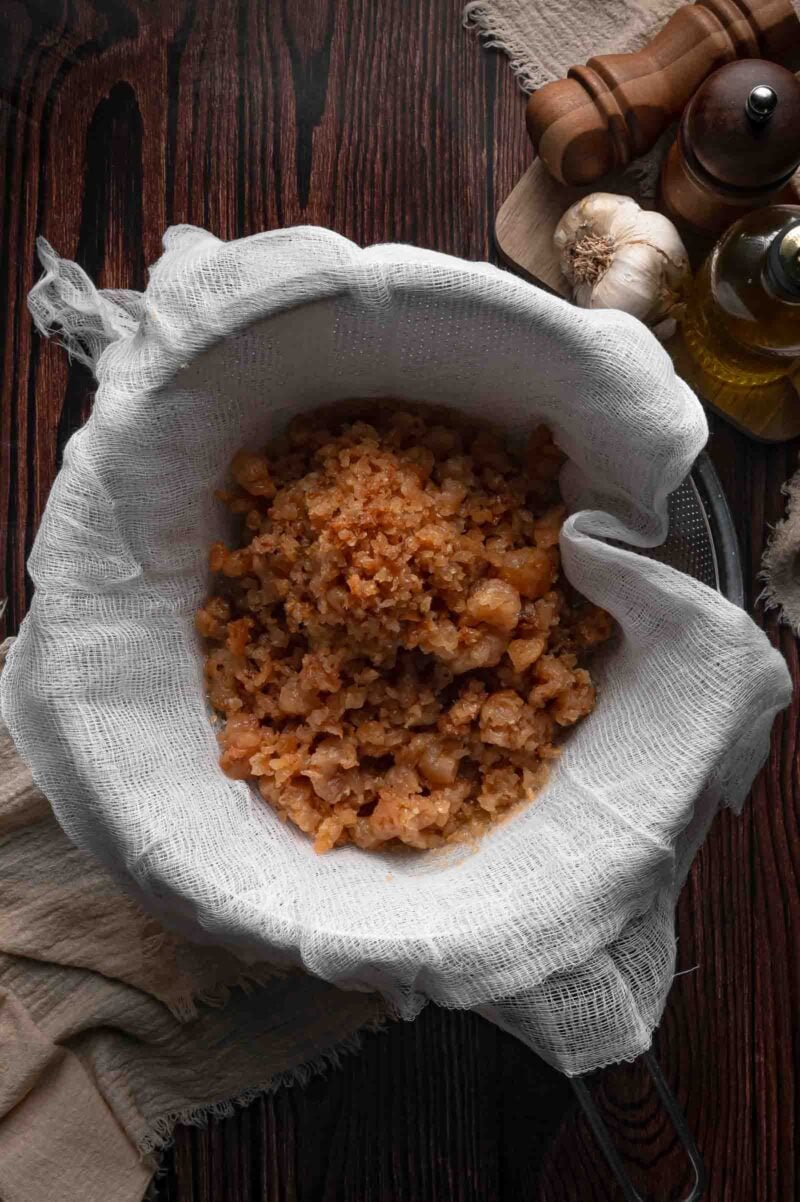
- Place a double layer of cheesecloth inside a fine mesh strainer and over a heat safe bowl or measuring cup. Slowly strain the tallow, allowing it to drain without squeezing the solids.
Jar It
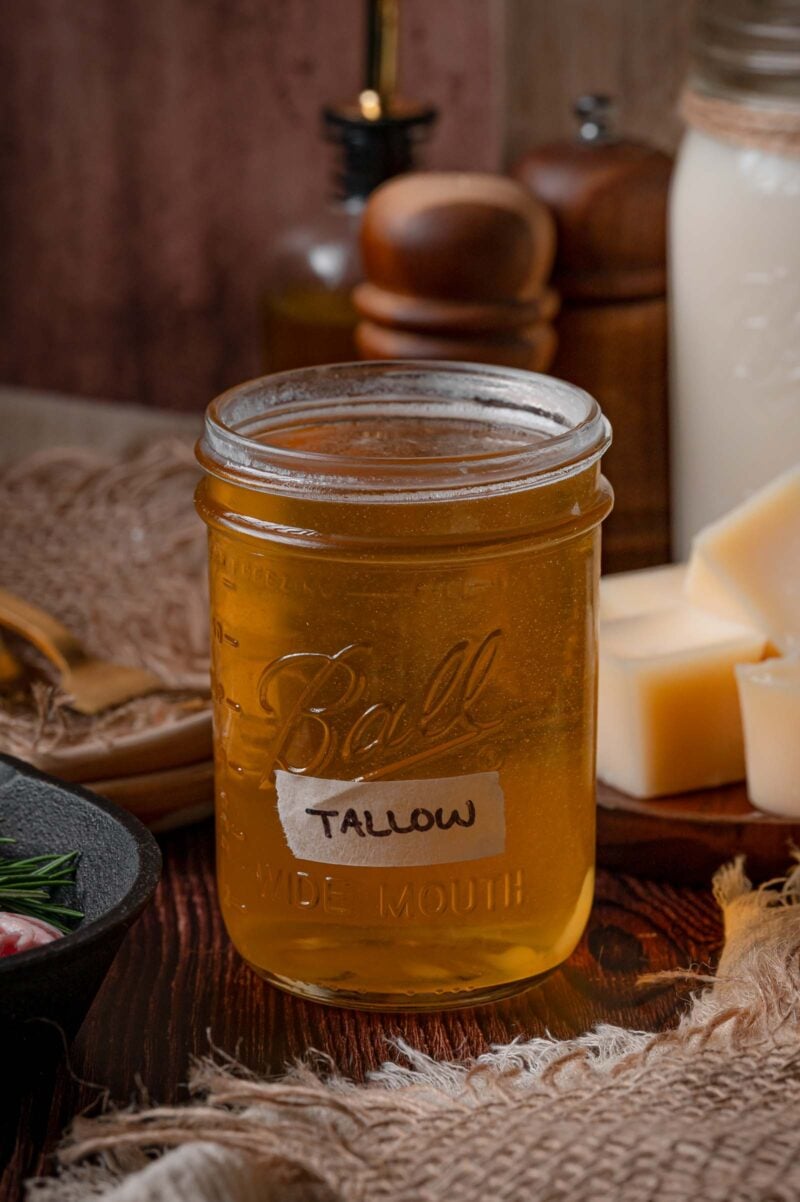
- Transfer the strained tallow to clean, completely dry glass jars while it is still liquid, leaving about 1/2 inch of headspace.
Cool and Seal
- Cool the jars uncovered until the tallow is completely cool, then seal and refrigerate.
Notes
- What to look for in the trimmings: use hard fat, not soft fat. Hard fat is the dense white fat from the outside of the animal, the brisket fat cap, the cap over a chuck roll or rib, and suet from around the kidneys. Cold from the fridge, it is stiff and wax-like, and a piece cracks when you fold it in half. Soft seam fat, the greasy yellowish fat from between the muscles, bends and smears on your fingers instead is not what you want to use for this and can be discarded. However, yellow fat from grass-fed beef is not the same as soft fat and renders hard and clean.
- Store tallow in clean, airtight jars in the refrigerator for up to a year. Always use a clean, dry utensil when removing tallow from the jar.
- Freeze tallow for up to 2 years. Portioning it into small containers or silicone molds makes it easier to remove only what you need.
- Fat that begins sticking during the first part of rendering needs more movement. Scrape across the bottom and into the corners of the Dutch oven frequently until enough liquid tallow has accumulated to surround the pieces.
- Dark or strongly flavored tallow usually comes from excessive browning. Keep the temperature low and remove the pot from the heat while the solids are still light golden.
- Too much meat attached to the fat can produce darker tallow with a stronger beef flavor. Trim away large lean sections before chopping the fat.
- Large chunks take much longer to release their fat. Cutting the pieces to a fairly consistent 1/2 inch exposes more surface area and helps the batch render evenly.
- Moisture inside the storage jars can shorten the shelf life. Clean the jars before beginning the recipe and make sure they're completely dry.
- Don't cover the Dutch oven while the fat renders. The water and natural moisture in the beef fat need to escape as steam rather than collect on the lid and drip back into the pot.
Nutrition
Serving: 1servings | Calories: 242kcal | Protein: 0.4g | Fat: 27g | Saturated Fat: 15g | Polyunsaturated Fat: 1g | Monounsaturated Fat: 9g | Cholesterol: 19mg | Sodium: 2mg | Potassium: 5mg | Calcium: 1mg | Iron: 0.05mg