
Cuban Mojo Pork (Slow-Roasted Pork Shoulder)
Cuban mojo pork is garlicky, citrus-soaked, fall-apart tender pork shoulder that does most of the work while you wait. One marinade, one pan, and you walk away with enough delicious, shreddable pork to feed a crowd... or yourself, three different ways, all week. Best made a day ahead; the flavor deepens overnight and reheats better than most roasts.
Servings: 8 servings
Calories: 242kcal
Equipment
- Large mixing bowl or measuring cup
- Whisk
- Zip-top bag or non-reactive dish
- dutch oven or roasting pan with lid
- Aluminum foil
- tongs or meat forks
Ingredients
Mojo Marinade
- 1 cup fresh orange juice
- ¼ cup fresh lime juice
- ¼ cup olive oil
- 8 cloves garlic minced
- 1½ teaspoons ground cumin
- 1 teaspoon dried oregano
- 1 teaspoon kosher salt
- ½ teaspoon black pepper
- ½ teaspoon red pepper flakes optional
Pork
- 3 to 4 lb pork shoulder or pork butt
- 1 medium onion sliced
- Salt and black pepper to taste
Instructions
Make the marinade
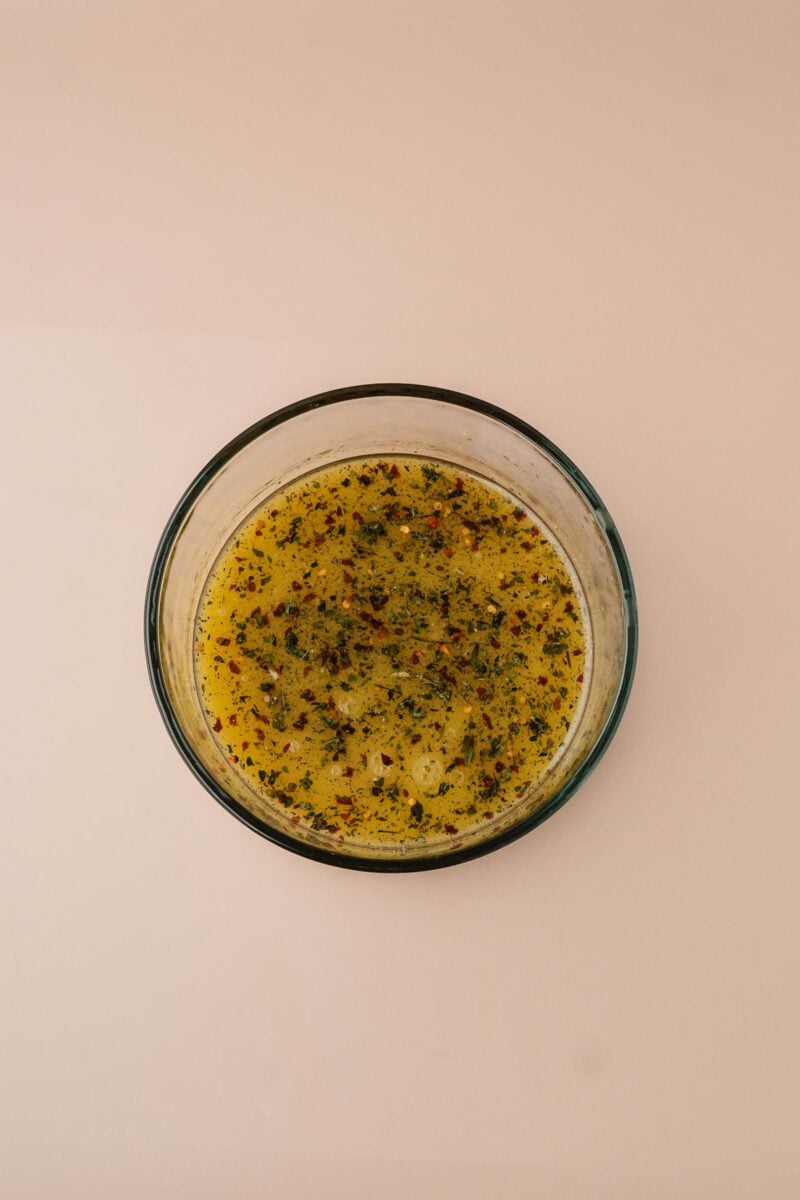
- Whisk together the orange juice, lime juice, olive oil, garlic, cumin, oregano, salt, pepper, and red pepper flakes until fully combined.
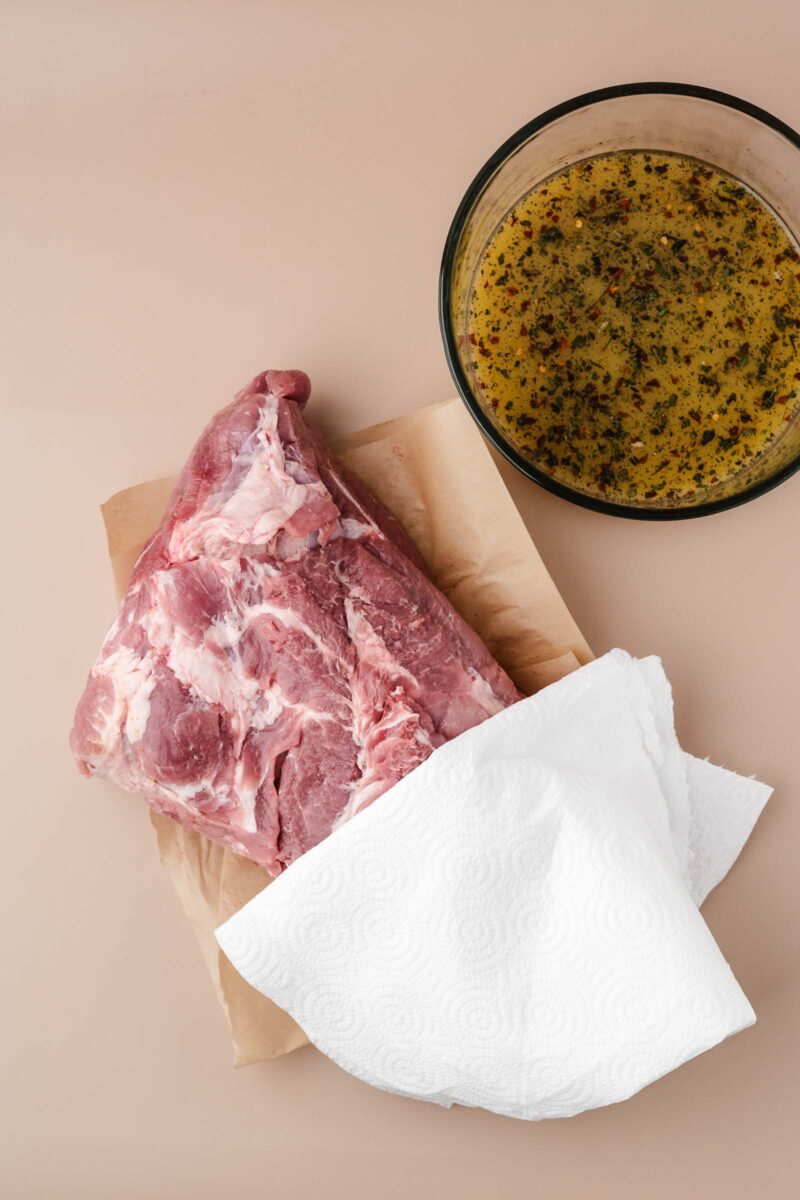
- Pat the pork dry with paper towels. Use a knife to cut shallow slits across the surface to help the marinade penetrate. Season lightly with salt and pepper.
Marinate
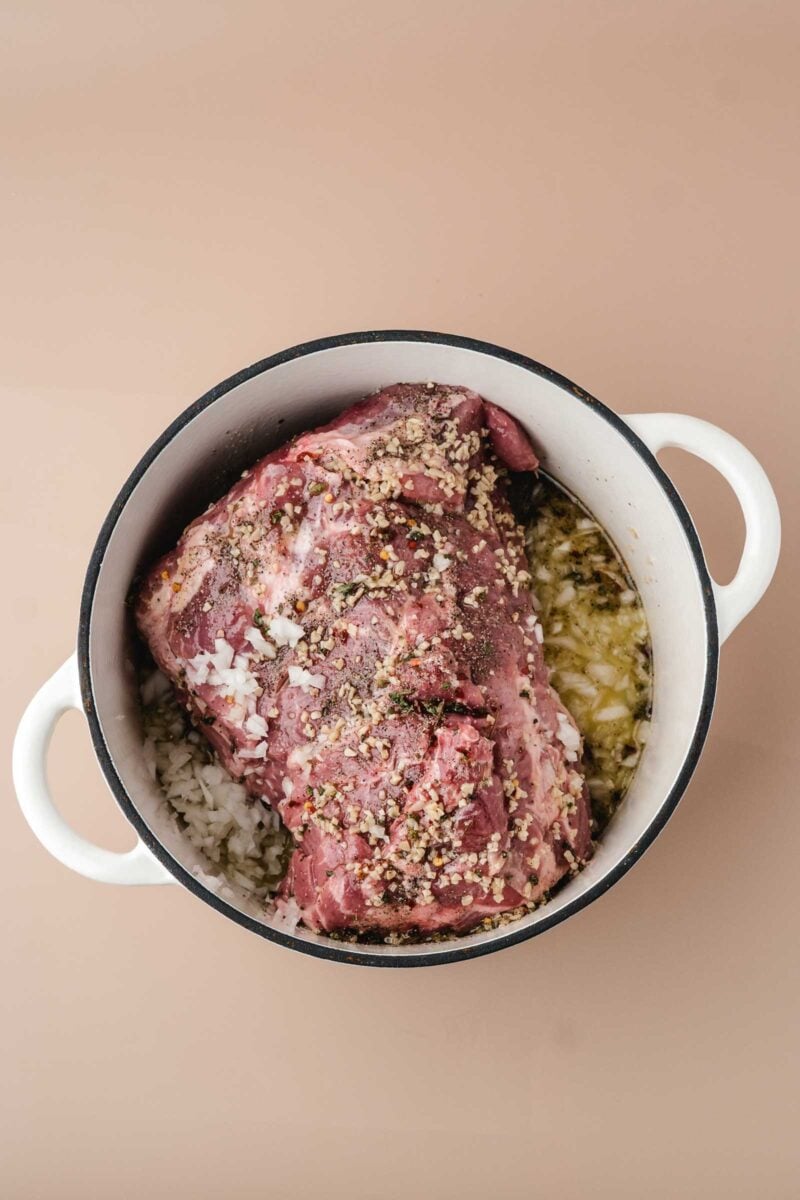
- Place the pork in a zip-top bag or dish. Pour the marinade over it and add sliced onions. Cover and refrigerate at least 8 hours, preferably overnight.
Roast low and slow
- Preheat oven to 325°F. Transfer pork, onions, and marinade to a Dutch oven or roasting pan. Cover tightly and roast for 3 to 3½ hours.
- Cook until the pork reaches 195°F to 205°F internal and feels very tender when pierced with a fork.
Crisp the edges
- Increase oven temperature to 425°F. Uncover and roast for 20 to 30 minutes, basting once or twice, until the edges are browned and caramelized.
Rest and shred
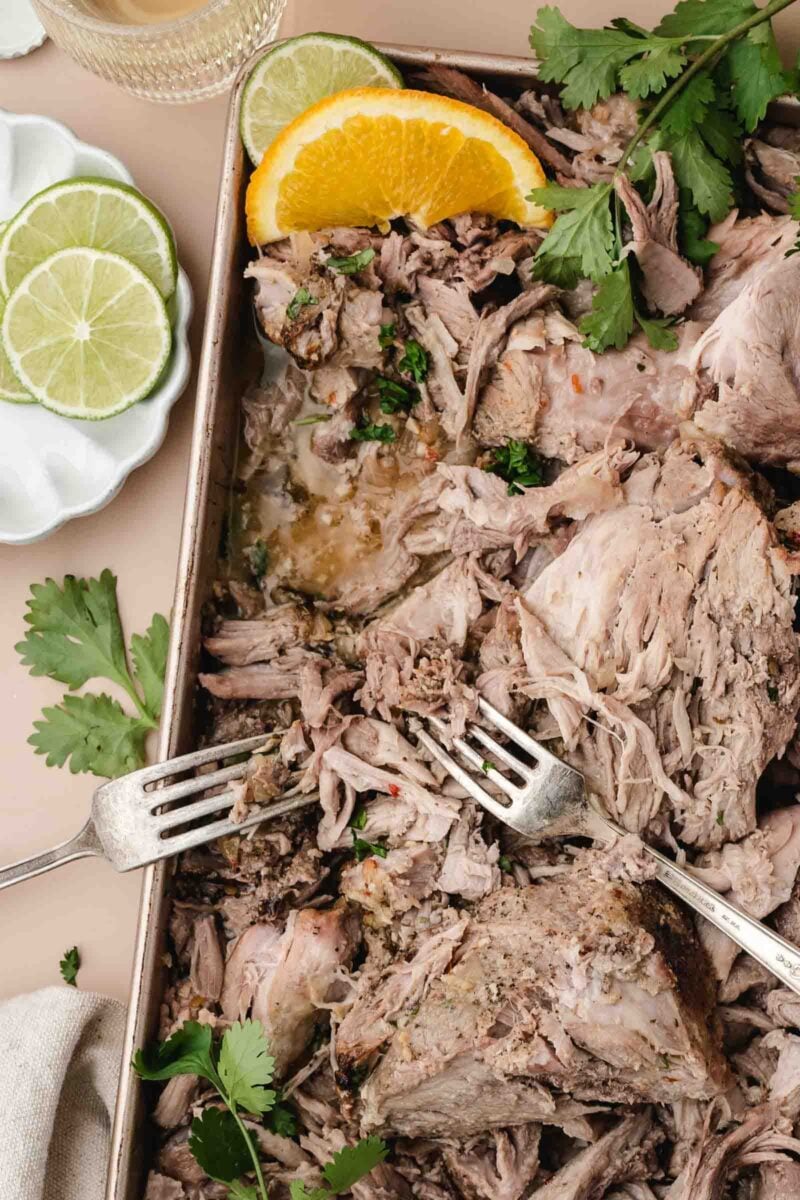
- Let the pork rest 15 minutes, then shred using forks or tongs. Toss with the pan juices. The pork is ready when it shreds easily with two forks without resistance.
Notes
- Plan for about ½ pound per person as a main dish, or stretch further for tacos, bowls, or sandwiches.
- Fresh citrus makes a noticeable difference - skip the bottled juice.
- Pork shoulder is ideal for shredding due to its fat and collagen content.
- Cook to tenderness, not just time; look for that 195–205°F range for the most tender pork.
- For extra-crispy bits, spread the shredded pork on a sheet pan and broil for 2–3 minutes.
- Save the pan juices for reheating; this keeps leftovers from drying out.
For the best texture, cook until the pork hits 195–205°F internal and shreds easily—this is when the collagen has fully broken down, and the meat turns tender instead of chewy.
Nutrition
Serving: 1serving | Calories: 242kcal | Carbohydrates: 7g | Protein: 21g | Fat: 14g | Saturated Fat: 4g | Polyunsaturated Fat: 2g | Monounsaturated Fat: 8g | Cholesterol: 70mg | Sodium: 374mg | Potassium: 471mg | Fiber: 1g | Sugar: 3g | Vitamin A: 119IU | Vitamin C: 21mg | Calcium: 36mg | Iron: 2mg