Braised Beef Cheeks Recipe
Beef cheeks are what butchers eat for dinner, and after one braise you'll understand why. Low and slow in red wine until the collagen does all the work, wand a trick for turning the the braising liquid into a silky, glossy sauce that you'll pour over everything.
Servings: 6 servings
Calories: 549kcal
Ingredients
- 3 pounds beef cheeks trimmed
- 2 teaspoons kosher salt
- 1 teaspoon black pepper
- 2 tablespoons avocado oil
- 1 medium yellow onion roughly chopped
- 2 celery stalks roughly chopped
- 2 carrots roughly chopped
- 4 garlic cloves minced
- 2 tablespoons tomato paste
- 1 tablespoon Better Than Bouillon beef base
- 1 cup red wine
- 2 cups reduced sodium beef broth
- 4 fresh thyme sprigs
- 2 fresh rosemary sprigs
- 2 bay leaves
- 2 tablespoons cold butter cubed
Instructions
Sear the Beef Cheeks
- Preheat the oven to 325°F.
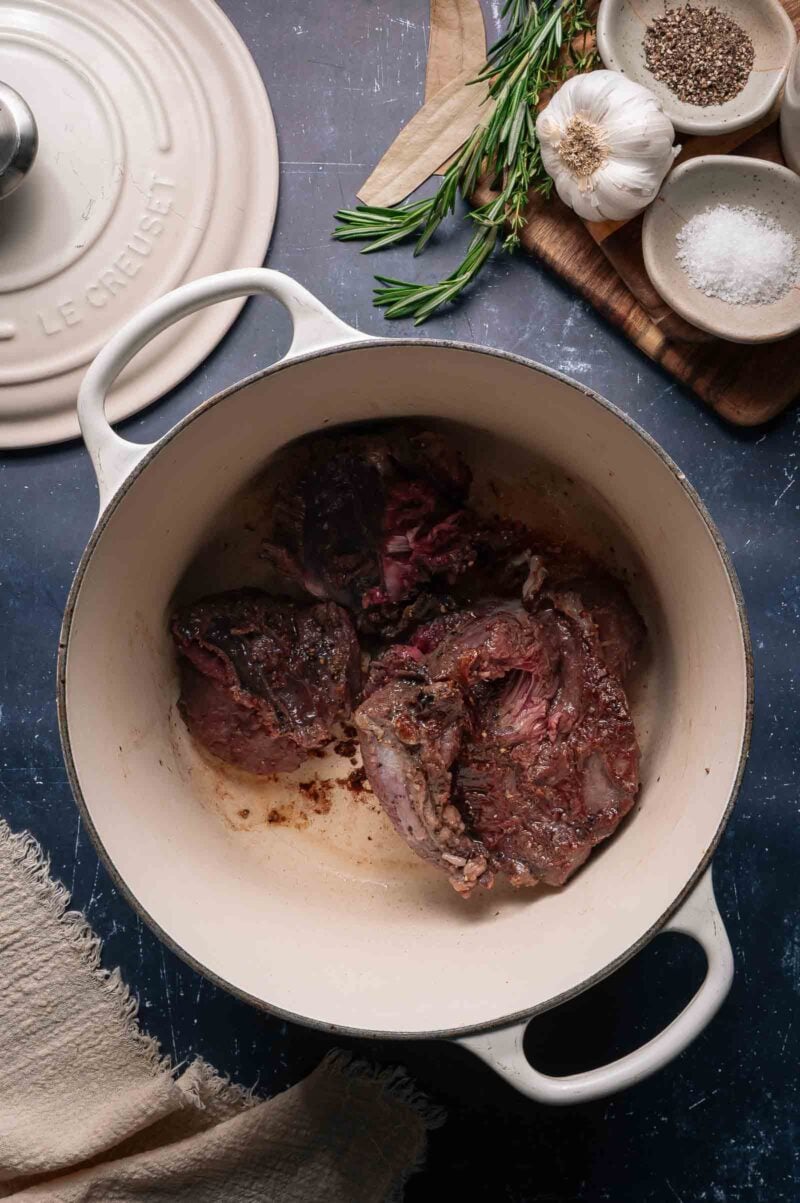
- Trim any thick membrane and excess gristle from the beef cheeks, then pat them dry. Season them with salt and pepper.
- Heat the avocado oil in a Dutch oven over medium high heat. Sear the cheeks until browned, about 3 to 4 minutes per side, working in batches if needed, then transfer them to a plate.
Saute the Veg
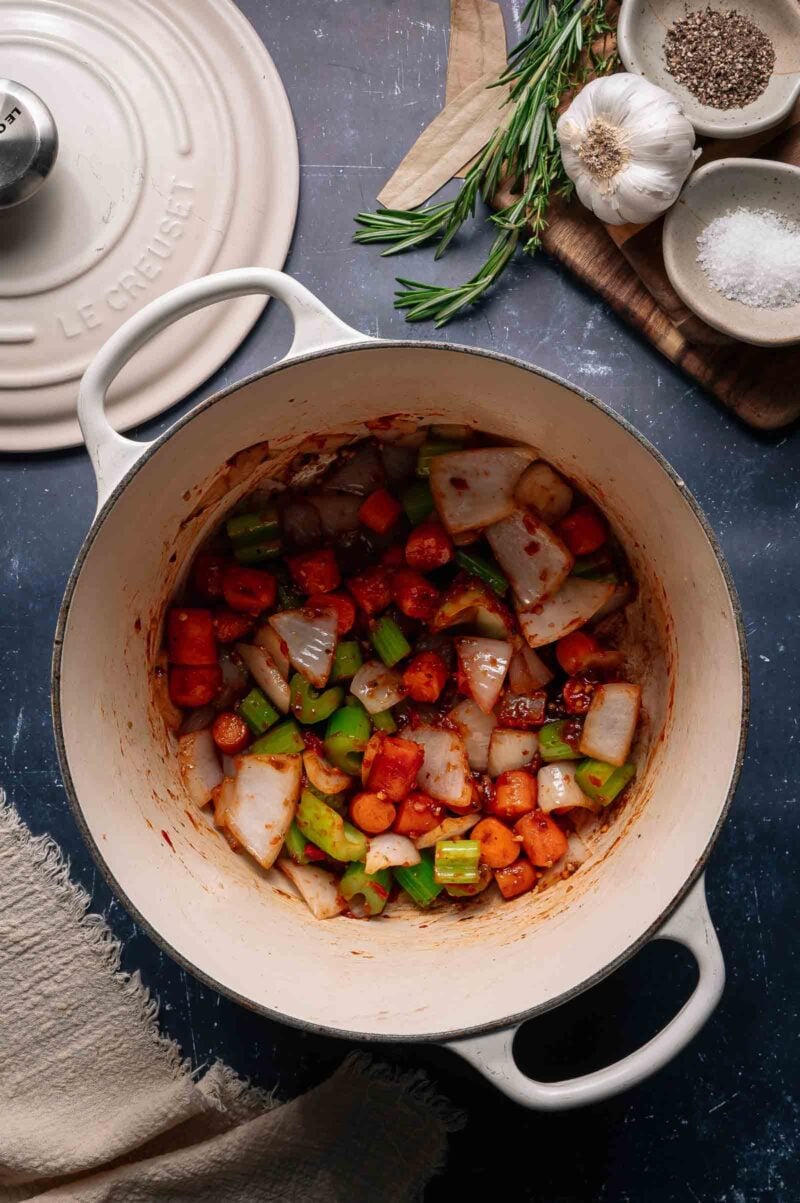
- Lower the heat to medium and add the onion, celery, and carrots. Cook until the vegetables start to soften, about 3 to 4 minutes, stirring and scraping as needed.
- Stir in the garlic and cook until fragrant, about 30 seconds.
- Add the tomato paste and cook for another 30 seconds.
Make the Braising Base
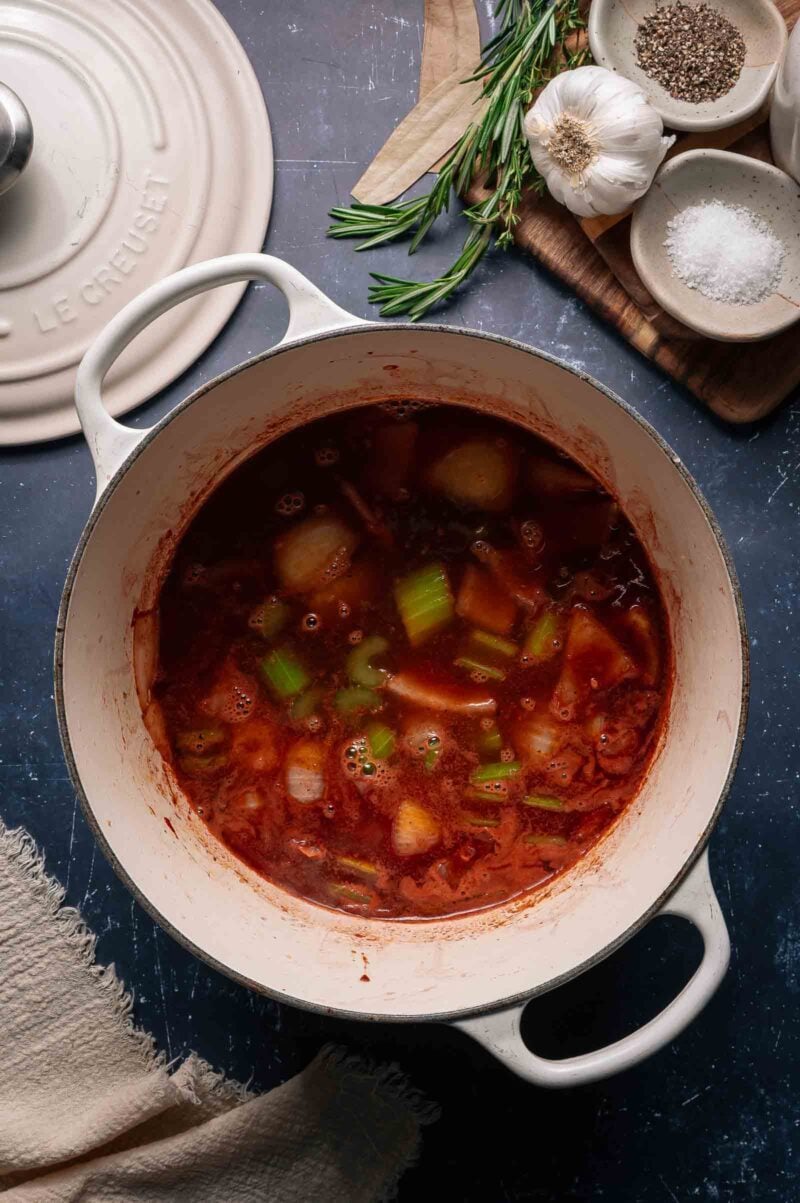
- Stir in the beef base and pour in the red wine and scrape up the browned bits until the bottom of the pot. Simmer until the wine reduces slightly and smells less sharp, about 2 to 3 minutes.
- Pour in the beef broth and bring the liquid to a gentle simmer.
Braise
- Nestle the beef cheeks back into the pot, then tuck in the thyme, rosemary, and bay leaves.
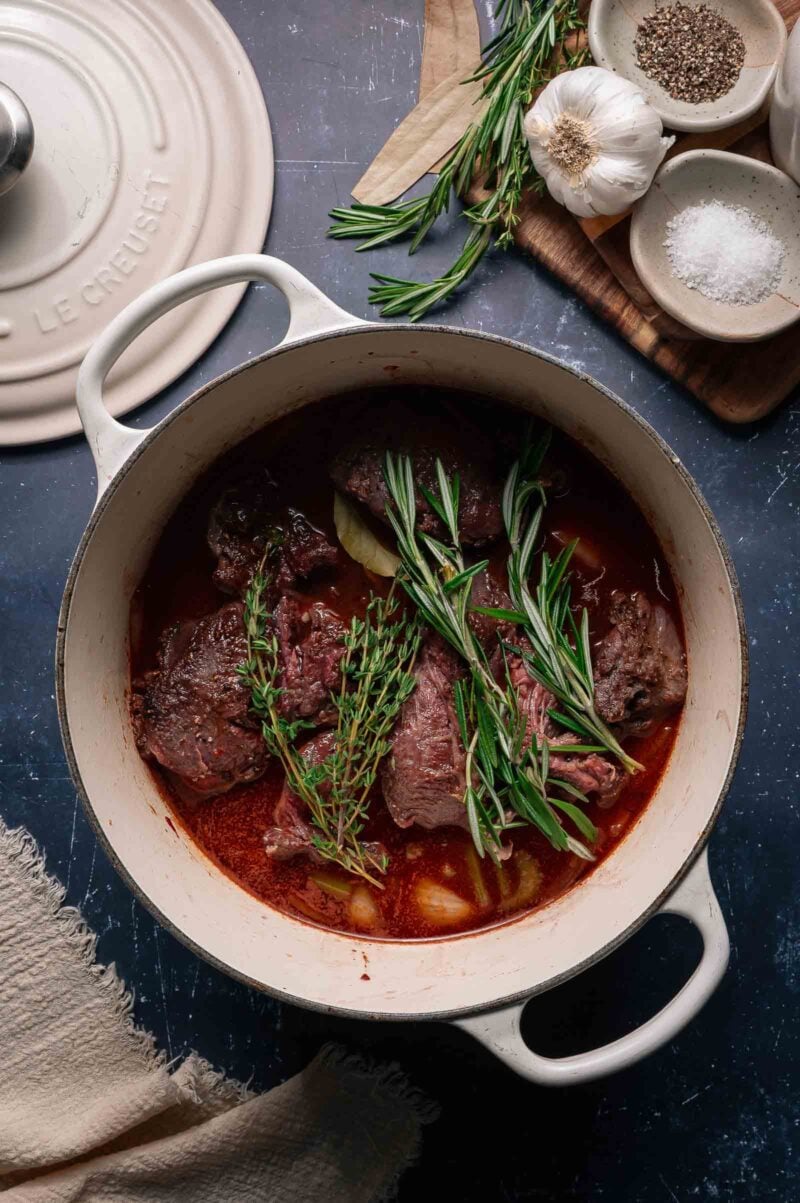
- Cover with the lid and transfer to the oven. Braise until the cheeks are very tender, about 3 hours to 3 hours 30 minutes, checking at the 3 hour mark for tenderness.
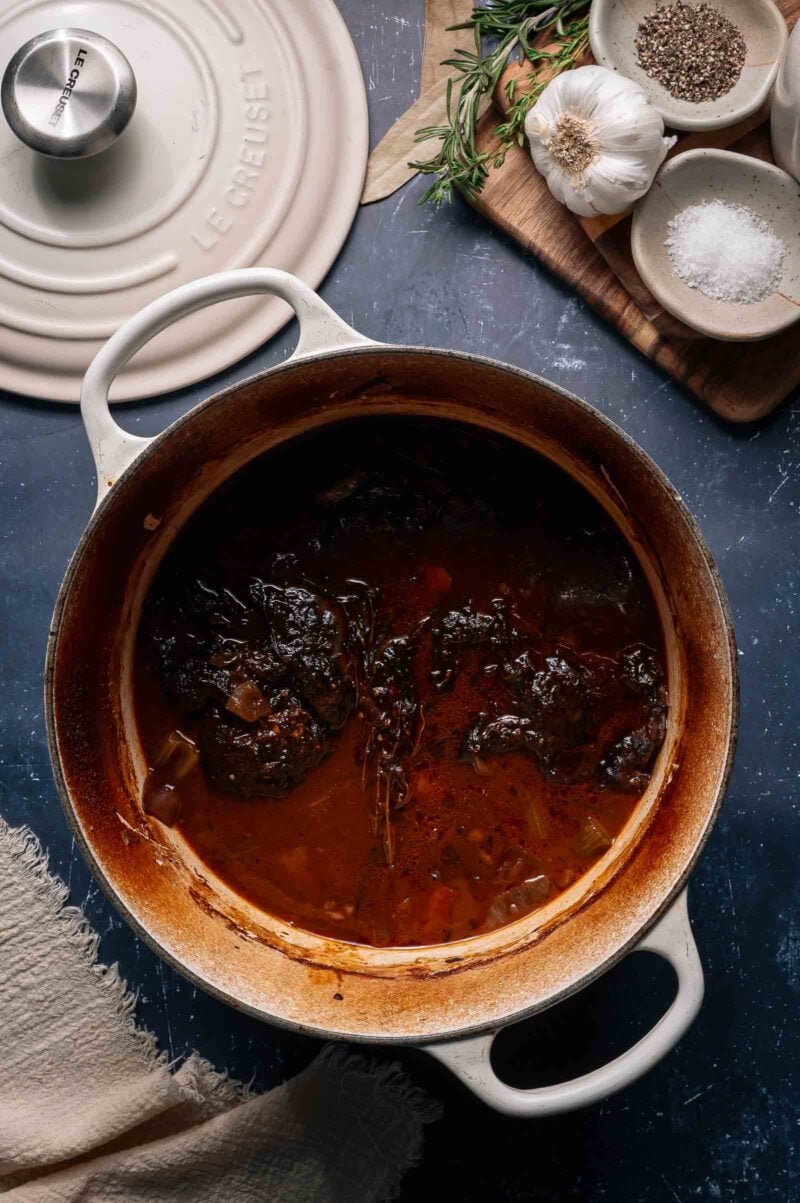
- Transfer the cheeks to a plate.
Reduce the sauce
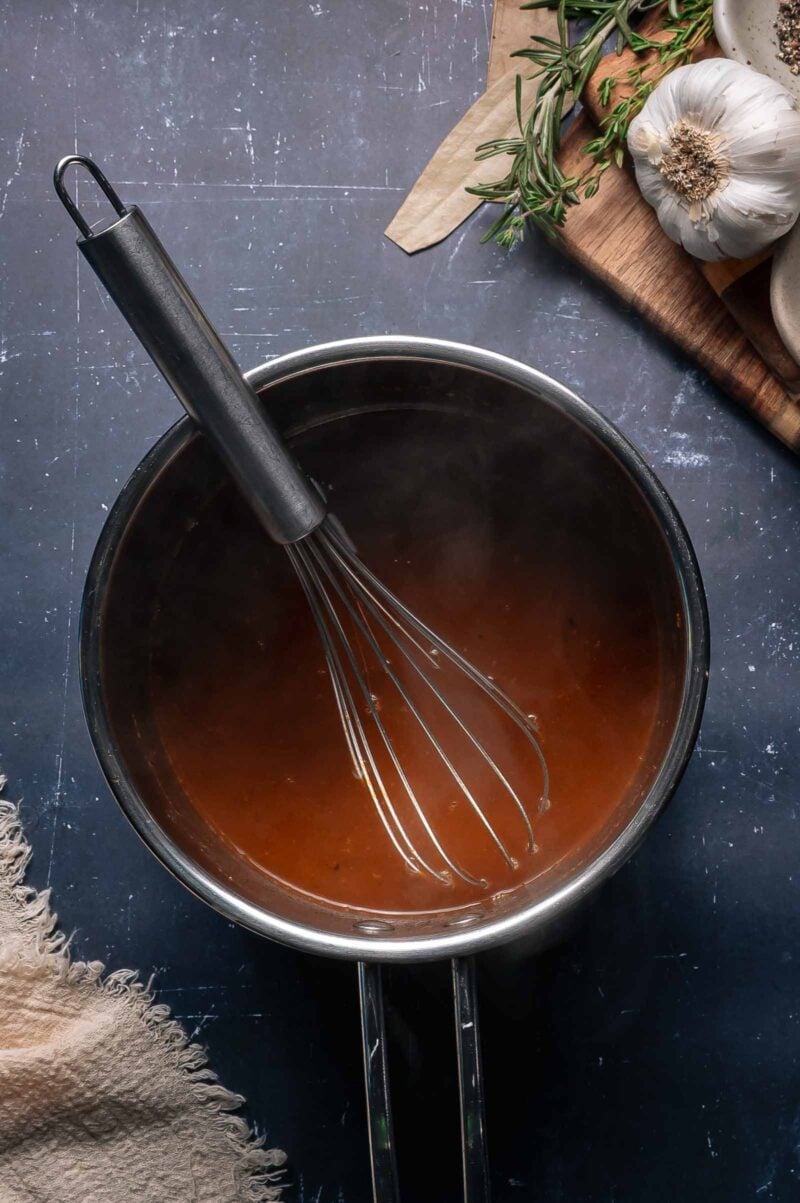
- Strain the liquid into a saucepan, then simmer until it thickens slightly. Remove from the heat.
- Whisk in the cold butter a few cubes at a time until melted and the sauce looks glossy.
Serve
- Serve the beef cheeks with the sauce spooned over the top.
Notes
- Beef cheeks are done when a fork slides in easily with almost no resistance—not when the timer ends.
- If the sauce tastes flat, add a small splash of vinegar before serving to wake it up.
- For a thicker, rustic sauce, blend the cooked vegetables instead of straining.
- Leftovers are even better the next day as the sauce continues to develop.
If the beef still feels tight, it’s not done. Beef cheeks only turn tender after the collagen fully breaks down—give them time and they’ll reward you.
Nutrition
Serving: 1serving | Calories: 549kcal | Carbohydrates: 7g | Protein: 46g | Fat: 35g | Saturated Fat: 14g | Polyunsaturated Fat: 3g | Monounsaturated Fat: 18g | Trans Fat: 2g | Cholesterol: 167mg | Sodium: 1396mg | Potassium: 1137mg | Fiber: 1g | Sugar: 3g | Vitamin A: 3677IU | Vitamin C: 6mg | Calcium: 66mg | Iron: 5mg