
A wet brine is the only turkey step that takes over the whole house. It needs a bucket, it needs cold, and it needs both of them for a full day while everything else in the kitchen is also happening. It is also the reason the white meat is still juicy on Thursday.
If you are not sure a brine is the right call, compare every method in our Thanksgiving turkey recipes roundup.
Table of Contents
- 🎥 Watch: How to Brine a Turkey
- 🧂 Why Brine a Turkey
- ⚖️ Wet Brine vs. Dry Brine
- 🔪 Turkey Brine Ingredients
- 📝 How to Brine a Turkey
- How to Make Turkey Brine
- Getting the Turkey Ready
- How long to Wet Brine a Turkey
- Cooking a Brined Turkey
- How long to cook a brined turkey
- 🔄 Substitutions and Flavor Variations
- 💡 Meat Nerd Tips
- Best Brine Recipe for Turkey (Wet Brine Method) Recipe
- Quick Summary
- ❓ Turkey Brine FAQs
The recipe is a ratio before it is a recipe: one cup of kosher salt per gallon of water, enough to cover the bird, 12 to 24 hours in the cold. Go saltier and you shorten the time. Go longer and the breast starts reading like ham. Then comes the step that decides everything. Pull the bird, pat it dry, and leave it uncovered on a rack in the refrigerator overnight so the skin browns instead of steams. Finding the cold space is the hard part, and it is the reason the dry brine exists.
🎥 Watch: How to Brine a Turkey
🧂 Why Brine a Turkey
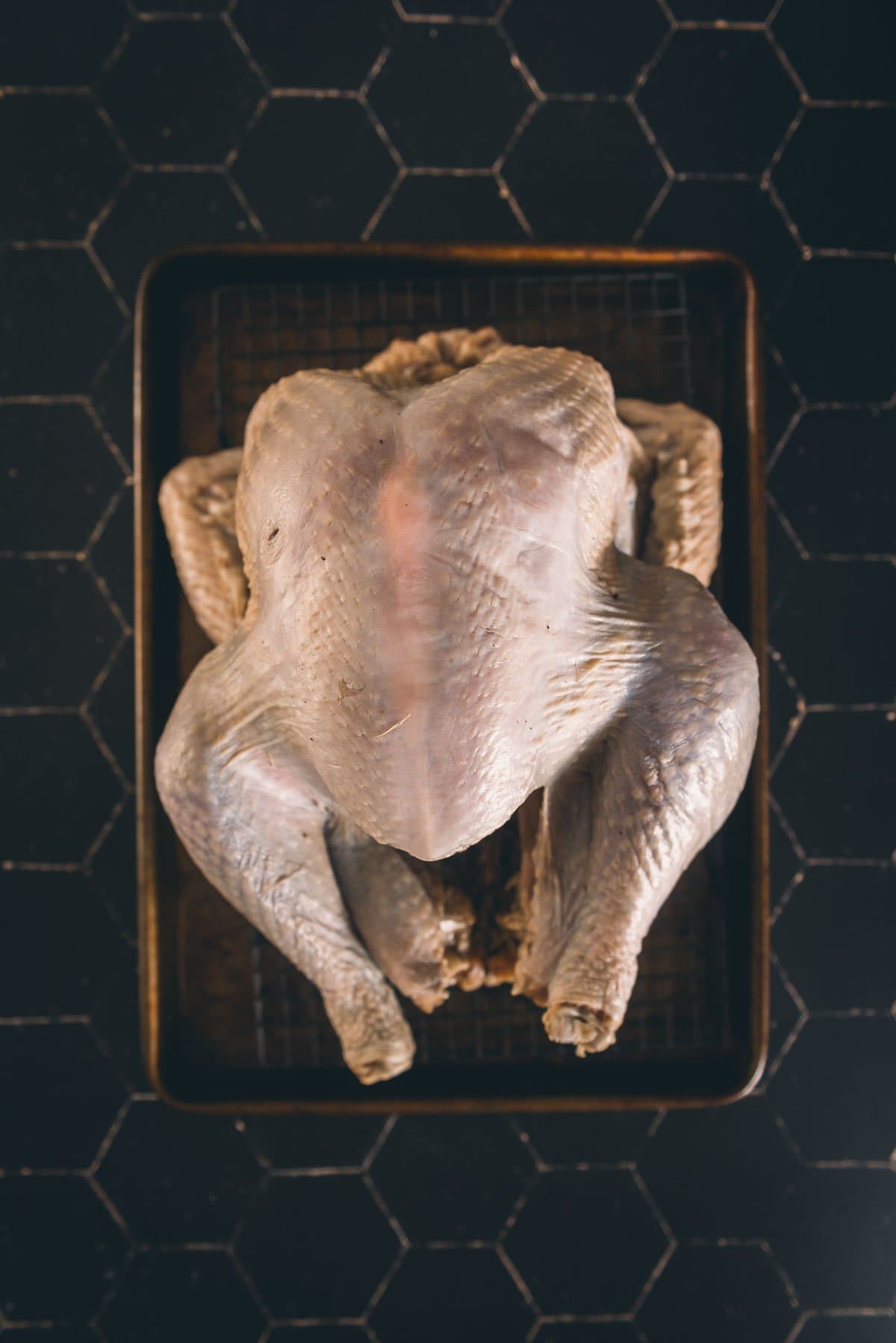
A brine is a salt solution consisting of water, salt, and herbs. You can use a brine solution with all kinds of meat and even vegetables! The salt penetrates the exterior of the turkey through osmosis and diffusion. Osmosis is when the water inside the bird comes to the surface to dilute the salt. Diffusion occurs when the saltwater solution moves from the outside of the bird and penetrates the meat inside.
As the turkey’s muscle fibers are being broken down from the brining process, the bird is infused with flavor and moisture.
⚖️ Wet Brine vs. Dry Brine
This page is the wet brine: the bird sits in salted water and comes out seasoned the whole way through, with more moisture in the meat and a skin that needs a night of air drying to recover. If you want crisper skin without finding refrigerator space for five gallons of salt water the week you need it most, use the dry brine instead. Wet brining is the better rescue for a lean or previously frozen bird. Dry brining is the better default for almost everything else.
🔪 Turkey Brine Ingredients
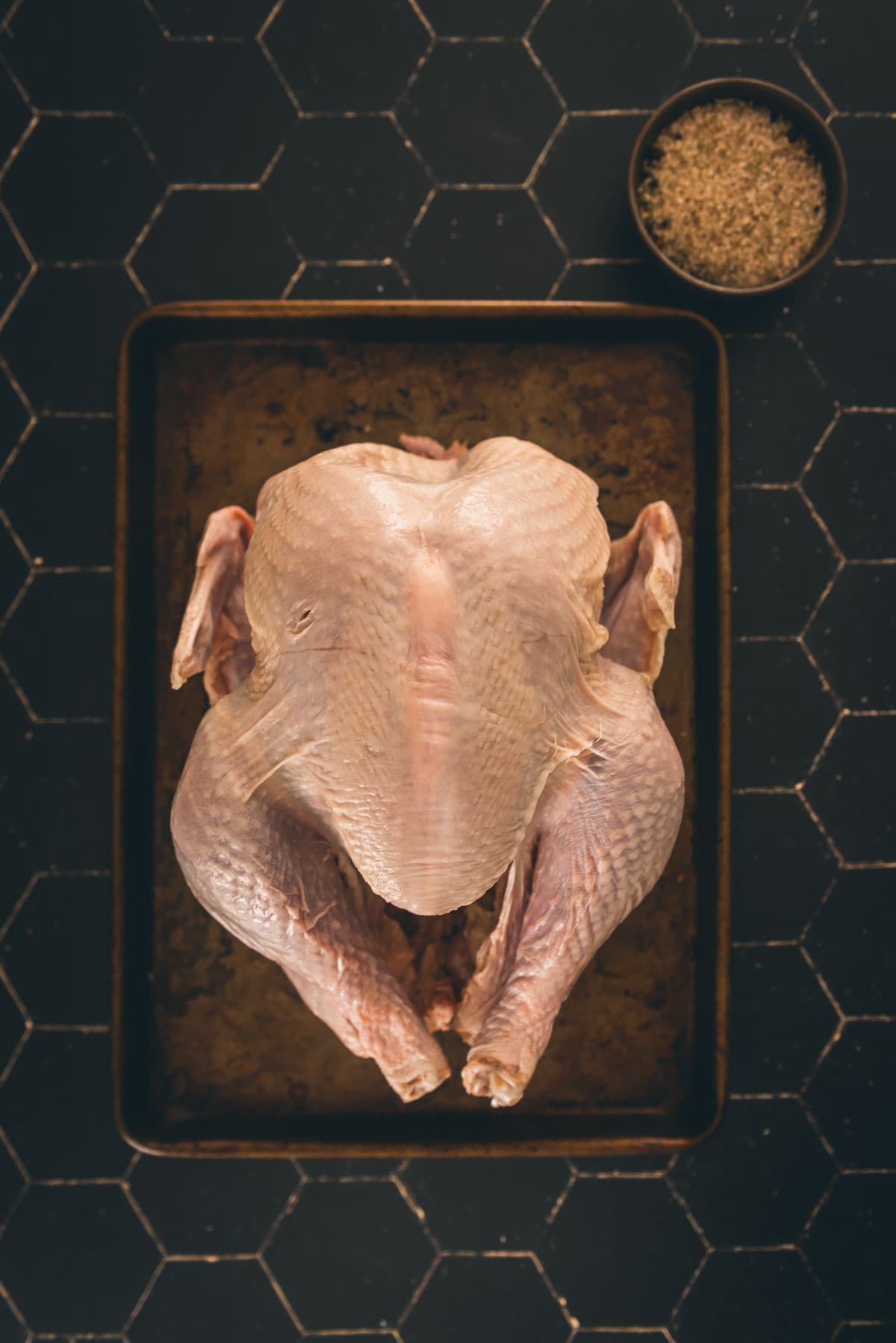
- Water
- Kosher Salt – do not use table salt for this recipe.
- Black peppercorns
- Dried rosemary
- Dried sage
- Dried thyme
- Thawed turkey
Best Turkey Brine Tools:
We tested these brining bags in the Girl Carnivore Meat Labs and love them. They are huge, thick, and durable. We find that brining can be a little unnerving with the risk of cross-contamination, but with these sturdy bags, everything was contained and safe. The package we purchased came with 3 bags. We used zip ties as an easy way to secure the bag once the turkey and liquid were in it.
📝 How to Brine a Turkey
How to Make Turkey Brine
- First, you’ll need to get a large stockpot. Fill it with water and put it on the stove to heat up. You want it to come to a boil.
- Once the water is boiling, turn off the heat. Now, add all the brine ingredients, like salt, black peppercorns, dried rosemary, sage, and thyme. Stir everything really well until the salt is all dissolved.
- Now, you need to let this liquid cool down. It has to be completely cool before we use it.
Getting the Turkey Ready
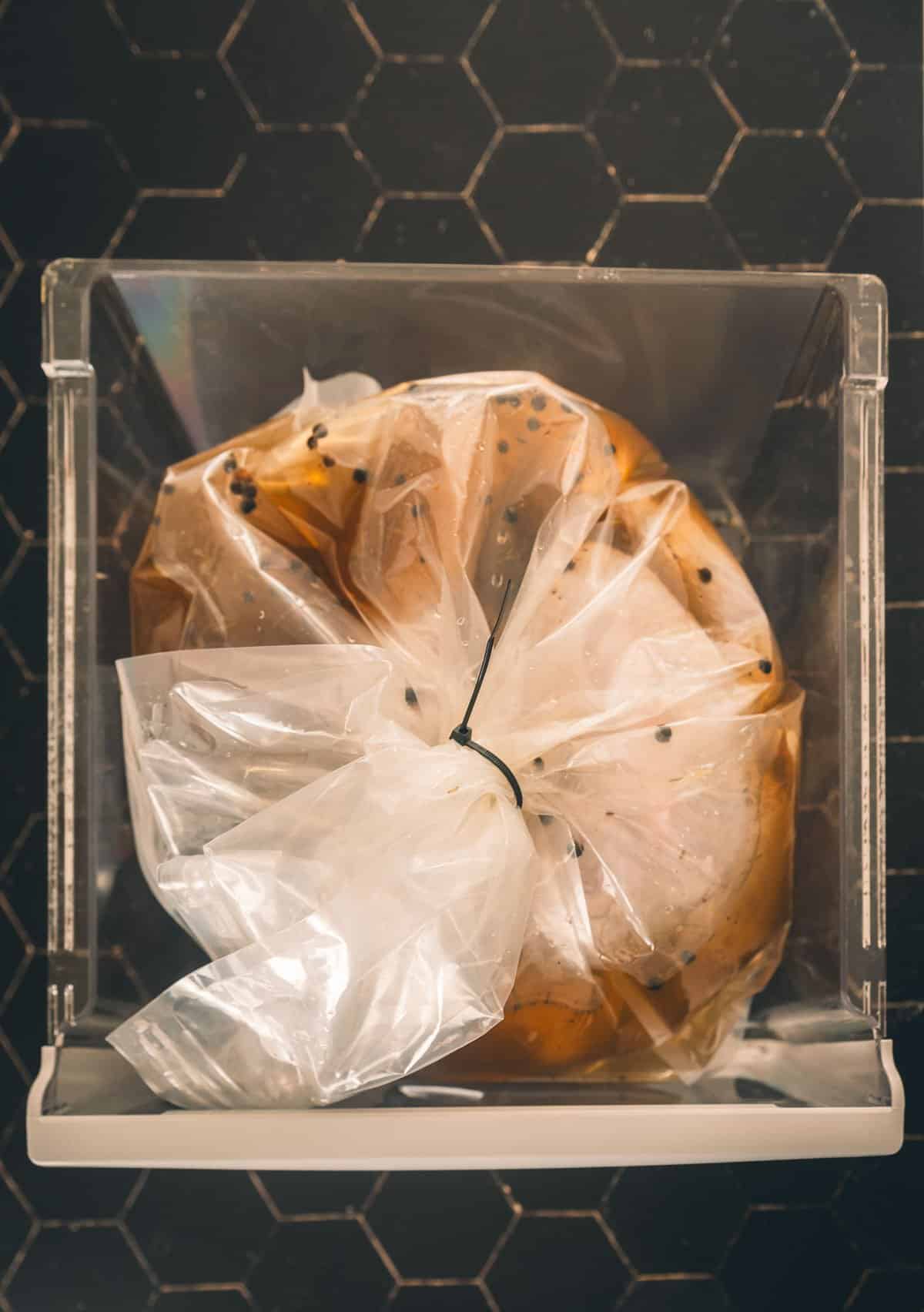
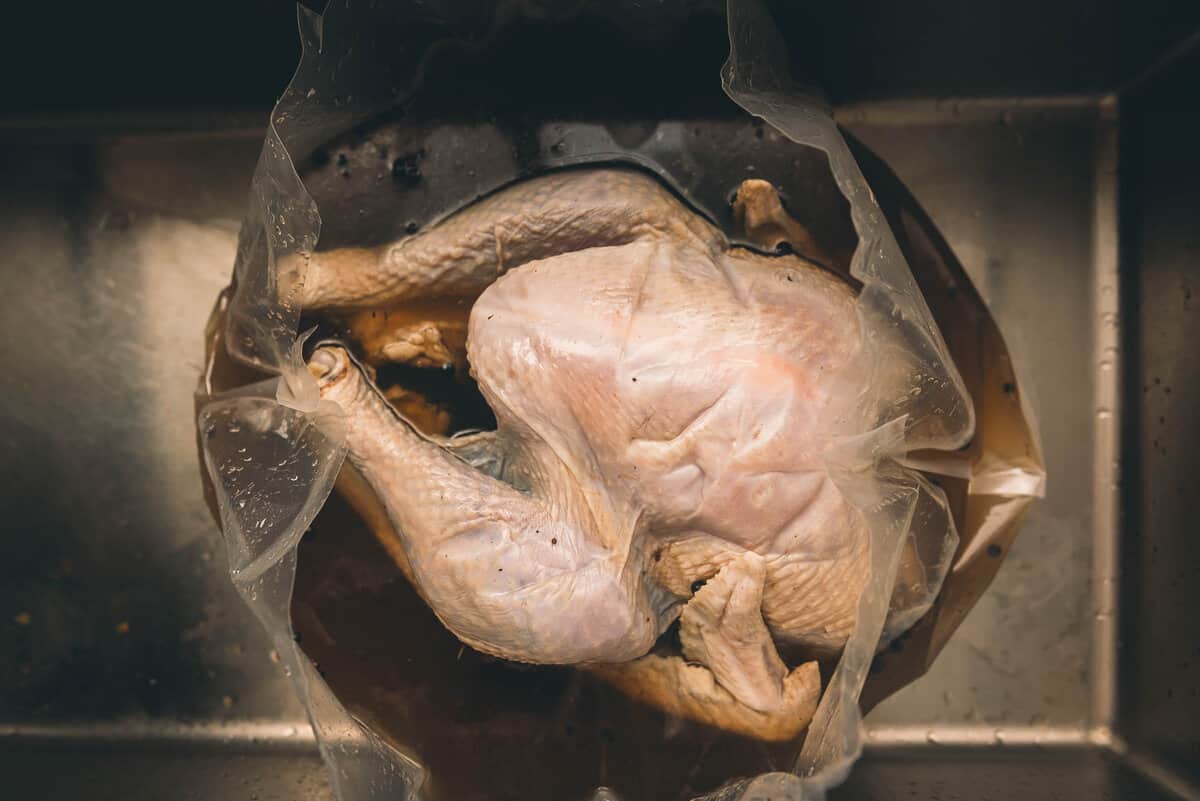
- When the liquid is cool, it’s time to get your raw turkey in there. We like to use a large brining bag. It’s strong and can hold both the liquid and the turkey.
- If you’re using a brining bag, put your turkey inside it first. Then, carefully pour the cooled brine into the bag. After that, we need to get rid of any air inside. Hold the bag above the turkey, twist it, and use your hands to make sure no air is left. Once it’s air-free, secure the bag with a zip tie where you were holding it twisted. If the legs need tying, here is how to truss a turkey.

How long to Wet Brine a Turkey
- Now, put the turkey in the fridge and leave it there for about 12 hours. You can either place the bag in a 5-gallon bucket (if it fits) or use a big vegetable drawer in your fridge. If you don’t have enough refrigerator space, you can also keep the turkey in the brine in a large cooler with ice to make sure it stays nice and cold.
Cooking a Brined Turkey
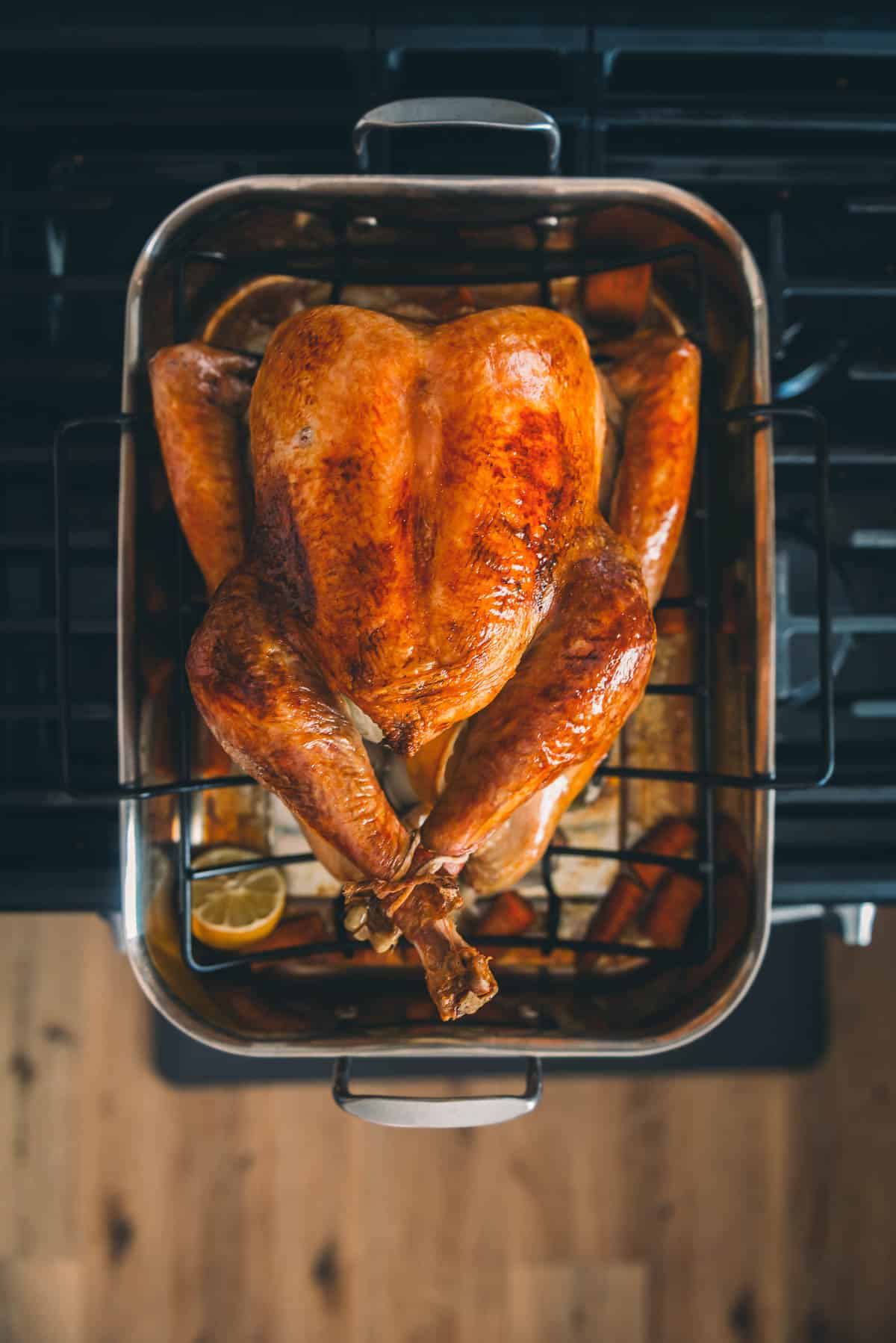
- After the 12 hours are up, take your turkey out of the brine. You won’t need the brine anymore, so you can toss it. Before you start cooking, pat your turkey dry with some paper towels. Now it’s all set for you to cook it up and enjoy!
How long to cook a brined turkey
Now the next step is to check on how long to cook a turkey per pound to set yourself up for success.
Ready to cook it? Roast it whole with our oven roasted turkey, flatten it with our spatchcock turkey, or take it outside with our smoked Thanksgiving turkey.
Get ready for a juicy turkey like you’ve never had before! This Turkey Brine recipe will take your basic bland turkey and turn it into a flavorful, tender bird! Once you brine your turkey, you’ll never settle for an unbrined bird ever again!
🔄 Substitutions and Flavor Variations
- Customize the brine to your taste with different fresh herbs, apple cider, bay leaves, or brown sugar. Use what you like.
- Keep the herbs that matter most under the skin and inside the cavity. Aromatics in the bucket only season the surface.
💡 Meat Nerd Tips
- Not all kosher salt measures the same: a cup of Diamond Crystal weighs roughly half what a cup of Morton does. If you are using Morton, cut the volume by about a third or weigh it instead. This is the single most common reason a brine comes out too salty.
- Cool the brine completely before the bird goes in: you have to heat it to dissolve the salt and sugar, and putting a turkey into warm brine parks it in the temperature danger zone for hours. Chill it to refrigerator temperature first, or build it with half the water hot and the other half as ice.
- Check the label before you buy: a bird marked self-basting, enhanced, or with a percent solution is already brined at the plant. Brining it again is the fastest way to ruin a turkey.
- The overnight air dry is not optional: pull the bird, pat it dry, and leave it uncovered on a rack in the refrigerator overnight. A wet surface steams and will not brown, which cancels out everything the brine just did.
- Taste the drippings before you salt the gravy: brined drippings run saltier than unbrined. Build the gravy with unsalted stock and season at the very end, not at the roux.
- Temperature, not location: a cooler works as well as a refrigerator as long as the brine stays at or below 40F the whole time. Put a thermometer in it and actually look at it.
Have you tried this recipe? Do us a favor and rate the recipe card with the ⭐ ⭐ ⭐ ⭐ ⭐ and drop a comment to help out the next reader.
Best Brine Recipe for Turkey (Wet Brine Method)
Recommended Equipment
- Large stock pot
Ingredients
- 2 gallons water
- 1 cups salt
- ¼ cup black peppercorns
- ½ cup dried rosemary
- ½ cup dried sage
- ½ cup dried thyme
Instructions
Make the saline
- Bring the water to a boil in a large stock pot.
- Remove from heat and stir in the brine ingredients until the salt is dissolved.
- Allow the liquid to cool completely.
Brine the turkey
- When cooled, submerge the turkey in the liquid. We find the easiest way to do this is to use a brining bag, a heavy duty plastic bag designed to hold liquid and a turkey. See our notes below for our recommendation.
- If using a brining bag, add the turkey to the bag and then pour the liquid in.
- Next remove the air, do this by twisting the bag above the turkey and secruring with your hands.
- Carefully press air out, careful not to slosh any liquid out.
- Secure the bag with a zip tie where your hand was holding it twisted.
- Place the turkey, in the brine, in the fridge for 12 hours.
- You can use a 5 gallon bucket to hold the bag, and store the whole bag in the fridge. Or you can empty a vegetable draw and use it, if it is big enough and store the bird in the brining bag in the drawer. Alternatively, you can store the turkey in the brine in a cooler, on ice to maintain a safe temperature.
Remove from brine and cook
- Remove from brine, discard the liquid, and pat the turkey dry before cooking.
Video
Notes
- How to Dry Brine a Turkey
- How to Spatchcock a Turkey
- How to Truss a Turkey
- How Long to Cook a Turkey Per Pound
- How to Carve a Turkey
Save this Recipe
Nutrition
Bookmark this recipe now!
Quick Summary
A wet brine is one cup of kosher salt per gallon of water for 12 to 24 hours, fully chilled, on a fully thawed bird that is not kosher or self-basting. Pull it, pat it dry, and air dry it uncovered in the refrigerator overnight so the skin browns. If refrigerator space is the problem, the dry brine does the same job without the bucket.
❓ Turkey Brine FAQs
Brine ratio: 1 cup salt to every 2 gallons of water. Make sure the salt is dissolved and the water is cool before brining.
You can rinse your turkey after brining to remove excess salt, but with our turkey brine recipe, we don’t need to.
Since the brining process imparts plenty of flavor into the bird, you don’t have to! If you want to add more seasoning, we recommend using a seasoning or dry rub without salt as the bird will be plenty salty. We add compound butter for extra fat and flavor under the skin while the turkey roasts.
It takes 12 hours at most. Any more than that, and we find the turkey meat becomes too salty.
Nope! We highly recommend our giblet gravy after you’ve brined and roasted your turkey.
Yes! However, you’ll want to partially thaw the turkey enough to clean out the cavity before brining. If you want to know How to Thaw a Turkey, check out our guide!
Yes! You can use a wet or dry brine on a spatchcocked turkey. Never spatchcocked a turkey before? Check out our How to Spatchcock a Turkey guide!
Nope, you don’t. But you’re turkey won’t taste as good if you skip this step. If you don’t have the space for a traditional wet brine, check out our dry brine recipe, which we use all of the time for it’s ease and convenience.
Brining helps your turkey remain tender and juicy through the cooking process.
Yes, we recommend 12 to 18 hour brine, for most turkeys.
No, and this is the mistake that ruins the most birds. Kosher turkeys are salted as part of processing and supermarket birds labeled self-basting or enhanced are already injected with a salt solution. Brining either one again stacks salt on salt and the result is inedible. Check the label for a percent solution before you buy.
A food-safe brining bag inside a stockpot, a clean 5-gallon food-grade bucket, or a beverage cooler. Do not use a metal stockpot that is not stainless, and do not use a trash bag. Aluminum reacts with salt and the plastic in a non-food-grade bag is not rated for a day of contact with raw poultry.
Yes, and it is the usual answer when the refrigerator is full. The rule is temperature, not location: the brine has to stay at or below 40F the entire time. Add sealed ice packs or bagged ice, keep a thermometer in the cooler, and check it before bed and first thing in the morning.
No. Once raw poultry has sat in it for a day it is raw poultry liquid. Pour it out. If you want a second bird brined, mix a second batch, and never reuse brine as a basting liquid or a gravy base.
After. The bird has to be fully thawed before it goes in, because a frozen core will not take salt and the outside will over-brine while it waits. Budget the thaw first, roughly 24 hours in the refrigerator per 4 to 5 pounds, then start counting brine time.














I brined a duck, we are not that fond of turkeys. I added Rose Sage and high desert wild sage. Fairly local, and I always gather some when out hiking. My family loved it. Even though one was upset I was not doing my usual recipe from BFF, aka BigFatFather, that is me. She loved it after one bite. Thank you.
Thanks, Tony! We’re glad this one worked for you. Love the addition of wild sage.
Very good plans and recipes for Turkey. Very close to what we, I use for birds, excepting dove and quail.
We usually have duck, and I brine chicken also, other wise the chicken should just be tossed. My opinion(s).
One favorite brine I use is very simple. Soak 4 inch pieces of LemonGrass in good water. Let soak at least 4~6 hours. Wrap Lemon Grass in cheese clothe, makes easier clean up. The Lemon Grass tenderizes the bird, and leaves a flavor in the background that guests try to decipher, as they swallow fast to get a fresh bite in.
I cook 20 minutes per pound at 325º, I have calibrate both of my ovens. We live a mile high, so water boils at a lower temperature. Please adjust your cook time as needed for saft=ety and flavor.
Kwik, quick, note, I installed a Reverse Osmosis as our water tanks on the mountain have a lot of chemicals, and the water company add bleach to reduce possibility of bugs growing.
Love the addition of lemon grass, Mr Williams!